St. Augustine's first green stormwater project features bioswales that will capture and filter rainwater before it drains back to the Matanzas River | Simone Endress, Jacksonville Today
Published on September 17, 2026 at 4:32 pm
Free local news and info, in your inbox at 6 a.m. M-F. Sign up for the Jacksonville Today newsletter.
In past years, residents of Court Theophelia in St. Augustine dreaded the rainy season, when several feet of standing stormwater widened road cracks.
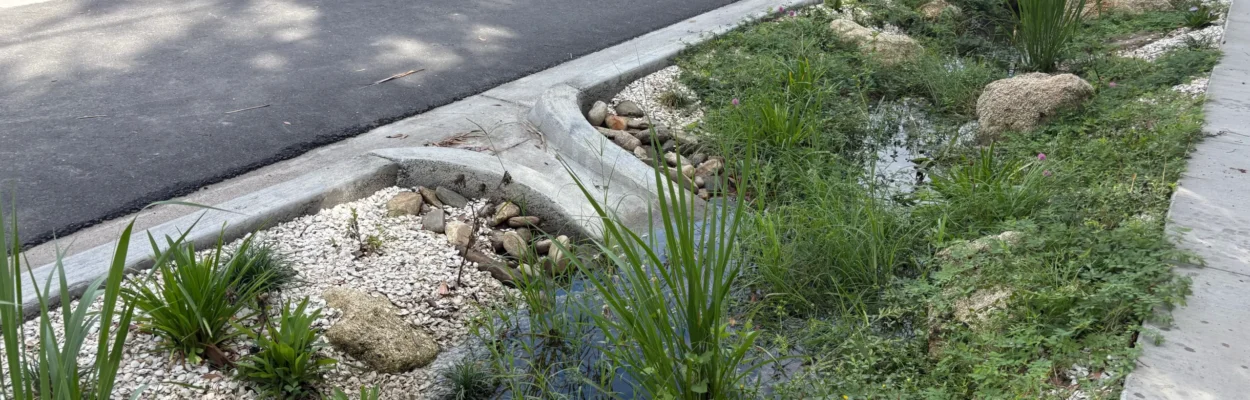
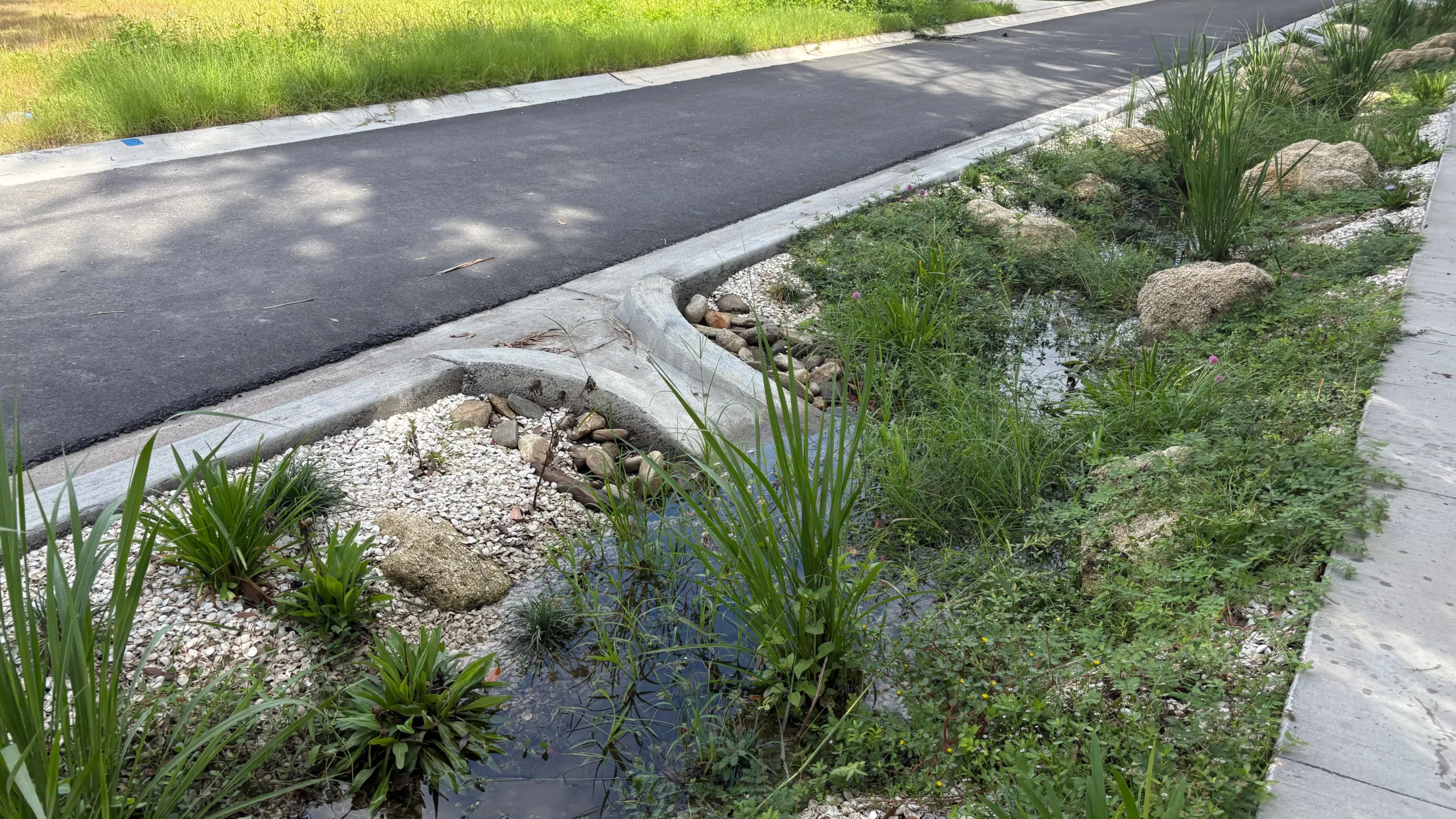
This year, rainwater that might have deteriorated Bannan Avenue instead pools in Coquina beds that run along the road before draining through layers of soil in a designated area called a bioswale. This is St. Augustine’s first green stormwater infrastructure project.
Jacksonville Today thanks our sponsors. Become one.
Tina, who did not provide her last name, says her yard used to flood “every time we had an inch of rain.” She’s in full support of the recently finished stormwater infrastructure project in the neighborhood. “Our yard is not flooding anymore,” she says.
Jessica Beach, St. Augustine’s chief resilience officer, says the city first recognized the issue over 10 years ago.
“ We actually had it identified in our stormwater master plan as early as 2013. It’s been a matter of getting funding,” Beach says.


Jacksonville Today thanks our sponsors. Become one.
The Public Works Department can fund maintenance only for stormwater systems. The department relies on federal and state grants for new projects. The Florida Department of Environmental Protection’s Resilient Florida program fully funded this project, which cost over $4 million.
Feet of water used to overwhelm a decades-old clay pipe. Now the entire drainage system has been redone.
Above ground, bioswales run along redone roads. These are tiny ecosystems where native plants like the purple Sunshine mimosa sway in the breeze.
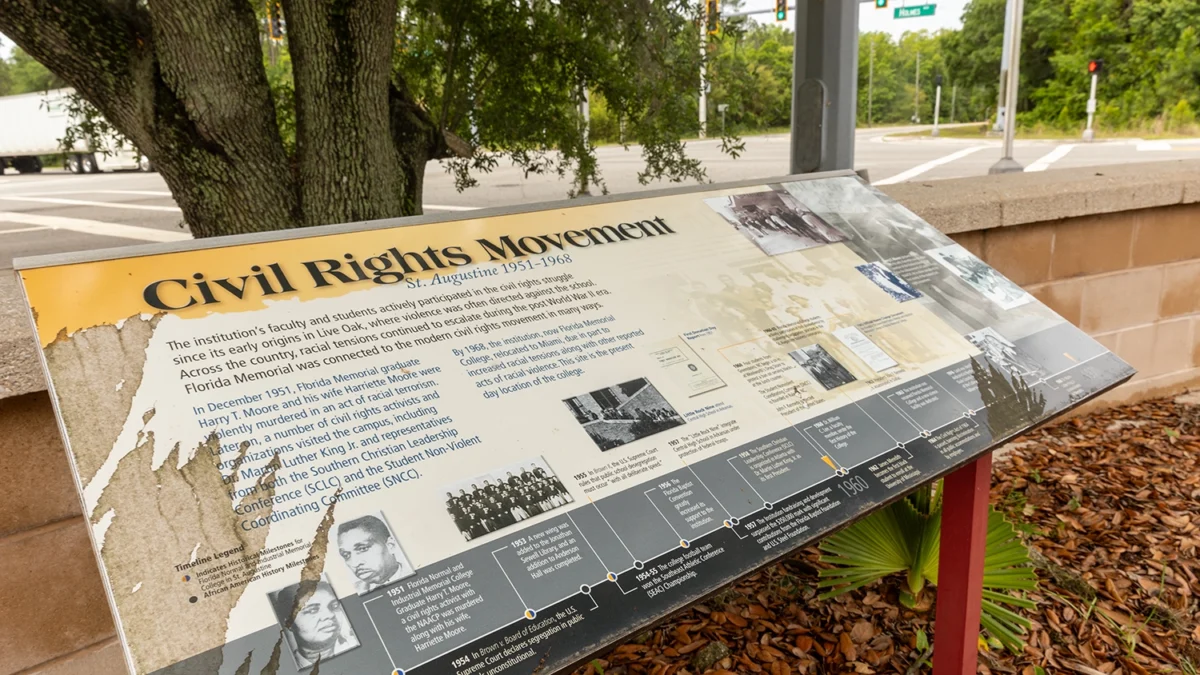
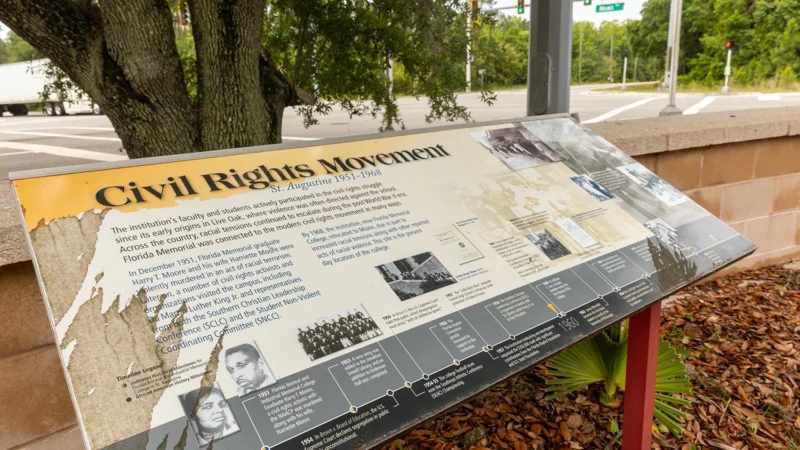
Between Court Theophelia and Court Louise, a sign explains how the bioswale works. Now, instead of collecting on the concrete, water will drain into the soil layers, including Bold and Gold, a soil engineered to capture and remove pollutants and heavy metals from stormwater.
Aside from preventing flooding, the project aims to improve water quality. Stormwater that lands in Court Theophelia, Beach says, ends up in the Matanzas River.
“ So we can remove that nitrogen and that phosphorus that would normally just be draining straight into the water body — in this case it’s the Matanzas River — without any type of treatment.“ A new baffle box on the riverbank also helps to trap sediment and debris.
Now the city will have to maintain the system, which functions differently from other stormwater systems in St. Augustine.
Recently, the Public Works Operations team removed weeds from the bioswales for the first time. Staff is getting up to speed on how the new baffle box works. In roughly 20 years, the Bold and Gold soil in the bioswales will have to be replaced. “We’ll have to keep an eye on it,” Beach says.
The city will host a public ribbon-cutting ceremony Friday with educational presentations on the project and how the bioswales work.
”This is just one neighborhood out of the entire city, so we’re trying to do outreach and education on these types of things, especially with water quality,” Beach says. “We hope to be able to show people: ‘Hey, this can work.’”