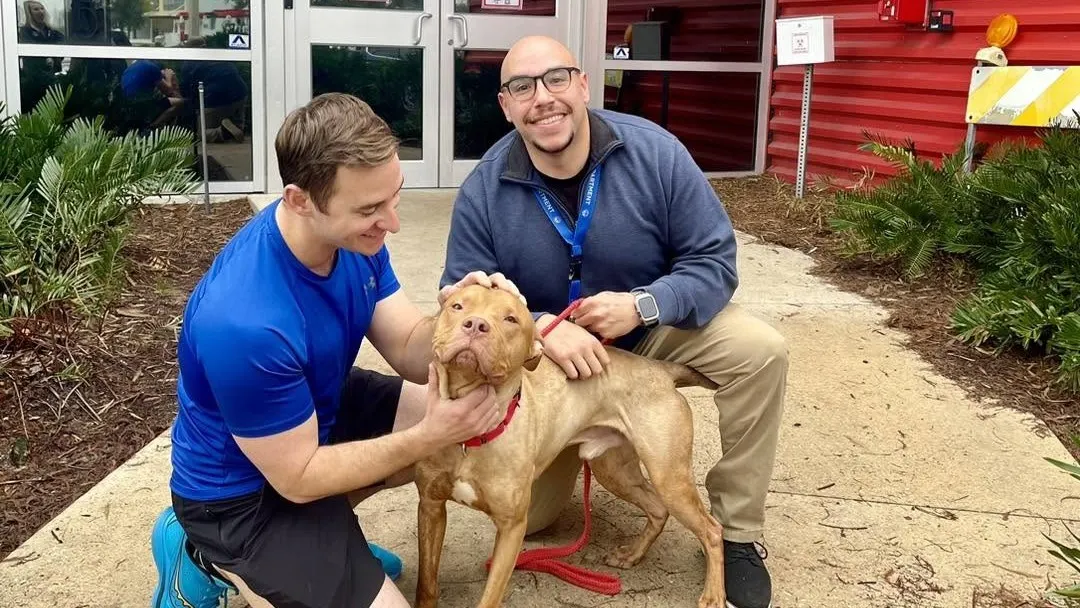
City Councilman Jimmy Peluso and ACPS Chief Mike Bricker pose with a dog named Leo outside the ACPS building in December 2023. | Jimmy Peluso, Facebook
Published on October 2, 2026 at 11:17 am
Free local news and info, in your inbox at 6 a.m. M-F. Sign up for the Jacksonville Today newsletter.
A city councilman is echoing concerns about Jacksonville’s animal control response times already documented by the city’s top watchdog agency in 2025.
Three days after Jacksonville Today published an investigation into the city’s Animal Control and Protective Services division, Councilman Jimmy Peluso paid the facility a visit he said was unannounced.
Jacksonville Today thanks our sponsors. Become one.
Peluso represents District 7, where the animal shelter is located. He reported that although the shelter is overcrowded, he found the kennels in good shape and the volunteers responsive.
Peluso’s biggest concern from Jacksonville Today’s report, he said, is the use of 630-CITY and MyJax to report dangerous dogs.
630-CITY is a centralized line used by multiple agencies, including fire and law enforcement. MyJax is an app that similarly connects users to city services.


Jacksonville Today thanks our sponsors. Become one.
Peluso said those options are too far removed from ACPS, which takes reports secondhand from both entities. Sometimes those reports involve emergencies.
“You’re not able to directly call ACPS,” Peluso said. “I’d love for them to have their own number.”
Animal control concerns
Jacksonville Today reported last week that the number of dog bites in the city rose dramatically under a no-kill philosophy at the local animal shelter. The article also documented that nonprofit organizations involved in Jacksonville’s animal welfare scene raise hundreds of millions of dollars per year toward the no-kill mission.
ACPS has faced scrutiny over its operations before. Peluso said he hadn’t read a report issued by the Office of the Inspector General last year, but his worries about communication at ACPS were documented in an audit published in August.
The Inspector General’s Office sampled 200 emergency and high-priority calls to ACPS for things like bites or aggressive dogs between November 2024 and April 2025. More than one-third of the calls, 69 in total, weren’t responded to fast enough after they were dispatched, according to ACPS’ operating procedures published by the inspector general.
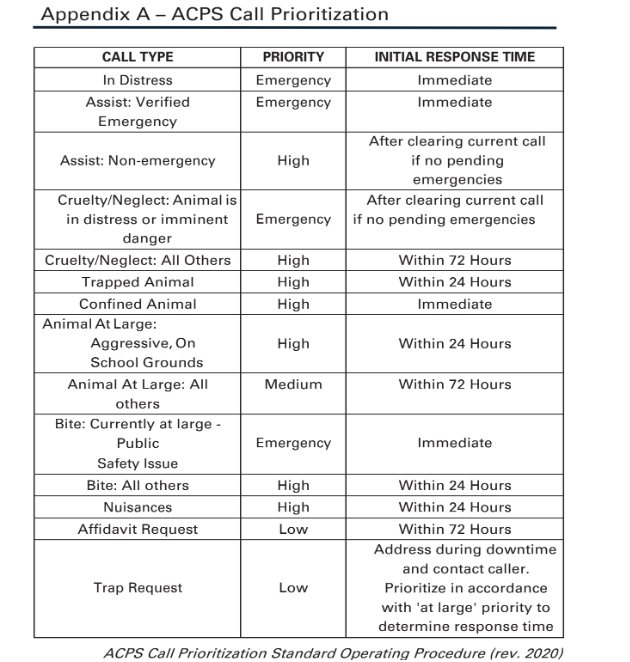
It’s unclear whether those delays are related to the shelter’s policy to selectively respond to calls under the no-kill emphasis. ACPS Chief Mike Bricker says no-kill policies don’t determine the agency’s direction. He did say Animal Control officers are instructed to prioritize calls based on their urgency.
But ACPS has fewer officers than an industry benchmark recommends. A National Animal Control Association guideline suggests one officer for every 18,000 residents. Jacksonville would need more than 50 officers under that guideline. It has 20, Bricker says.
Still, some calls were delayed before even reaching Animal Control. Sixteen calls failed to transfer from the city’s systems for more than 24 hours, with some taking over a month, according to the report.
Twenty-two calls weren’t assessed due to missing timestamps or lack of response-time standards, including for calls tagged “dangerous.”
The Inspector General’s Office recommended that ACPS work with the city to make sure reports were being transferred properly and update its procedures to set standard response times for dangerous calls and other call types missing responses.
“It is crucial that ACPS address the findings as they are critical to protecting the health and safety of both animals and the community,” the audit said. “Delays in response or unclear procedures can lead to prolonged animal suffering, missed emergencies, and reduced public trust in ACPS operations.”
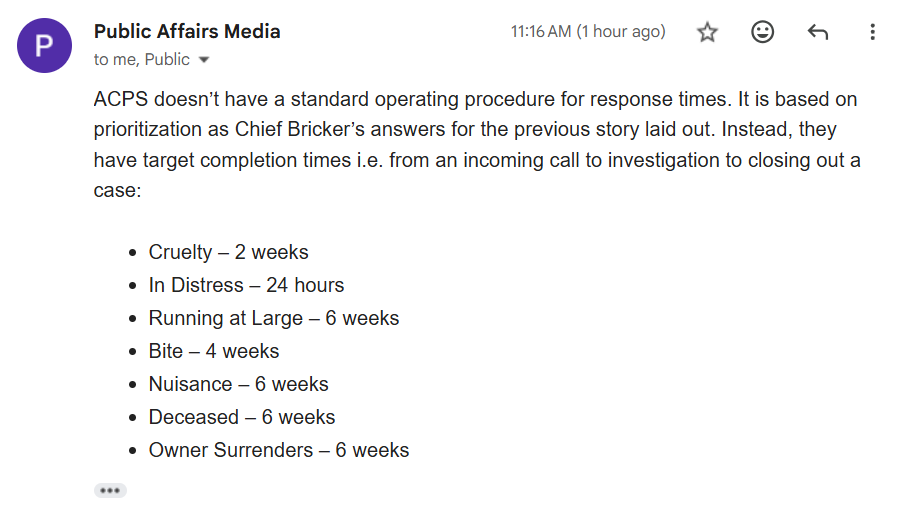
Jacksonville Today requested ACPS’ updated response call times, which the agency said include dangerous calls in the “bite” category. ACPS said it handles reports on a case-by-case basis and measures itself based on when a case is closed out completely, which can be up to four weeks for a dog bite.