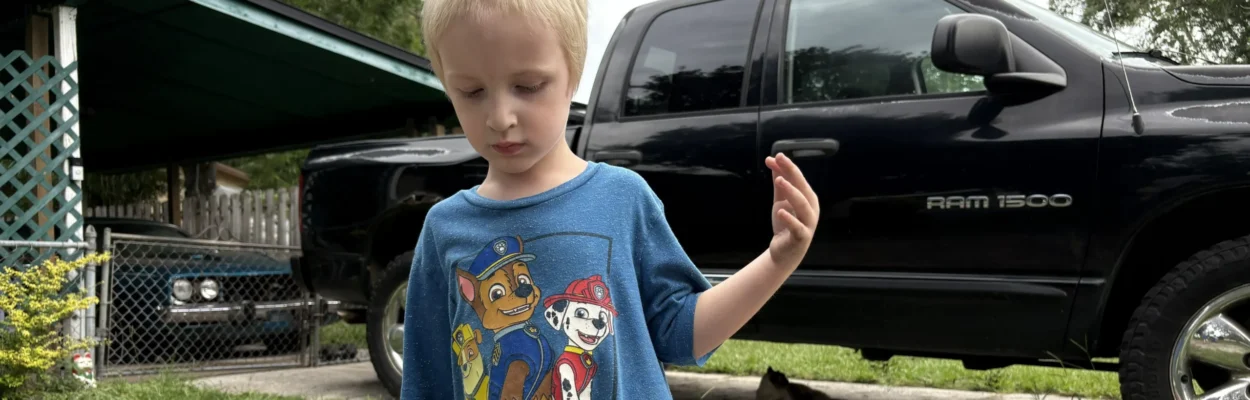
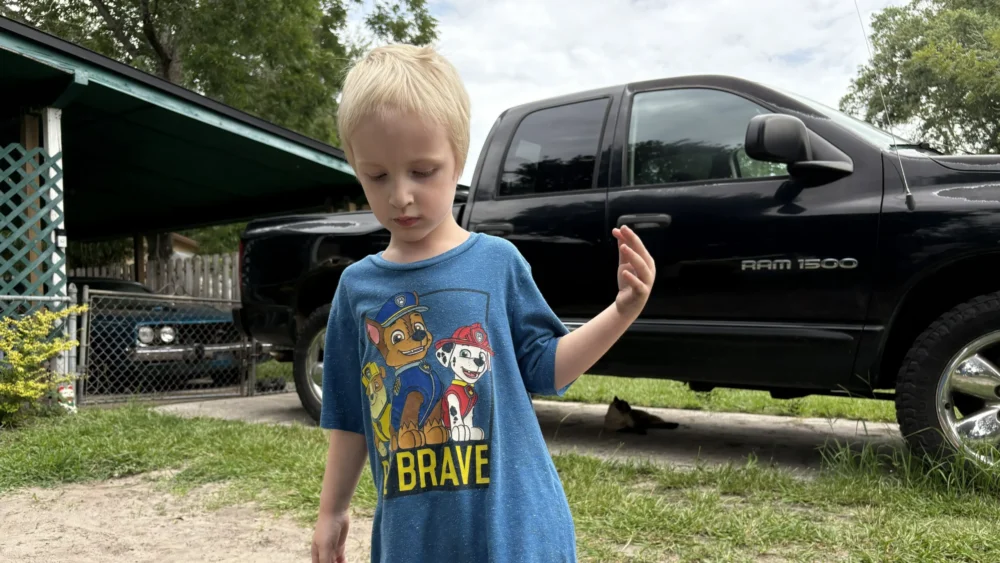
Dog attack victim Roland Moore stands in his family's driveway on Marquis Drive on July 10, 2026. | Simone Endress, Jacksonville Today
Published on September 23, 2026 at 12:12 pm
Free local news and info, in your inbox at 6 a.m. M-F. Sign up for the Jacksonville Today newsletter.
The first time Karen Hogan saw the dog she described as vicious, she was taking a walk last year on Jacksonville’s Westside with her infant grandson.
She didn’t think anything of the dog until it began growling and acting like it wanted to attack. Hogan thought about grabbing the baby from his stroller and running, but sudden movement seemed like a bad idea.
Jacksonville Today thanks our sponsors. Become one.
“I kept walking backwards, walking backwards, telling it, ‘No, no,’ and it kept coming towards me,” Hogan said.
It was the start of a terrifying incident that thousands of people in Jacksonville have experienced in some form over the last several years. In Hogan’s case, the dog would soon maim a neighbor’s child, and her community would struggle to come to terms with his bloody attack.
A growing number of grisly encounters in Jacksonville and beyond aren’t just bad luck, according to some animal welfare advocates. They say more attacks are the result of a well-meaning policy known as no-kill, widely marketed to local governments by a set of powerful and financially invested nonprofits.


Jacksonville Today thanks our sponsors. Become one.
No-kill is designed to save animals’ lives, but its focus on keeping animals out of shelters, combined with a light approach to law enforcement, can leave more dangerous dogs on the streets, sometimes with devastating consequences.
In Jacksonville, former animal control officers say limited shelter intake is contributing to public safety problems. Animal control officials respond that they assess situations on a case-by-case basis to protect the public.
Roland’s attack
When Hogan saw the dog get distracted by something else down Marquis Drive, she ran with the baby to her son’s house. She called 911. The dispatcher told her to hang up and call Jacksonville’s general line, 630-CITY.
“They said they were gonna be sending a truck right out,” Hogan said.
She pulled up the blinds and watched the road while holding the baby. She never saw a truck.
About a week later, Hogan’s daughter-in-law shared a screenshot of the same dog taken with the family’s Ring camera. Hogan called 630-CITY again and again was told a truck would respond. She never saw it.
Two weeks later, on Nov. 20, Tracy Moore, 41, was putting her autistic daughter on the bus to school when two dogs, including the one Hogan saw, approached her house on Marquis Drive. She took photos for social media in case the dogs were lost.
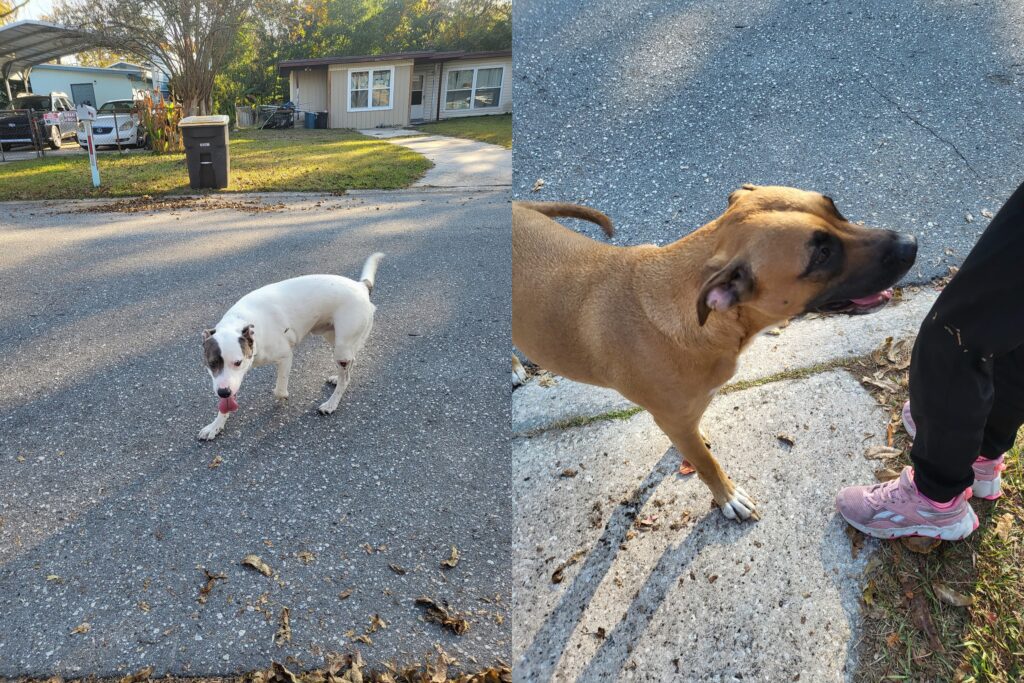
Her then 4-year-old son, Roland, was impatiently waiting for his mother. He wanted to give her a hug, Moore said. Eventually, Roland climbed over the Moores’ short fence to reach his mother near the road, drawing the dogs’ attention.
“That’s when that brown dog started getting nippy because Roland was scared,” Moore said.
Moore’s 9-year-old son picked up Roland, who was crying and screaming by then, but one of the dogs pounced on the older boy’s back.
“It scared the pure living mess out of him and he dropped Roland,” Moore said.
Moore put her body on top of Roland’s, taking care to protect his neck. At the same time, a dog started biting Roland around his left temple area.
“I screamed for help for a good three to five minutes,” Moore said.
Like the movie ‘Carrie’
Every morning, Barbara Girgis gets up early to feed the stray cats on Marquis Drive. Nov. 20 wasn’t much different except that she saw two dogs. They were wagging their tails, she said, so she petted them.
“They were not stray, dirty dogs. They were beautiful dogs. They were somebody’s dogs,” Girgis said.
But when the dogs took off after one of her beloved cats, she was afraid, and she ran after them until they lost interest and continued down the street.
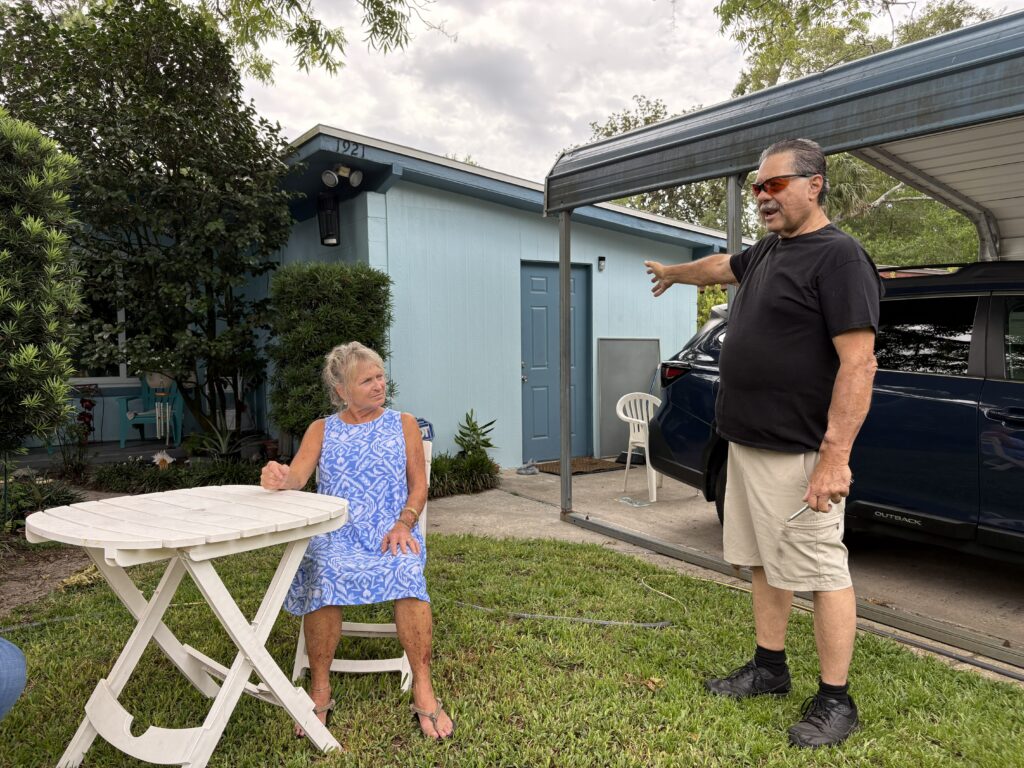
After Girgis returned home, she thought she heard something, so she went outside.
“It was like the movie Carrie,” Girgis said.
Roland was on the ground covered in blood. Moore was on top of him while one of the dogs was biting Roland.
Girgis and another neighbor were able to pull the dog away, but Girgis said the dog was relentless. It was fixated on Roland. She eventually picked up the walker Moore uses due to a disability and fended off the dog, an action Moore credits with saving Roland’s life.
The attack was over, but the damage was done. Roland was missing an ear.
‘Kind of nonchalant’
After Karen Hogan heard what happened to her neighbors, she furiously called 630-CITY again to complain.
“They told me, ‘Well, we don’t send trucks from this number,’” Hogan said.
Hogan, incredulous, told the operator she called twice before about one of the dogs that just attacked her neighbor.
“I said, ‘Now a child has lost an ear,’” Hogan said. “I got a lot of action out of them when I told them a child was attacked. The other two times it was kind of nonchalant.”
In response to questions about Hogan’s calls, Jacksonville’s Animal Control and Protective Services division said it had not received multiple alerts about the dog. But ACPS call logs that the Moore family received and shared with Jacksonville Today show Hogan’s two calls on Oct. 29 and Nov. 5, with accompanying narratives.
“Roaming street again and [the dog] is aggressive,” the Nov. 5 note reads.
The no-kill philosophy
The no-kill concept is an animal shelter standard holding that every healthy and treatable pet should be saved. A shelter is considered no-kill if it manages to release 90% of animals alive.
Jacksonville’s animal shelter has been considered no-kill in the past and now sits shy of the metric. According to a city dashboard, Animal Control and Protective Services’ current live release rate is 83%. But Chief Michael Bricker has repeatedly invoked the no-kill benchmark.
“Our save rate is over 90%. That is the no-kill threshold. We are clearing it,” Bricker wrote on his blog April 30.
In a response to Jacksonville Today just before publication, Bricker wrote that no-kill policies haven’t dictated Jacksonville’s direction.
“Since I arrived in September 2023, we have never changed our response to a dangerous or aggressive dog because of a save-rate target or a no-kill goal,” Bricker said.
Local numbers show a rising human toll outside of the shelter despite Bricker’s statement. Roland, it turns out, has a lot of company. Jacksonville’s number of dog bites has soared over the past five years, according to the local health department.
The Florida Department of Health in Duval County says 585 people were bitten by dogs in 2022. In 2023, that number nearly quadrupled to 2,155, and it jumped again 47% the next year, to 3,173.
Jacksonville’s ACPS has different numbers. That’s understandable because health departments and public safety agencies don’t have the same missions. The health department says its numbers generally depend on reports from medical providers, while ACPS’ figures come from community calls.
ACPS says its own data doesn’t reflect the big increase in bites. Numbers stayed nearly flat at around 1,100 for 2022 and 2023, ACPS says.
Former employees are skeptical. They say the agency has a history of leaving frightened people to fend for themselves.
The change
Joe Casey is a former Jacksonville animal control officer of more than seven years. He said he wanted to work for ACPS indefinitely but ended up resigning in 2024 “due to a hostile work environment.”
Casey’s personnel file, obtained through a public records request, shows he was disciplined for using profanity and sending a woman a picture of a starving dog to make a point about a case.
Casey described what he considers a number of problems inside ACPS, including the call system Karen Hogan used.
When someone calls the 630-CITY line, they don’t get connected to animal control. They talk to an operator who takes a message. Then, a shelter dispatcher decides how to prioritize the call.
ACPS defended the system, saying in response to a list of written questions from Jacksonville Today that multiple Jacksonville agencies use the centralized city line, pointing to the Sheriff’s Office and the Fire Department.
Casey also criticized the amount of complaints that got attention. When he first started, he said, the policy was to respond to every call. But in 2022, interim Chief Marcy Gallo, who preceded Michael Bricker and later became his shelter manager, instructed staff to stop picking up so many stray dogs.
An email from Gallo, obtained through a public records request, even suggested a script about how the shelter was full should be used with people who call in complaining about strays.
“Not all loose dogs are lost — many are familiar with the area, know their way home, and may lead you there. Allow them to lead the way,” Gallo wrote.
In the same email, she said the ACPS leadership team was in unanimous agreement about the “temporary limitation.”
Casey contends the policy wasn’t so temporary and that it got worse under Bricker, who developed a system to further deprioritize calls not tagged as an emergency. He said complaints about animals considered nonaggressive were deposited into a “junk drawer” and often wouldn’t be looked at again.
Casey’s description of a new policy coincides with Jacksonville’s sharp increase of dog bites in 2023 and 2024. But Bricker says he was following policy established before he arrived and he didn’t make significant changes except to advocate that officers use their judgment.
“My direction to the team has been to look at the actual situation in front of us,” Bricker wrote in response to questions. “A sick animal, an injured animal, a dangerous or aggressive animal, a cruelty case, or an animal presenting an immediate public-safety concern takes priority over a healthy stray animal.”
It appears Jacksonville isn’t alone in its policy choices. The city’s upward trend in dog bites is reflected nationally, too, and could be complicated by factors like the COVID-19 pandemic. According to the Centers for Disease Control and Prevention, deaths caused by dog bites more than doubled from 2018 to 2021.
Best Friends Animal Society
National nonprofits, like the Best Friends Animal Society, have helped spread the no-kill idea to great effect, though that wasn’t always the group’s mission. Former members say BFAS started as a cult.
The Process Church of the Final Judgement was founded in England in the 1960s by two people with ties to the Scientology religion. The Process’ beliefs included worship of Jehovah, Jesus, Satan and Lucifer.
According to former member Timothy Wyllie, England “got tired” of the Process, and the small group moved to the U.S., where members eventually settled on a Utah ranch, dropped the religious focus and became BFAS in 1993.
These days, BFAS, which declined comment for this article, is one of the largest animal welfare nonprofits in the country. In 2025, it took in $166 million in donations, some of which it uses to partner with local governments and nonprofits to spread its “Save Them All” campaign meant to make the country no-kill by 2025.
Rick DuCharme is founder of the Jacksonville nonprofit now known as EveryPet, which focuses on affordable animal care. He credits BFAS with changing animal welfare in the country for the better.
“Before Best Friends, nobody was talking about how many dogs and cats were dying in shelters,” DuCharme says. “Nobody was setting goals to decrease that. It was all just doing the same thing over and over and feeling there was no other choice.”
DuCharme said euthanizing thousands of pets forced shelter staff, often people who love animals, into making demoralizing decisions.
Aiming to ease those decisions, BFAS has invested in Jacksonville.
Between 2019 and 2023, the Jacksonville Humane Society was granted $4 million from BFAS, the largest award in the country during those years. The Humane Society has used at least some of the money to be a no-kill “mentorship and training hub.”
One of BFAS’ lessons is managed intake, defining the practice as “any form of regulating or scheduling non-urgent intake.” In practice, it means admitting fewer animals so that fewer face death in a shelter, making the 90% live release rate more attainable.
Although 23 governors have issued proclamations in support of BFAS’ no-kill goal, some cities are turning down the nonprofit’s offers of help because of methods like limited intake that they say can leave dangerous dogs on the streets.
In 2024, Danville, Virginia, caught BFAS’ eye for its number of shelter animals killed. The nonprofit offered a package of help that Danville rejected because it said it didn’t want to close its doors to the public.
In a news report at the time, Danville’s city manager said its open-admission shelter was seeing the “unintended consequences” of the no-kill movement, with more and more surrounding shelters refusing to engage animals that ended up in Danville.
That same year in BFAS’ home state of Utah, the city of Provo declined the organization’s pitch, valued at $1 million, to help start a trap-neuter-return program for cats.
TNR, as it’s known, is an initiative that provides for stray cats to be fixed and put back on the streets. TNR aims to thin out cat colonies while also releasing cats from a shelter alive. In 2008, Jacksonville became the first city in the country to incorporate TNR into sheltering, an initiative sponsored by BFAS.
But Provo’s police department objected to the practice, citing a study that said TNR is effective at reducing breeding only if more than 70% of cats in a colony are sterilized, a number that is difficult to achieve.
The Provo police department also pointed out that wild cats are an invasive species. They kill up to 4 billion birds and 21 billion small mammals a year.
That’s the sleight of hand of no-kill, detractors say: Fewer animals in shelters doesn’t mean less suffering or dying outside.
Jacksonville’s chief
With a budget of more than $6.8 million to manage, former employees say ACPS Chief Bricker has a “demanding” job. He’s likely understaffed, too.
Currently, the National Animal Control Association says there’s no universal metric for how many animal control officers a city needs. But an older NACA benchmark recommends one officer for every 18,000 residents.
Jacksonville would need 57 officers under that metric; it has 20, according to the shelter’s website.
Bricker doesn’t have much experience leading even a small team of animal control officers, though, according to his resume. His past roles mostly consisted of private sector and nonprofit work, including several positions with BFAS. One of those jobs was at the group’s headquarters in Utah.
In response to questions about Bricker’s credentials, City Administrative Services Director Al Ferraro pointed to “the rising lifesaving results despite record demand/intake of animals over the past three years under Chief Bricker’s leadership.”
“Bricker has been able to work with other divisions like the Jacksonville Sheriff’s Office and Municipal Code Compliance Division,” Ferraro said in a written statement provided by the city. “In some instances, we must immediately provide kennels or shelters for large numbers of animals. Sometimes this is because of puppy mills where illegal overbreeding of animals is discovered. There are times we do bring in 60 to 70 dogs in one call. In some instances, we receive large packs of strays that have been dumped off in neighborhoods, streets, and no notice at our shelters.”
‘All across the country’
Ed Boks, once a leader in both New York and Los Angeles’ animal control divisions, now spends his days writing a Substack that often touches on no-kill policy.
Once, he appreciated the no-kill movement. Now, he says, the term amounts to manipulation disguised as advocacy that raises large sums around an emotional cause.
Boks has pointed to the way BFAS uses its money. During the fiscal year ending in September 2025, the group spent $96.2 million on salaries and other compensation. That’s more than six times what it spent on grants, $15.5 million.
And Boks has been critical of limiting shelter intake. Told of the situation in Jacksonville, he called the reluctance to respond to every animal call a serious public safety failure.
“That’s somewhat similar to the fire department not responding to a fire call,” Boks said.
Boks said that as stories like Roland’s become more common, he expects the tide to turn on no-kill policies.
“These shelters that are doing managed intake, return-to-field, not taking animals off the streets, or enforcing leash laws, have resulted in dogs running in groups, more bites, more attacks and more fatalities, and this is happening all across the country,” Boks said. “I think people are going to start asking animal control to do their job again.”
Roland’s recovery
The dogs that bit Roland were euthanized, according to ACPS records sent to the Moores.
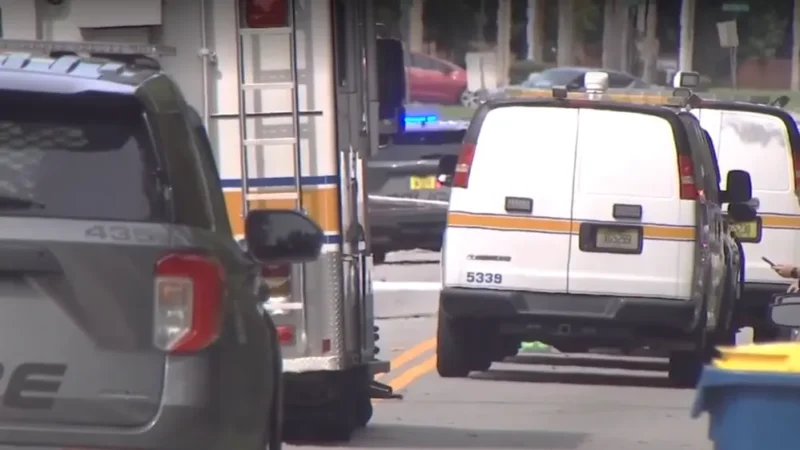
Those records also show confusion in the aftermath of the incident, with ACPS logging that law enforcement shot the dogs. But according to a narrative written by the responding animal control officer, the dogs were transported to the shelter and later put down.
The Moores asked to be present when the dogs died because they wanted to be sure they would never see them again, but the shelter declined, saying it was against policy.
Doctors reattached Roland’s ear, but there was a problem with blood flow. The week after he got home from the hospital, Roland’s ear shriveled up and turned purple.
His medical team did everything it could to help, including using leeches to stimulate blood flow, but the decision was finally made to remove the ear.
Since then, Moore and her husband have been trying to send Roland the message that he shouldn’t be ashamed or self-conscious.
“We’ve been telling him, it’s cool to be different,” Moore said. “A good friend of mine was talking about getting him into Van Gogh. He had one ear and everyone loves that guy.”
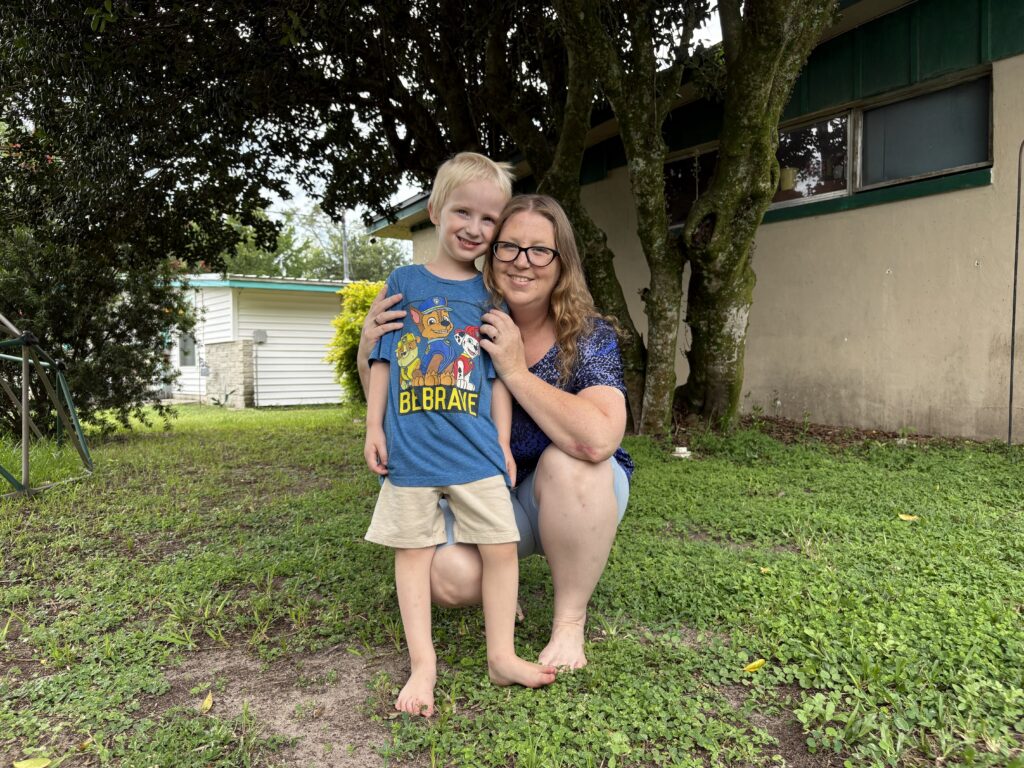
Moore, who’s on Medicaid, hopes to be able to get Roland a prosthetic before he starts school, but she’s not sure she can afford it.
She engaged an attorney who filed a liability claim with the city, but Jacksonville responded that Moore was responsible for the attack because she interacted with the dogs by photographing them. The city sent a letter saying Moore was at least 51% at fault.
Under a Florida law that took effect in 2023, proposed by Gov. Ron DeSantis, a person is not entitled to compensation if they’re more at fault for their injuries than anyone else.
Meanwhile, Jacksonville’s dog bite numbers dropped in 2025, but 1,629 people were bitten last year. So far in 2026, more than 1,000 have been bitten, according to the health department.
Roland may have to live his life with a permanent reminder of the attack.
“It’s absolutely really scary for us. We’re the low man on the totem pole,” Moore said. “If that help doesn’t come, we don’t have it.”
Jacksonville Today reporter Simone Endress contributed to this report.