

JEA is trying to recoup millions in underbilled water capacity fees. | Jacksonville Today, file photo
Published on November 19, 2026 at 11:17 am
Free local news and info, in your inbox at 6 a.m. M-F. Sign up for the Jacksonville Today newsletter.
JEA says Florida law will prevent it from recouping millions of dollars in underbilled “capacity” fees from large commercial customers going back nearly three decades.
Lawyers for the publicly owned utility company says JEA is hamstrung by a four-year statute of limitations.
Jacksonville Today thanks our sponsors. Become one.
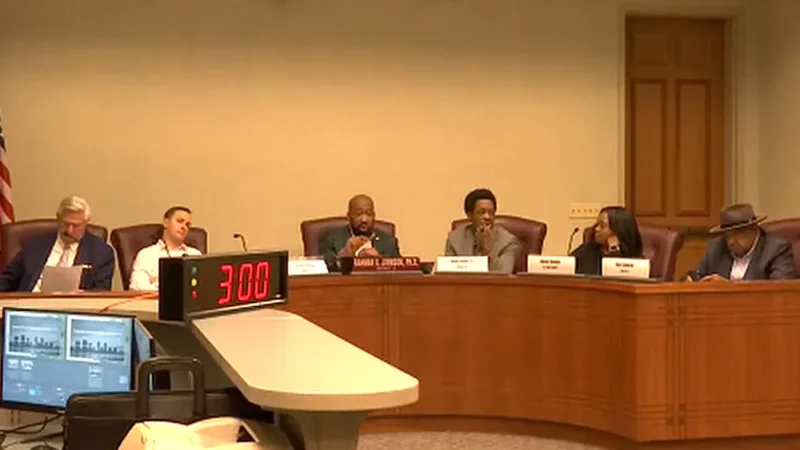
That’s as the utility’s board of directors on Tuesday unanimously approved a language fix, meant to prevent future undercollection of the fees companies are supposed to pay when they expand their footprint and place higher demand on a JEA water plant.
In July, the Jacksonville City Council Auditor found JEA had underbilled commercial customers by approximately $55 million since 2003 alone. A council oversight committee then investigated the issue.
The under-collected fees could go back even further, to 1997, when JEA took over water service operations from the city.


Jacksonville Today thanks our sponsors. Become one.
JEA Chief Water Systems Officer Rob Zammataro said Tuesday that gaps in the historical data, partly as a result of the city-to-JEA transition, make it difficult to determine the total amount of capacity fees that went uncollated.
He says the way the fee policy was originally written also made collection difficult.
A JEA spokesperson told Jacksonville Today on Wednesday that because officials have discovered the four-year statute of limitations, the utility will not be conducting a comprehensive analysis of what was owed prior to 2023.
According to JEA Assistant General Counsel Bradley Bulthuis, the utility is confident in can legally bill for uncharged capacity fees dating back to 2023.
“But it all goes back to: Can we enforce this policy, both as an operational end and on a legal basis?” Bulthuis said.
Monitoring capacity fees
The JEA board’s new policy change does two things: simplifies fee language and puts in place constant monitoring so increases in businesses’ water capacity needs doesn’t go unchecked again.
Going forward, businesses that connect to JEA water service will pay an initial one-time capacity fee and will receive another bill when they increase their capacity need from a water plant by 20% or more. Businesses will receive notices when they’ve reached 110%-115% of their initial capacity usage. They’ll also get a six-month grace period to lower their needs through water conservation before getting billed.
“When you build a new plant, as people connect to it, they kind of purchase their portion of the plant, their little slice of the pie,” Zammataro told a council committee in July. “Those capacity fees help pay for that infrastructure that we have bonded up front. So whenever somebody pays for a capacity fee, whether it be water or wastewater, it’s specific to the capacity and the capital improvement.”
Companies that owe back payment under the old policy will receive notices by May 2027. The capacity fees only apply to JEA’s commercial customers, not residential users.
By June, the utility will begin ongoing monitoring to track commercial customer usage. JEA officials say technology is already in place to conduct the monitoring.
JEA told Jacksonville Today in an email that the utility won’t know until after an analysis that begins in January 2027 exactly how much the utility can collect in underpayments.
“JEA will not be able to identify which companies owe additional capacity fees or determine the amounts owed until the reconciliation analysis is completed.” JEA spokesperson Karen McAllister said.
No effect on residential rates
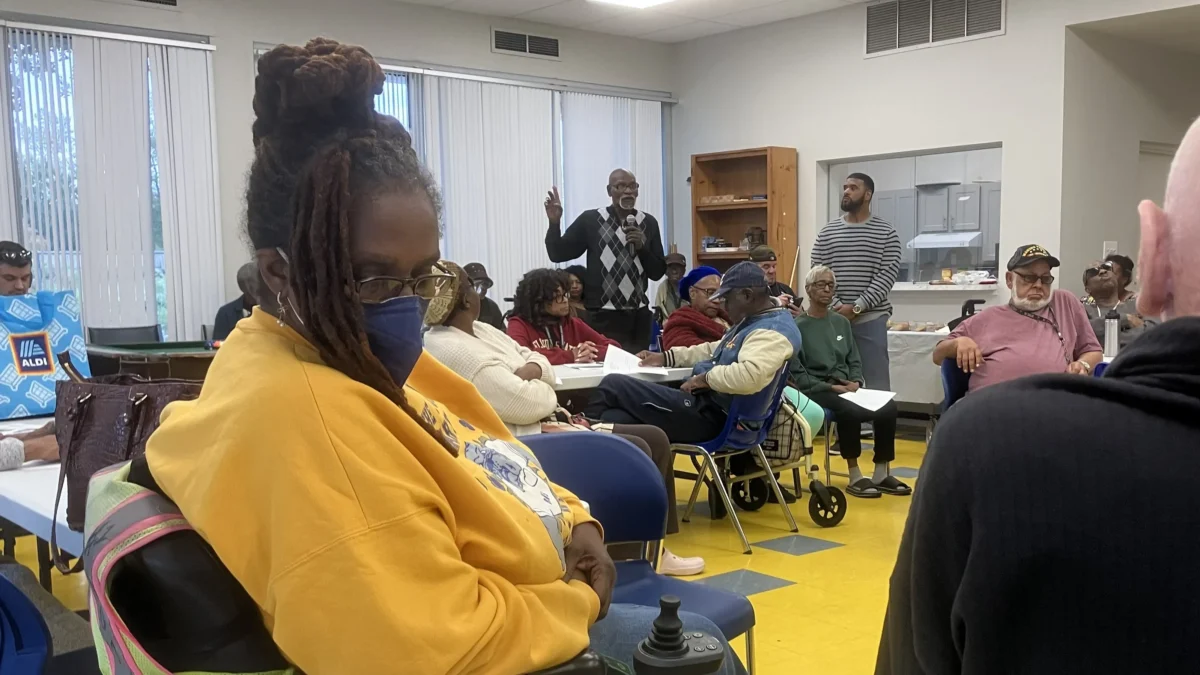
JEA’s inability to collect millions of dollars in capacity fees has become a key talking point for customers who have incurred multiple rate increases over the last two years.
“You should not have raised the rates of the working-class people in this publicly owned utility,” JEA customer Denise Scott told board members Tuesday. “But, instead, I encourage this board to go after the uncollected money that is owner this company.”
Utility officials maintain that, because the one-time capacity payments are restricted for use only to bolster infrastructure for water plants to handle increased demand, the money doesn’t have an effect on residential rates.
“What you’re paying on a month-to-month basis, regardless of the volume of these fees that we collect, it’s not going to have a noticeable difference on any of our monthly rates for any of our customers,” Zammataro said.
JEA CEO search
JEA leaders on Tuesday also officially began the search for the agency’s next chief executive officer by voting to put out a request for proposals for a firm to conduct a national search.
JEA confirms to Jacksonville Today that interim CEO Jody Brooks is putting her name in for the permanent position.
JEA’s last CEO Vickie Cavey, who resigned in September, was an internal promotion in 2024 after serving nearly four decades at the utility. In that case, the board forwent a nationwide search.
Cavey left JEA abruptly this fall after a tumultuous six months, facing mounting pressure after then-Jacksonville City Council President Kevin Carrico publicly alleged the CEO had created a toxic and racist work environment at the utility, based on anonymous allegations.
Despite Carrico ordering a Special Investigatory Committee into JEA, those claims were never proven out.

JEA has struggled over the past decade finding stable leadership in its top spot. Most notably, past CEO Aaron Zahn was released from federal prison in September after serving 20 months of a four-year sentence for conviction on wire fraud and conspiracy linked to the effort to privatize JEA in 2019.
Zahn’s permanent replacement, Jay Stowe, resigned after four years, after board members questioned his job performance and criticism on his decision to allow some of his executive leadership team to live and work remotely outside of Jacksonville.
On selection of a search firm, JEA’s board chair told Jacksonville Today that he wants the public to trust that any search firm contract is awarded on the merits and not based on favoritism.
“Because of the importance of this agency and this hire, I don’t want to give any indication that there are any political or personal preferences,” Chair M.G. Orender said.
Board member Kawanza Suarez, who will serve as one of three evaluators who will score the bids from the search firms, said she wants to hear from other executives who have gone through an interview with the firms under consideration.
JEA officials hope to have a search firm in place with a one-year contract by early 2027.