
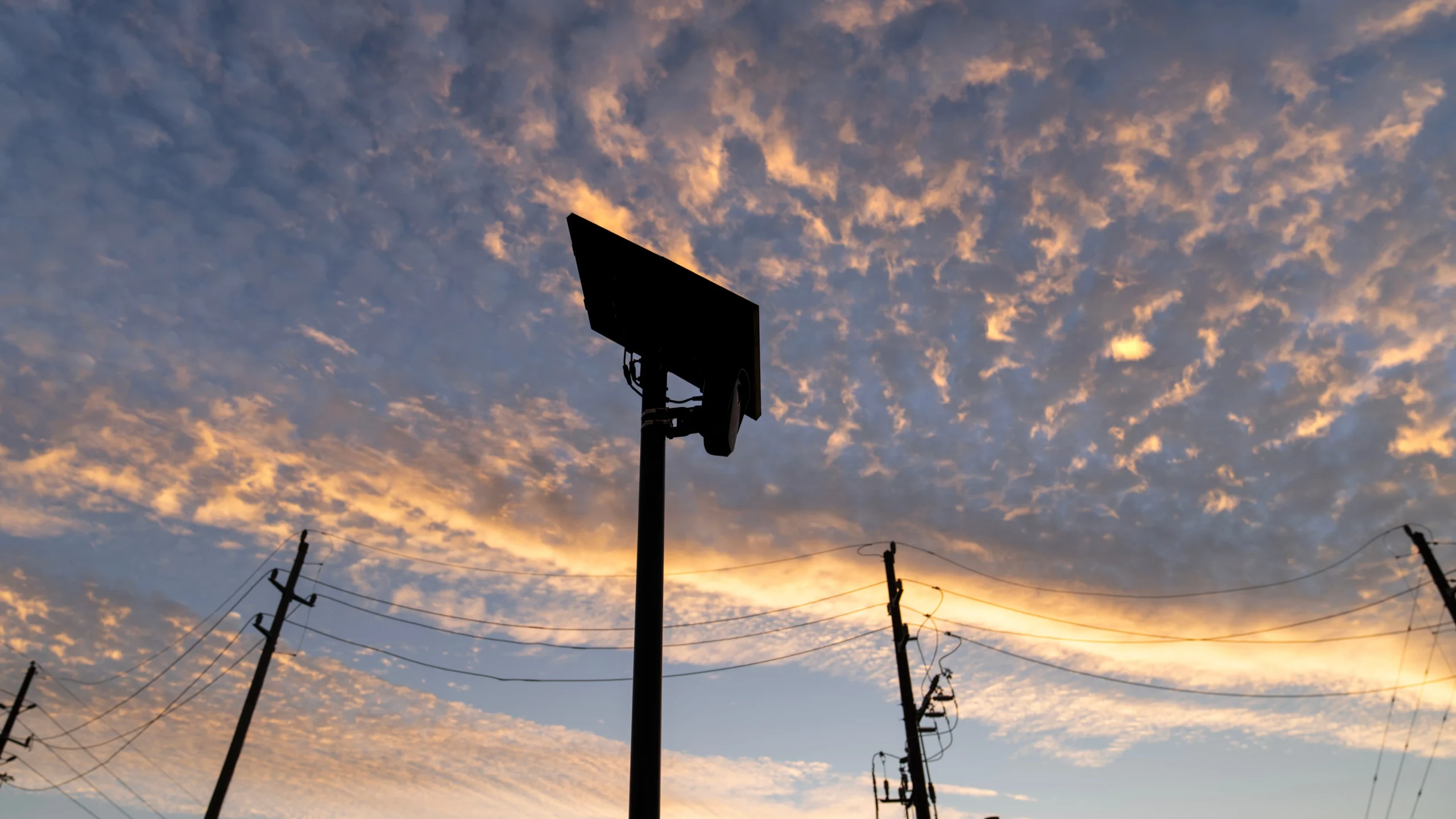
A Flock Safety license plate reader is seen along a public road. | David Goldman, AP file
Published on October 20, 2026 at 2:39 pm
Free local news and info, in your inbox at 6 a.m. M-F. Sign up for the Jacksonville Today newsletter.
St. Johns County will follow the lead of other Northeast Florida counties and remove its remaining Flock license plate reader cameras in public rights of way.
The Board of County Commissioners narrowly agreed Tuesday afternoon to revoke permits previously issued to the St. Johns County Sheriff’s Department for some 45 cameras along county roads.
Jacksonville Today thanks our sponsors. Become one.
The move comes nearly two months after Gov. Ron DeSantis ordered law enforcement agencies to take down cameras along state roads.
Law enforcement agencies across the state acted fast to go beyond compliance with the order, removing cameras from along local roads, too.
St. Johns County was the exception. Sheriff Rob Hardwick defended the agency’s use of the cameras. He maintained that since the agency began using license plate reader cameras in 2017, the devices had become an integral tool to help deputies track down suspects.

Jacksonville Today thanks our sponsors. Become one.
“If you’re not committing, you know, violent crimes, and you’re not wanted by federal, state or local government for a crime, then there’s nothing to hide,” Hardwick told Jacksonville Today this summer.
But public opinion on license plate reader cameras, especially those operated by the security company Flock, has soured. Amid concerns about data security, privacy and misuse by law enforcement agents, many St. Johns County residents demanded the full removal of the cameras.
For and against Flock cameras
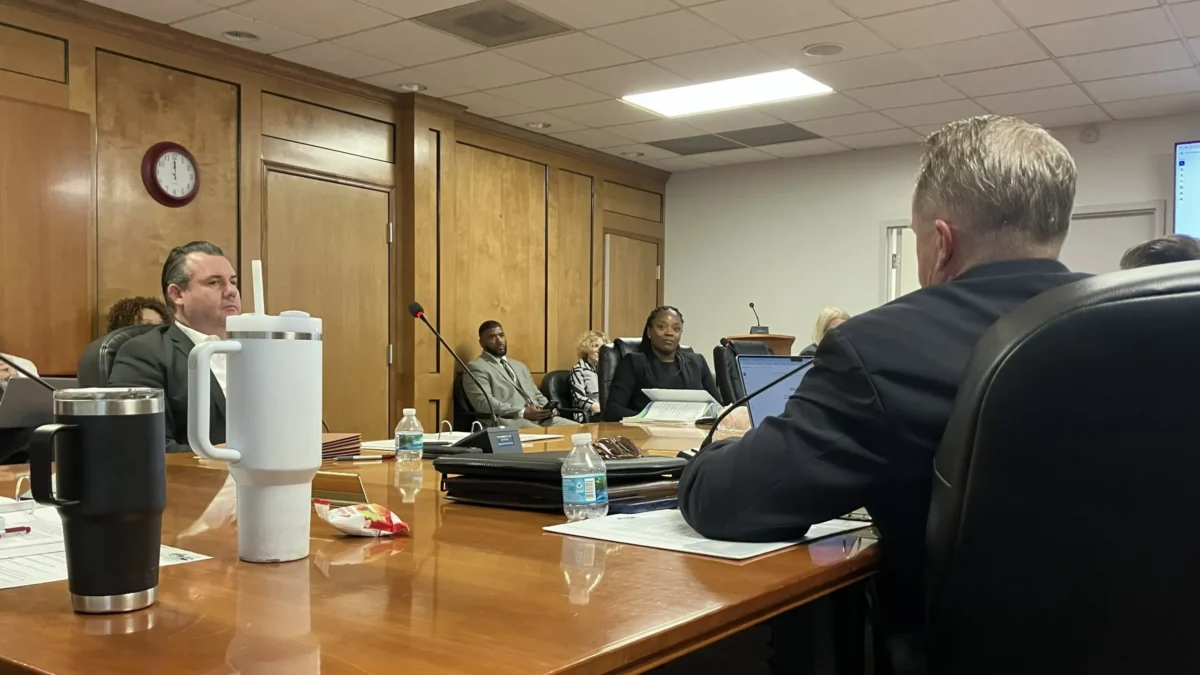
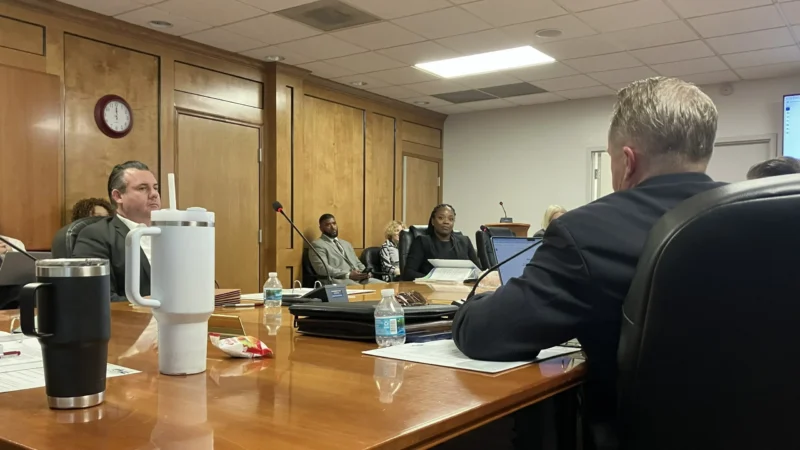
During the two-hour discussion Tuesday about whether to remove cameras along St. Johns’ busy county roads, elected officials heard passionate arguments for and against the cameras.
Howard “Skip” Cole, criminal investigations division director for the Sheriff’s Office, said he understands the security concerns, but he maintained that the cameras have “valuable” uses.
He touted a number of instances when a Flock camera’s up-to-the-minute license plate reading technology helped catch suspects, including in an armed bank robbery last week.
As the public raised concerns about the cameras, Cole said the Sheriff’s Office reevaluated its internal guidelines and conducted an audit. The result, Cole said, was that local data is not stored for as long or shared with other agencies.
“We were sharing with 2,600 other law enforcement agencies, not all of whom … had the same policies as us, had the same records release laws as we do,” he said. “As we stand here today, we share with zero agencies. So that means the only people who have access to St. Johns County data is 70 people in the St. Johns County Sheriff’s Office.”
Cole added: “If any other agency wants to access that data, they’re going to have to go through a supervisor and one of our analysts to get it. They don’t have automatic access anymore.”
The agency would resume sharing data with other agencies around the state, Cole said, only if the Florida Legislature were to pass sweeping statewide regulations on the tech.
And while the misuse of Flock cameras to track people for personal reasons has made news around the state and country, the Sheriff’s Office says its audit found just one personal use of a license plate reader camera: a detective who used the Flock database to see if a used vehicle he purchased was being delivered.
The agency also maintains that although Flock works with law enforcement agencies across the U.S., its database has never been tampered with. Individual cameras, however, have been hacked. Reporters from Wired spoke with hackers who pulled down a Flock camera and accessed data stored on the device.
Supporters of the cameras included Forrest Bailey, whose daughter Tristyn was murdered in 2021.
Bailey said it’s valid to question companies’ usage of private data, but he said he feels safer knowing that the St. Johns County Sheriff’s Office tracks drivers’ license plates.
“… knowing that was a tool available to our law enforcement, that if my daughter was with someone that they potentially could be found, gave me hope,” Bailey said.
Opponents of the cameras outnumbered supporters at the public meeting Tuesday. They argued that bad actors, up to and including Flock as a private company, should not be able to track people’s cars with impunity.
“We are not here asking to be less safe. We are asking for safety measures that respect our constitutional rights,” one speaker said. “Law-abiding taxpayers should not be forced to fund a mass surveillance system that monitors everyone by default.”
A narrow vote
Ultimately it was County Commissioners Sarah Arnold, Ann Taylor and Christian Whitehurst who passed the measure to remove the cameras from county rights of way.
All three commissioners stressed their support for law enforcement despite their concerns about license plate reader cameras.
Whitehurst said he would favor bringing the cameras back once Florida lawmakers “put guardrails on this technology.”
Arnold shared a similar position, saying “the technology has outpaced the safeguards.”
County Commission Chair Clay Murphy and Commissioner Krista Joseph supported keeping the cameras up.
Joseph called removing the cameras a “radical” position and said she would not “jeopardize one child in this county” by ordering the removal of the cameras.
Some Flock cameras will remain
The County Commission’s decision Tuesday afternoon authorizes the removal of Flock cameras from just county-maintained roads. Cameras along state roads have already been removed, but that does not mean that every Flock camera in the county is gone.
Cameras in communities governed by homeowners associations and community development districts can remain and continue to share data with the St. Johns County Sheriff’s Office.