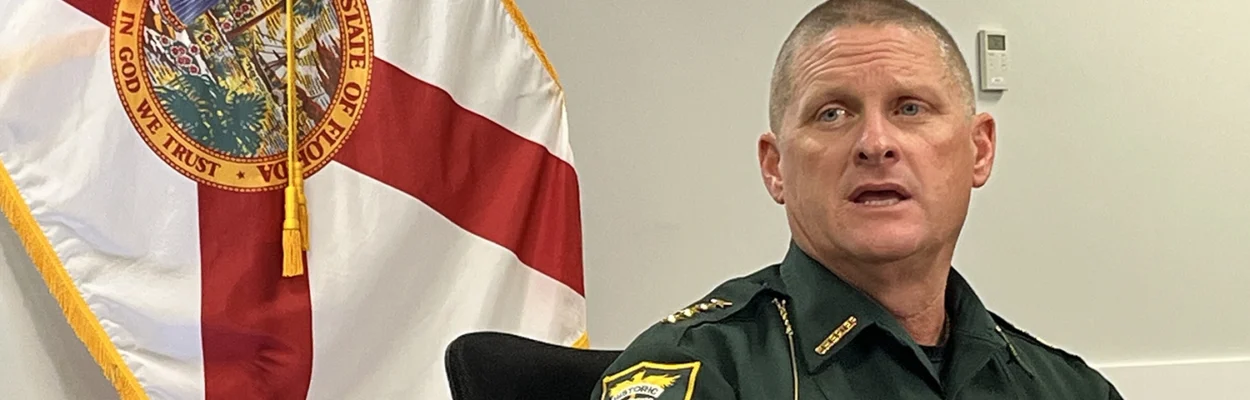
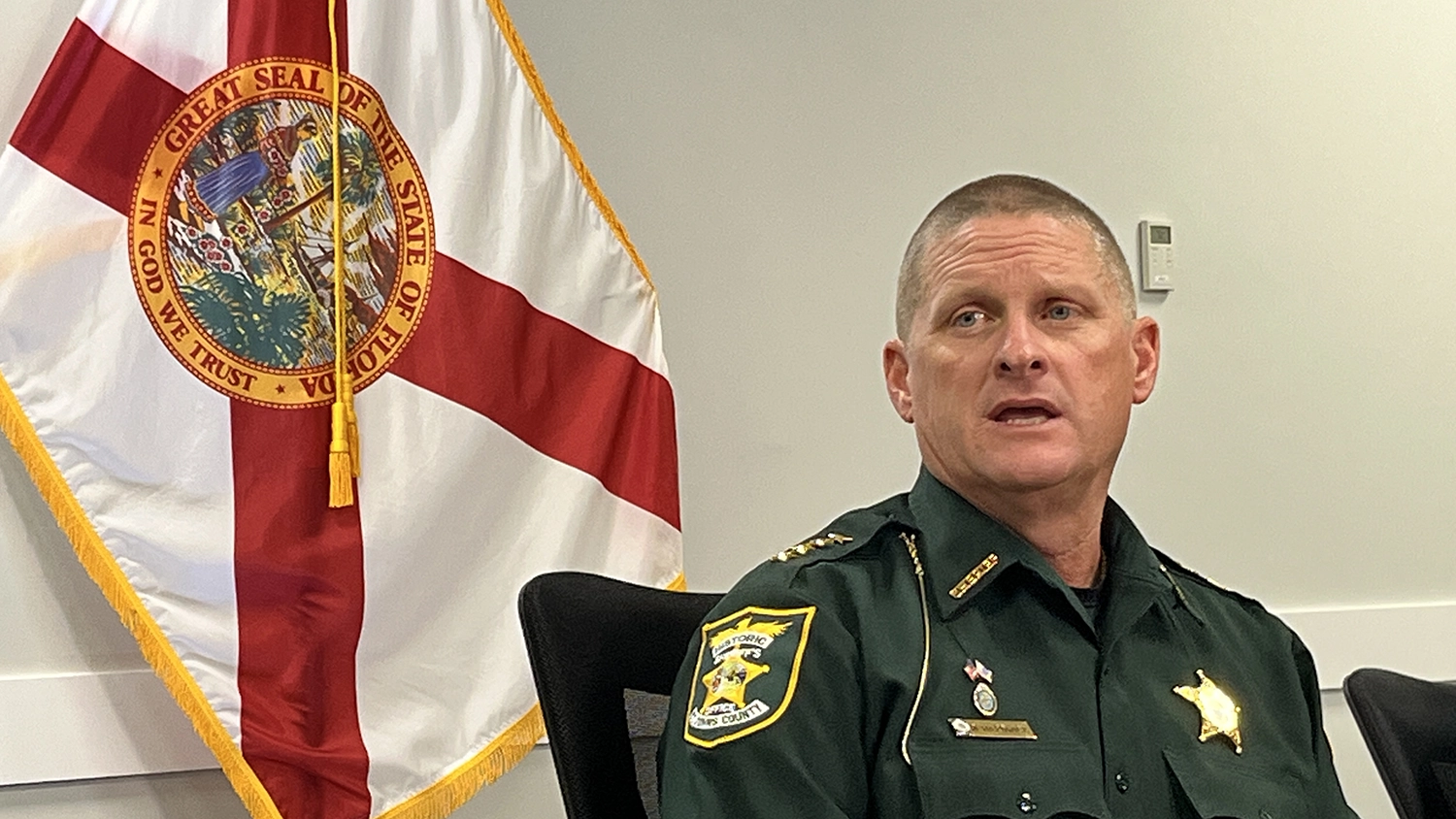
St. Johns County Sheriff Rob Hardwick, who confirmed this week that the county will remove at least some of its Flock license plate readers. | Noah Hertz, Jacksonville Today
Published on September 3, 2026 at 2:31 pm
Free local news and info, in your inbox at 6 a.m. M-F. Sign up for the Jacksonville Today newsletter.
Amid mixed opinions from local elected officials and others, the St. Johns County Sheriff’s Office will join other law enforcement agencies in taking down at least some of its Flock license plate reader cameras on state roads.
The move comes after the Florida Department of Transportation announced earlier this week that the agency was revoking its permits for the cameras along state roads.
Jacksonville Today thanks our sponsors. Become one.
Law enforcement agencies across the state were quick to comply. Some, like the Jacksonville Sheriff’s Office, are removing all of their license plate readers.
The St. Johns County Sheriff’s Office was the last agency in the area to publicly respond to the state directive. It’s statement does not clarify whether all cameras will be removed or just the cameras on state roads.
Asked for clarification, Sheriff’s Office spokesperson Taylor Levesque said the agency would not make any further comments beyond its public statement on social media.


Jacksonville Today thanks our sponsors. Become one.
Support for Flock
Even as criticism of the company Flock has grown, St. Johns County Sheriff Rob Hardwick has maintained that the cameras are effective law enforcement tools.
Speaking with Jacksonville Today after a news conference last month, Hardwick defended the use of the cameras despite growing criticism about surveillance data security.
“If you’re not committing, you know, violent crimes, and you’re not wanted by federal, state or local government for a crime, then there’s nothing to hide,” Hardwick said.
St. Johns County has roughly 180 license plate readers from the company Flock.
Mixed opinions locally
Opposition to the usage of license plate reader cameras has mounted in recent months, including from Florida Gov. Ron DeSantis.
In St. Johns, representatives from a local group calling itself Deflock St. Johns County along with other critics have repeatedly made statements at County Commission meetings.
But opinions among local elected officials about St. Johns County’s compliance with the state’s order to remove the cameras from state roads was mixed.
County Commissioner Ann Taylor said “residents’ voices have been heard” on the matter, but County Commission Chair Clay Murphy, a former Florida Highway Patrol officer, was less pleased about the move.
Murphy acknowledged that there were concerns about data security, but he believes those could have been handled.
“As a 39-year member of the law enforcement community, I thought tag readers were doing the job that we had asked them to do,” Murphy said Tuesday. “I think it’s a blow to public safety. I think we’re going to pay the price for that.
In an email Hardwick sent to the County Commission, he confirmed that his agency would comply with the state order, but that there was “more to follow.”
“We have been using LPR technology since 2017 so we have some procedural adjustments we are working through now,” Hardwick wrote. “I’m in contact with our Senator and three Representatives, you will be pleased with the outcome.”
In the St. Johns County Sheriff’s Office’s public statement on the use of license plate reader cameras, the agency said it “supports the development of legislation which addresses concerns around LPR technology and establishes clear standards for its use.”
According to Hardwick’s email, the county budgeted a total of $908,000 for the cameras in the 2026 fiscal year but spent only $481,000. The remaining cost was covered by grants, he said.