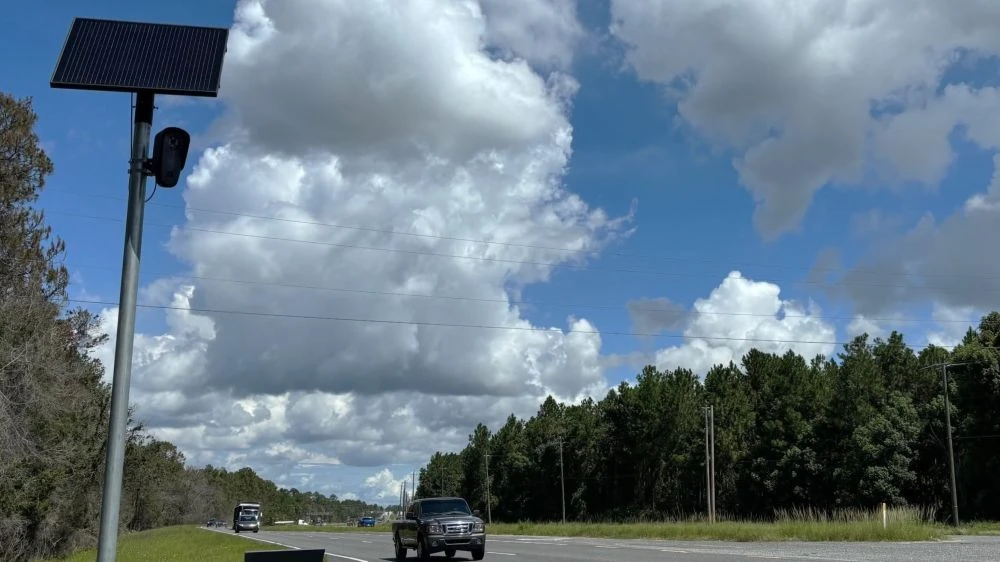
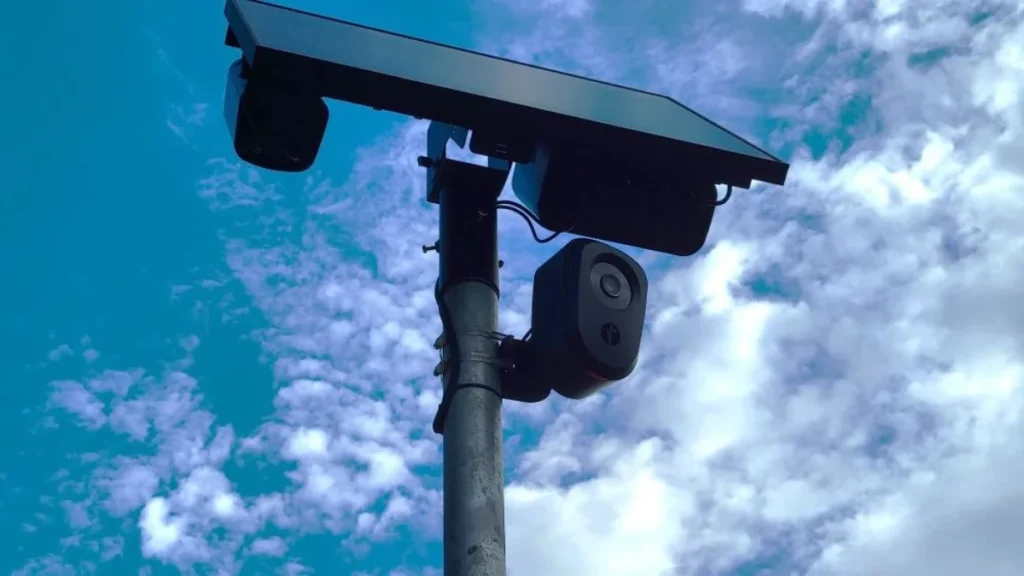
A Flock camera is shown along a road in Putnam County. | Putnam County Sheriff's Office
Published on August 31, 2026 at 4:53 pm
Free local news and info, in your inbox at 6 a.m. M-F. Sign up for the Jacksonville Today newsletter.
Police around Northeast Florida are stopping the use of Flock cameras after the state revoked permits and licenses for license plate reader technology around the state.
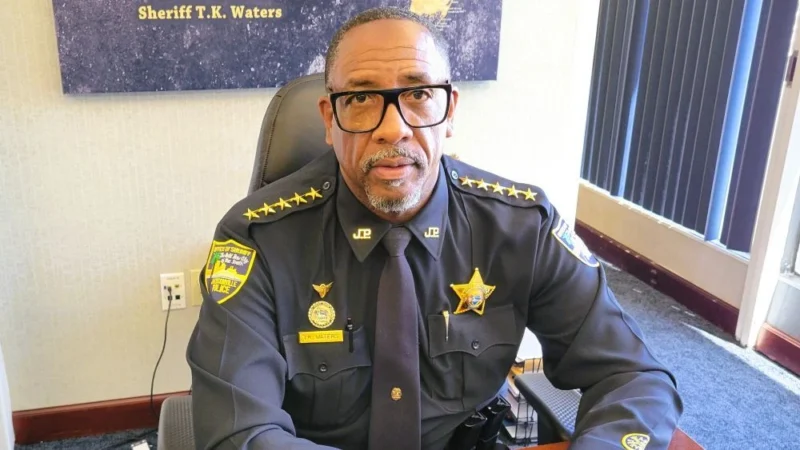
Jacksonville Sheriff T.K. Waters posted an announcement on Facebook on Monday saying the technology had proven to be “an enormously valuable investigative tool.” But, “given the decision made at the state level and the concerns expressed by members of our community, I have determined that discontinuing the use of this technology is the appropriate course of action at this time,” Waters said.
Jacksonville Today thanks our sponsors. Become one.
Nassau and Clay counties also announced they were discontinuing license plate readers. Putnam County Sheriff Gator DeLoach said the county’s 18 cameras will be disconnected immediately and removed within 30 days.
The St. Johns County Sheriff’s Office could not be reached for confirmation that it would stop using the cameras.
Police across the country say they use the cameras, many manufactured by Flock Safety, strictly to record license plates, not to conduct surveillance. The cameras have been invaluable in solving crimes and locating missing people, police say.
Jacksonville Today thanks our sponsors. Become one.
But in Florida, after public concern about privacy, the Florida Department of Transportation issued a memo Monday blocking the cameras, just three days after Gov. Ron DeSantis had raised red flags about the widespread use of license plate readers.
RELATED: Flock cameras are watching more than roads in Jacksonville
“I think these cameras, the license plate readers, I think it’s out of control,” DeSantis said during a press event at Florida International University in Miami.
The FDOT memo said, “The recent exponential increase in deployments along our roadways coupled with concerning reports of misuse, data privacy concerns, and surveillance schemes merit immediate action to preserve Floridians’ sovereignty and quality of life.”
All cameras must be removed within 30 days. If not, FDOT said, it will remove the cameras.
The licence plate readers have come under scrutinty in some cases because of misuse by law enforcement, though police in Northeast Florida said they have strict rules about how the data is used.
In contrast, Savannah discovered “several potential misuses” of its Flock system, according to a Facebook post from Mayor Van Johnson on July 31. Four police officers and two civilian employees were put on administrative leave as the Georgia Bureau of Investigation investigates.
In July, a 19-year-old man in Jacksonville Beach was charged with vandalism after five cameras were damaged in Atlantic and Neptune Beach.
Police say the lenses had been spray-painted black. A security camera showed a man getting out of a car early on June 25, then climbing a ladder near one of the damaged Flock cameras. The car’s owner was identified by its license plate, which had been photographed by other Flock cameras in beaches communities, as well as another in Georgia, police said.
Cameras in Northeast Florida
License plate readers were first placed in Putnam County in 2022. Sheriff DeLoach said the cameras have helped find missing people who had Alzheimer’s and early stages of dementia, and they also have helped the department track and arrest murder suspects. The camera system also helped the Sheriff’s Office and FBI locate a teenage victim of human trafficking from another state.
“But I have become increasingly concerned that the technology is advancing faster than the laws and regulations governing its use,” DeLoach wrote Monday morning. “Until that framework catches up and provides clearer, more consistent safeguards for both public safety and individual privacy, I believe discontinuing the program is the most responsible course for our agency and the community we serve.”
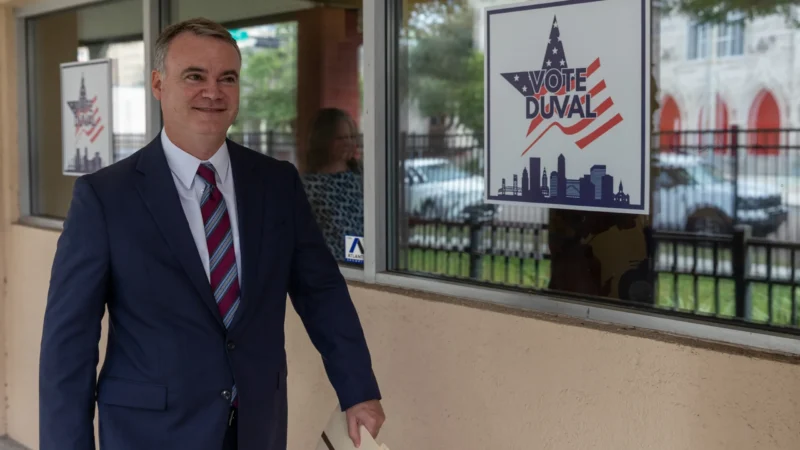
Jacksonville City Council member Jimmy Peluso stated last week that he would propose new regulations on Flock Safety cameras in Duval County, including rules to give neighborhoods a say in where the surveillance technology is used.
Contacted after Monday’s announcement from the Jacksonville Sheriff’s Office, Peluso said he may still file a bill to ensure community protection from similar systems.
Jacksonville Mayor Donna Deegan issued a statement saying: “As I’ve said from the beginning, the right to privacy must be protected when emerging technology is employed, even when it serves a legitimate law enforcement purpose. I commend Sheriff Waters on his responsiveness to shared community concerns. My administration will continue working with City Council on policy solutions that protect data from misuse.”
The Clay County Sheriff’s Office said that it will continue to adhere to state guidelines, and looks forward to “continuing conversations regarding technology in law enforcement.”
“As always, our commitment to fostering a safe community where families and businesses can thrive remains our top priority,” Sheriff Michelle Cook said in the statement. “This decision does not hinder, nor sway, our efforts to prevent and fight crime, solve cases, hold offenders accountable and maintain public trust.”
Nassau County Sheriff Bill Leeper said that as technology continues to evolve, his department would work with local and state partners “to ensure these tools are used appropriately, responsibly, and as intended to assist in solving serious crimes.”