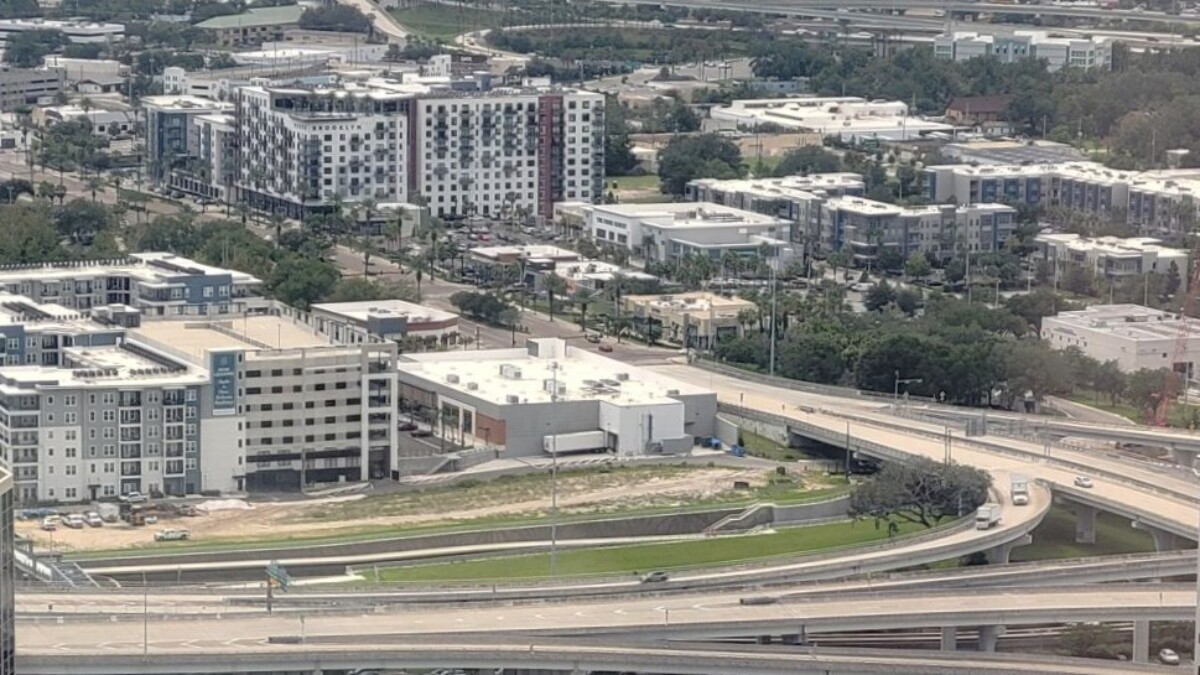


An aerial view of St. Augustine. | News4Jax
Published on September 4, 2026 at 11:26 am
Free local news and info, in your inbox at 6 a.m. M-F. Sign up for the Jacksonville Today newsletter.
St. Johns County is seeing evictions climb to their highest level in at least seven years as rents remain high and the cost of living continues to outpace what many workers can afford.
New research from the University of Florida’s Shimberg Center for Housing Studies shows there were 718 eviction filings in St. Johns County in 2025, the highest number recorded since at least 2019.
Jacksonville Today thanks our sponsors. Become one.
It also marked the fifth consecutive year of increases.
Eviction filings fell sharply in 2020, when the COVID-19 pandemic brought eviction moratoriums and emergency rental assistance programs that helped keep many people in their homes.
But as those programs expired, eviction filings began to climb again.
“For several years now, we’ve been seeing an uptick in evictions and housing loss,” said Anne Ray, who manages the Florida Housing Data Clearinghouse at UF’s Shimberg Center.

Jacksonville Today thanks our sponsors. Become one.
Ray said the increase reflects a growing gap between housing costs and household incomes.
“You know, there’s just been a real gap between what housing costs and what people can afford to pay,” Ray said.
St. Johns County eviction filings:
- 2019: 499
- 2020: 292
- 2021: 341
- 2022: 502
- 2023: 584
- 2024: 657
- 2025: 718
St. Johns County is one of the fastest-growing areas in Northeast Florida, but that growth has also brought higher housing costs.
Ray said many workers are in jobs that do not pay enough to comfortably afford local rents.
“A lot of people are working jobs that don’t pay enough to allow them to afford that rent comfortably or they have to skimp on other needs,” Ray said. “And eventually that catches up with them and they’re forced to leave their housing.”
St. Johns County’s eviction rate remains below the statewide average and is far lower than neighboring Duval County, which has the highest eviction rate in Florida, according to the UF data.
But Ray said the lower rate does not mean residents are insulated from affordability pressures.
One sign of that pressure is where people choose to live.
Workers who cannot afford housing close to their jobs in St. Johns County may move farther away, including into less expensive parts of Duval or Putnam counties.
That can create another financial burden.
“The cost of your housing isn’t just the place that you live. It’s also your commuting costs,” Ray said.
Workers who move farther from job centers to save money on housing may end up spending more on gas, vehicle expenses and other transportation costs.
“So it’s not only important to have a variety of housing types and affordability levels in our counties, it’s also really important to have those near our jobs,” Ray said.
Duval County’s eviction rate
While St. Johns County recorded 718 eviction filings in 2025, the numbers were substantially higher in Duval County. Duval County is sixth most populous county in Florida, while Miami-Dade County is No. 1.
There were 15,026 eviction filings in Duval County last year, the highest eviction rate of any county in Florida, according to the UF data.
Eviction filings in Duval increased 9% from 2024 to 2025.
Duval County eviction filings:
- 2019: 13,174
- 2020: 9,689
- 2021: 10,644
- 2022: 12,756
- 2023: 13,879
- 2024: 13,818
- 2025: 15,026
The difference partly reflects Duval’s much larger renter population, but experts say the underlying affordability challenge is similar across Northeast Florida.
This story was produced by News4Jax, a Jacksonville Today news partner.