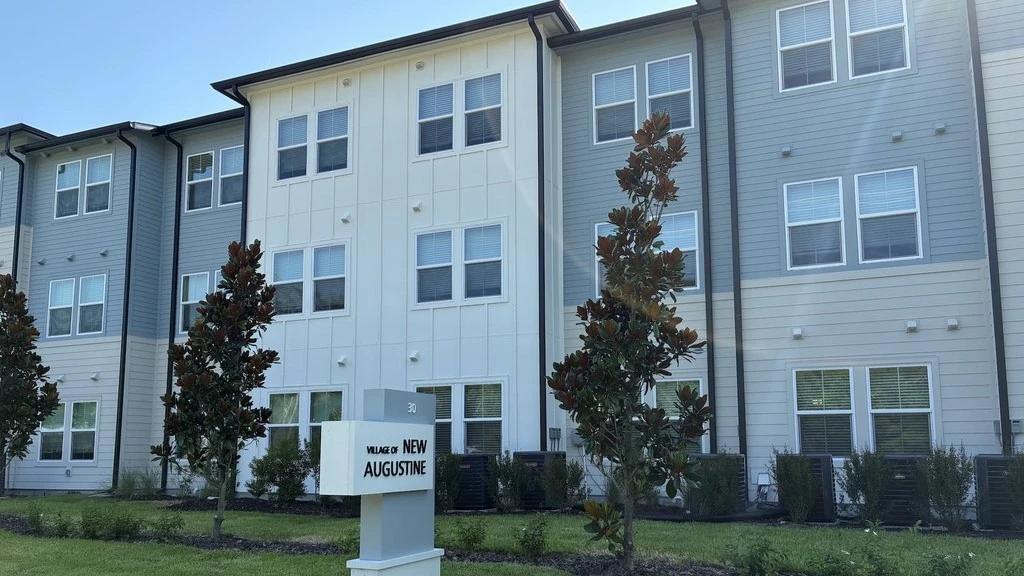
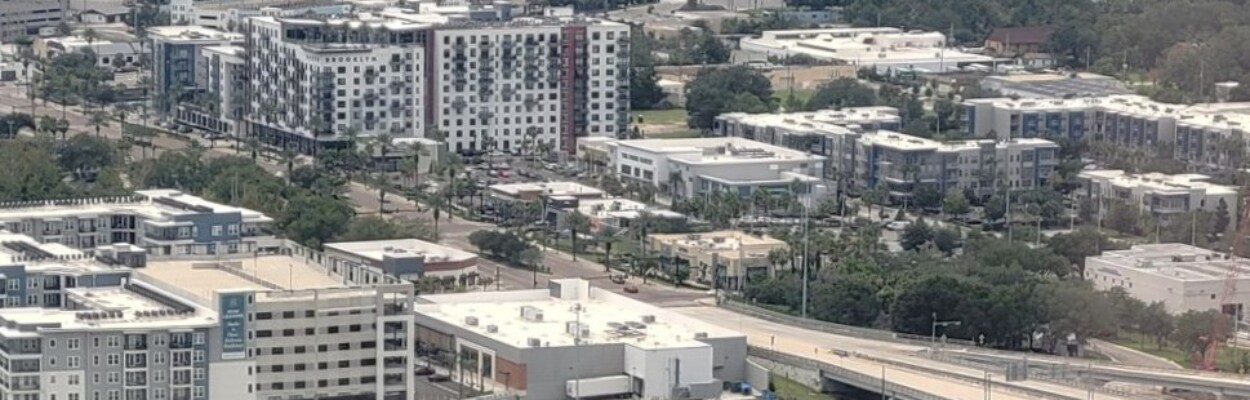
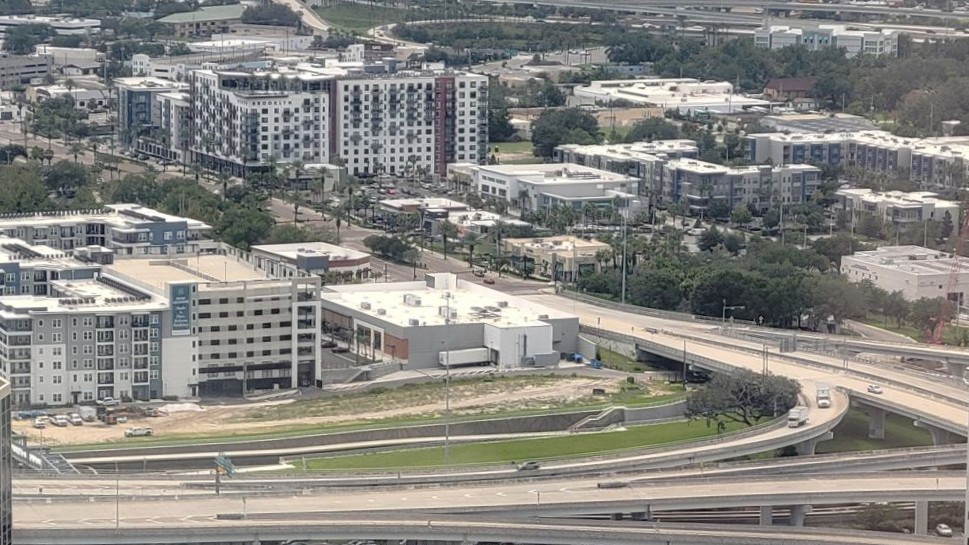
These are some of the new apartments that have been built in Jacksonville in the past few years, including the One Riverside complex, left, and other units on Riverside Avenue and Park Street. | Dan Scanlan, Jacksonville Today
Published on August 20, 2026 at 6:29 pm
Free local news and info, in your inbox at 6 a.m. M-F. Sign up for the Jacksonville Today newsletter.
A new $20 million fund in Jacksonville will finance $80 million in affordable multifamily rental housing, a group of private and philanthropic investors announced Thursday.
The Jacksonville Growth and Affordability Partnership Fund — known as the Jax GAP Fund — is designed to seek solutions to the lack of affordable rental housing in the city.
Jacksonville Today thanks our sponsors. Become one.
The fund is the culmination of five years of research by groups including The Jessie Ball duPont Fund, Community Foundation for Northeast Florida and Pinnacle Financial Partners. The GAP Fund will offer low-cost development loans, tax credits and other assistance to affordable-housing developers.
Developers use the tax credits to complete projects and preserve rental affordability, said Amanda Frazer Wong, president of Self-Help Ventures Fund, which has managed five similar affordable housing funds in North Carolina. Self-Help Ventures Fund will pool investors’ capital and make the low-cost loans to developers in Jacksonville, she said.
“We have projects that are almost ready to get to the closing table. They have bond financing; they have tax credit financing and senior debt, but they are not quite ready to go to the closing table,” Frazer Wong said. “They need an additional piece of financing that is affordable, that can get them to the closing table so they can produce those affordable units of housing that are ready for our residents.”


Jacksonville Today thanks our sponsors. Become one.
This $20 million investment program is another tool to address the housing crisis and will cover gaps in funding from government sources, Jacksonville Affordable Housing Director Joshua Hicks said.
“When you are trying to build a project, the numbers don’t always add up, so you need to be mindful of that and make sure we are covering that financial gap through loans that allow us to get the project to where construction costs are $40 million, and the return on investment is $40 million,” Hicks said, offering an example. “That is what this fund is going to do. It is going to provide capital through loans to help cover that financial gap that is short, to get more affordable projects done.”
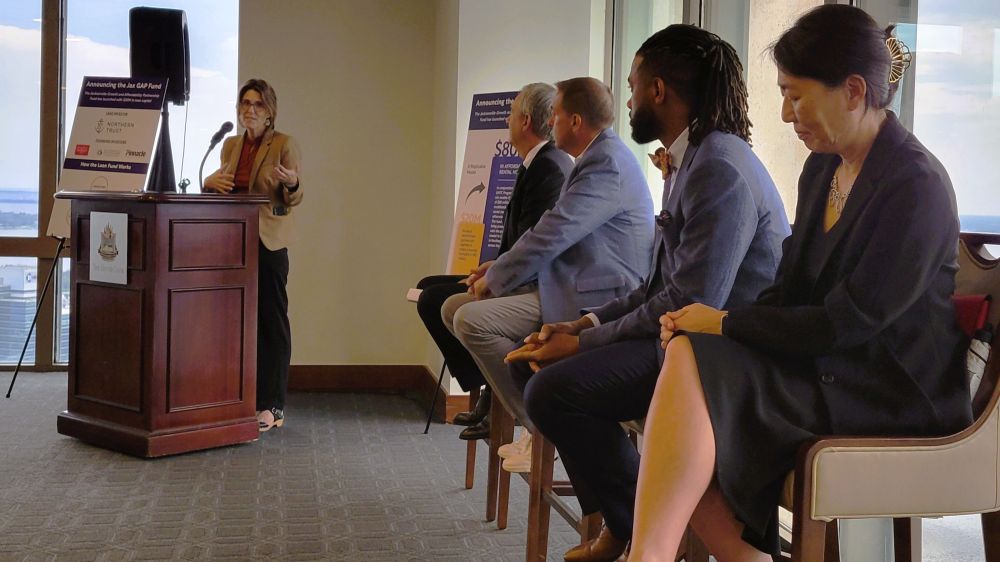
The idea for the fund began when a private bank, Northern Trust Wealth Management, found a loan fund model administered by Self-Help Ventures Fund in North Carolina. Northern Trust agreed to be the lead investor in a pilot program in Jacksonville, designed to be scaled up in Northeast Florida and nationwide through future investment from the private, philanthropic and public sectors.
The duPont Fund and Community Foundation then co-designed the loan fund to meet Jacksonville’s specific needs, focussing on creating a model that can begin to address the magnitude of the affordable housing challenge.
GAP Fund officials said there is a clear and critical need for more permanently affordable rental housing in Jacksonville. They point to studies showing that the typical Jacksonville renter has been rent-burdened since 2011, spending over 30% of their income on housing.
That makes it difficult to save for a home purchase for the heads of households earning 50% or less of the area median income ($51,250 for a family of four). Rental homes are hard to come by, since there are only 48 affordable units for every 100 renters searching for housing within this income bracket, according to the University of Florida Shimberg Center for Housing Studies.
GAP Fund officials also said the supply of affordable housing projects is constrained by a lack of financing. Developers propose them, then face a shortfall of available money to finance them.
In Duval County, developers submitted more than $40 million in applications for gap financing from the state’s Apartment Incentive Loan Program in 2025, but only 20% of those projects were funded.
The Jax GAP Fund is among the first funds in Florida to create a community-based source of gap financing for developers interested in building affordable housing units, said Mari Kuraishi, president of the Jessie Ball duPont Fund. It also will help housing developers secure competitive property in high-demand neighborhoods, as it begins accepting applications from interested developers.
“This GAP Fund that we are launching is dedicated to Duval,” Kuraishi said. “The GAP Fund unlocks access to other sources of low-cost financing including the state’s underutilized 4% Low-Income Housing Tax Credit Program as well as tax exempt bonds. In effect, we are taking public credits and financing that we used to leave on the table, and this is going to let us take more than we do today.”
Housing fund contributors
To capitalize this $20 million pilot program, Northern Trust made an anchor investment of $10 million, followed by $5 million from Jessie Ball duPont Fund and $3 million from The Community Foundation and its donors.
The Community Foundation’s contributors included a number of private philanthropists including Nancy and Gary Chartrand, the DuBow Family Foundation and Delores Barr Weaver. An additional $2 million investment was made by Pinnacle Financial Partners.
As administrator of the Jax GAP Fund, Self-Help Ventures Fund will pool investors’ capital and make the low-cost loans to developers. As projects are completed and developers pay back their loans over a 20-year period, Self-Help will return capital to the investors, so the original loan capital can be reinvested in the community, Frazer Wong said.
“We can put more units of housing in the marketplace that are affordable to Jacksonville’s workforce; affordable to teachers, police officers, healthcare workers, to developers interested in building affordable housing,” she said.
The GAP Fund announcement comes as the Jacksonville City Council Finance Committee recommended stripping $4.9 million in affordable housing funding from Mayor Donna Deegan’s proposed budget. Deegan has made affordable housing a key policy push over the last year, and the $4.9 million allocation in her proposed budget would help fund a down payment assistance-homeownership program.
City Council also removed $10 million in funding in 2024 from Deegan’s budget, the first attempt to create the JAX Gap fund.
In a statement after the GAP announcement, City Council member Rahman Johnson said this program is investing in “people, possibility and permanence.”
“This is a generational investment,” Johnson said. “Twenty million dollars matters. But what matters even more is what those dollars can unlock, how many families they can serve and how many times that capital can be recycled and put back to work. We are not simply funding housing. We are building financial infrastructure for affordability.”
Developers interested in accessing the fund can learn more at self-help.org/JaxGAP, and contact Self-Help at MultifamilyLoans@self-help.org.