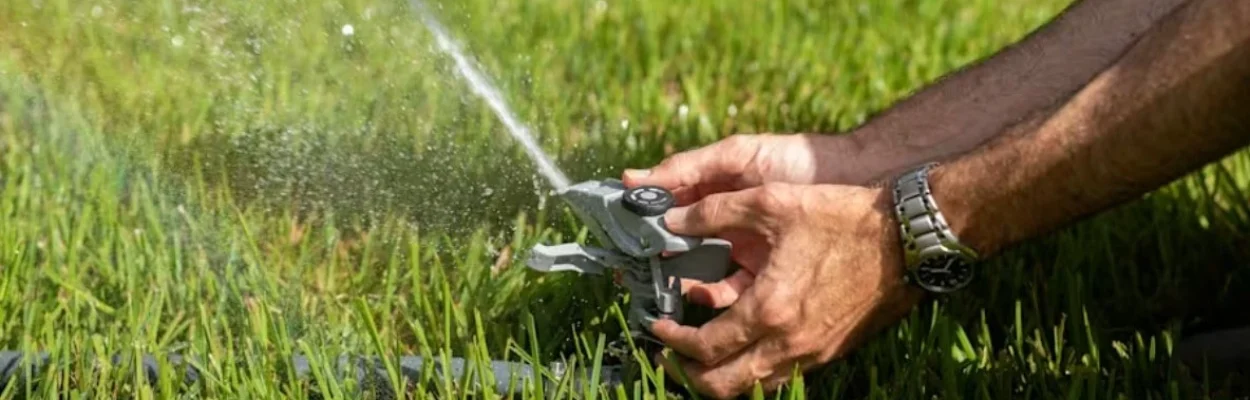
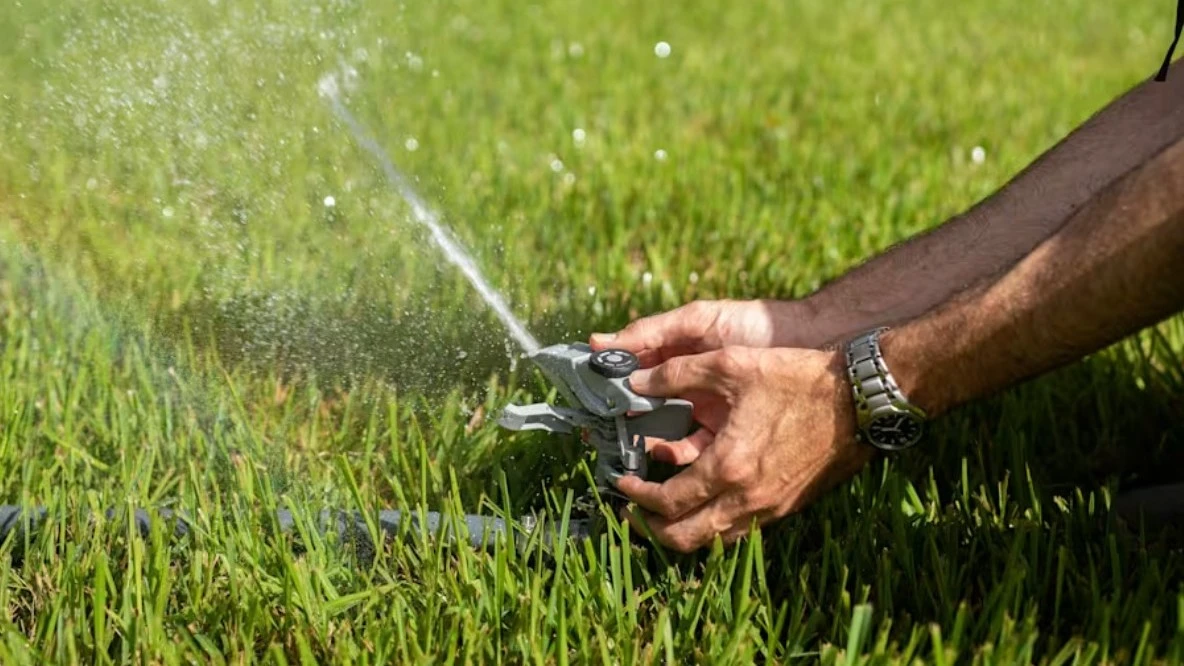
A person sets the lawn sprinkler to the proper setting. |
Published on May 18, 2026 at 11:50 am
Free local news and info, in your inbox at 6 a.m. M-F. Sign up for the Jacksonville Today newsletter.
Water restrictions are tightening across Northeast Florida as parts of the region move into Phase III drought conditions.
The St. Johns River Water Management District says the shift is being driven by a long stretch of below-average rainfall and dropping groundwater levels.
Jacksonville Today thanks our sponsors. Become one.
So what does that mean for you?
As in Phase II, outdoor watering continues to be allowed only one day a week for residential, commercial and institutional properties, including managed landscapes and athletic fields.
But under Phase III, restrictions on irrigation for new plantings, including sod, have also been tightened.
Additional Phase III measures include:
- Commercial, industrial and institutional users must suspend certain non-essential water uses.
- Irrigation for golf course fairways is limited to one day per week.
- Aesthetic water use is prohibited, and additional restrictions apply to activities such as street and pressure washing.
- Landscape irrigation is prohibited between 8 a.m. and 6 p.m.
A detailed report can be found here.
Officials are urging residents to take these conservation restrictions seriously as dry conditions continue.
Jacksonville Today thanks our sponsors. Become one.
While every little drop helps, our region is still in an exceptional to extreme drought with over 25 inches short of rainfall compared with last year.
Officials say it’s environmental factors — lack of rainfall and dropping groundwater levels — triggered the move to Phase III, not a sudden spike in water use.
They say overall water use in North Florida has remained relatively flat over the past decade, even as the population has grown, because of conservation measures already in place.
The district is urging people to take these new restrictions seriously, because cutting back on irrigation is one of the quickest ways to reduce demand.
“If you are looking at water use, our largest water use is residential irrigation,” said Carlos Hear, regional water supply coordinator for St. Johns River Water Management District. An average irrigation cycle uses 1,000 gallons of water. “So if you add that up, for a thousand times every house we have in North Florida, that’s a lot of water.”
This story was produced by News4Jax, a Jacksonville Today news partner.