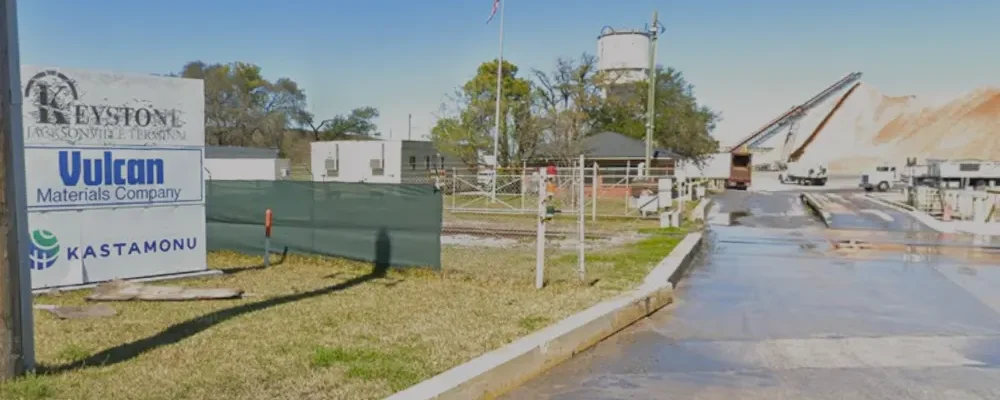
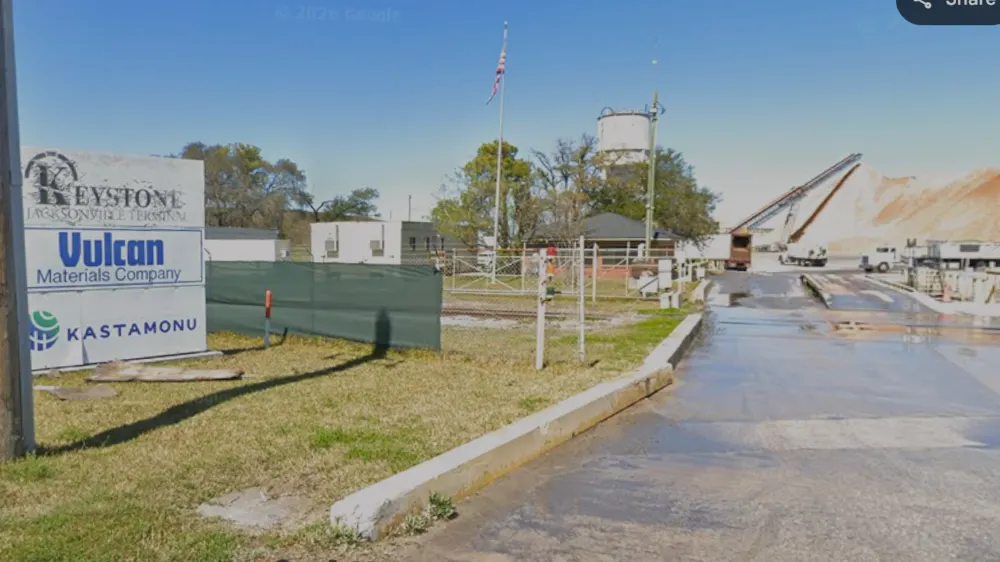
Jacksonville's Keystone Terminal on Wigmore Street in the Talleyrand area. | Google
Published on November 17, 2026 at 4:06 pm
Free local news and info, in your inbox at 6 a.m. M-F. Sign up for the Jacksonville Today newsletter.
Jacksonville’s Keystone Terminal has been ordered to stop accepting coal ash from Puerto Rico after concerns of its health impact to city residents.
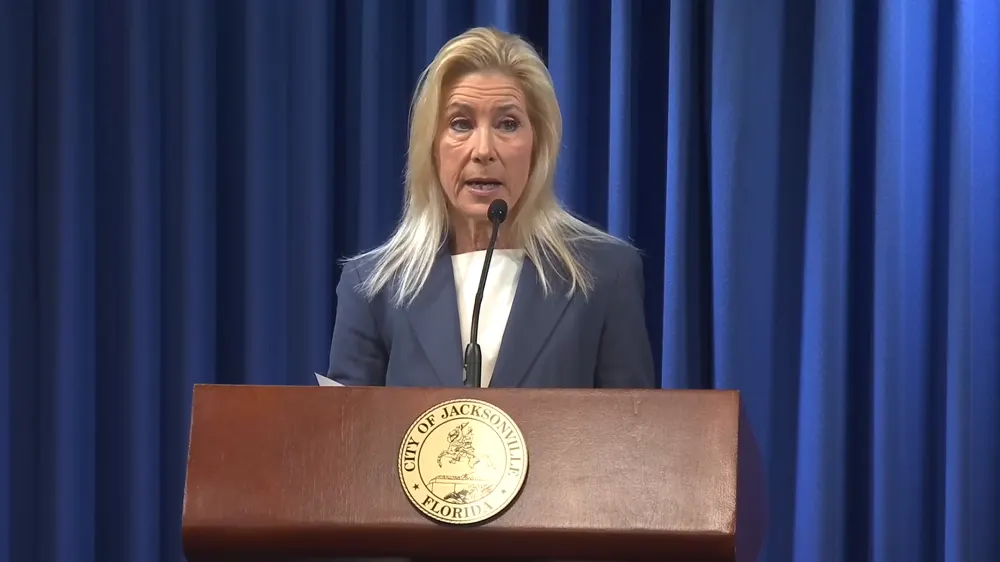
Mayor Donna Deegan announced the city order on Tuesday, giving the facility in Talleyrand 45 days to ship any coal ash stored there to a “lawful facility.” Deegan says Keystone has not obtained the city permit that is required for handling solid waste and must now apply for a city permit to receive solid waste “like any other business working in this industry.”
Jacksonville Today thanks our sponsors. Become one.
The order also mandates that Keystone control coal ash dust and runoff during the removal process, and provide regular progress reports to the city.
Speaking at City Hall, Deegan said the city sent Keystone a formal notice of violation on Oct. 13, with 30 days to show its operation was authorized. The company’s response “was not satisfactory,” Deegan said.
“This operation has never been reviewed by the city as required by local ordinance code. Coal ash is not a benign material. According to the EPA, it contains contaminants such as mercury, cadmium and arsenic,” Deegan said. “Without proper management, it can pollute waterways, groundwater, drinking water and the air. From the Ashes, a National Geographic documentary, shows just how devastating this substance can be for communities if it is not handled in the proper way.”
Jacksonville Today thanks our sponsors. Become one.
Keystone Terminals issued a statement to Jacksonville Today in response to the city’s order, saying in part that it strives to comply with the city.
“Keystone Terminals values its role as a community and corporate partner,” it said. “…We do not believe the work being done at our Talleyrand facility requires this level of permitting, but we are working with the city to do what is necessary to resolve this issue.”
The city’s action was applauded by John November, general counsel and executive director of the Public Trust for Conservation advocacy group, which, along with the St. Johns Riverkeeper, filed a Clean Water Act and Resource Conservation and Recovery Act lawsuit on Aug. 19 against the Keystone Terminal. The suit claimed that Keystone was “illegally discharging coal ash into the river, improperly managing ash during transport and storage and contaminating groundwater.”
“The mayor and city has taken a tremendous step forward in ensuring that our regulations and laws are respected by all entities operating in the city,” November said on Tuesday. “The certificate of necessity provides an opportunity for the city to determine whether this importing of coal ash from Puerto Rico benefits the citizens of Jacksonville, whether there is a need for this service and how it does benefit the city residents?”
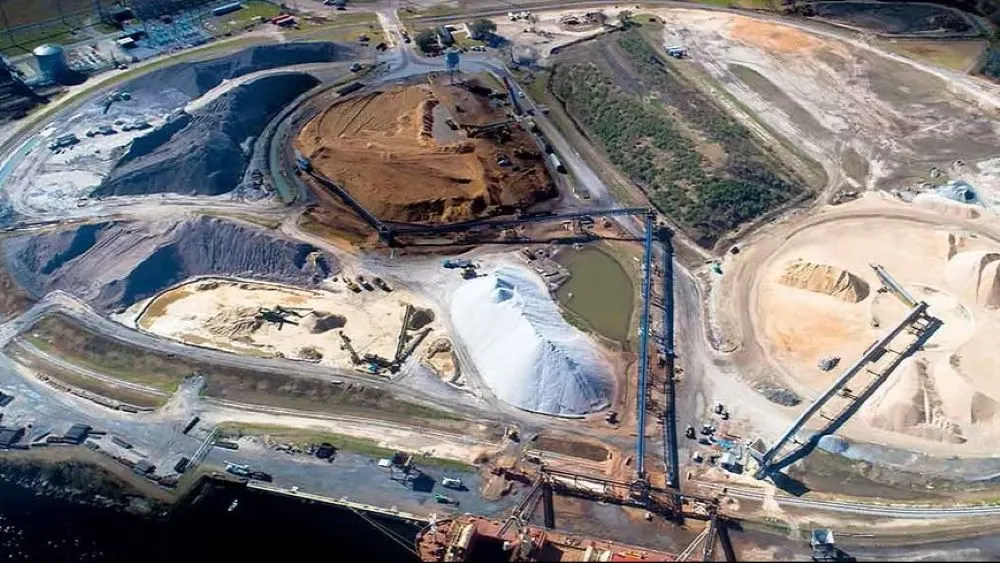
Jacksonville began receiving coal dust shipments after Puerto Rico banned the permanent storage of coal ash, a by-product of burning coal, in 2017. As a result, coal plants began shipping its coal ash on barges to Jacksonville, hauled almost 18 miles up the St. Johns River, where it was stored in Talleyrand before it is then shipped to a Folkston, Georgia, landfill.
Since 2022, the Riverkeeper claims, Keystone has handled more than 2 billion pounds of potentially toxic coal ash at its Jacksonville facility, with storage in unlined areas that lack adequate safeguards to protect groundwater and the nearby river. The environmentalists’ suit also claims Keystone failed to use adequate dust-suppression measures, which lets carcinogenic dust travel into neighboring communities and put residents at risk.
“Coal ash is a very light substance,” November said Tuesday. “When the wind hits coal ash, it can be picked up into the air and go into neighboring communities. It can make its way all the way across the river. Scientists have shown that over 90% of this material is going to make its way outside its immediate neighborhood, so it impacts all Jacksonvillians.”
The suit also pointed to a March 2021 incident when a barge carrying coal ash from Puerto Rico crashed into the Jetties near the mouth of the St. Johns River. Up to 9,000 tons of coal ash spilled into the surrounding waters, demonstrating the danger of transporting toxic waste on local waterways, the suit said.
When Keystone files for a permit to receive solid waste that approval process will include a City Council review and public hearing, with nearby property owners invited to comment before any vote.
“That is how we can verify an operation is safe or harmful for our neighbors,” Deegan said. “The rules for handling solid waste in Jacksonville apply to everyone, and they exist to protect the people who live and work nearby. Every other facility that stores or transfers solid waste in our city must go through the certification process. Keystone does too.”
“It gives the opportunity for the City Council to inspect or do as much or as little as they want moving forward,” added city Blight Initiatives Manager Al Ferraro. “So we have to have all parties helping out on this. This is something that any business or industry needs to be part of.”