
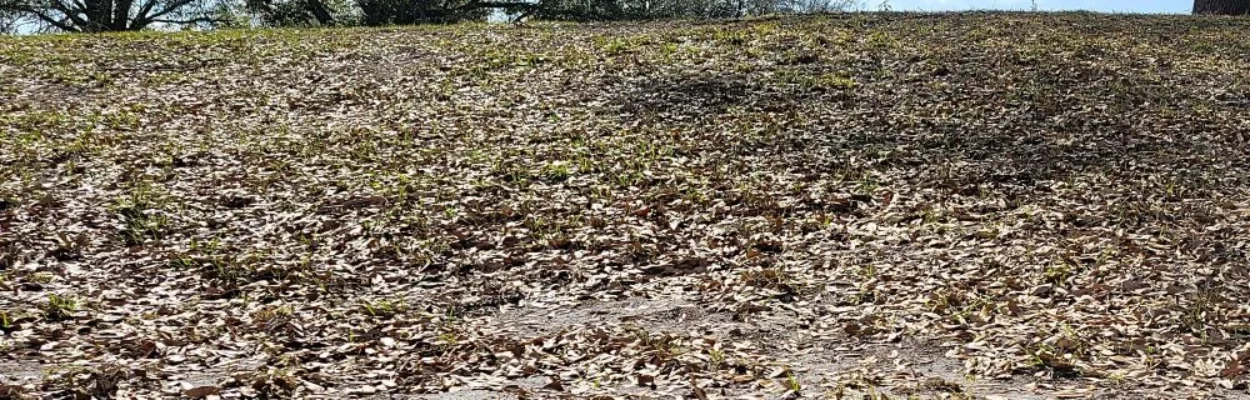
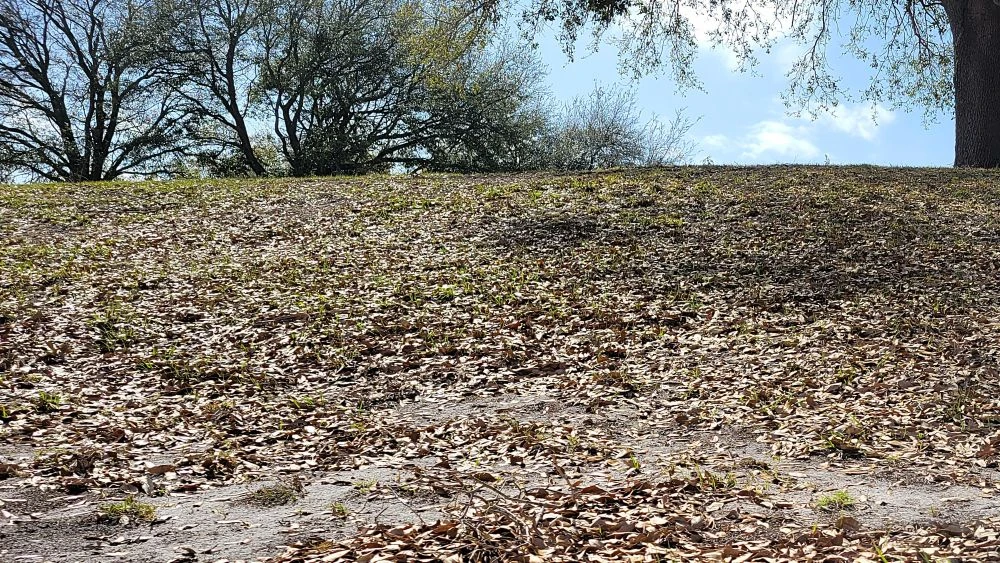
Dry grass and sandy soil show some effects of the water shortage brought on by lack of rain, water management district officials said. | Dan Scanlan, Jacksonville Today
Published on March 3, 2026 at 3:32 pm
Free local news and info, in your inbox at 6 a.m. M-F. Sign up for the Jacksonville Today newsletter.
Lawn watering that usually increases this time of year will continue to be restricted as Northeast Florida copes with a severe water shortage.
The St. Johns River Water Management District on Tuesday issued a more stringent warning about the conditions, declaring what it calls a “Modified Phase II Severe Water Shortage.”
Jacksonville Today thanks our sponsors. Become one.
Increased watering allowances that typically happen this time of year — shifting from once a week to twice a week — will not go into effect at this time, district officials said.
Until now, Northeast Florida was under a Phase I water shortage. The initial warning was issued for parts of Baker, Bradford and Duval counties and then expanded just over a week ago to Clay, Flagler, Nassau, Putnam and St. Johns counties.
The latest order encourages voluntary reductions for all water use, including public supply, commercial, industrial, institutional, agricultural, landscape, recreation and aesthetic uses, the water management district said. Property owners and managers were encouraged to prepare for possible worsening conditions.


Jacksonville Today thanks our sponsors. Become one.
All water users are encouraged to reduce water use as much as possible. Wasteful and unnecessary water use is prohibited.
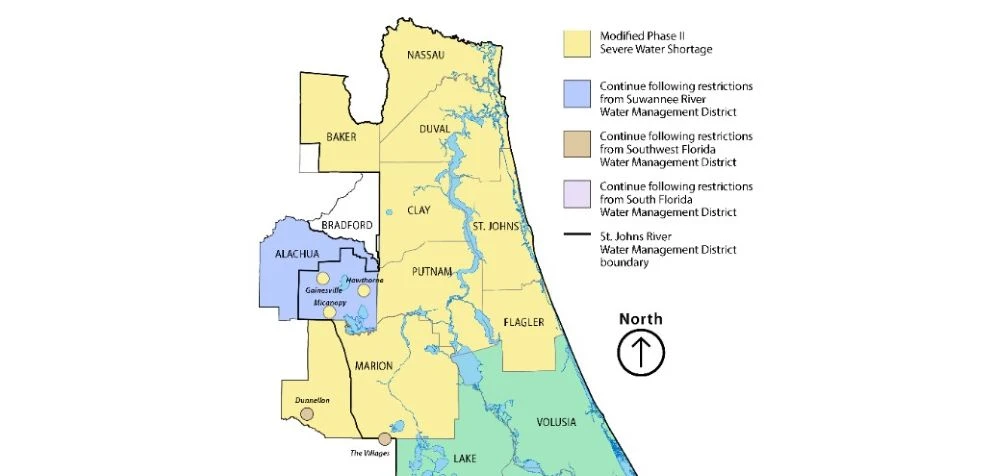
The latest declaration applies to parts of Baker, Bradford and Clay, along with all of Duval, Flagler, Nassau, Putnam, and St. Johns counties. Those are eight of the 18 counties along the St. Johns River that are part of the district.
Measuring the water shortage
The modified declaration comes after district staff evaluated groundwater levels, river flows and current drought conditions. It also includes recent rainfall levels, which have continued to decline recently, resulting in decreases in groundwater levels and reduced surface water flows.
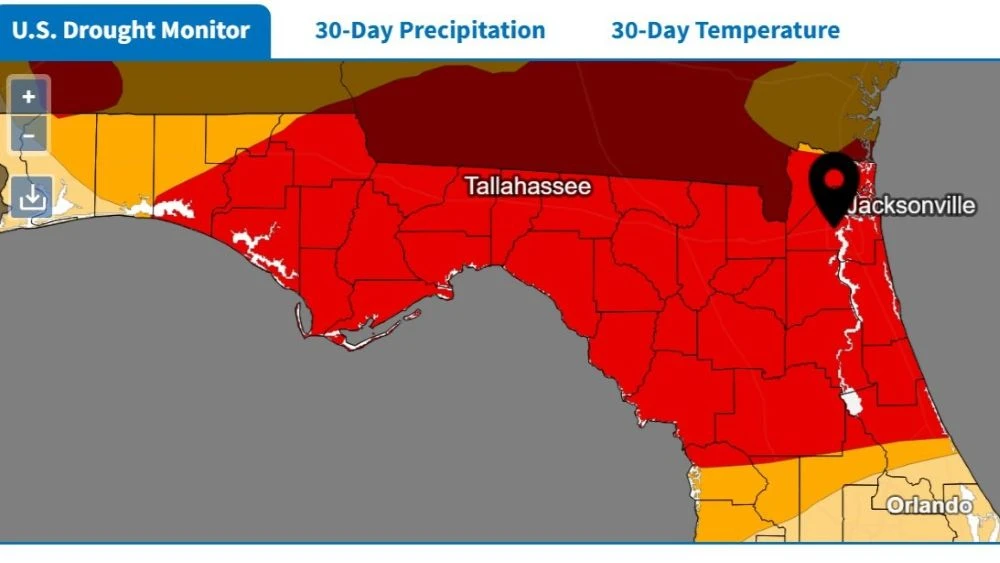
The U.S. Drought Monitor, a federal website, depicts the location and intensity of drought across the country and is updated each Thursday. It shows that all of North Florida from Duval west to Jackson and Walton counties is classified as being in extreme drought.
Duval County had the driest January on record –1.4 inches below normal, the Drought Monitor says.
Landscape irrigation schedules would normally shift from one to two days per week on Sunday, when daylight saving time begins. Instead, people are being told to limit watering to one day per week, before 10 a.m. or after 4 p.m.
The district’s water shortage plan allows for additional restrictions if conditions continue to deteriorate.
For more information about water conservation and current conditions, go to sjrwmd.com.