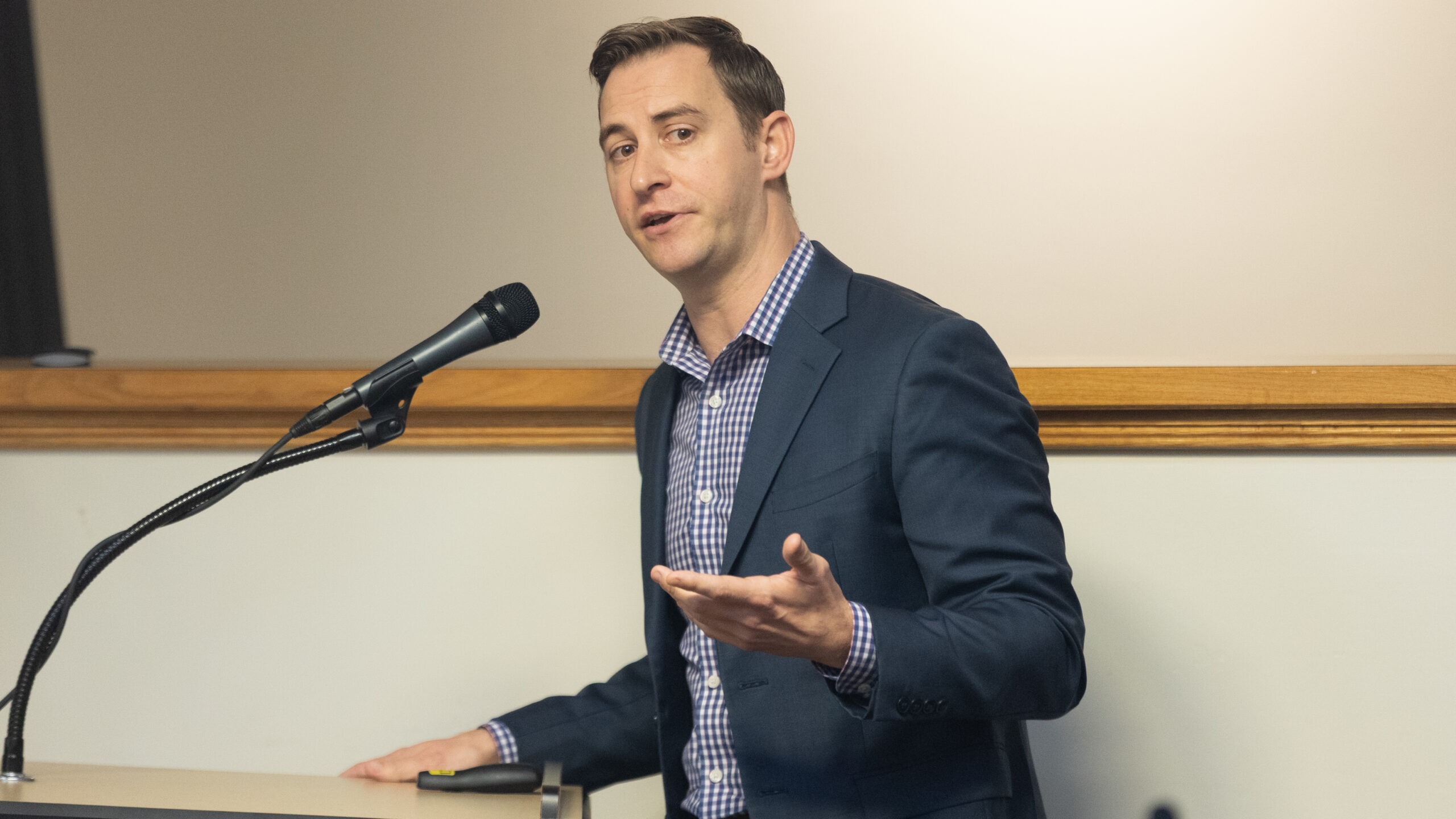
Jacksonville City Council member Jimmy Peluso at a Duval County School Board meeting in December. | Will Brown, Jacksonville Today
Published on August 26, 2026 at 5:15 pm
Free local news and info, in your inbox at 6 a.m. M-F. Sign up for the Jacksonville Today newsletter.
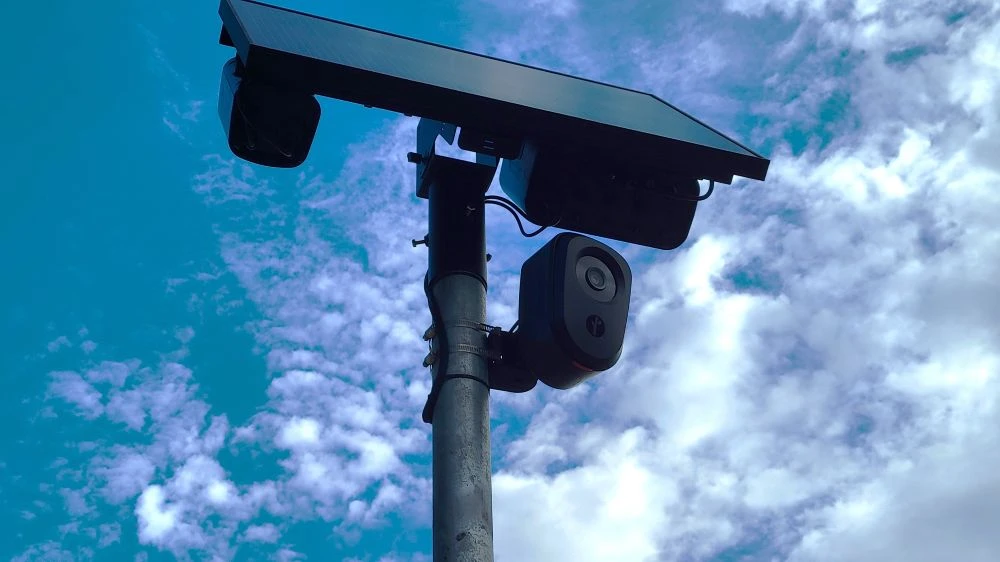
A Jacksonville City Council member plans to propose new regulations on Flock Safety cameras in Duval County, including rules to give neighborhoods a say in where the surveillance technology is used.
Council member Jimmy Peluso says he wants to see the Jacksonville Sheriff’s Office create a local inventory of Flock camera locations and an internal permitting process for their installation that would require approval from Citizen Planning Advisory Committees (CPACs).
Jacksonville Today thanks our sponsors. Become one.
The District 7 Democrat, who represents the Downtown Northbank and many of the surrounding urban neighborhoods, has scheduled a public meeting for 10:30 a.m. on Friday, Aug. 28, at City Hall about the rising community concern linked to growing Flock camera use by JSO and private companies.
Peluso tells Jacksonville Today the Flock surveillance technology can be an effective crime-fighting tool, but he believes it needs guardrails to protect the public from potential abuse.
“I think JSO is probably going to say these devices save lives. They can help people. I’m not disputing that. I think they could. I also think they could be a constitutional abuse,” Peluso said. “I think they could be concerning to residents. And I think we give residents the power to ask themselves as a community whether or not they want these.”
Jacksonville Today thanks our sponsors. Become one.
Peluso says he intends to file legislation that would make several changes to the city’s and JSO’s Flock camera policy:
- A 120-day moratorium on new Flock cameras while the city creates an internal permitting process,
- Reporting requirements including an official city inventory system of the cameras,
- Requirements for CPAC approval prior to installation in the areas where a new camera is proposed,
- A petition process for residents to get them removed, similar to the city’s system for speed humps.
JSO’s Flock use
Peluso says he’s been in contact with JSO about his pending legislation. The lawmaker expects law enforcement will make the case that Flock cameras keep neighborhoods safe, and he expects a mix of reactions from Duval County residents.
The sheriff’s office released a video and social media post on Aug. 20, explaining the department’s support for license plate recognition cameras and how the surveillance technology is being used in investigations.
An officer speaking in the video says the technology is only employed in relation to a call for service.
“There’s an audit to the system. Folks are reactively using the system. Specialists don’t just get in there and choose any old John Q Citizen to look for,” the JSO officer says. “They’re being reactive based on a call for service or some type of incident that necessitates them to go into that system and be looking for a specific vehicle.”
The Facebook post says JSO has 141 fixed and nine mobile license plate recognition cameras in service. According to JSO, the technology has helped solve 15 murders, 17 kidnappings, six forcible sex offenses, nearly 100 shootings, and 172 missing-persons cases since 2024.
The video leads with an example of how flock cameras throughout Duval County were able to track a vehicle involved in a juvenile kidnapping using the camera’s license plate reading capability.
Jacksonville Today has requested records about which privately held cameras JSO and surrounding law enforcement agencies can also access.
Public speaks out
Duval County residents spoke both in support and against the growing prevalence of Flock-style cameras during Tuesday’s city council meeting.
“The Fourth Amendment was designed to restrain. That’s precisely why Flock demands constitutional scrutiny,” one public speaker said. “This isn’t simply about photographing a license plate. It’s about what happens after that photograph is taken. A plate observed once on a public road is visible to anyone. But when thousands of observations are automatically collected, stored, interconnected, and made searchable, (the) government acquires something fundamentally different.”
Jacksonville resident Tony Langhals said although people’s “private details may be exposed,” it helps solve missing persons, stolen vehicles, and homicide cases.
“The mass surveillance cameras assist JSO in analyzing and solving crimes by aiding an enhanced conviction rate, which improves residents’ safety in the city of Jacksonville,” he said.
Peluso says he wants council to take action on Flock camera use before the issue gets to the state Legislature. The Jacksonville Democrat worries that state lawmakers could make it harder for local governments to regulate the technology and easier for third-party companies to sell the data they gather.
“I know that our friends in Tallahassee, when the right donor shows up, can say there’s more money to be made on this,” Peluso said. “‘How about you allow us to sell this data? How about you allow us to provide driving trends and hand that over to Walmart or Amazon and really try to monetize these things to the nth degree?’”
On Wednesday, after Peluso spoke with Jacksonville Today, Florida Gov. Ron DeSantis called license plate readers “out of control” and said he worries the devices could lead to a “surveillance state,” according to Florida Politics.
During an event at Florida International University in Miami, the governor called on the Legislature to take action on the surveillance cameras.
The startup watchdog website deflock.org shows nearly 10,000 of the automated license plate reader cameras active are in Florida.
Peluso’s Flock camera meeting will be at 10:30 a.m. on Friday, Aug. 28, in the Lynwood Roberts Room on the first floor of Jacksonville City Hall, 117 W. Duval St.