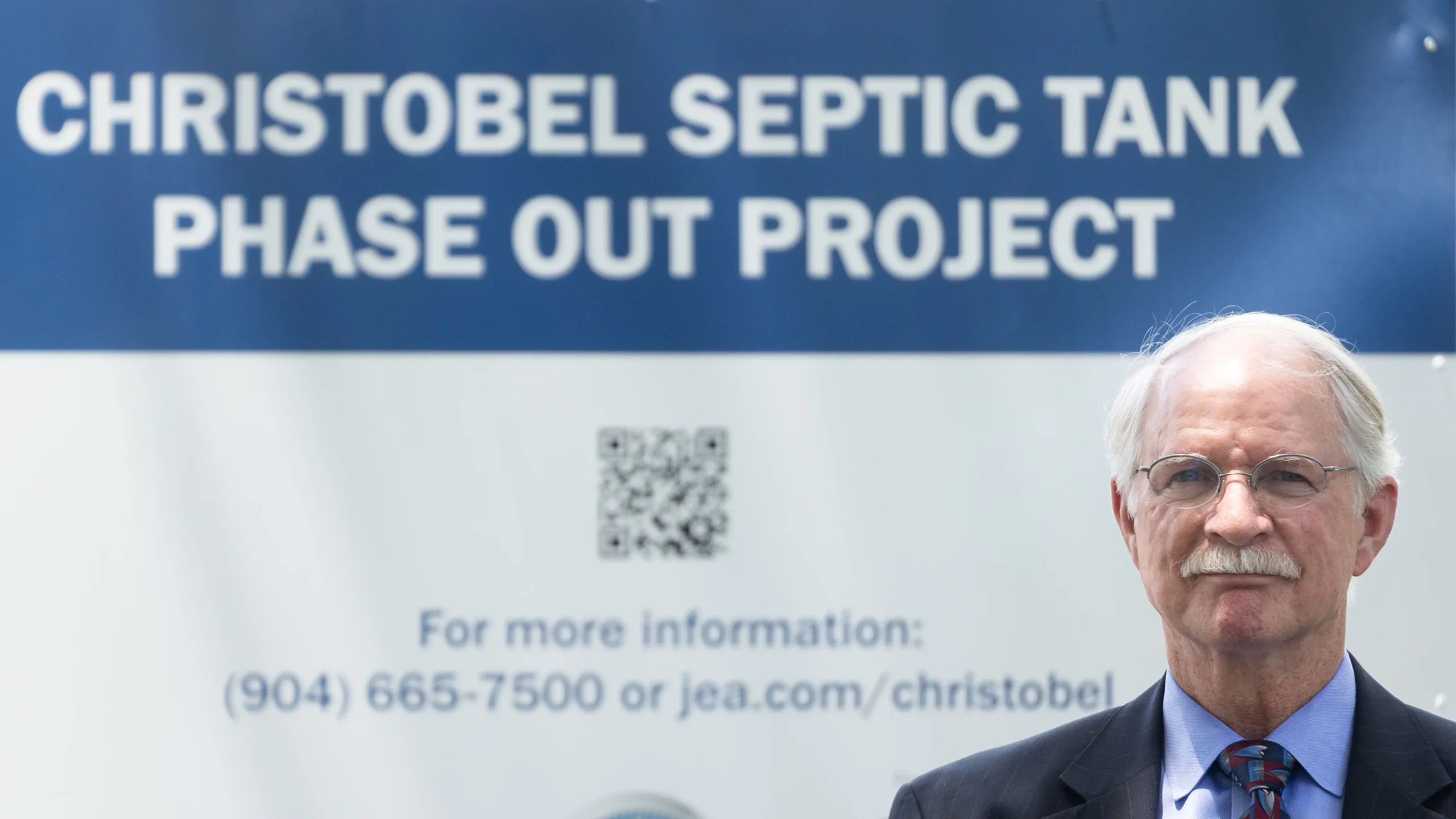
U.S. Rep. John Rutherford, R-Jacksonville, says connections between his office, Jacksonville Mayor Donna Deegan's office and the federal Environmental Protection Agency helped secure $6.7 million in funding to remove septic tanks from the Christobel community in Northwest Jacksonville. | Will Brown, Jacksonville Today
Published on June 23, 2026 at 5:22 pm
Free local news and info, in your inbox at 6 a.m. M-F. Sign up for the Jacksonville Today newsletter.
Loretta Barfield and William Batts have been neighbors for nearly 50 years.
They individually purchased property in Christobel, a Northwest Jacksonville neighborhood, during the 1970s on the premise and the promise their homes would be connected to the city sewer system.
Jacksonville Today thanks our sponsors. Become one.
It was the personification of faith without public works.
“It hits your pocketbook, because every time it rains, you got to spend all that money,” Batts said. “It was $125 when I moved over here. But, now, it’s going to cost you over $500, headed toward $1,000 that you have your septic tank pumped out. That’s not fair to the neighbors.”
Their patience was rewarded this spring.
Phaseout work begins in Christobel
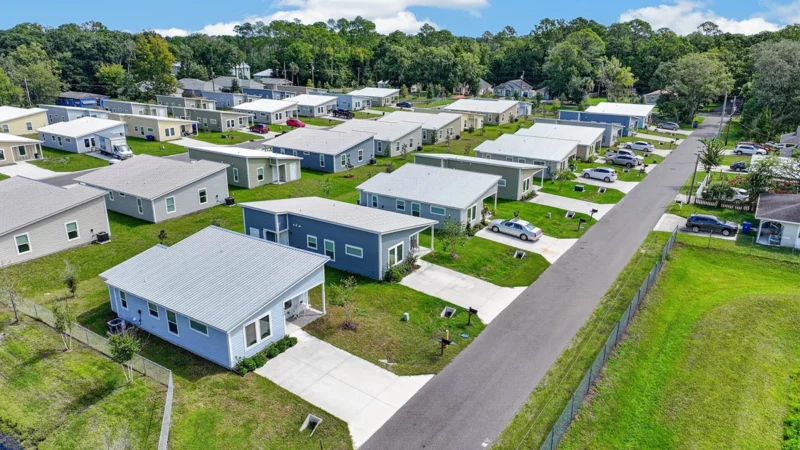
JEA began work to replace and remove more than 300 septic tanks in the Christobel neighborhood in March.
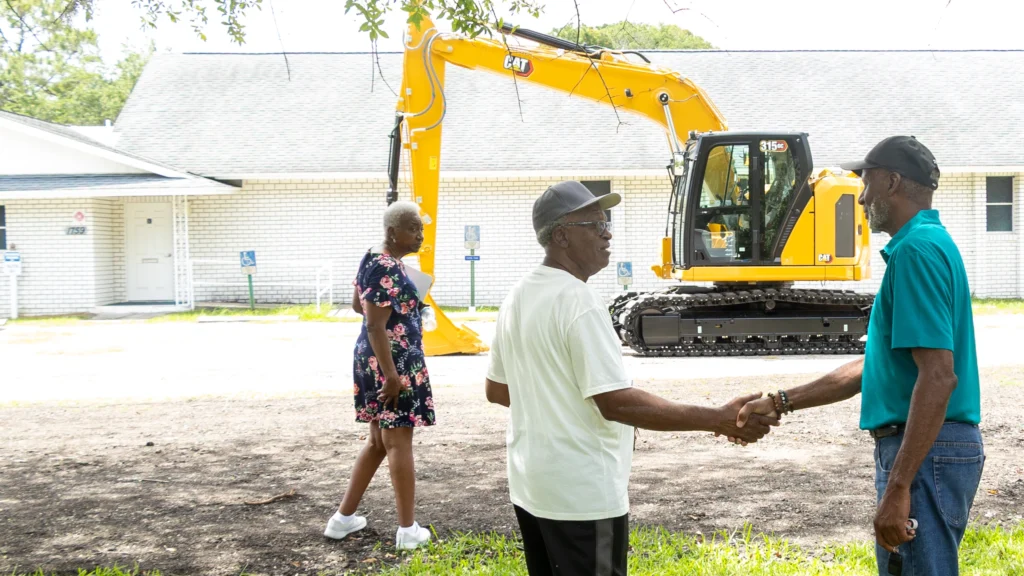
The Christobel Septic Tank Phase Out Project was celebrated last week at Peace Missionary Baptist Church. It’s a short walk from the street that Barfield and Betts have shared for decades.

Jacksonville Today thanks our sponsors. Become one.
The project is funded with city of Jacksonville Capital Improvement Plan funds as well as a grant from the federal Environmental Protection Agency. It removes septic tanks on properties and installs sewer lines on the private properties to connect the residences to the JEA wastewater system.
Homeowners will not pay for the improvements. Their only financial commitment is a monthly JEA wastewater bill.
Work is expected to finish in 2028.
JEA officials hope the start of the project will spur more people in Christobel to sign up for septic tank removal. Property owners who are interested in having sewer installed can learn more at jea.com/christobel.
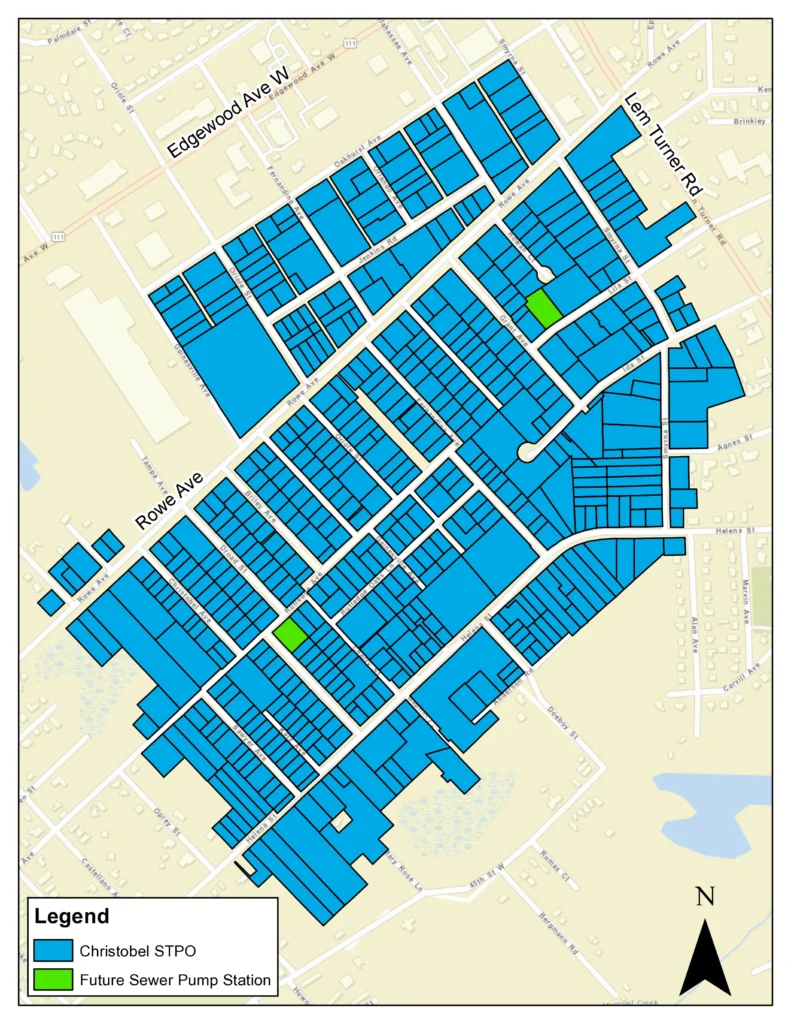
So far, an estimated 78% of the property owners in the designated Christobel neighborhood have signed up.
The city of Jacksonville invested $10 million for septic tank removal during this fiscal year. Mayor Donna Deegan says that when she presents her budget for the 2026-27 fiscal year to the City Council next month, she will propose a higher number.
Restoring the river
Kevin McOmber, a regional administrator with the federal Environmental Protection Agency, says Christobel was a priority because of its proximity to the St. Johns River.
Moncrief Creek and the Ribault River, two tributaries of the St. Johns, are about a mile from where McOmber gave his remarks, underneath a shade tree, outside Peace Missionary Baptist Church.
“With this investment, the project will retire over 300 failing septic systems (and) provide sewer connections with nearly 500 parcels in the neighborhood” McOmber said June 18. “That means fewer pollutants reaching the St. Johns River, improving water quality, protecting wildlife and making it safer for families to enjoy the river that defines this region.”
Jacksonville University Associate Professor Ashley Johnson studied both the Trout and Ribault rivers through a collaboration between the St. Johns Riverkeeper and LISC Jacksonville.
Johnson’s 2025 report concluded nearly 2,900 septic tanks in the Trout River watershed — which included the Christobel neighborhood — contributed to more than half of tested water exceeding fecal coliform standards. The report recommended accelerating septic-to-sewer conversion as well as additional water monitoring.
Christobel community advocacy
For Batts and Barfield, the connection to JEA’s wastewater system cannot come soon enough.
“That’s just not fair because we pay the same taxes,” Batts says. “I think they should have treated us better, seeing that they had the money. It wasn’t that they didn’t have the money. They had the money. They go somewhere else and do something else.”
U.S. Rep. John Rutherford, R-Jacksonville, may not represent Christobel in Congres, but the former Duval County sheriff fondly recalled serving as an officer in the Northwest Jacksonville neighborhood in the 1970s. He says collaboration between his office, the Deegan administration, the EPA and congressional colleagues helped secure $6.7 million in federal funds.
“I think the hardest part is always getting the right players together, (who) understand (and get) everyone pulling in the same direction,” Rutherford said. “We were able to accomplish that with (former Rep.) Al (Lawson). I hate that Al’s not here; he was a big part of that as well. So, that’s the biggest difference.”
Barfield attended last week’s celebration. After it concluded, she explained that she was not going to hope elected and appointed officials would bring the same infrastructure to her home as other neighborhoods. Instead, she was proactive.
When the Moncrief Springs Improvement Association was revived in 2020, its membership pressed City Hall for answers about the inequity.
Barfield joined the association. She connected with residents throughout Christobel to reach the required 70% approval from homeowners to begin the septic tank phaseout.
“We did a whole lot,” Barfield says. “We took flyers. I printed them, my copies on my computer, on my printer. We knocked on every door and talked to everybody we could. … The community is involved.”
“We are close knit,” Batts interjected.
“Yeah,” Barfield agreed. “And, everybody around here has been here forever.”
Yvonne Ward is also a member of the Moncrief Springs Improvement Association. She has lived in Christobel for over 60 years. While she’s excited to see change become reality, she says the work for her community is far from done.
“We’re looking forward to everybody in this neighborhood to get off of septic tanks,” Ward says. “We want to be treated decently.”
Patience amid the promises
The implied promises of consolidation — and specifically septic tank removal — were referenced when the City Council doubled the local option gas tax to 12 cents per gallon in 2021.
Terrance Freeman, a City Council member at that time and a current Republican candidate for the Florida Legislature, said at the time the gas tax conversation was an opportunity to not only spur investment in the urban core, but to backfill unkept promises.
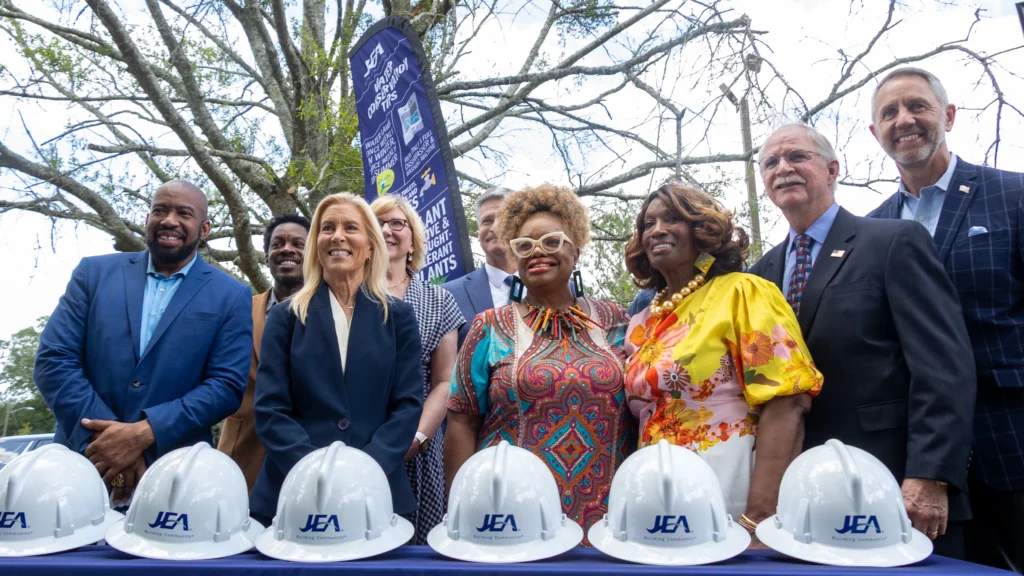
From left: Jacksonville City Council member Rahman Johnson; Jacksonville City Council member Reggie Gaffney Jr.; Jacksonville Mayor Donna Deegan; Tracye Polson, the city of Jacksonville’s director of state and federal advocacy and public-private partnerships; Kevin McOmber, Environmental Protection Agency Region 4 administrator; Jacksonville City Council member Ju’Coby Pittman; Freddie Webster, First Lady at Peace Missionary Baptist Church; U.S. Rep. John Rutherford; and Jacksonville City Council member Chris Miller. | Will Brown, Jacksonville Today
At that time, council member Ju’Coby Pittman advocated for the gas tax because it would help the city complete infrastructure projects that were low-hanging fruit and could provide long-term stability throughout Jacksonville.
Pittman says the Christobel septic removal is what’s possible when federal, local government and communities work in harmony. She says the idea that Christobel, and other predominantly Black portions of Jacksonville, relied on septic tanks in 2026 is unacceptable.
“This neighborhood had relied on aging septic tanks that created environmental concerns and placed unnecessary burdens on homeowners,” Pittman says. “And that meant, for some of them, buying septic tanks (which was) money they didn’t have. … It’s about ensuring that every family, regardless of where they live, have access to safe, reliable services that (contribute) to a healthy and thriving community.”