
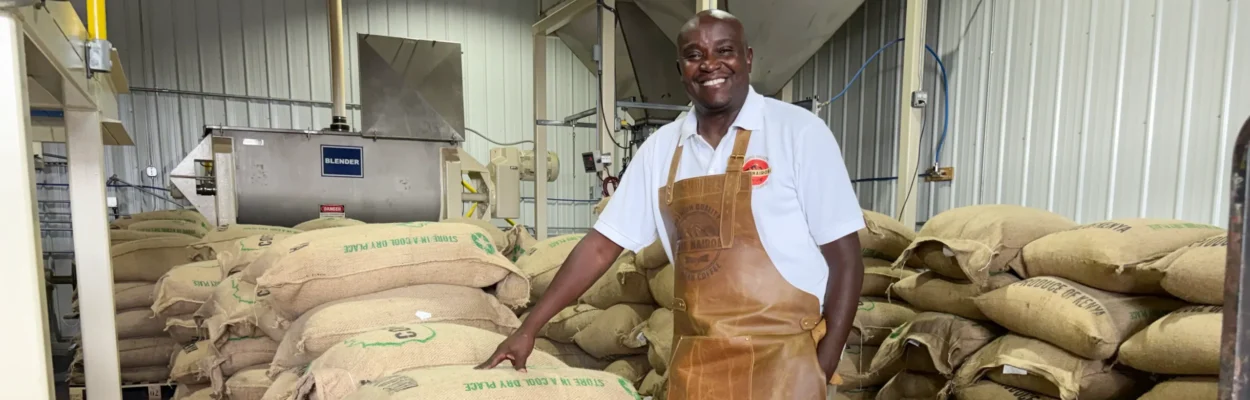
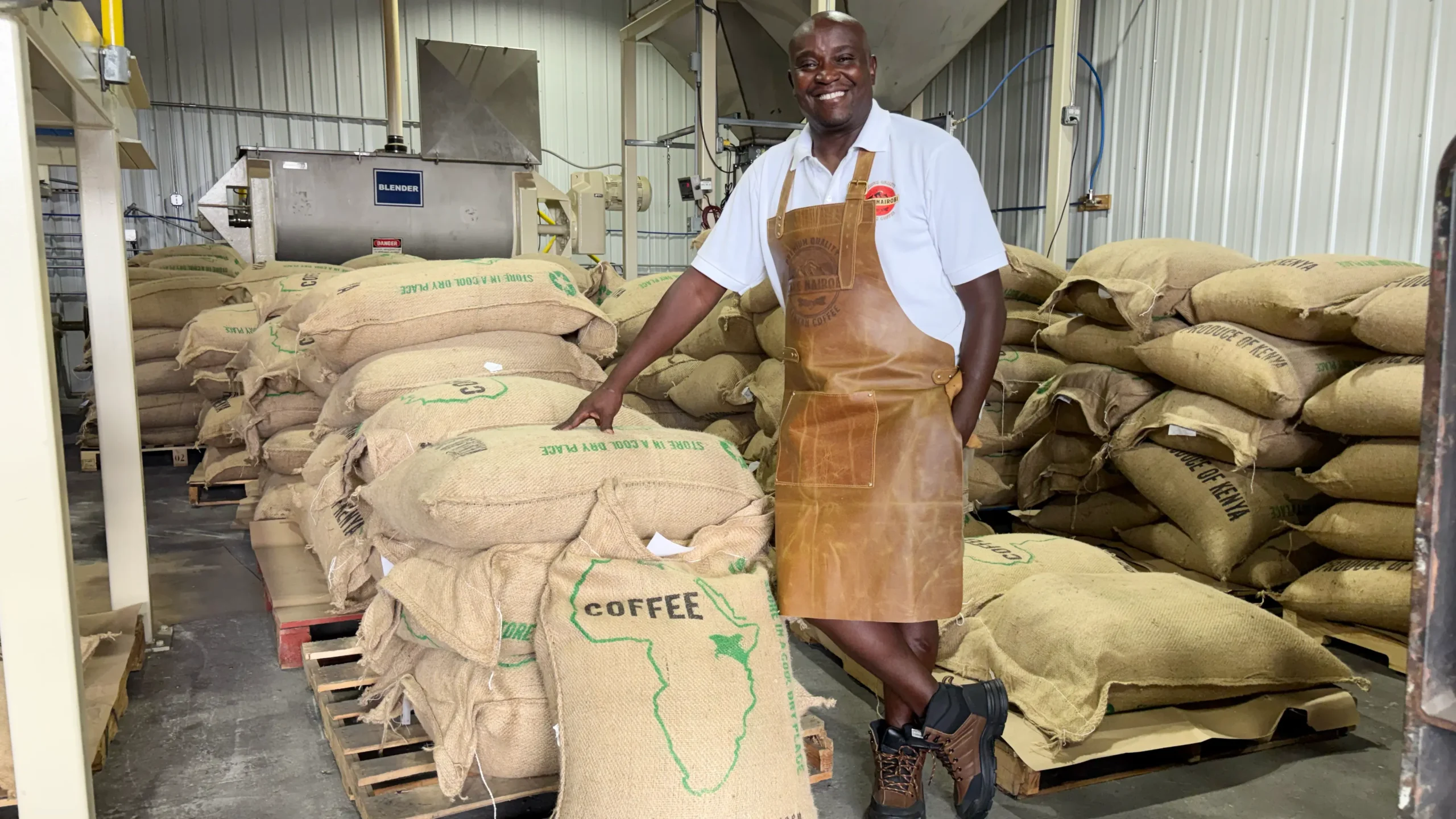
Martin Kakabi stands with 132-pound sacks of Kenyan coffee beans that he roasts in Downtown Jacksonville. | Simone Endress, Jacksonville Today
Published on October 5, 2026 at 2:37 pm
Free local news and info, in your inbox at 6 a.m. M-F. Sign up for the Jacksonville Today newsletter.
Martin Kakabi’s first coffee venture was called Grower’s Alliance. He started selling it out of a truck at the St. Augustine Amphitheater in 2006. He says that back then, “ it wasn’t easy because people didn’t know about the brand. Most people had never gotten a taste of Kenyan coffee.”
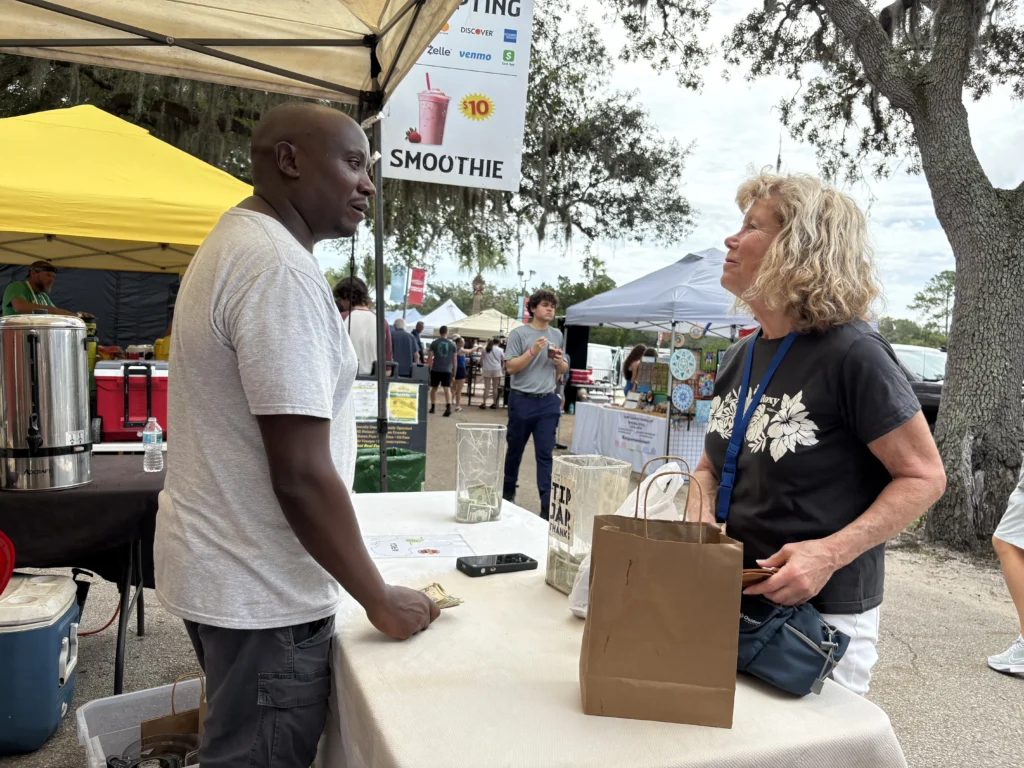
Twenty years later, Kakabi still sells coffee at the same market, but with his new business — Café Nairobi. Just like back then, Martin asks passersby if they would like to try some Kenyan coffee.
Jacksonville Today thanks our sponsors. Become one.
Kakabi believes that a taste of his single-origin brews will be enough to attract customers. He’s converted many in the past 20 years, but he admits that it may have something to do with his own personality and the relationships he’s built over time. ”Some people come to the market just for me,” he admits.
When Gannon Barrett approaches Kakabi’s tent, Kakabi turns to make him “the usual.” Barrett’s not sure what roast it is. He says he used to frequent coffee shop chains until April of this year, when Kakabi persuaded him to try Kenyan coffee. “I like Martin specifically,” he says.
Sue West says she first tried a sample from Martin over a year ago. Today she stops by to pick up several bags of coffee for her and her husband. “ My husband, Finn, is very particular with his coffee. So, he will drink no other coffee. We’ve given up all the other brands, and every time we’re here at the market, we buy at least four bags.”

Jacksonville Today thanks our sponsors. Become one.
When Kakabi emigrated from Kenya to the United States at 26, his first job was as a dishwasher at a Panera Bread in Jacksonville. “I noticed all these Americans coming up and lining up for coffee,” he says. “I come from Kenya, which has some of the best-tasting coffee in the world, and I saw that as a big business opportunity.”
Kenyan coffee is unique because of the country’s soil. High elevations and volcanic ash give the coffee cherries a bright taste. Kakabi says his beans are grown in the shade, which softens the acidity that Kenyan coffee is often associated with.
Kakabi roasts in Downtown Jacksonville. His 132-pound sacks of green coffee beans fill a loading area. All of Kakabi’s coffee comes from Kiambu, where he is from. Kakabi says he works directly with the growers. “ I feel like there’s a gap for an authentic coffee that is connected to the origin,” he says.
With his last business, Grower’s Alliance, Kakabi opened a brick-and-mortar on Anastasia Island in 2017. Along with his coffee, the shop was known for frequent events like a weekly drum circle.
But the pandemic slowed business to a crawl. Grower’s Alliance never fully recovered. Facing steep rent prices, Kakabi shut it down in 2024. He changed tactics quickly. “I had to restart from scratch by creating a new brand under Cafe Nairobi,” he says. He started focusing on online sales and returning focus to the markets.
Two years later, Cafe Nairobi is stocked in Fresh Market stores. Kakabi sells three versions of his single-origin blend — a light, dark and medium roast — at farmers markets and online. He says he’s talking to Publix and Sprouts. He’s targeting specialty supermarkets, and he loves a scrupulous customer. “ You can trace it back to where it comes from. And that’s what I’m big on.”
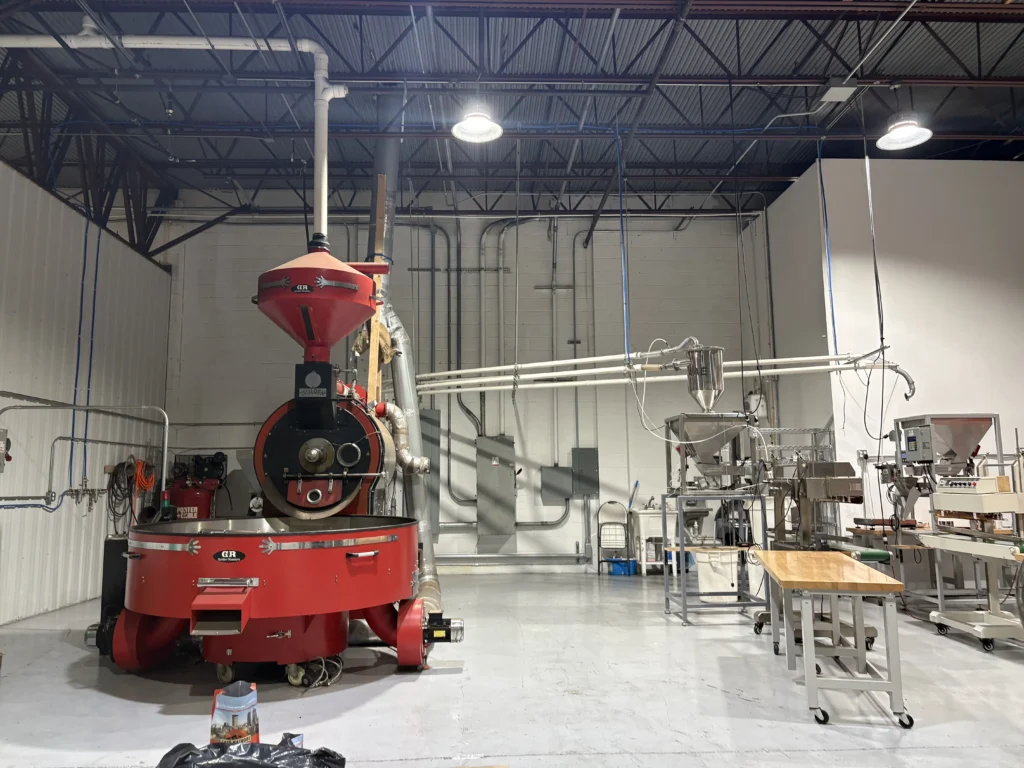
At the roasting facility, Kakabi shows off his 60-pound roaster. When he turns it on, the room warms slightly, and a whirring sound gives rise to a deep, earthy aroma with bright, fruity undertones.
Across the room is an empty 300-pound roaster. Kakabi has used it but is waiting for the day that he’ll be stocked in enough stores to use it every day.
Kakabi says he doesn’t miss the pressures of brick-and-mortar. For the next five years, his goal is to get into 10 supermarkets across the country. But one day, he wants to open a coffee chain with locations across the Southeast.
“ It’s going to be a Kenyan-themed coffee shop with the same name, Cafe Nairobi,” he says. He already has a rendering of the outside.
Even if he gets into more stores, Kakabi says he’ll keep going to the farmers markets.
“ That’s where I began,” he says. “I don’t think I will ever get away from those because I just enjoy farmers markets. I like meeting my customers face to face.”