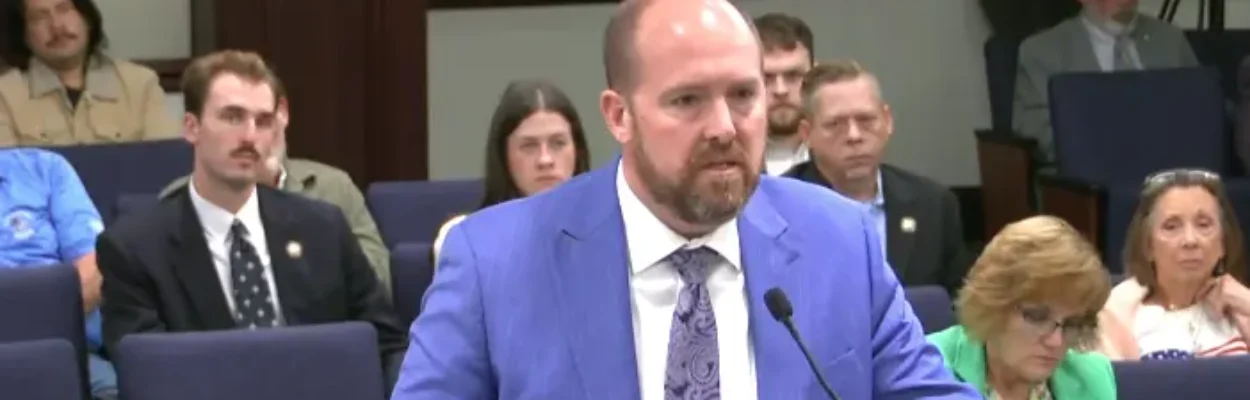
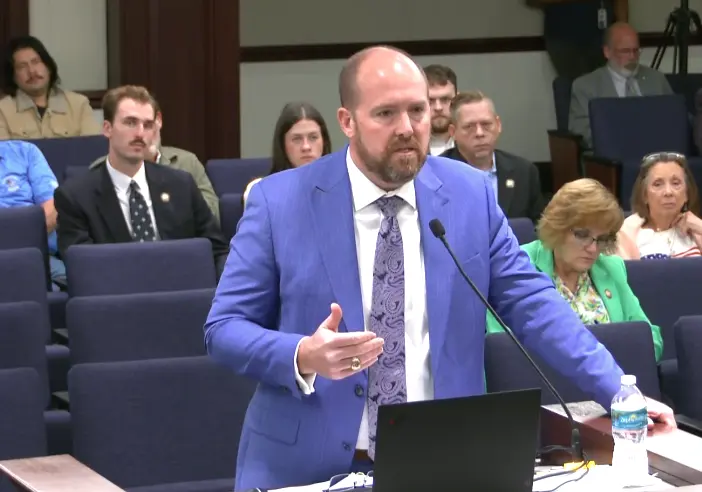
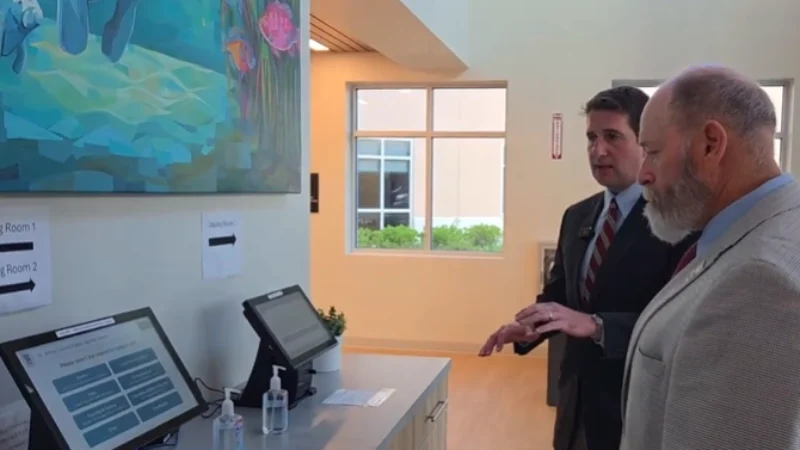
Jared Perdue, the state Transportation secretary and newly appointed interim director of the Florida Division of Emergency Management, asked legislators for $250 million on Sept. 11, 2026, to help pay off debts related to "Alligator Alcatraz." | The Florida Channel
Published on September 17, 2026 at 10:01 am
Free local news and info, in your inbox at 6 a.m. M-F. Sign up for the Jacksonville Today newsletter.
The state’s emergency coffers are nearly empty. The Florida Division of Emergency Management has about $6.4 million in reserves as of July 1.
About an hour before the Joint Legislative Budget Commission meeting Sept. 11, newly appointed division Interim Director Jared Perdue gave lawmakers the report outlining the agency’s budget — it was due July 15.
Jacksonville Today thanks our sponsors. Become one.
Perdue requested an additional $250 million to help cover some of the agency’s debts. A portion will go toward natural disaster and hurricane relief, but about three-quarters — $187 million — will pay outstanding invoices for immigration and detention operations.
The report shows the division spent about $989 million during the 2025-26 fiscal year. Meanwhile, state records show nearly $568 million of it went to immigration-related expenditures, making it more costly than any other natural or human-made emergency last year.
“The bulk of this request is for outstanding invoices and services that have been rendered as part of the (immigration) operation that is ongoing with FDEM,” Perdue said.
Jacksonville Today thanks our sponsors. Become one.
He’s referring to Operation Vigilant Sentry. The report said that “mission includes the detention of illegal immigrants in Florida and their movement back to their home country while supporting federal efforts to protect the United States from the incoming illegal immigrants.”
The emergency agency estimates it will spend $500 million on it during this fiscal year.
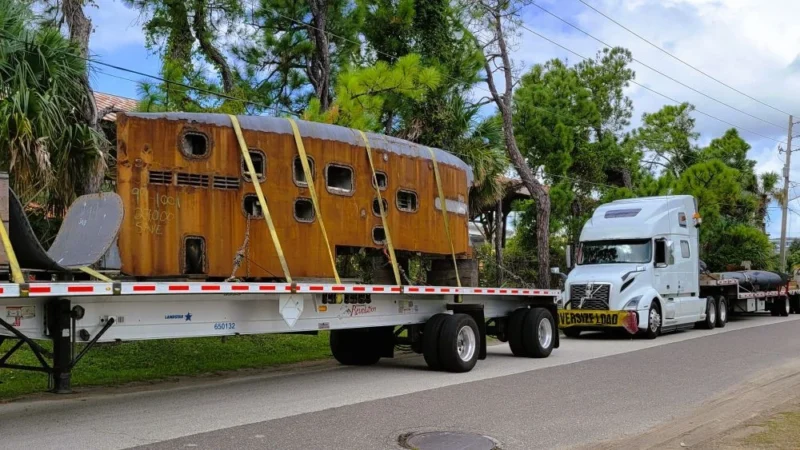
The report showed 592 pending invoices for the operation — most of the vendors helped operate “Alligator Alcatraz.”
A couple of lawmakers pushed back during the meeting, including Senate Minority Leader Lori Berman. She claimed the Gov. Ron DeSantis’ extension of emergency orders on immigration enforcement was a pretense to divert funds from emergency reserves.
“This is not the way that we should be spending our Florida money. We need more legislative oversight. We need transparency. When they come to us at the very end and say, ‘We’ve already made these expenditures, now we want reimbursement,’ we’re boxed in in the Legislature,” Berman said.
“We’re not given the opportunity to say, ‘No, this is not where we want the money to go. The continued abuse of this emergency power is an insult to our constitution and the people of Florida.”
The governor first signed the emergency declaration on illegal migration in January 2023.
The Emergency Management report came the same day the Department of Homeland Security released an inspector general’s report about the conditions inside the immigration detention center dubbed “Alligator Alcatraz.”
ALSO READ: Lawmakers react to report outlining substandard conditions at ‘Alligator Alcatraz’
For Emergency Management’s role in immigration enforcement, state Rep. Anna Eskamani, D-Orlando, said the agency did not spend conservatively.
“This agency was given a blank check, acted irresponsibly (and) just got more money of your tax dollars,” she said. “And this vicious cycle will continue unless something changes in our political landscape through the November elections.”
So far, Emergency Management has received about 14 percent of the promised $608 million federal reimbursement for operating “Alligator Alcatraz.”
Eskamani said it’s unclear if the rest of the federal money will come.
The agency indicated a worst-case scenario without the additional money: If at least two major storms come through Florida, it could be in the red by about $1.5 billion by the end of June.
If you have any questions about state government or the legislative process, you can ask the Your Florida team by clicking here.
This story was produced by WUSF as part of a statewide journalism initiative funded by the Corporation for Public Broadcasting.