
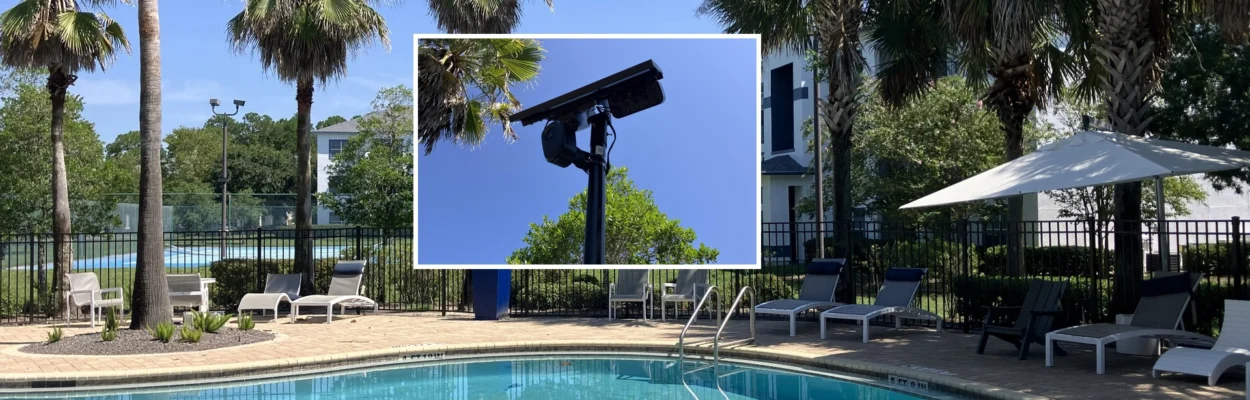
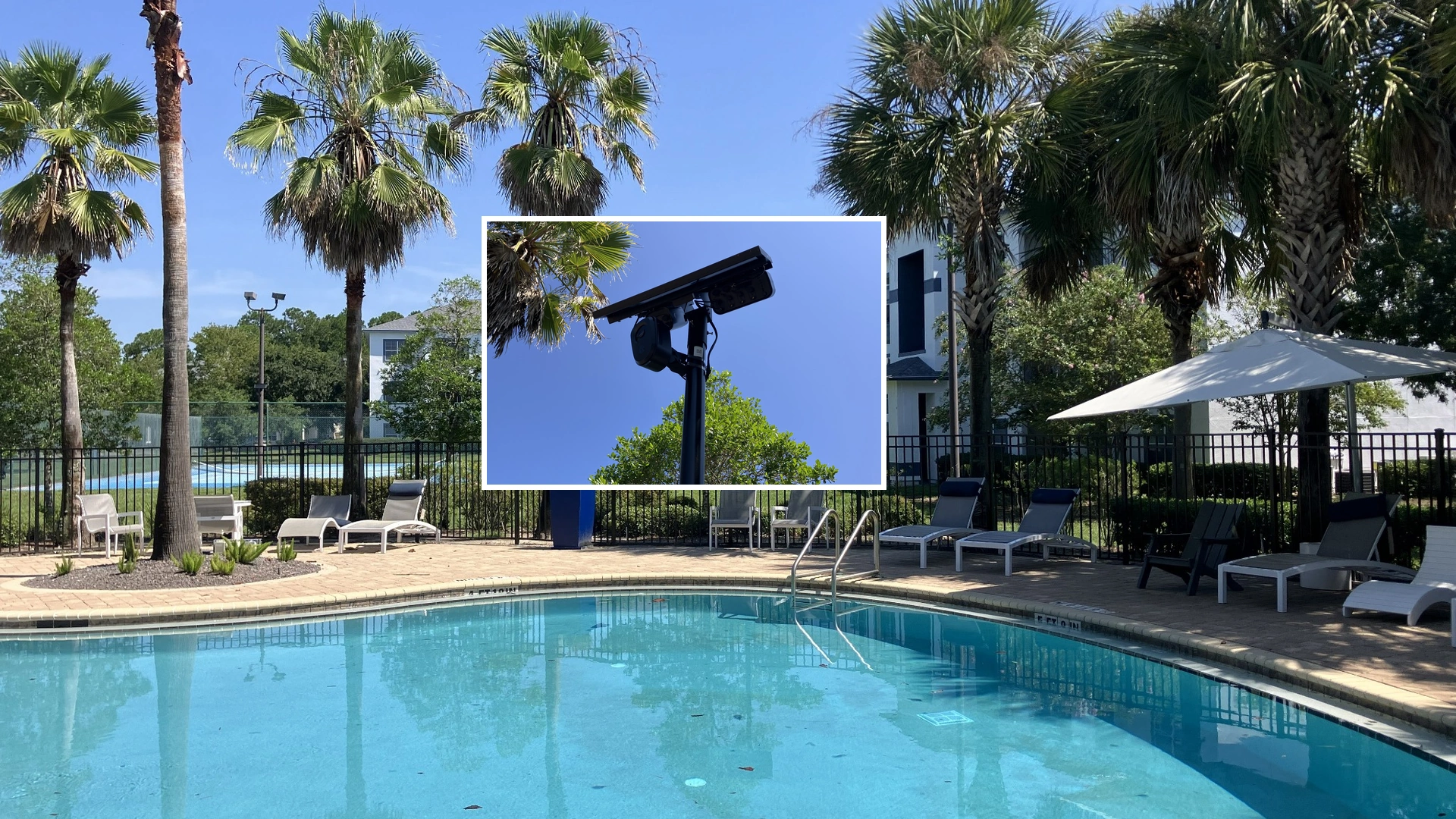
A Flock camera at the Mezza Premier Apartment complex is seen in this composite image | Elizabeth Caldwell, Jacksonville Today
Published on August 24, 2026 at 3:20 pm
Free local news and info, in your inbox at 6 a.m. M-F. Sign up for the Jacksonville Today newsletter.
The Jacksonville Sheriff’s Office says it operates about 150 Flock devices in Duval County. But that number may not paint the full picture, as critics nationwide worry about the rise of surveillance.
While Flock Safety credits its cameras that easily share footage with helping solve 10% of reported crime across the country, complaints about leaks, abuse of power and lack of transparency are causing some cities to distance themselves from the controversial technology startup that boasts 120,000 devices coast to coast.
Jacksonville Today thanks our sponsors. Become one.
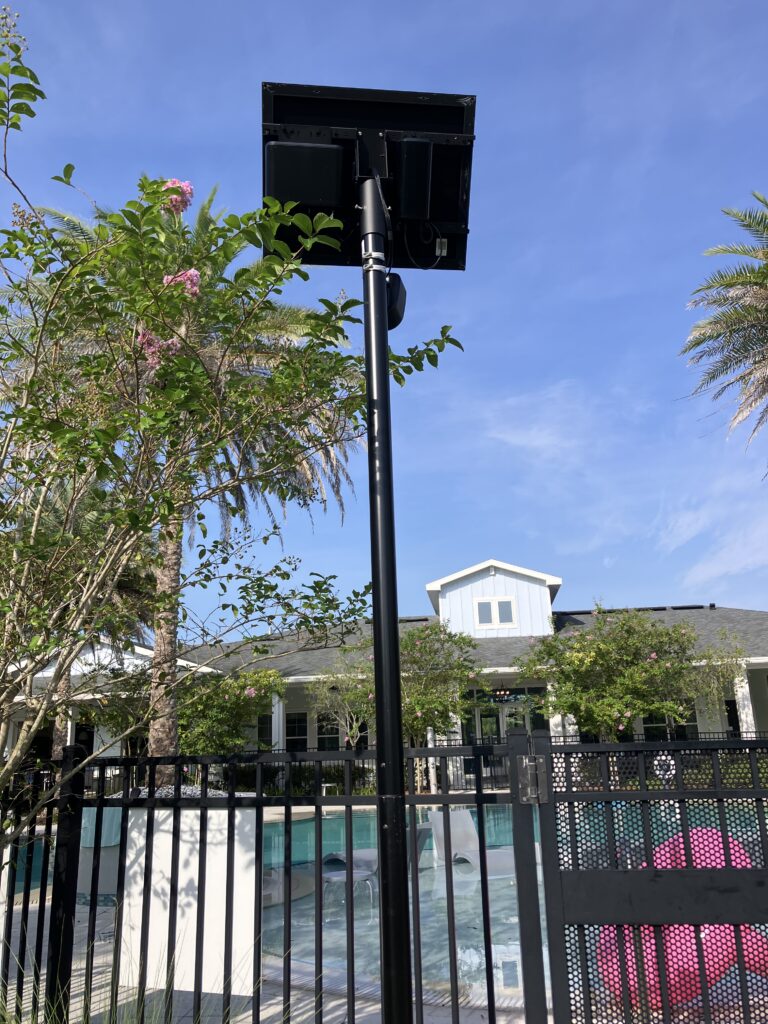
Jacksonville is seeing its own share of debate. It bubbled up online on Aug. 10, when a photo of a Flock camera pointed at a pool in the Mezza Premier Apartments in north Jacksonville was posted on Reddit. A visit to the complex by Jacksonville Today confirmed the camera’s existence.
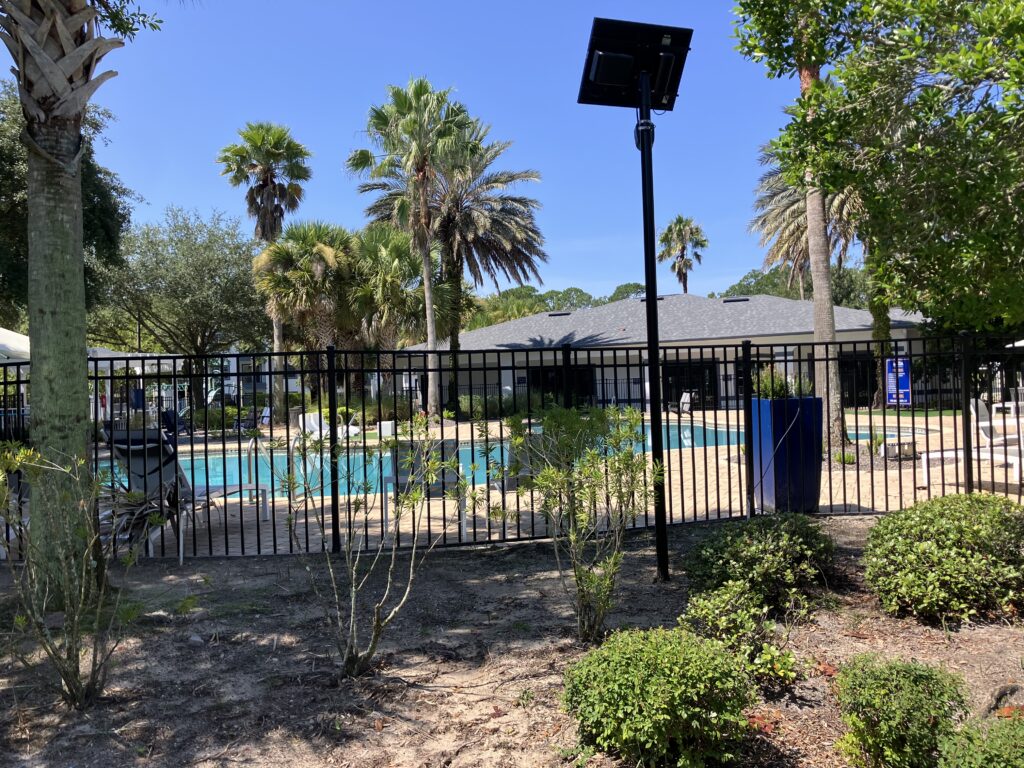
Commenters questioned who might be able to see footage recorded in sensitive areas like pools.
According to government records, Mezza Premier is owned by Fundrise, a company headquartered off Dupont Circle in Washington, D.C. Aside from owning about 9,000 residential units nationwide, Fundrise manages a tech-heavy investment fund holding $23 million worth of Flock as of March.

Jacksonville Today thanks our sponsors. Become one.
A second Flock camera at another Fundrise community in Jacksonville, The Ridley, was confirmed by Jacksonville Today.
Neither Flock nor Fundrise returned phone calls or emails requesting comment.
JSO and other law enforcement agencies could have access to the pool-watching devices. (A spokesperson for JSO said the agency has access to some privately held cameras but declined to elaborate.)
Flock promotes partnerships between police and residential communities, with 24/7 access being a selling point for stopping crime.
That’s how Flock differs from Ring and other security cameras, researchers say. Permission by a Flock camera’s owner or lessor allows ongoing access to a potential host of agencies, an attractive option for landlords looking to protect their assets.
Homeowners associations are the biggest users of Flock cameras as a group, according to Flock’s website. But HOAs have governing boards. Rory Safir, a criminal defense attorney in St. Petersburg, says renters at non-HOA apartment communities like Mezza Premier have even fewer safeguards.
“There are statutes that govern Flock for public roads, but there are not for HOAs, condominiums, apartments,” Safir said. “If you’re an apartment tenant, you can’t opt out. It’s not like you even opted in.”
Safir worries that Flock cameras might track someone going to see a lawyer or a therapist, and that information could be exploited.
Flock’s growing influence
According to JSO, cameras have helped solve multiple murders and a host of other crimes, including sexual assaults and kidnappings.
Meg Kitamura, a doctoral researcher at Goethe University in Frankfurt, Germany, said Flock was never a traditional public safety outfit. From the start, the company positioned itself to cater to consumers.
“It’s important to remember these companies are operating in a different way from traditional public safety companies,” Kitamura said.
Flock, which its founders say was created in a garage after the successful build of a camera that helped solve neighborhood car break-ins, initially marketed itself to communities, Kitamura said. When enough cameras were installed on private property, Flock then approached police, dangling the idea of access to the existing network as a carrot.
Flock’s founders didn’t have military experience, as most founders of public safety companies do, but they had experience with platform building and subscription models, both of which are central to Flock, Kitamura said.
Some police departments have Flock transparency portals that contain audit logs and access permissions, but Jacksonville doesn’t have such a portal.
Jacksonville Today has requested records about what privately held cameras JSO and surrounding agencies can access.