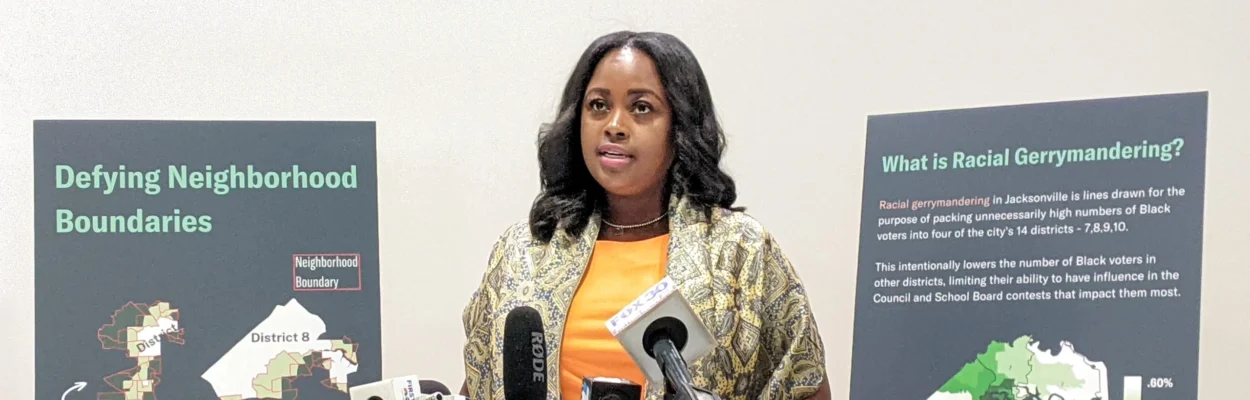
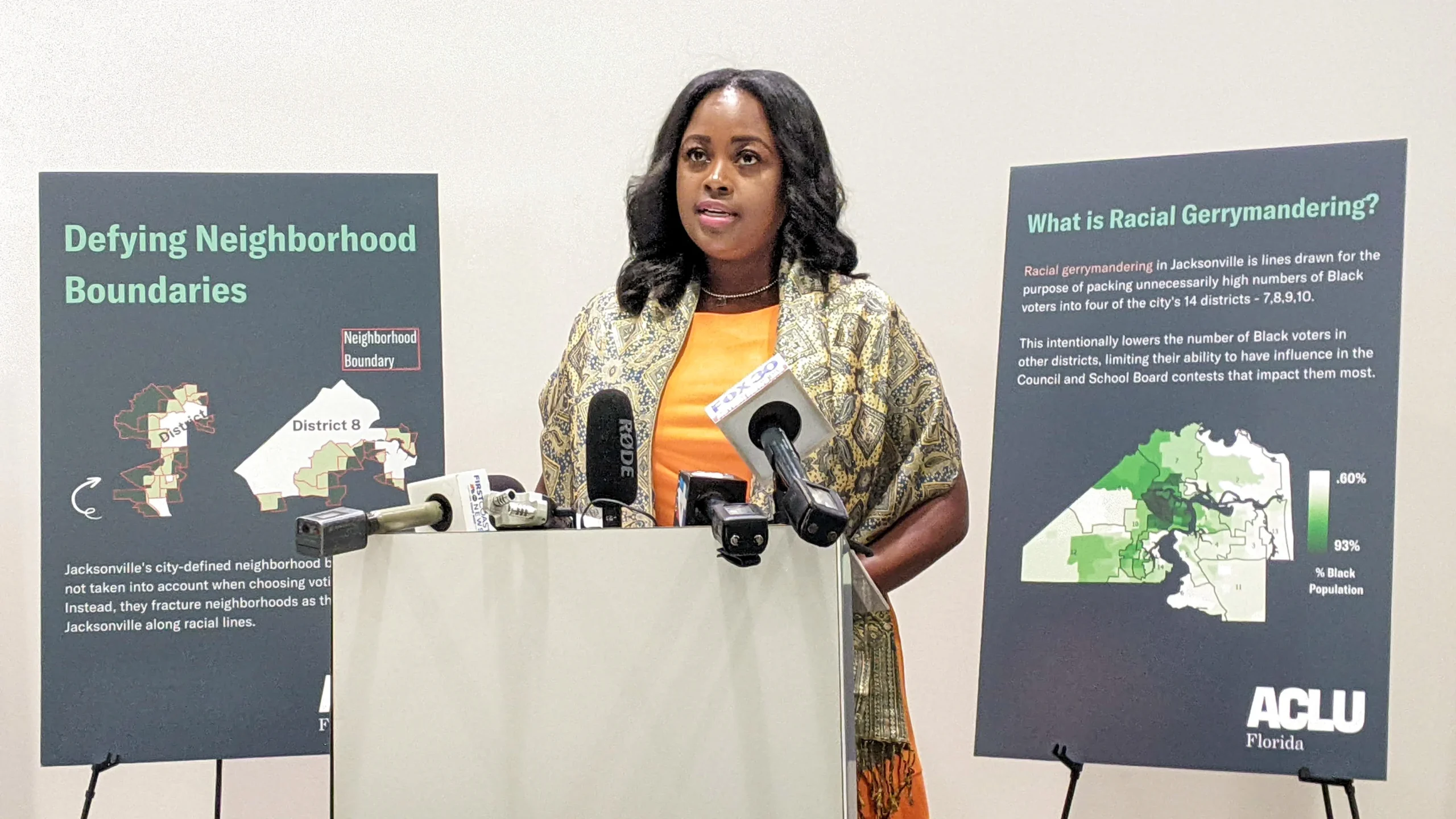
Jacksonville City Council member-elect Moné Holder. | File photo, Jacksonville Today
Published on August 20, 2026 at 5:54 pm
Free local news and info, in your inbox at 6 a.m. M-F. Sign up for the Jacksonville Today newsletter.
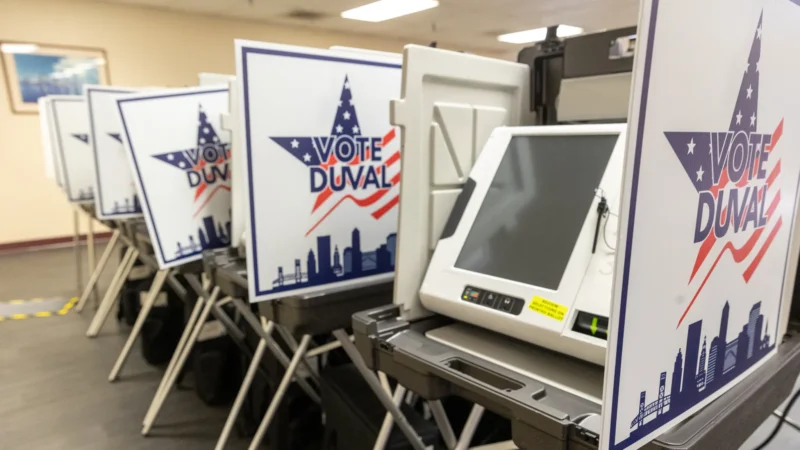
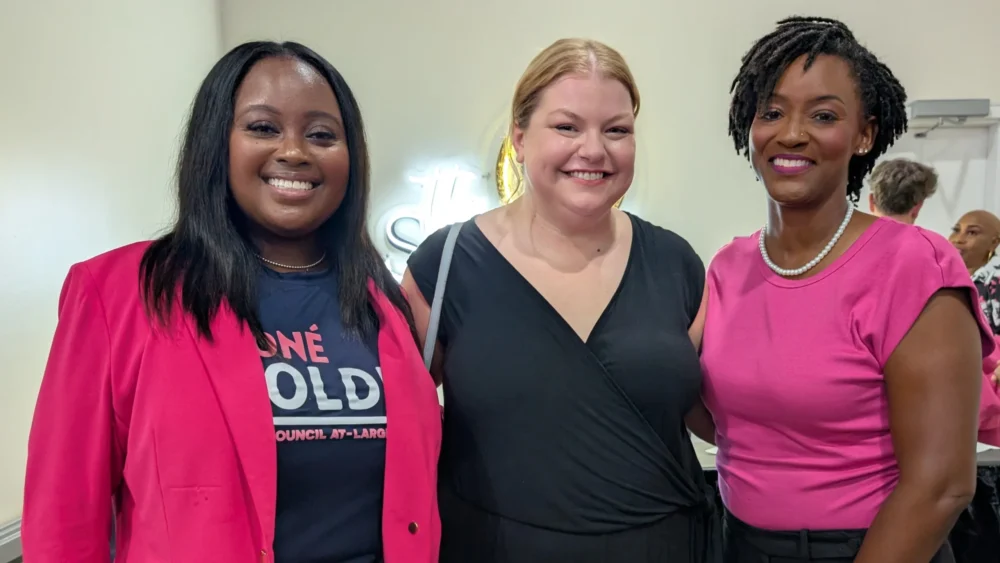
Democrat Moné Holder’s win in the election Tuesday flipped a Jacksonville City Council seat held by the Duval County GOP for 11 years.
At a basic level, her victory over Republican Deborah Wesley bumps the number of seats held by Duval County Democrats on council to six for at least the next 10 months and narrows Republicans’ hold on the city’s legislative branch to 13-6.
Jacksonville Today thanks our sponsors. Become one.
That’s still a supermajority, but the smaller split will make it harder for the council’s Republican leadership to overcome intraparty policy divisions and city budget battles that, in the past, have required 13 votes to pass.
Holder, who served as chair of the Jacksonville Planning Commission, will likely be seated by Aug. 28, after the Duval County Supervisor of Elections Office certifies the vote. That puts her on council in time to propose changes to and take a final vote on the city’s $2 billion annual budget.
In the last year, moderate Republicans like Michael Boylan, Ken Amaro and Matt Carlucci have sided with Mayor Donna Deegan and council Democrats on issues like direct city funding for affordable housing and a city-funded telehealth program for the uninsured.
Jacksonville Today thanks our sponsors. Become one.
And they’ve successfully advocated by withholding their votes to remove language from the city budget over social issues like diversity, equity and inclusion policy, abortion and immigration. Boylan and Carlucci have been pivotal in preventing the council’s Republican majority from overriding two Deegan vetoes, an act that takes 13 votes.
Flipping the countywide council seat from Republican to Democrat makes those conservative policies a little harder to pass.
Rick Mullaney, executive director and chair and Jacksonville University’s Haskell Public Policy Institute, says Holder’s win over Wesley lends credence to a broader perceived voter trend — Duval County’s and Florida’s statewide electorates are moving in opposite political directions.
“The question is, is Duval County red, purple or blue?” Mullaney said.
“I think this is the reverse of the macro trend at the state (level) in which the state of Florida has become red. But I actually see Duval County becoming purple, and in some cases, maybe leaning a little blue,” Mullaney told Jacksonville Today. “Which is why last night’s election, in part to me, is so significant.”
Holder won on election night for the Council At-Large Group 1 seat with 51.16% of the vote, according to unofficial results from the election office. She topped Wesley’s 44.73% and Libertarian Addison Patrick’s 4.11%.
The vote total was enough for Holder to avoid a runoff race later this year, surpassing the 50%-plus threshold required by the city charter, which would have delayed the winner being seated.
She will replace two-term Republican Terrance Freeman, who announced in May his plan to resign to run for Florida House District 12 in November.
Democratic Party voter registration still tops the Republicans in Duval County with 37.74% to 36.53%, respectively. That’s narrowed in recent years. Voters with nonparty affiliation also have grown to 22.34%, according to election office data.
Mullaney says the election of Deegan in 2023 and Joe Biden being the first Democratic presidential candidate to win Duval County since Jimmy Carter shows local voters shifting.
Duval County also went for Democratic Andrew Gillum in the 2018 governor’s race while Republican Ron DeSantis narrowly carried the election statewide.
That’s after four of Jacksonville’s last five mayors prior to Deegan were Republican. A majority Republican council has persisted.
Mullaney says Duval’s recent voting trends are counter to the broader Florida electorate’s shift to the right in recent years. He points to a “red wave” that occurred in Florida in the 2022 midterm elections that was expected, but didn’t materialize, nationwide. Republicans currently hold all statewide elected offices in Florida and have supermajorities in the state Legislature.
Holder’s election is more evidence, Mullaney says, that Duval County is now a purple political battleground in a red state. But he feels that party labels usually carry less weight to voters in city-level races.
“The traditional thinking that Duval County is that conservative bastion, which it has been for many years, has undergone some pretty significant change,” Mullaney, an attorney, former city chief of staff, and former city general counsel, said. “We’ve seen that, particularly in national and statewide races. And one question now is are you going to see that more in local races.”
What Holder’s win means for Jax council
Mullaney says Holder’s win could provide the mayor and another city lawmaker receptive to her policy goals. But he expects her election’s effect on council decisions to depend on the issue.
“I think that’s potentially pretty significant. Because there has been a divide on some of the issues. But I think it’s going to be on an issue-by-issue basis,” Mullaney said.
Deegan praised Holder’s win in a statement on election night.
“I’m excited to work with Moné and keep Jacksonville’s momentum going,” Deegan said. “She took the time to sit down with me to talk about affordability and those kitchen table issues so important to our community — and that’s the message she carried throughout her campaign. She’ll be a voice for every person and a trusted partner on City Council.”
On election night, Hodler told Jacksonville Today that affordability would be a key issue for her, including housing insecurity. She says she hopes to do that through an affordable housing trust Deegan’s been trying to move through council.
Last week, council’s Finance Committee removed $4.9 million from Deegan’s proposed budget for that trust. But the full council could revive it when it comes up for a final vote on budget night.
Holder said she wants to be able to work with the entire council.
“It definitely starts with building a good rapport with my colleagues on the council,” she said Tuesday. “And making sure that I keep people first in all the decisions that I make and really spend my time listening to the community and bringing that energy to the council and every time I make a vote.”
Jacksonville City Council President Nick Howland, a Republican, told Jacksonville Today that, once it became clear Tuesday night that Hodler had won, he called to congratulate and welcome her to council.
“I told her that one of my main priorities was getting this council to work together as a team this year,” Howland said. “And it may seem in the media that we’re always at each other’s throats, but on the fourth floor (of City Hall), it’s a very congenial atmosphere and I look forward to having her join it.”
On whether Holder’s win would make Howland and his GOP majority’s policy goals harder to achieve, the council president maintains that “this result doesn’t change a thing.”
“We’ve been crystal clear. This year this council is focused on public safety, infrastructure and essential services,” Howland said. “Those are the core roles of government, and we’ll make sure we get those things right.”
Howland says he will release new council committee assignments next week to adjust for Freeman’s departure and Holder’s arrival. On Wednesday, Howland said he didn’t know where he would place Holder but expected Freeman’s spot on the influential Finance Committee to go to a longer-serving council member.
Election tea leaves for 2027?
Wesley lost the race despite running on her more than three decades in law enforcement, her position as the first Black woman to reach the rank of assistant chief at the Jacksonville Sheriff’s Office, and the endorsement of Jacksonville’s Republican sheriff, T.K. Waters. Mullaney called the nod from Waters a “pretty big credential.”
He says Holder’s win could provide a roadmap for other Democrats like council member Jimmy Peluso, who will run for the At-Large Group 4 seat next year instead of seeking reelection in District 7, and other council Democrats running for reelection or considering a countywide seat.
Deegan also is up for reelection in 2027.
Before Election Day, Holder’s campaign got a $510,000 financial boost through a donation by attorney and former state House member Steve Pajcic to the Jacksonville Together political committee supporting her campaign.
Mullaney says there’s a reason for Democrats to feel some optimism and feel good about Holder’s success. But replicating those results is also dependent on fundraising, the quality of candidates and voter turnout, he says.
“Having said all that, do I think the party labels mean as much at the local levels as they do at the statewide and national level? I do not,” Mullaney said. “However, it was a very significant win for her. And likely, among Democrats, they’re going to be energized by this and give them some momentum heading into next spring in particular.”
Despite Wesley’s loss, Howland is optimistic about Republicans’ chances in the 2026 midterm general elections and in Jacksonville’s citywide elections next year.
“I think the Republican Party is as strong as it’s ever been. I think we’re going to have a terrific November, and we’re going to have an even better March and May.”
Based on the way Wesley ran her race and her JSO service record, Howland is encouraging her to run again next year.
“I hope she jumps back in the ring because I think she would be a terrific asset to the city and to the City Council.”
Who will be on the ballot for the Council At-Large Group 1 seat when Jacksonville voters go to the polls in March is still murky. Holder also will be on the ballot again in the spring. This week’s special election decided who will fill out the remainder of Freeman’s term.
The newly elected Democrat would have to win again in 2027 to serve a full four years. Mullaney says that race could look a lot different for Holder, if she runs.
“If history’s a guide, it will be interesting to see if she even gets opposition,” he said. “What you’ve seen in some instances in the past, if somebody wins in a pretty significant way, especially if there’s a lot of funding, they make the decision of ‘do you want to take this on again?’”
Patrick is listed as a filed and active candidate on the election supervisors database for the At-Large Group 1 race in 2027, and she previously told Jacksonville Today she intends to run. No Democrat or Republican has announced yet for that race, but there is still time. The qualifying period for the 2027 city elections is from noon Jan. 11 to noon Jan. 15.
According to Mullaney, Holder’s ability to raise money combined with her talent for campaigning, and performance on Election Day with more than 51% of the vote in a three-person race “makes her a formidable candidate” to run for a full term next year.
“If she faces opposition, certainly this campaign will serve her well in that campaign next spring,” he said. “You learn from each campaign.”
Jacksonville Today reporter Will Brown contributed to this report.