

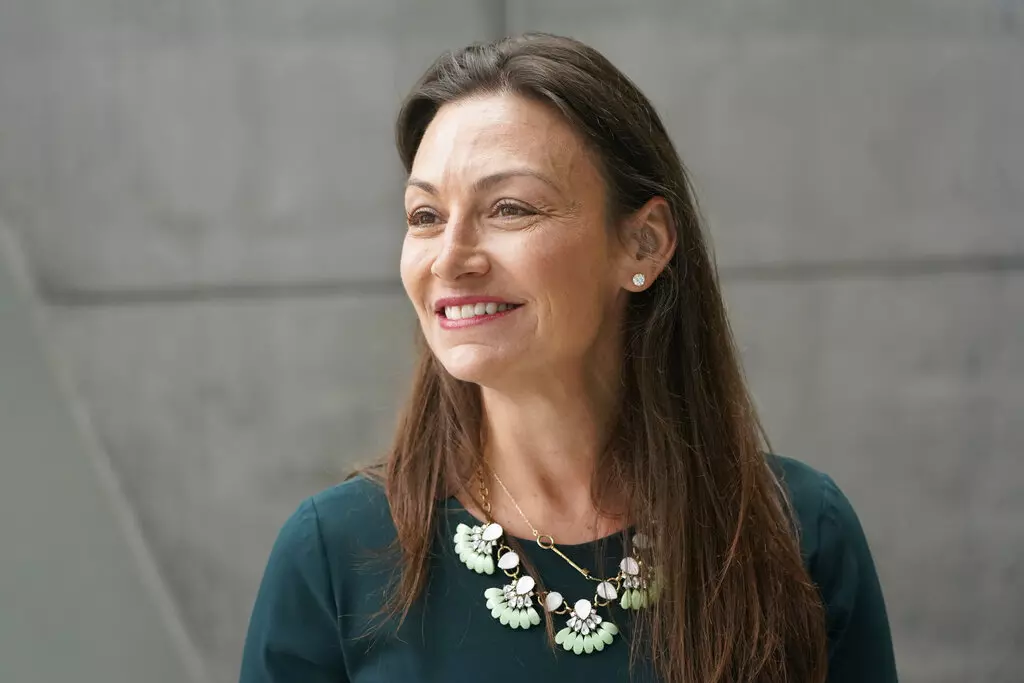
Florida Democratic Party Chair Nikki Fried. | Wilfredo Lee, AP
Published on August 20, 2026 at 4:14 pm
Free local news and info, in your inbox at 6 a.m. M-F. Sign up for the Jacksonville Today newsletter.
Facing a newly redistricted congressional map that weakens Democratic power in the state, Florida Democrats are preparing to lead an offensive in November’s midterm elections focusing on cost of living and ending a long-held Republican supermajority.
At a post-primary event in Little Havana on Wednesday, state party Chair Nikki Fried took the podium alongside Democratic state legislature nominees Richard Lamondin, Gloria Romero Roses and Lucia Baez-Geller, looking to energize voters for a monthslong campaign effort.
Jacksonville Today thanks our sponsors. Become one.
“While Republicans were busy dismantling our state and selling off our public institutions for parts, we haven’t slept. We’ve been building a comeback. Organizers are already in the field, more than 6,000 trained volunteers,” Fried said.
This follows a primary election night that saw several major upsets for Democrats. Established candidate Shevrin Jones, a state senator and longtime legislator, was overtaken in the Congressional District 24 race by opponent Oliver Gilbert, a former Miami-Dade County Commissioner who has not served in the Florida Legislature.
READ MORE: Oliver Gilbert prevails in crowded seven-way Democratic primary to succeed Rep. Frederica Wilson


Jacksonville Today thanks our sponsors. Become one.
On the Senate side, candidate Angie Nixon won in a major upset against Alex Vindman in the Democratic primary for the U.S. Senate seat formerly held by Secretary of State Marco Rubio. Nixon is trying to unseat Republican Ashley Moody, Florida’s former Attorney General.
David Jolly, the Democatic nominee for Florida Governor, told WLRN he stands apart from Nixon on numerous issues.
“ I’m gonna sit with her and figure out where our policies agree and where they differ. Certainly when it comes to Israel, we have a strong disagreement. To the extent she’s embracing any of the DSA platform, I reject that,” Jolly said Tuesday night, referring to the Democratic Socialists of America, the popular progressive wing of the party.
Jolly faces strong opposition from Republican nominee Byron Donalds, who has the endorsement of President Donald Trump.
Asked about the division in the party between more centrist Democrats and DSA candidates, Fried said the party is united on tackling affordability for working-class Floridians.
“ Seniors are worried about losing their Social Security and Medicare. Businesses can’t keep a workforce because nobody can afford to live here and live near their jobs,” Fried said. “Republicans want this election to be about anything else. We won’t let them change the subject.”
The party celebrated greater turnout from registered Democrats in Miami-Dade County. According to the Miami-Dade Supervisor of Elections Office, about 47% of voters who cast ballots in the primary were Democrats, while about 38% were Republicans. Overall turnout in Miami-Dade was about 19%.
Republicans have an advantage in voter registrations in Miami-Dade. Republicans have approximately 455,000 registered voters, compared to the Democrats’ 408,000, according to the most recent voter rolls. About 391,000 voters in the county are registered with no party affiliation.
Statewide, Republicans outnumber Democrats by more than 1.5 million registered voters. Florida is to 5.6 million registered GOP voters compared to a little more than 4 million registered Democrats. No Party Affiliation voters number more than 3.3 million, according to the latest state figures.
WLRN’s Daniel Rivero contributed reporting.
Copyright © 2026 WLRN