
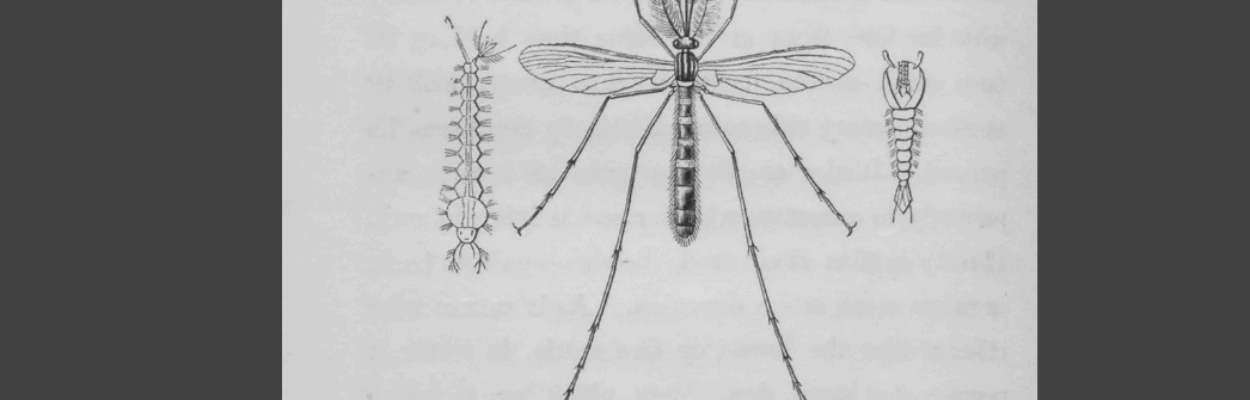
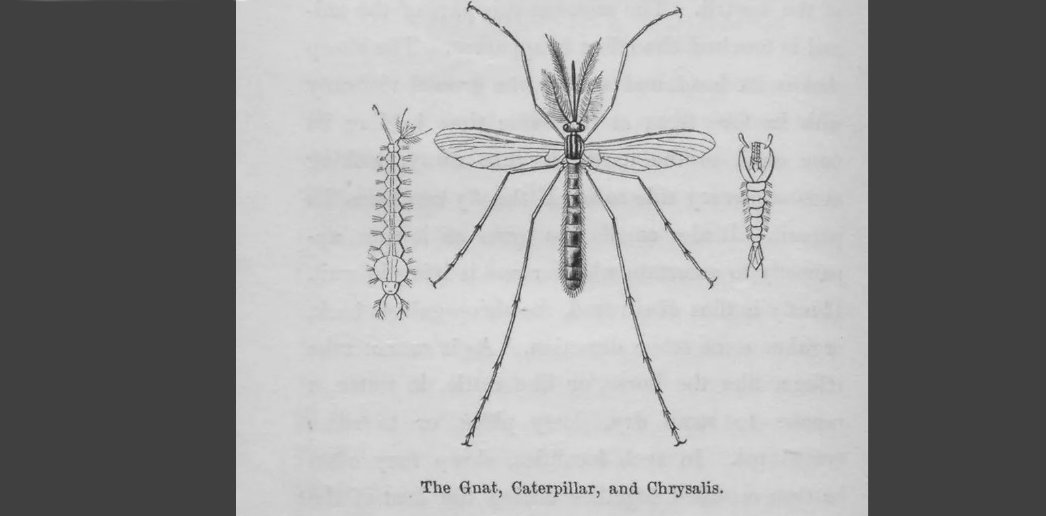
An illustration of a gnat from the 1863 publication "Lessons from Insect Life" | Biodiversity Heritage Library
Published on June 25, 2026 at 1:38 pm
Free local news and info, in your inbox at 6 a.m. M-F. Sign up for the Jacksonville Today newsletter.
Q: A swarm of flying pests seems to have taken over Jacksonville. You’ve probably seen them hovering near lights or damp areas. Sometimes they buzz around your eyes and ears.
Where did all these gnats come from anyway?
“I’ve noticed that gnats seem to be more abundant and annoying this year than in the past,” writes Jacksonville Today reader Karen F.
Jacksonville Today thanks our sponsors. Become one.
“Are there more gnats this summer? And if so, why?”
A: Yes, there do appear to be more gnats this year, experts tell Jacksonville Today.
Anthony Rossi, a biology professor at the University of North Florida, confirms that people are seeing more gnats than usual, in some areas.
“Their numbers tend to swing from year to year, and one of the biggest drivers is weather, especially rainfall,” Rossi says.



Jacksonville Today thanks our sponsors. Become one.
Gnats and mosquitoes rely on moist environments to reproduce, Rossi says. Their immature life cycle stages develop in wet soil, standing water or damp organic material.
“When a season brings above average rainfall, more standing water or higher humidity, their populations can spike dramatically,” Rossi says.
Recent heavy rains have created ideal breeding conditions, which is why people are noticing more gnats hovering around “and generally being a nuisance,” he says.
The gnat family includes lots of insects in Northeast Florida, like biting midges (aka “no-see-ums”), eye gnats, fungus gnats and buffalo gnats (black flies).
The folks at Florida Pest Control says gnats are small, delicate insects with long antennae and slender bodies. Adult gnats do not fly well and are often seen hovering in swarms.
They typically breed in aquatic environments and can emerge from these sources in high numbers, attracted to lights around buildings, Florida Pest Control states. The good news: Many types of gnats lack the mouth parts to bite a human. They’re a nuisance only.
City of Jacksonville entomologist Benjamin Allen says the city’s mosquito control division does not do any regular surveillance for biting gnats (Genus: Culicoides). The city can’t officially say whether there are more gnats now than in the past, he says.
“That said, we have a few different species in the Jacksonville area, and the one thing they have in common is breeding in moist habitats,” Allen said. “Damp tree holes, manure, moist soil on creek margins and in soil depressions are all places where they breed, depending on the species. Heavy rain allows their populations to skyrocket.”
With recent evening thunderstorms, the humidity that lingers at night “allows them to be active without desiccating in the heat,” he says.
You can try many ways to get rid of gnats, according to Good Housekeeping magazine’s website:
- As with mosquitoes, get rid of stagnant water around your house where they can breed.
- Replace white outdoor lights with yellow or amber-colored LED units.
- Pour boiling water down a sink drain to kill their eggs if they are a hassle inside a home.
- An electronic zapper trap works, as does a vinegar trap. Add some dish soap to a bowl of vinegar, and gnats that land on it and will sink and drown.
- Even an almost-empty bottle of stale beer works, the article said. The gnats and flies go in, but can’t get out.