Published on January 12, 2026 at 10:45 am
Free local news and info, in your inbox at 6 a.m. M-F. Sign up for the Jacksonville Today newsletter.
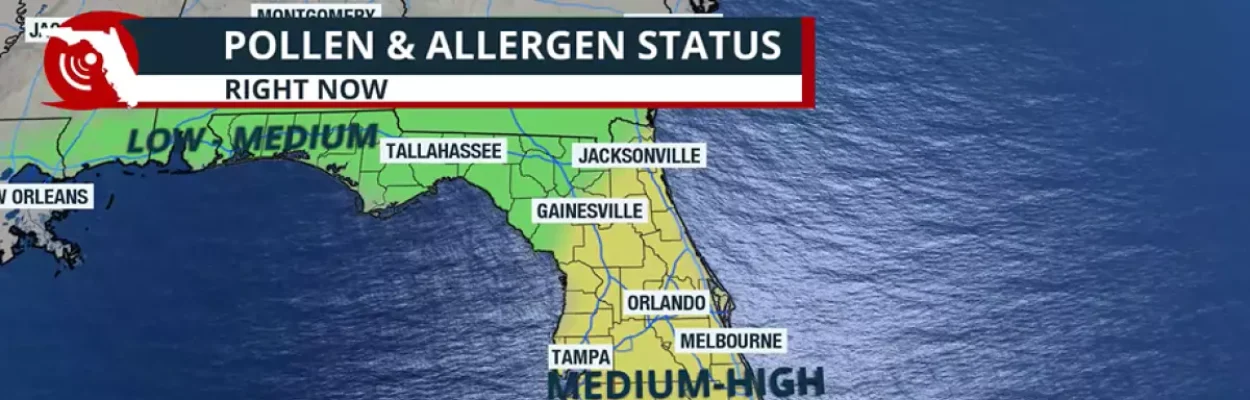
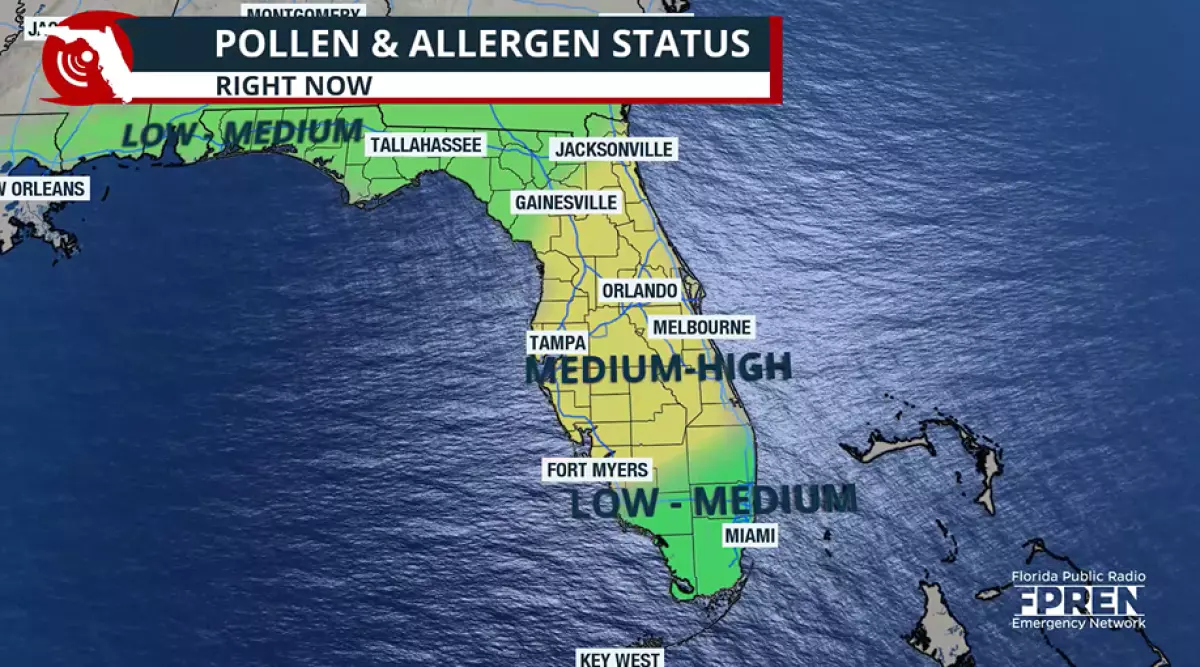
Pollen levels, especially from trees, are running high across parts of Florida, as the state transitions out of its winter allergy season and heads toward the spring cycle.
According to allergen experts, juniper, elm and maple trees are presently among the primary contributors, which have been enhanced by the rather dry, warm winter.
Jacksonville Today thanks our sponsors. Become one.
The vegetation relies on wind for pollination. As a result, the lightweight pollen can often fill the air.
Pollen monitoring stations along the Interstate 4 corridor and along parts of Interstate 95, from the Treasure Coast north to the First Coast, have shown moderate to occasionally high levels of allergens.
A lack of rainfall has undoubtedly allowed the atmosphere to go for an extended period uncleansed, a pattern that will continue until there is a major weather change.


Jacksonville Today thanks our sponsors. Become one.
Other trees, such as pines and oaks, will join Florida’s allergy scene during the coming weeks and often signal that the heart of the season has arrived.
Pine pollen typically peaks in Central Florida in February, while across North Florida, March is usually the prime month and is responsible for the thick yellow dust that coats nearly every outdoor surface.
Pollen activity tends to be highly dependent on the weather, as late-season cold spells and even wind patterns can affect when plants begin to pollinate.
According to data from the U.S. Centers for Disease Control and Prevention, more than 80 million Americans have some form of allergies.
Symptoms can vary from sneezing and coughing to asthma and, in rare cases, shock, but experts with the University of Florida say there are steps people can take to limit exposure.
Peak pollen hours typically occur from roughly 10 a.m. to 4 p.m. People with severe allergies should reduce outdoor activities during that time.
Additionally, showering after spending time outdoors and running the air conditioning system can help reduce indoor pollen levels.
Pollen seasons
Overall, tree pollen levels will remain elevated into the spring, after which grass pollens will become dominant during the late spring and summer.
Ragweed allergies typically do not emerge until fall and usually subside during the later half of the year, before the allergy cycle begins all over again.
The combination of vegetation and the state’s climate often makes Florida one of the regions with the most prolonged pollen seasons in the country.
Despite what may seem like prolific amounts at times, no Florida city ranks in the top 10 for having the worst allergies, according to the Asthma and Allergy Foundation of America.
Copyright © 2026 Storm Center