

Duval County's Hispanic electorate has grown by 70% since 2016. | Will Brown, Jacksonville Today
Published on October 30, 2026 at 11:12 am
Free local news and info, in your inbox at 6 a.m. M-F. Sign up for the Jacksonville Today newsletter.
In an election season where Florida’s most high-profile candidates are coveting every vote, Duval County’s Latino residents may play a role in determining November’s victors.
The 46,643 registered Hispanic voters in Duval County for this year’s midterms represent 7.11% of the 655,219-person electorate.
Jacksonville Today thanks our sponsors. Become one.
Over the last decade, the number of Hispanic voters in Duval County has increased by 70.2%, compared with 11.4% overall voter growth.
The number and percentage of Hispanic voters may be a far cry from the percentage of the electorate in Florida’s other major metropolitan areas. However, it may be enough to determine winners. UNF Public Opinion Research Lab polling indicated this month that Florida’ gubernatorial candidates are only 2 percentage points apart, closer than the poll’s margin of error.
Two parties, two approaches
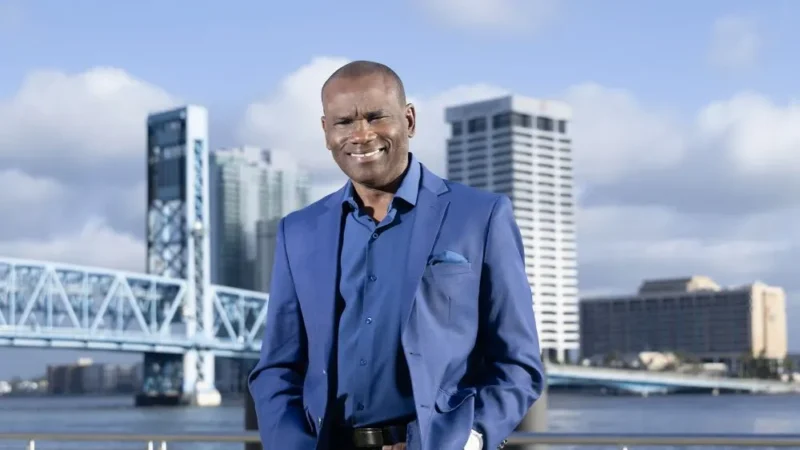
The LIBRE Initiative, a right-leaning Hispanic-focused organization devoted to education improvement, civic engagement and economic empowerment, opened a Jacksonville office in January.
Jacksonville Today thanks our sponsors. Become one.
Martha Torres, the grassroots engagement director for LIBRE Initiative Jacksonville, has lived in Duval County since 2008. Torres found a lack of information about the House of Representatives and Senate, at both the state and federal level, are among the reasons people do not vote.
That is starting to change.
“The candidates have to have more orientation to the Hispanic community,” Torres says. “Every candidate has to look at that and pay attention. Today, it’s 7%. Maybe, in two years it’s 15%. We have to keep working on that. Candidates have to look for them.”
Torres is also president of the Hispanic Republican Club of Jacksonville. In that capacity, she and others have knocked on doors in Arlington and in Cedar Hills on the Westside to encourage people to vote this election season. Orange Park in Clay County is another focus area of the door-knocking.
Jacksonville Democrats are not focused on a geographic area in their voter engagement. Valerie A. Gutierrez, president of the Duval Democratic Hispanic Caucus, says it is focused on connecting with newly registered Hispanic voters throughout the county and encouraging them to vote.
Gutierrez is a native of New Mexico who was stationed at Naval Air Station Mayport in 1987 and has since made her home here. She says participating in events alongside other Democratic-aligned organizations has been an effective way to engage and inform voters.
“With everything that has happened over the last two years, Hispanic voters are a lot more engaged,” Gutierrez says. “That’s what makes the difference between 2018 and now. Before, it was nonchalant and people asked does it matter. I think people are realizing just how valuable it is to vote in any election. I’m hoping this is not a one-off.”
That premise may be put to the test next spring when Jacksonville holds its municipal elections.
Engagement efforts
Maria Machin is a member of the Hispanic Republican Club of Jacksonville. It was created in 2025 following a commitment from Duval GOP Chair Charles Barr to further connect the party to racial minorities.
“You would think any campaign would think ‘Dang, that’s 46,000 votes. I can’t pretend they are not here.’ But, it’s small-minded,” Machin says.
Republicans, like Machin, represent 29.9% of Duval’s registered Hispanic voters, while Democrats are 32.8%. Independents are 31.8% of Hispanic voters.
The question is whether local Hispanics will vote. In 2024, the 64.5% of Hispanic voters who participated fell behind the 66.7% of Black voters and 79.1% of white voters who participated in an election that saw President Donald Trump return to power.
In the 2022 midterms, only a third of Duval’s Hispanic electorate, 33.7%, cast a ballot. That was well below the overall 50.7% turnout.
Over Florida’s last five gubernatorial elections, Hispanic voter participation in Duval County has been at least 13 percentage points below overall voter participation. In 2018, the last time the governor’s race lacked an incumbent, 49.1% of Duval’s 31,141 Hispanic voters participated in that election.
Florida-based Democratic strategist Marcos Villar says previous voter engagement efforts with Hispanic voters may not work this cycle.
“If we are going to win and move forward as a society, we have to bring young people in,” Villar said this summer when asked how Democrats can earn Latino votes. “If you want to win the Latino vote, you have to want to be a part of our family.”
Villar, who moved from Puerto Rico when he was 14, said he did not feel motivated to vote until he was 27. He is currently based in Orlando. During his remarks at Leadership Blue, a gathering sponsored by the Florida Democratic Party in July, Villar stressed that candidates need to meet people where they are to earn their vote.
A diaspora across the peninsula
Florida’s Hispanic diaspora is far from a monolith.
Rey Sordo is a Democratic Cuban-American candidate for the Florida House. His Republican opponent in the House District 119 race, Juan Porras, is also a Cuban-American under 30.
This summer, while attending Leadership Blue in Kissimmee, Sordo told Jacksonville Today he stepped forward for public office because of the exhaustion “and general disgust with how the country is going,” a decade into the Trump era.
Then there is Machin, a Cuban-American who was born in Hialeah and lived in Duval County for more than 20 years.
“I take my politics very seriously. I had to since I was little,” Machin told Jacksonville Today this month. “However, Jacksonville doesn’t embrace us.”
Machin mentioned her experience being rebuffed by local candidates from both parties.
“Here, for some reason, they don’t think they have to pay attention to Hispanics,” Machin said of local candidates. “The think we will go along to get along. If you can’t take care of business (and our economic issues), we won’t go out and vote for you.”
Duval’s Hispanic electorate also includes voters with Puerto Rican, Venezuelan and Mexican heritage.
Latino Victory Project President and CEO Katharine Pichardo said this summer that cultural competency would be critical in connecting with voters. That is something she says could come only from working with local Latino communities. Latino Victory has endorsed 11 candidates in Florida this cycle. All of them are Democrats.
What polling indicates
The University of North Florida poll that concluded Republican gubernatorial candidate Byron Donalds and Democratic gubernatorial candidate David Jolly are two points apart also found that 40% of its Hispanic respondents plan to vote on Election Day.
Affordability and economic sustainability have been the primary issue for Hispanic voters across the peninsula and the United States.
This month, UnidosUS, one of the largest Latino-centered civil rights organizations in the United States, found a majority of the 1,900 registered voters it contacted had not been contacted by any political campaign as late as mid-September.
Clarissa Martinez, vice president of the Latino Vote Initiative at UnidosUS, told reporters this month that Republicans have gone too far with policies aimed at Latinos, while Democrats have fallen short of the trust required to earn votes.
“For Democrats, they cannot rely on discontent with Republicans to put wind in their sails,” Martinez told reporters. “That has not necessitated in full-on enthusiasm for Democrats. That means people could decide to stay home.”
The UnidosUS poll spoke with 1,900 voters across the country and 2,700 working class Hispanic adults for its national survey. It contained 500 adults from Florida, nearly twice the sample size of Hispanic voters contacted in the UNF poll.
The top issues for the Floridians UnidosUS polled were, in order: cost of living; economy/jobs; healthcare costs; housing costs; then immigration reform.
“The main driver is the economy,” Martinez said. “As we have heard repeatedly from Hispanic voters, they are reminded daily about that particular concern: at the grocery store, at the gas pump or when the rent or mortgage is due.”