Each year Cumberland Island hosts 25% to 30% of the loggerhead nests in Georgia | Center for Biological Diversity
Published on September 22, 2026 at 2:55 pm
Free local news and info, in your inbox at 6 a.m. M-F. Sign up for the Jacksonville Today newsletter.
Jessica Howell-Edwards first visited Cumberland Island as a teenager, about 30 years ago.
“I was like every other visitor,” she says. “I was enamored by the horses, and I was enamored by the moss and the trees.”
Jacksonville Today thanks our sponsors. Become one.
Eventually, she gained confidence to go camping. First with friends, then alone. She says it was a significant part of her development.
“I feel like if I have needed a place as restorative as Cumberland, my kids will too,” Howell-Edwards says.
Today, Howell-Edwards is part of Wild Cumberland, a nonprofit dedicated to protecting the island from development. And she fears that a proposal to allow large houses on the island could endanger its future.



Jacksonville Today thanks our sponsors. Become one.
In 1972, Congress established Cumberland Island National Seashore. A public law restricted development, with the intention of keeping Georgia’s largest barrier island “permanently preserved in its primitive state” apart from some recreational areas.
Families were living on the island then, until they gave up their land to the government under eminent domain. Some families retained rights for themselves and their immediate heirs to continue living on the island for a set period.
Since then, many of those retained rights have expired. But a few landowners remain, and they want to stay.
Cumberland Island land swap
The National Park Service recently proposed two land swaps that would transfer roughly 130 acres into federal ownership and about 80 acres of federal land to private ownership. The private land would be consolidated on the marshland in the south.
A maximum of eight houses — some as large as 15,000 square feet — could be built on 20% of the privatized land, totaling 16 acres, according to a Voluntary Land Exchange Environmental Assessment.
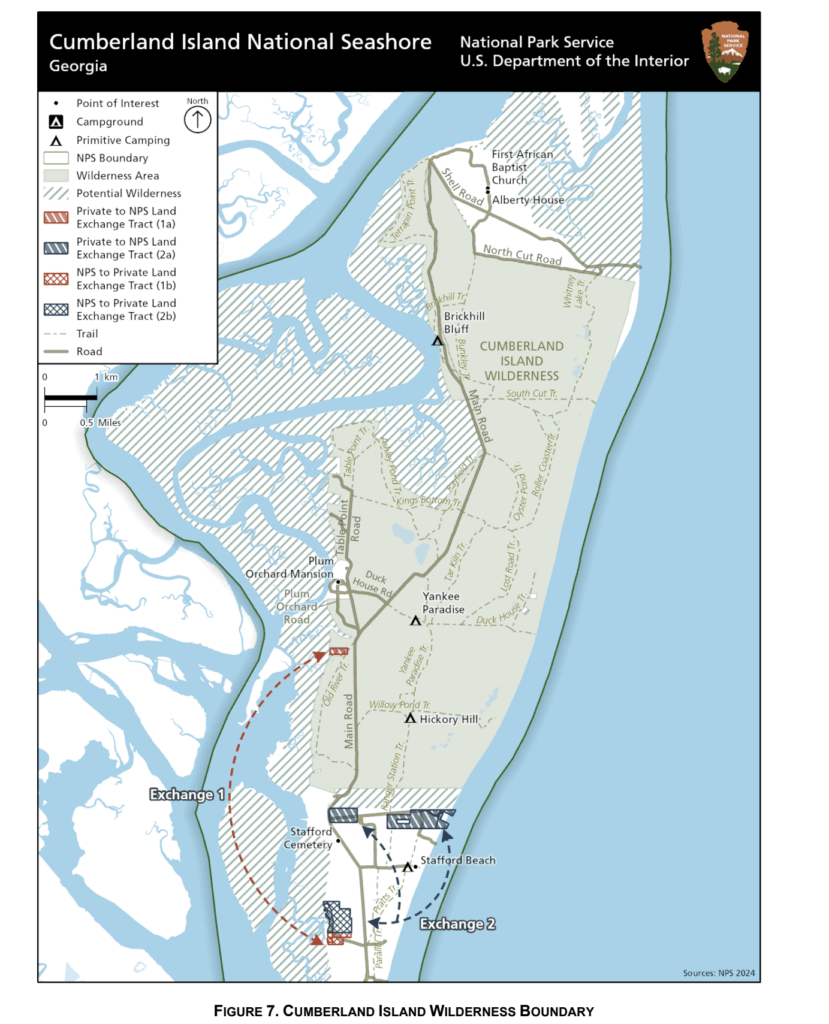
The park service said in a statement that the privatized land would be “protected by conservation easements. These easements would permanently limit development, prohibit subdivision, and ensure strong natural and cultural resource protections for generations to come.”
Conservation groups fear the park service may not be able to regulate land use after the exchange. In the Environmental Assessment, the park service lays out certain land uses that would not comply with its regulations. But it also acknowledges that privatized lands would be governed by Camden County rather than the park service itself.
For example, the park service says it would not authorize private dock construction. However, anti-development advocates worry that landowners may be able to seek permits for private docks under Georgia law.
Will Harlan, the Southeast director at the Center for Biological Diversity, says that right whales, the most endangered whale species in the world, have calving grounds just offshore of Cumberland.
About 380 North Atlantic right whales are left in the world, according to the National Oceanic and Atmospheric Administration. A vessel killed one in 2024 off the coast of Georgia.
Harlan is concerned that increased development could mean more barges crossing to the island with building materials.
In the short term, Harlan predicts, that will have “significant” effects on the whales who calve off of the East Coast, as well as the “turtles, shorebirds and also the manatees that literally live right along the western coast,” where the lands that may be privatized sit.
Today, Cumberland Island is home to several endangered sea turtle and bird species.
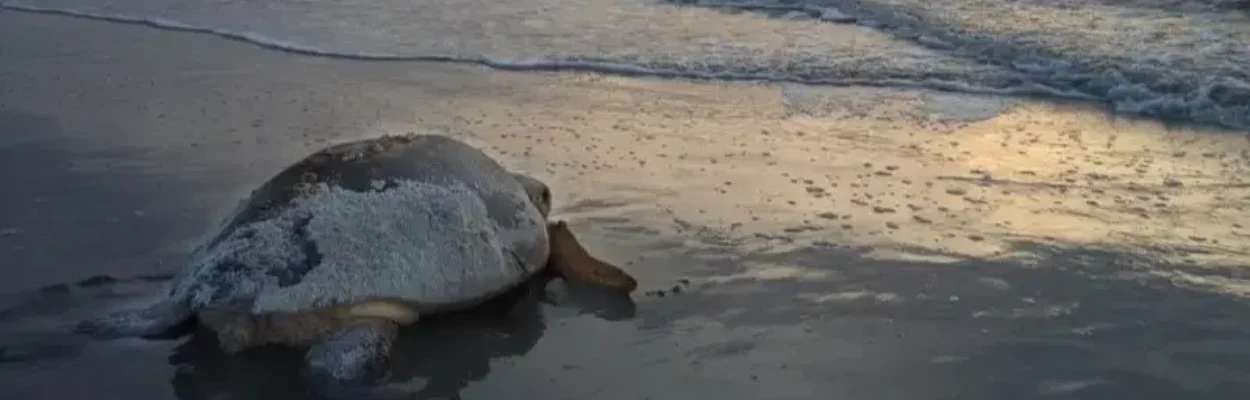
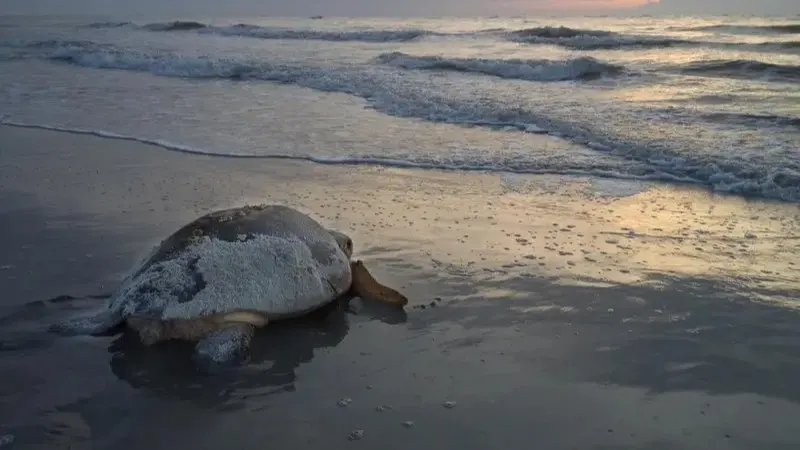
According to the National Park Service, each year the Cumberland seashore hosts 25% to 30% of loggerhead nests across the state of Georgia. Howell-Edwards says that she’s already seen the effects of lacking regulations on those populations, who rely on unobstructed paths to the ocean.
“ We’ve gone out to look for baby sea turtles and have found them in tire tracks,” she says. “So driving on a seashore, you know, that’s 18 miles of undeveloped shoreline, and given its significance, certainly for sea turtles, but also for a number of birds, it’s really devastating.”
Conservation groups also worry about the visitor experience. The National Park Service just published a new visitor management plan that doubles the number of visitors allowed on the island on a given day. It also greenlights the construction of new public bathrooms, pavilions and a retail store.
“These changes — expanding development, accommodations, and commercial activity on one of the wildest and most biologically diverse islands in our country — are incongruent with its Congressional mandates,” Howell-Edwards says in an email. “The NPS’ recent decisions undermine the very things which make it special.”
The park service will conduct a public meeting about the land exchanges from 5:30 to 7 p.m. Wednesday at the Santa Maria Venue. The public may submit comments until Oct. 16.
Clarification: This story was updated after publication to clarify that whales calve off of the East Coast, not in the intracoastal waterway that the proposed development fronts.