Jacksonville’s historic warehouses tell the story of a city shaped by railroads, shipping, manufacturing and commerce.
Published on August 19, 2026 at 2:09 pm
Free local news and info, in your inbox at 6 a.m. M-F. Sign up for the Jacksonville Today newsletter.
Jacksonville’s historic warehouses and industrial buildings tell the story of a city shaped by railroads, shipping, manufacturing and commerce. From coffee roasting plants and wholesale grocery warehouses to bottling operations and distribution centers, these buildings once formed the backbone of Jacksonville’s working economy.
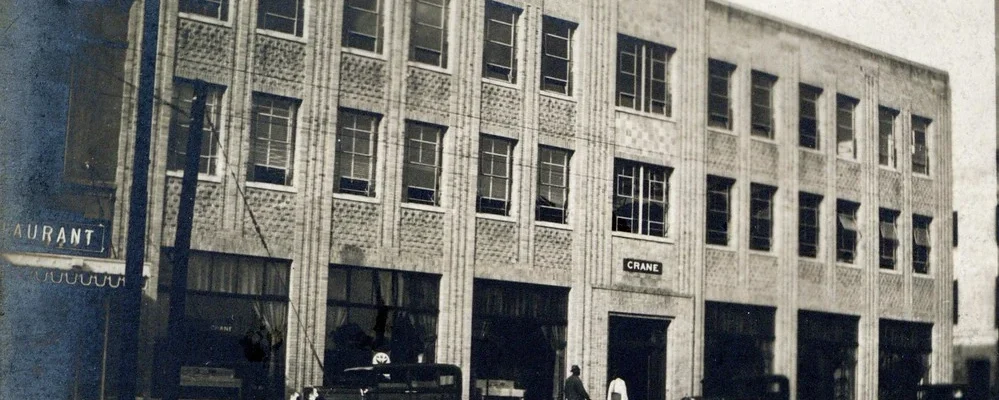
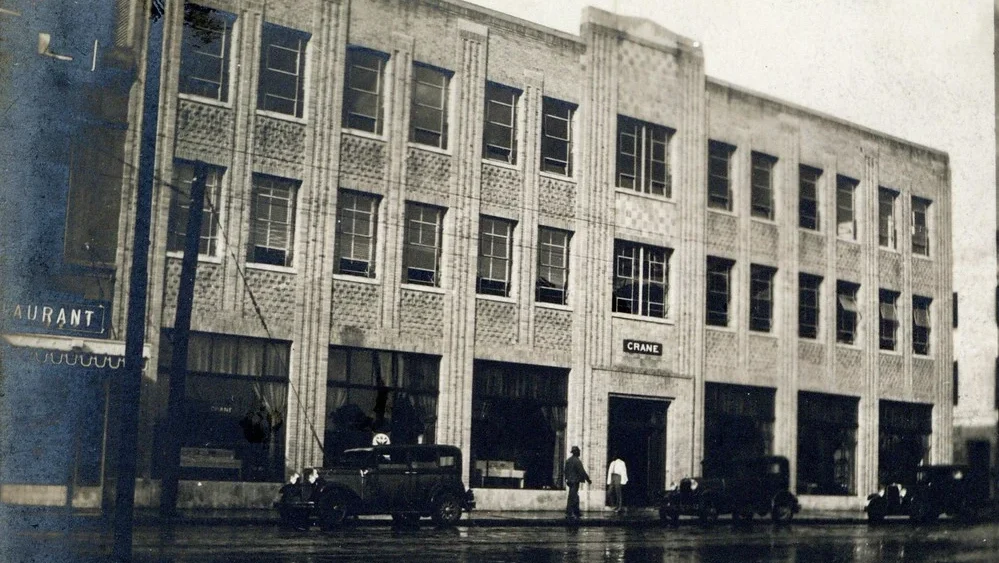
Some continue to serve industrial purposes, while others have been adapted for offices, apartments and small businesses, or simply await their next chapter. Through historic and present-day photographs, this collection explores how these landmarks have changed while preserving visible connections to Jacksonville’s industrial past.
Jacksonville Today thanks our sponsors. Become one.
A & P Southeastern Headquarters
1775 W. Beaver St.

Once the world’s largest retailer, the Great Atlantic & Pacific Tea Co. established a major Southeastern operations center along West Beaver Street. A&P opened its Eight O’Clock Coffee roasting plant here in 1925 and added an industrial bakery in 1932. The sprawling complex remained an important Jacksonville food-production and distribution center until A&P began relocating operations in 1968; the coffee plant continued until 1990. During the 1980s, Beaver Street Fisheries, now BSF, acquired much of the former A&P complex, continuing the property’s long association with Jacksonville’s food industry.


Clark & Lewis Company Wholesale Grocers
2481 Dennis St.

In 1947, Clark & Lewis Co. relocated its wholesale grocery operations to Dennis Street, adding to the concentration of food distributors, warehouses and industrial businesses operating in this section of Jacksonville. The move reflected the area’s growing importance as a center for wholesale commerce during the postwar era, when proximity to rail lines and major transportation routes made the district an attractive location for distribution companies. Today, the former Clark & Lewis property is owned by Global Impex Jax, continuing the building’s longstanding association with commercial and distribution uses.
Groover-Stewart Drug Co.
25 N. Market St.

Established by Flavius Christie and Frank Groover in 1900, the Groover-Stewart Drug Co. grew into Florida’s largest wholesale drug company. To accommodate its expanding operations, the company constructed this reinforced-concrete office and warehouse building on North Market Street in 1925. Recognizing its architectural and commercial significance, the property was listed on the National Register of Historic Places in 1992. The former warehouse has since been rehabilitated as Expansive Workspace, transforming a building designed for wholesale distribution into modern offices, suites and conference spaces.

Jacksonville Today thanks our sponsors. Become one.
H.J. Heinz Co.
57 Cantee St.

In 1948, H.J. Heinz Co. opened this 13,000-square-foot warehouse, office and shipping facility at Dennis and Cantee streets. Designed by prominent Jacksonville architects Marsh & Saxelbye and constructed by Gillespie Construction Co., the facility distributed Heinz products throughout nearly all of Florida outside Miami. It replaced the company’s earlier Jacksonville warehouse in LaVilla. Today, the former Heinz facility remains connected to food production as the home of Sunshine Peanut Co., Florida’s only peanut-butter manufacturer, which produces peanut butter for the Florida Department of Corrections.

Maxwell House Coffee
735 E. Bay St.

Jacksonville’s connection to Maxwell House began in 1910, when the Cheek-Neal Coffee Co. established a roasting plant along East Bay Street, where coffee beans could arrive by barge. Needing additional space, the company opened its five-story plant at 735 E. Bay St. in 1924. The complex eventually expanded to roughly 400,000 square feet. When closure threatened the plant in 1990, Jacksonville rallied behind the “Keep Max in Jax” campaign. The plant survived and remains an active round-the-clock coffee-roasting operation, producing Maxwell House and other coffee brands while employing nearly 200 workers.


Former Pepsi-Cola Bottling Plant
648 King St.

This King Street property has played several roles in Jacksonville’s beverage and food industries. From 1933 to 1946, it housed Thomas Beverage Co., a woman-owned soft drink bottler operated by Lois H. Thomas. In 1946, it became the Pepsi-Cola Bottling Co. of Jacksonville, which operated the facility until 1957. The building later served as a cold-storage warehouse for Deal-Warren Refrigeration Co. Today, the former bottling plant has been divided among smaller businesses, including Blue Buddha Exotic Foods, Cool Stuff Vintage and Flaire Antiques.

La Touraine Coffee / Union Terminal Warehouse
700 E. Union St.

When completed in 1914, the Union Terminal Warehouse was Jacksonville’s largest industrial building. Conceived by businessman C.B. Gay, the massive complex offered wholesale companies shared space with convenient transportation access and reduced operating costs. Among its major tenants was W.S. Quinby Co., which roasted its popular La Touraine Coffee here during the 1920s and 1930s. The Jacksonville roasting operation closed in 1935, but its local coffee legacy continued through companies that followed. More recently, Columbia Ventures rehabilitated the landmark warehouse as a mixed-use development combining apartments, retail, offices and makerspace.


Winn & Lovett Grocery Co.
1357 W. Beaver St.

Built in 1919, this West Beaver Street warehouse became an important hub for the grocery business that would eventually evolve into Winn-Dixie. William Lovett established his Jacksonville grocery chain in 1928, and its stores later became part of Winn & Lovett before being rebranded as Winn-Dixie in 1955. The company ultimately became Florida’s first Fortune 500 company. After Winn-Dixie relocated its operations, the building served for many years as the headquarters of Load King Manufacturing. Today, the historic warehouse stands vacant and is offered for sale.