

Published on August 5, 2026 at 4:21 pm
Free local news and info, in your inbox at 6 a.m. M-F. Sign up for the Jacksonville Today newsletter.
Long before entrepreneurship became a buzzword, Sophia Nickerson Starks built one of Jacksonville’s most influential Black-owned institutions.
When people tell the story of Jacksonville’s Black business pioneers, the names of bankers, physicians and civil rights leaders often take center stage. Yet one of the city’s most influential institution builders has remained largely absent from the historical spotlight.
Jacksonville Today thanks our sponsors. Become one.
Sophia Nickerson Starks spent decades quietly building something far more important than a successful business. She created an institution that trained Black women for professional careers, helped launch independent businesses across Northeast Florida and strengthened the economic foundation of one of the South’s most prosperous Black commercial corridors.
Her story is one of vision, discipline and entrepreneurship during an era when opportunities for Black women were sharply limited.
Born in Jacksonville in January 1890, Sophia Nickerson came of age during the tightening grip of Jim Crow segregation. The 1900 United States Census lists her as a 10-year-old student living with her parents, David and Margaret Nickerson, on Pippin Street in the Eastside’s Oakland neighborhood. The census also recorded that she could read and write and had attended school for six months that year, an achievement reflecting both family stability and a commitment to education at a time when educational opportunities for African Americans remained unequal.



Jacksonville Today thanks our sponsors. Become one.
Less than three decades later, Nickerson had transformed that educational foundation into entrepreneurship. By 1927, Jacksonville’s City Directory listed her as the proprietor of a “beauty shoppe,” officially establishing her as a business owner. The listing appeared before her marriage and confirmed that her enterprise operated within the city’s formal commercial structure. It also marked the beginning of what would become one of Jacksonville’s most influential vocational institutions.

She married Wesley Starks in 1929, according to the Florida Times-Union’s Daily Record, but continued operating professionally under the Nickerson name. Maintaining the school’s identity demonstrated an understanding of something modern entrepreneurs recognize immediately: institutional reputation matters. That institution became Nickerson’s School of Beauty Culture.
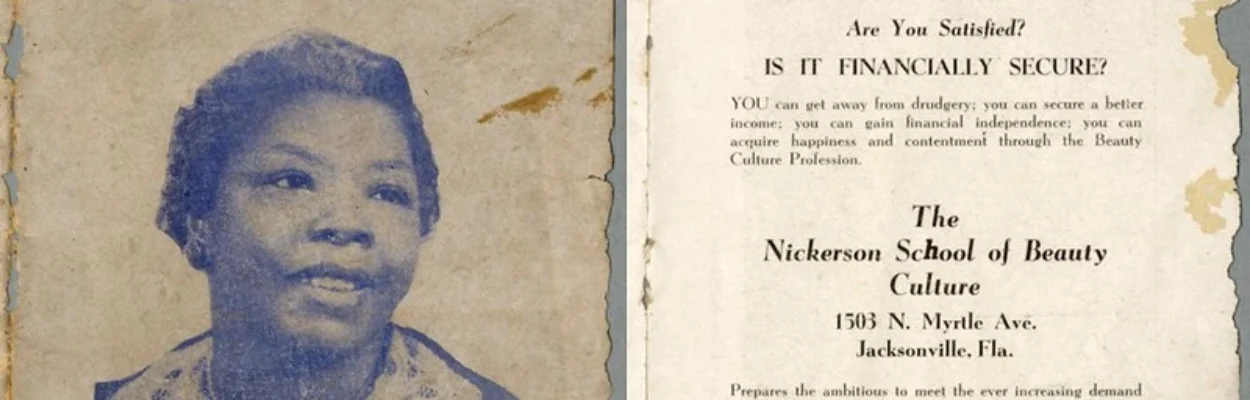
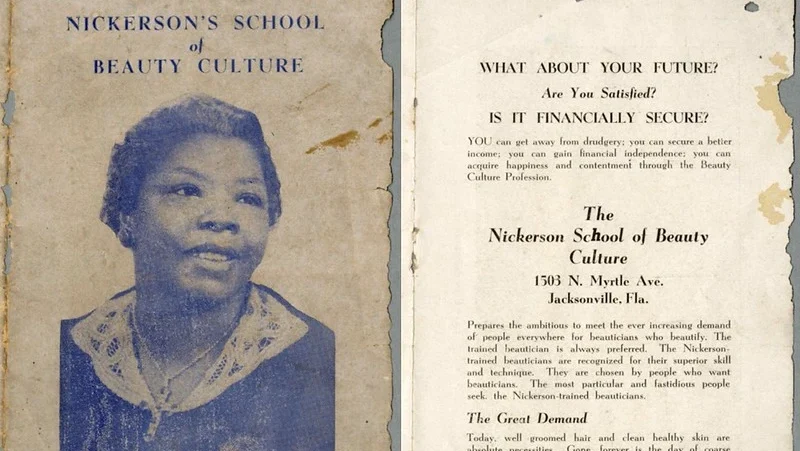
Located at 1503 North Myrtle Ave. in the heart of Durkeeville, the school was far more than a place to learn hairstyling. Surviving brochures reveal an academically structured program requiring 1,000 hours of instruction. Students studied hygiene, anatomy, physiology, sterilization, electricity used in beauty work, hair construction, salesmanship and shop management.
Admission required educational qualifications and health certificates. Students wore green uniforms with white collars and cuffs, reinforcing standards of professionalism. Tuition could be paid in installments, opening doors for women who otherwise might never have been able to afford vocational training.
At a time when economic opportunity for Black women was severely restricted, Nickerson Starks was building a professional pipeline. Her business also demonstrated remarkable financial resilience.
During the depths of the Great Depression, a surviving check dated November 28, 1931, drawn on The Citizens Bank of Jacksonville and signed by renowned philanthropist Eartha M. M. White, was made payable to Nickerson Beauty Shoppe. The document confirms that the business maintained formal banking relationships during one of the nation’s most difficult economic periods while also illustrating Sophia’s connection to Jacksonville’s network of Black civic leadership.

The 1940 United States Census offers another glimpse into the enterprise’s stability. Sophia and Wesley Starks owned their home at 1505 Myrtle Ave., directly adjacent to the beauty school. Census records indicate that Wesley reported no weeks of work and no income during 1939 as a railroad dining car waiter, suggesting the family’s financial security rested substantially on Sophia’s thriving business. Like many Black entrepreneurs of the era, she integrated home and business within the neighborhood she served.
By the early 1940s, Nickerson’s School of Beauty Culture had earned recognition well beyond Jacksonville. In January 1942, The Crisis, the NAACP’s nationally influential magazine, featured the school in a story highlighting Jacksonville’s thriving Black business district. Photographs showcased its classrooms, reception areas and training facilities while placing the institution alongside banks, insurance companies, professional offices and retail businesses that made Myrtle Avenue one of the South’s strongest centers of Black enterprise. National recognition confirmed what local residents already knew: Sophia Nickerson Starks had built something exceptional.
Local newspapers continued documenting the school’s success. In October 1942, The Jacksonville Journal reported that the institution had reached its largest enrollment to date. Two years later, The St. Augustine Record highlighted the opening of a beauty parlor owned by one of the school’s graduates, demonstrating that its influence extended far beyond Jacksonville city limits. Graduates were not simply finding jobs, they were opening businesses, employing others and reinvesting in their communities.
Starks remained an active civic and professional leader throughout the 1950s and early 1960s. Newspaper accounts chronicled her participation in beautician organizations, civic events and educational programs, including serving as a featured speaker during the Orange Blossom Beautician League’s anniversary celebration in 1961.

Her public leadership mirrored the quiet consistency of the institution she had spent decades building. Taken together, the documentary record traces an extraordinary life of continuity and achievement. Census records, city directories, banking documents, newspaper coverage and institutional publications reveal a woman who sustained a thriving enterprise through segregation, the Great Depression, World War II and sweeping social change.
Starks did more than teach cosmetology. She professionalized beauty culture, created structured pathways to economic independence for women and helped anchor one of Jacksonville’s most vibrant Black commercial districts. Her graduates established beauty salons throughout the region, creating businesses that generated income, strengthened neighborhoods and expanded opportunities for future generations.
Today, her name deserves recognition alongside Jacksonville’s most celebrated entrepreneurs and institution builders. Her greatest accomplishment was never simply operating a beauty school. It was proving that education, disciplined vocational training and Black entrepreneurship could become powerful engines of economic mobility. Long before the language of workforce development and small-business incubation entered the public conversation, Starks had already built the model. Her story still speaks through the communities her students helped shape.