
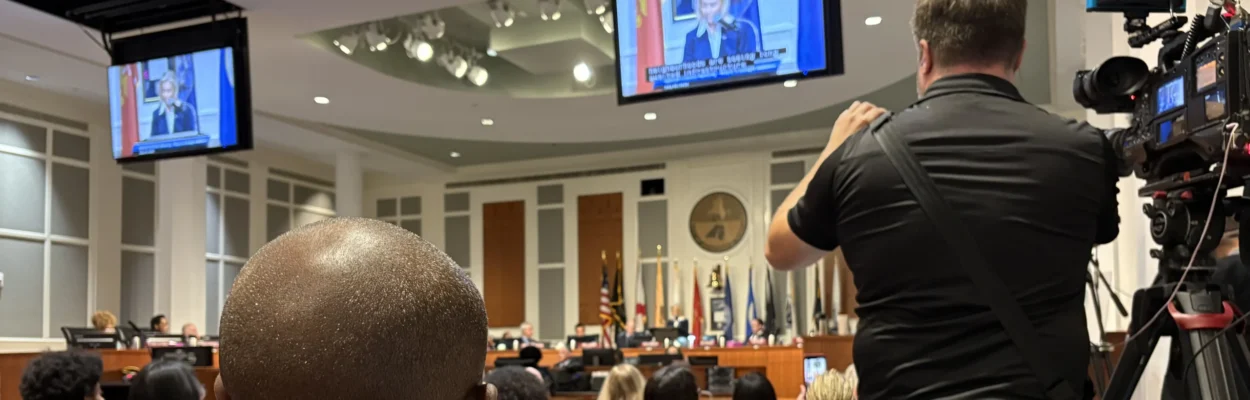
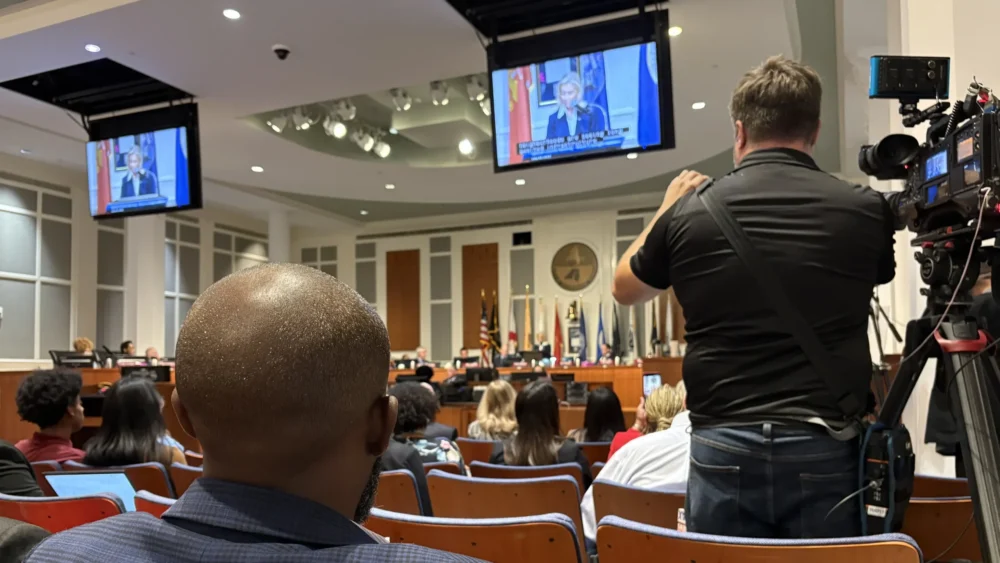
Audience members watch during the July 20 Jacksonville budget session. | Simone Endress, Jacksonville Today
Published on August 3, 2026 at 2:18 pm
Jacksonville Today seeks to include a diverse set of perspectives that add context or unique insight to the news of the day. Regular opinion columnists are independent contractors who are not involved in news decisions. Want to submit your own column on a matter of public interest? Email pitches to jessica@jaxtoday.org.
Here’s what it’s like to attend the mayor’s budget address, which kicks off the Jacksonville budget process, and how you can get involved next.
My first step in City Hall is a misstep. I send my full water bottle into the X-ray machine and a security guard points at a sign with red lettering: No Liquid.
Jacksonville Today thanks our sponsors. Become one.
This is my first time in the building, my first time attending a mayoral budget address. This is the start of the process that determines where Duval County residents’ tax money goes.
Much of our everyday lives — whether it’s a fix for a leaky septic tank, a new community garden, or whether an affordable housing development springs up in our neighborhood — correlates somehow to a policy decision made in this room.
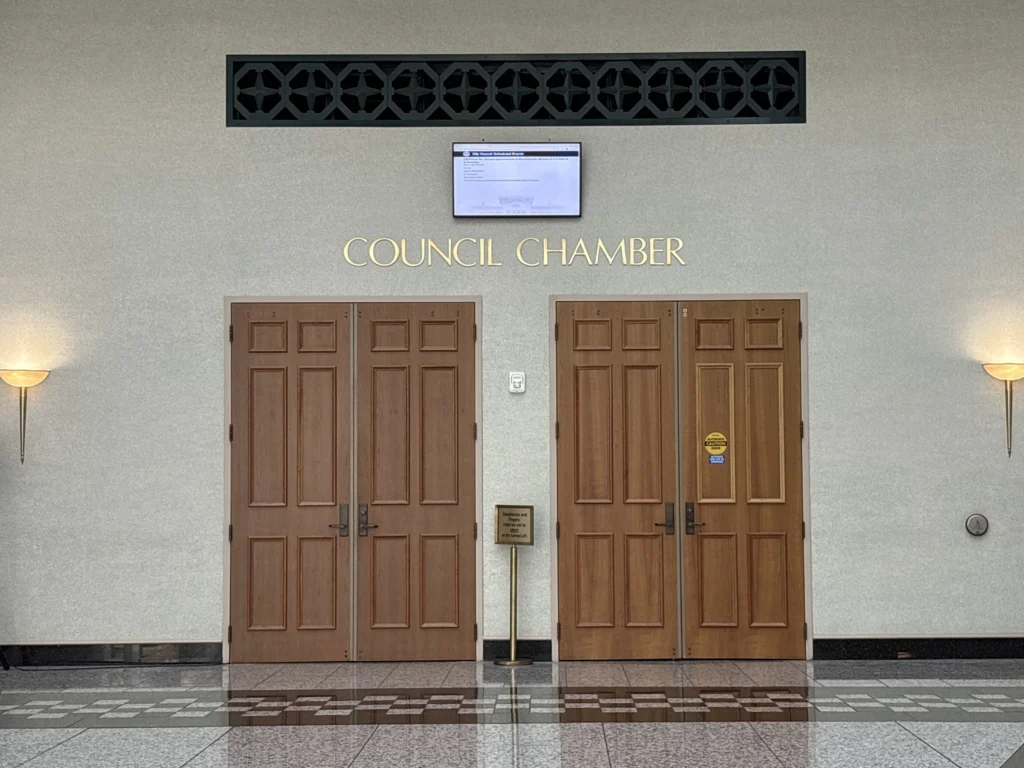
And the annual city lawmaking process starts here, with the unveiling of the mayor’s proposed budget. A large skylight softly illuminates the grandeur of the City Hall atrium. Golden, unwavering letters above tall doors read “Council Chamber.” Suits and dresses trickle steadily into the atrium. Luckily, I have a guide to this new world, Jacksonville Today’s City Hall reporter, Associate Editor Mike Mendenhall. He opens the door for me.

Jacksonville Today thanks our sponsors. Become one.
A mayoral budget address happens once a year. It’s the first meeting on the City Council’s calendar, which begins in July. The mayor takes about 30 minutes to make their case for a budget. That kicks off a two-month process of Council revisions and eventually mayoral approval that results in a final budget for the coming fiscal year.
As I learn, there are two parts of the budget: the General Fund and the Capital Improvement Plan. The General Fund covers daily operations like the salaries of public safety officers. Public libraries and city-funded health services. Affordable housing incentives. The Capital Improvement Plan is money that goes toward physical infrastructure improvements like bridge repairs and the phaseout of septic tanks.
Well-groomed people buzz around the aisle in the council chambers before the meeting. I recognize the sheriff and the City Council President Nick Howland. I look around but don’t see the mayor yet. The aisles fill up with video cameras, lobbyists in patterned dresses, sheriff’s and fire department uniforms, neon nonprofit T-shirts. It seems like everyone has an intern. Nobody in the audience has seen the budget yet, and many are waiting to hear the fate of specific items.
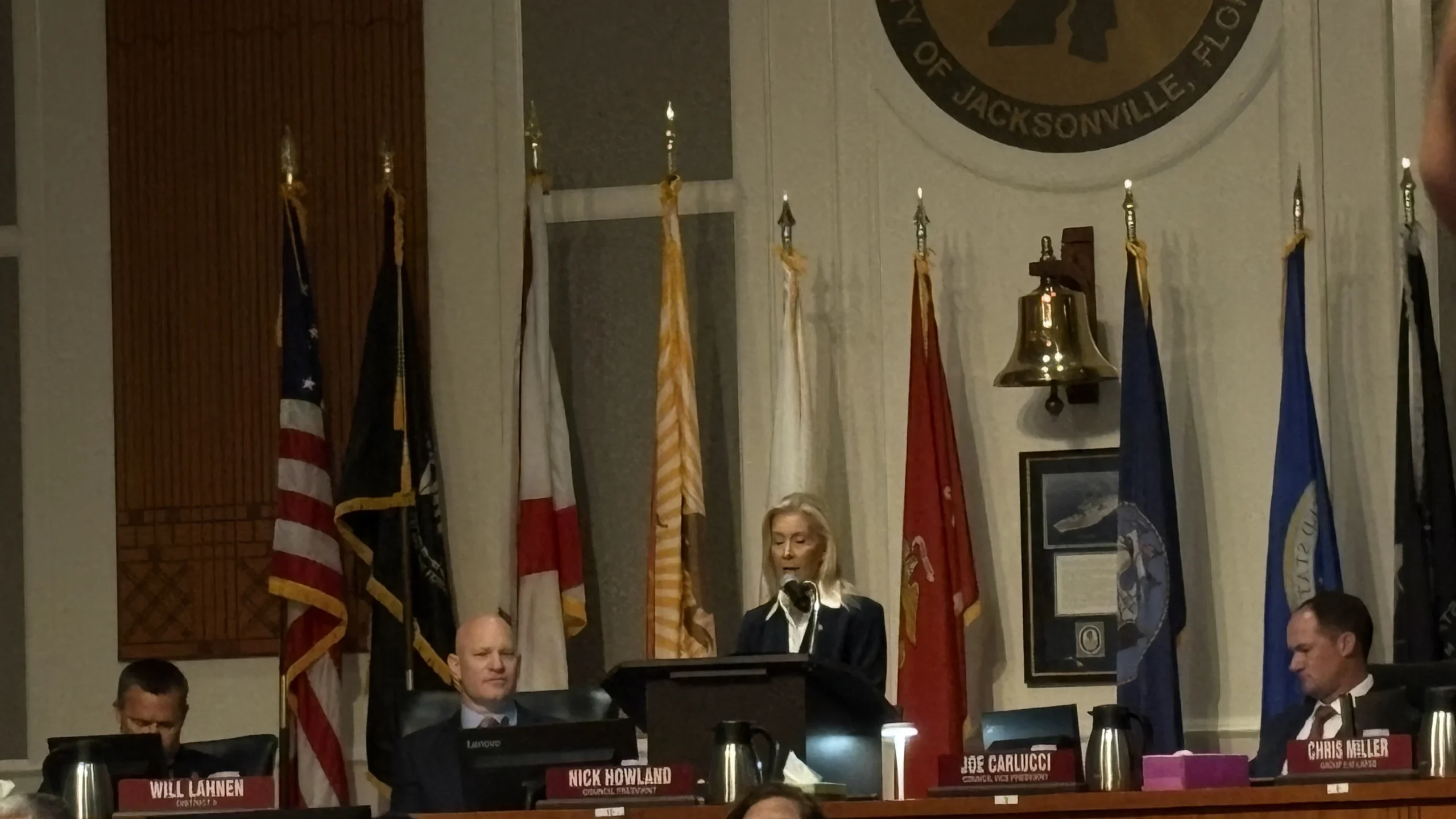
The special meeting begins. Howland, for whom this is the first meeting as council president, seizes the opening remarks and makes a lofty speech about checks and balances — reminding us that though the mayor has drafted it, the council will make the final budget. He expresses a hope that the process will be cordial.
Mayor Deegan takes the stage and shakes hands with Howland before delivering her budget address. She says she wants to improve housing and healthcare affordability and focus on pensions for public safety officers while repairing infrastructure. (Her budget increases money for road resurfacing projects). “Sometimes the most expensive thing government can do is nothing,” she says. “Because maintenance deferred, that’s not savings, that’s hidden debt.” Forceful applause abounds — Howland, who has been advocating for conservative spending in the run-up to the start of his term, smiles.
This year, the typical budget wrangling could be exacerbated by a statewide vote in November that could all but eliminate local property taxes. If voters approve of the amendment, the city would have an estimated $150 million less to work with starting in 2027. They would have $300 million less in 2028 and all proceeding years. In the face of this, Howland and a few other city council members have suggested putting some budget items “below the line,” meaning those departments would have to return to council later in the year to make their case for the funding.
The hearing wraps up. Now, Deegan will begin a series of town halls to discuss the budget with Jacksonville residents. The City Council Finance Committee will also begin to discuss each department’s budget before a final spending plan emerges from the gauntlet by its effective date of Oct. 1. (As of today, the council plans to pass the final budget at its Sept. 22 meeting.)
A budget reflects the direction the city wants to move. Have thoughts on that? Here are opportunities to weigh in:
- Attend one of the mayor’s town halls. The first is Aug. 5.
- Attend a budget hearing. The first is Aug. 13.
- Contact your City Council representatives (The county has five at-large reps and 14 district-specific reps). See who represents you and then send them an email.