
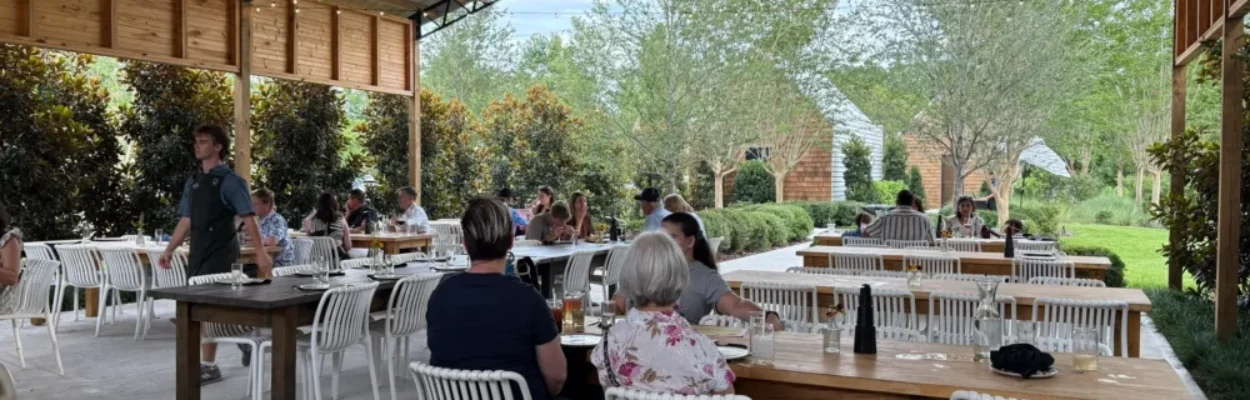
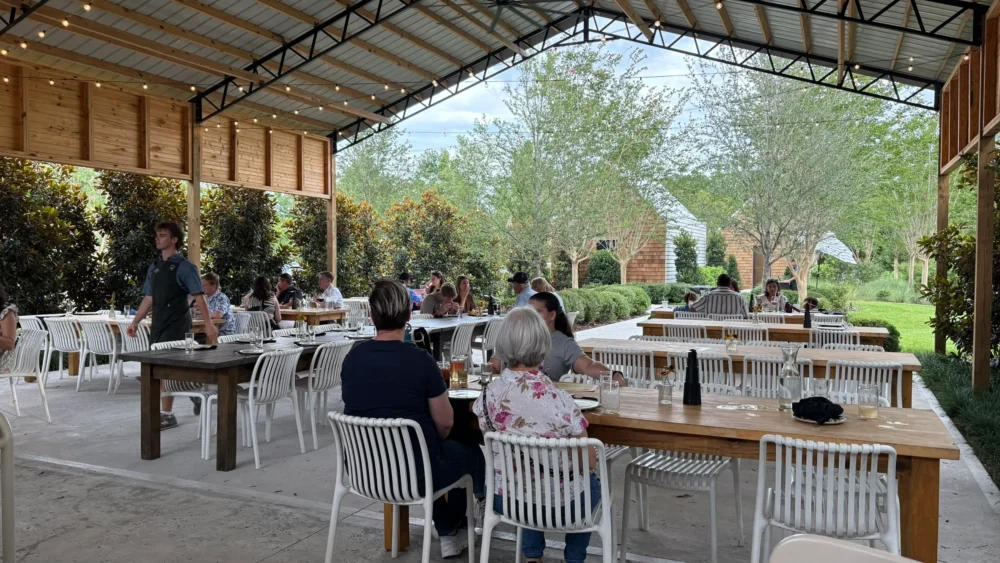
Open-air dining at The Roost, Congaree and Penn's new foray into casual dining | All photos by Hanna Raskin
Published on July 16, 2026 at 1:55 pm
Jacksonville Today seeks to include a diverse set of perspectives that add context or unique insight to the news of the day. Regular opinion columnists are independent contractors who are not involved in news decisions. Want to submit your own column on a matter of public interest? Email pitches to jessica@jaxtoday.org.
My late friend Nathalie Dupree, an exacting food writer, feminist and cooking instructor who for many years was the face of Southern food on public television, is best known for her pork chop theory. The collectivist idea that two chops will enhance each other with fat, while a lone chop dries out in the pan, turned up in her obituaries as surely as her birthdate.
But Dupree had plenty of theories, most of which she considered proven. Among them was the belief that young chefs are prone to make their savory dishes too sweet.
Jacksonville Today thanks our sponsors. Become one.
I was only two or three dishes into my recent meal at The Roost, Congaree and Penn’s new foray into casual all-day dining, when I started wondering about their creators’ birthdates. In retrospect, I probably should have gotten curious sooner, but I was distracted by the sun setting languorously over the impossibly pastoral vegetable fields alongside which the open-air venue sits.
Had I looked away from the plants, I might have noticed that The Roost’s menu of small plates—plus chicken, steak and a burger to bolster the restaurant’s not-fancy bona fides—was built with Brix, to use the scientific term for sugar levels. At The Roost, hummus is served with blackberry compote (14 degrees Brix, on average) instead of, say, cucumbers (3 degrees Brix). The littleneck clams are finished with sweet corn butter (20 degrees Brix) and cantaloupe (11 degrees Brix) rather than parsley (8 degrees Brix). That’s a commitment to sweetness that goes well beyond basic respect for summertime bounty.
It’s not a function of chef age, though. Chefs Steve Crawford and Andrew Blanton have years of restaurant experience, including close to a decade between them at Congaree and Penn. In fact, when I started poking around online to learn more about them, one of the first hits was Crawford’s latest Facebook post, offering up a box of superhero movie DVDs. “You’re old as hell,” a friend responded, ribbing him about the format.



Jacksonville Today thanks our sponsors. Become one.
So much for that theory.
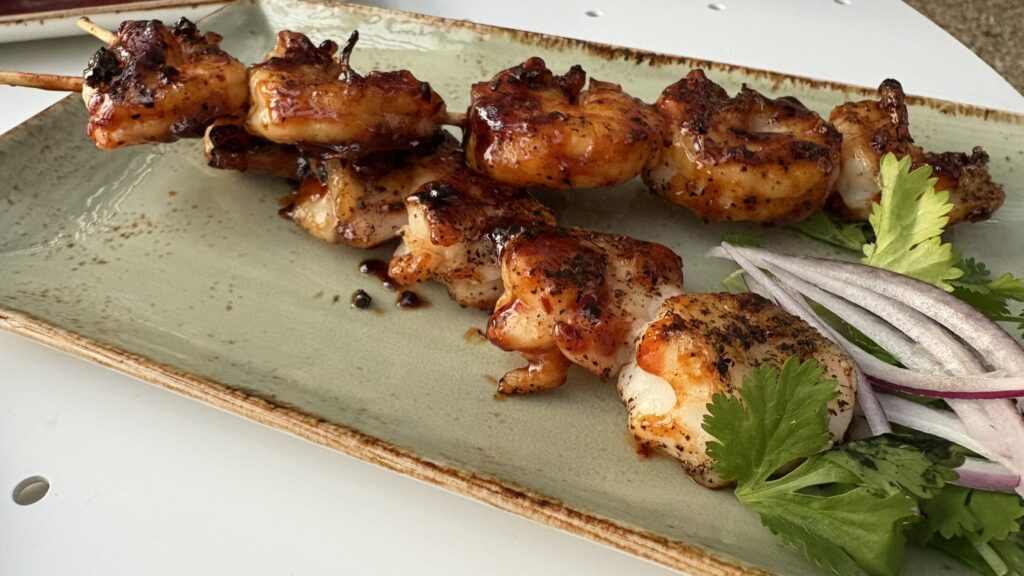
Except that I don’t think Nathalie was entirely wrong. Maybe chronological age doesn’t explain why The Roost’s grilled shrimp are lacquered with sticky-sweet orange juice, but I feel comfortable chalking it up to a youthful exuberance that the scenery and setup inspire.
Speaking of Congaree and Penn’s administration, I’m not sure they’d appreciate the phrase “special occasion” used in conjunction with The Roost, perhaps preferring to save it for the six-course chef tastings offered on the farm in the fall, or High Horse. They’re doing their best to signal that The Roost can stand in for wherever else you might grab beers after softball practice, charging an eminently reasonable $10 for a pimento cheese starter and listing juice boxes on the beverage menu.
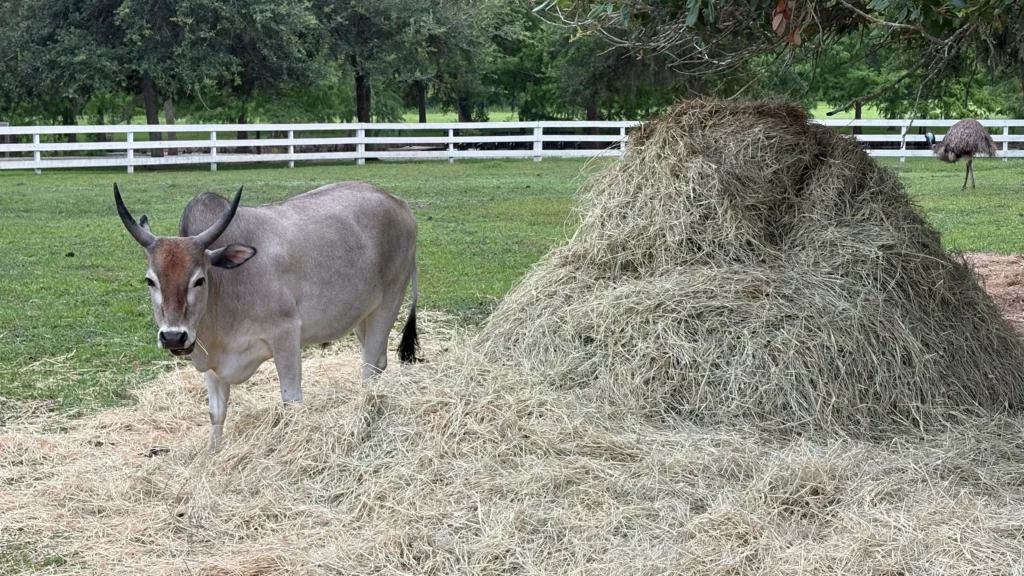
For many patrons, though, The Roost understandably amounts to an affordable glimpse of luxury. It’s hard to drive 20 minutes out of town to a hushed 330-acre tract where the trees are trimmed, the livestock’s spotless and the bungalows rent for $350 a night without feeling a frisson of “night out.”
If that’s how you envision your time at The Roost, whether your reservation is for Thursday lunch or Sunday supper, consider bringing a bottle of wine and paying the $30 corkage fee. The Roost’s drinks list isn’t all juice boxes, but adult selections are limited to a smattering of wines, local beer and homemade cider. Sampling the latter by the flight is a popular option, but I found even the driest of them—pardon the redundancy—too sweet.
The one menu item which leans insouciantly into acid is a wide-lipped serving bowl of pickles, alluringly bright in flavor and hue. Unfortunately, though, the selection of vegetables is out of step with the surroundings. What could have doubled as a vicarious farm tour instead seems to reference someone else’s orchard, with green and kalamata olives taking up about half the stoneware bowl.
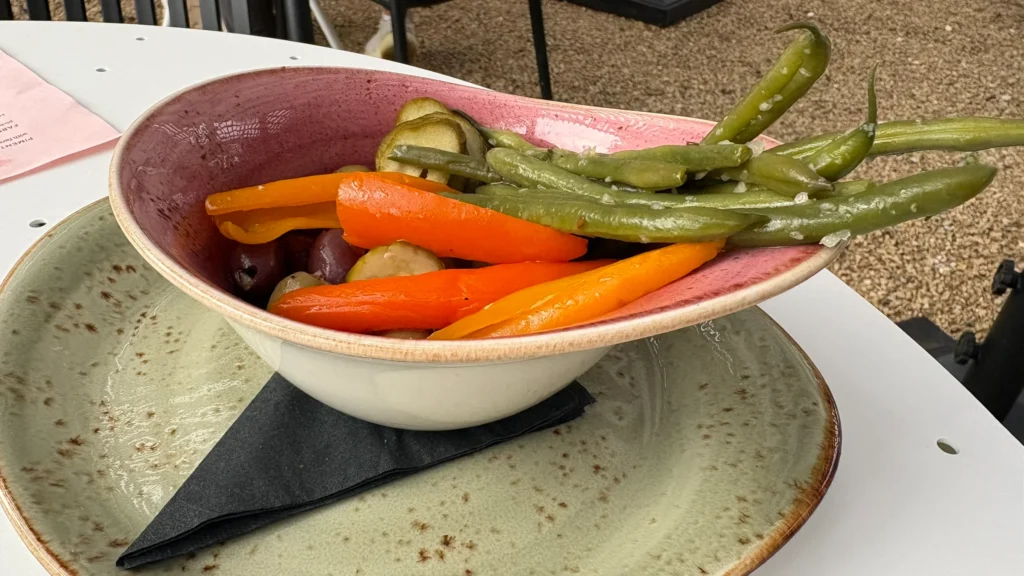
For those who don’t keep close tabs on Congaree and Penn’s property map, The Roost is a successor to the restaurant that occupied the Quonset hut, a structure now being remade as an enclosed dining room for Crawford and Blanton’s next fine-dining project, High Horse. While any assessment of that venture will have to wait until it opens this winter, at The Roost, the agritourism minds behind Congaree and Penn have mustered a culinary experience that’s comfortable and classy in equal measure, making it more vibrant than most special-occasion additions to the local restaurant landscape.
While olives are cultivated in Northeast Florida, I didn’t get the impression that these fruits were homegrown. Later, my excellent server confirmed that the requisites of serving food at scale mean the only menu items from the premises are squash and rice. That makes sense, although I’m still hoping once the restaurant recovers from the ballyhoo of its June debut, a cook might cut up and pickle a few of the watermelons I saw in the field.
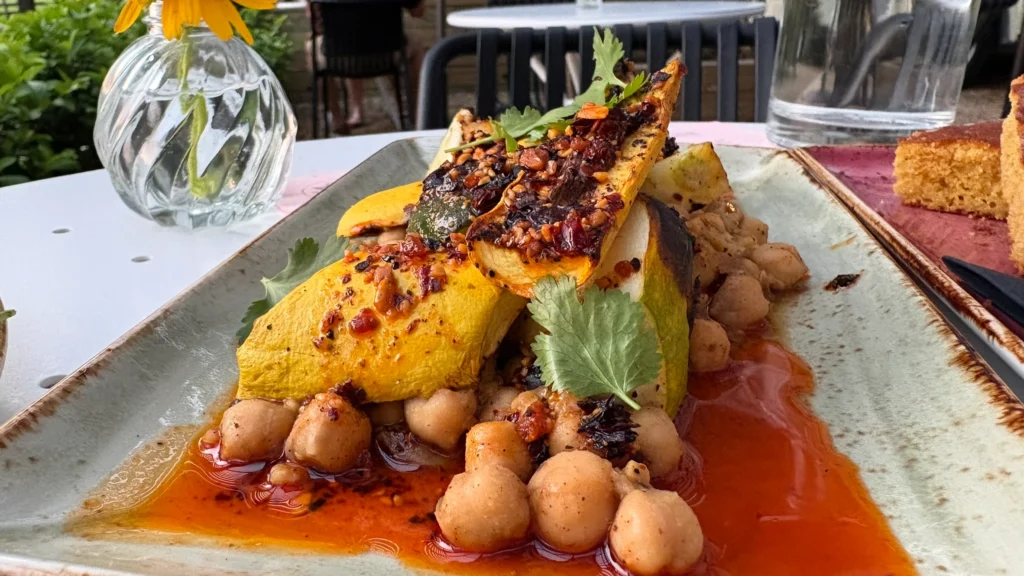
As for the squash, the hulking wedges on my plate weren’t thoroughly cooked, but underlying chickpeas bathing in a shimmering salsa macha, textured with dried chiles and nuts, hinted at The Roost’s reigning star dish. Every time I heard a server talk up the lima beans to another table, I was tempted to chime in with my testimonial, which would have gone something like this:
Have you ever heard older people say they grew up poor but didn’t know it? These slow-simmered beans are blissfully removed from the ill-informed opinion that limas are bland, boring, or ordinary. Peppery and cassoulet-creamy, they’re fabulously rich—and cut a pretty figure with their trim of grilled split okra pods.
For dessert, The Roost serves ice cream, pie and banana rice pudding, which is more of a banana pudding with rice than the other way around. The scarce grains act like sprinkles in the custard, which is awfully sweet. But, then again, so’s The Roost.
The Roost is at 11830 Old Kings Road, Jacksonville 32219 | Full menu | Hours: Thursdays 5 p.m.-9 p.m.; Fridays 5 p.m.-10 p.m.; Saturdays 11 a.m.-10 p.m.; Sundays 11 a.m – 9 p.m.