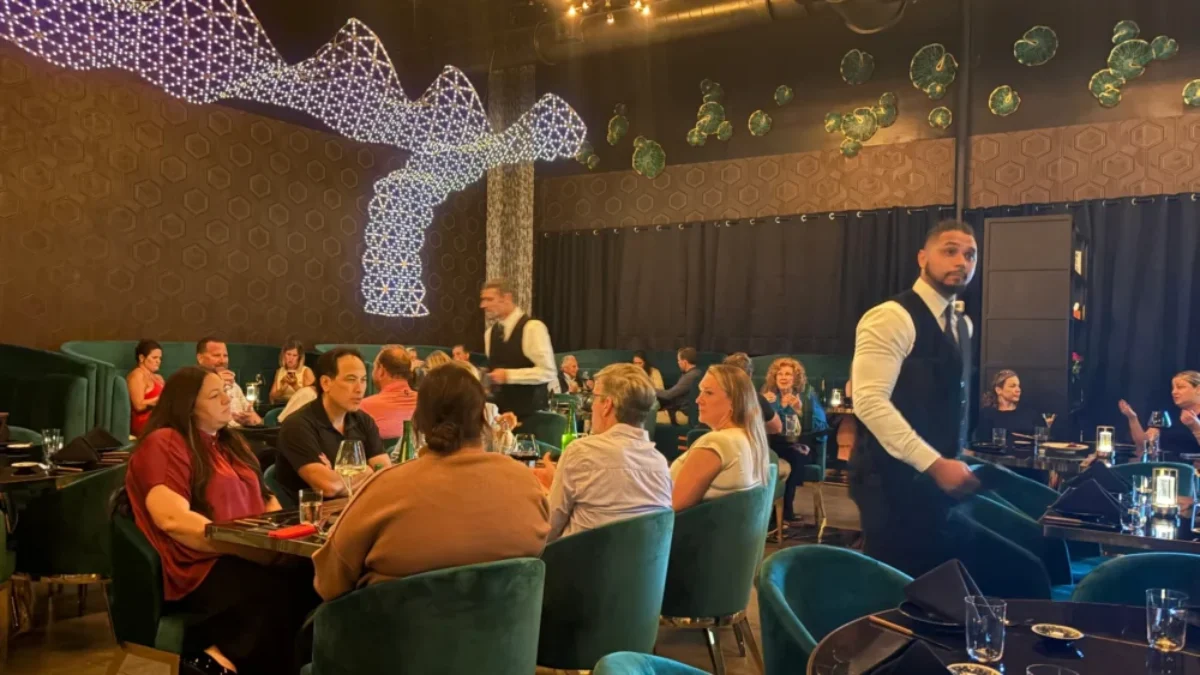

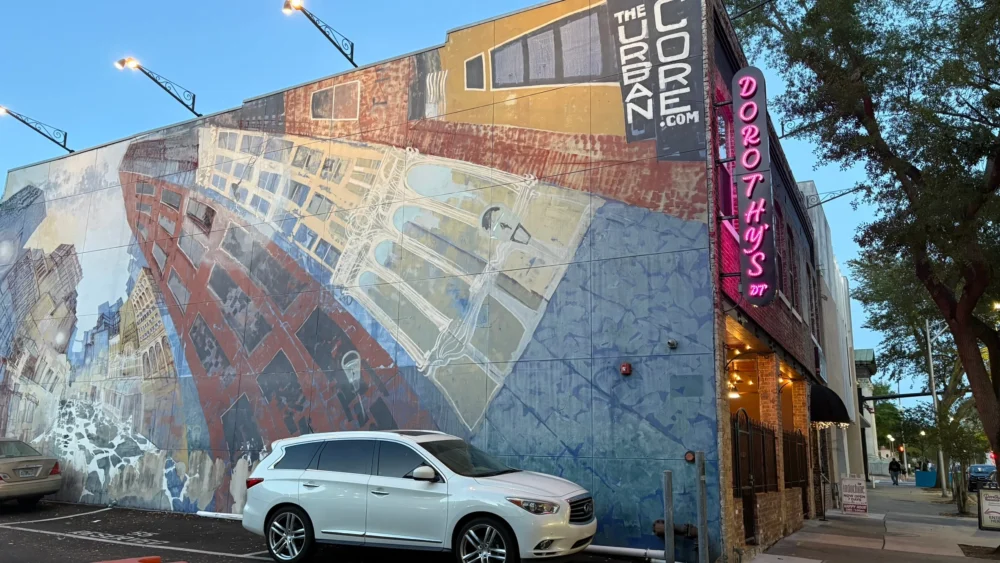
Dorothy's Downtown was one a growing number of recent restaurant recipients of public incentives under the Downtown Investment Authority's Retail Improvement Program. Dorothy's received $167,380 (48% of its total development cost) in 2024. | Hanna Raskin
Published on May 31, 2026 at 12:35 pm
Free local news and info, in your inbox at 6 a.m. M-F. Sign up for the Jacksonville Today newsletter.
When the owners of Keane’s Tavern on May 20 asked the city to support the development of a listening den above their Irish-style pub on East Bay Street, they stressed what would make Vinyl Room different from other Jacksonville venues. They cited events themed around records, state-of-the-art speaker systems and a snacky menu featuring burrata and baos.
What they didn’t mention was something they have in common with a growing number of local restaurateurs: A business plan that incorporates significant financial support from the food-and-beverage arm of the Downtown Investment Authority’s Retail Enhancement Program, familiarly known as FAB-REP. Although the agency has courted culinary proposals in The Elbow and Hogan x Laura districts since 2020, the initiative didn’t pick up serious steam until recently.
Jacksonville Today thanks our sponsors. Become one.
The $590,000 investment awarded to Vinyl Room, including a forgivable $200,000 loan, is one of 11 incentives distributed through the dedicated fund since the start of 2024. By contrast, four FAB-REP incentives were awarded in the previous three years. Downtown restaurants, including Keane’s, have also qualified for grant money at an increased clip through the DIA’s sidewalk enhancement program.
“We’ve really seen an uptick in the last two years,” said DIA redevelopment manager Allan DeVault, who attributes the culinary sector’s mounting interest in civic backing to two factors.
First, DeVault believes more prospective restaurateurs finally see the potential that Downtown’s champions have been talking up for decades.
Jacksonville Today thanks our sponsors. Become one.
“As a native, I’ve heard it all my life,” DeVault said. “In the ‘70s, my dad used to drive me through LaVilla and say, ‘This is all going to be built up.’ I joked it was the only time he ever lied to me. But now, with the rise and momentum and excitement, people are saying, ‘This is really happening.’”
Second, while DeVault is anxious about coming off as “a horn blower,” he allows that his involvement with FAB-REP has made the program more palatable for bakers, brewers, baristas and other culinarians who may have chosen their careers in part to distance themselves from bureaucracy.
“They may bake the best croissant in the world, but filling out a pro forma can be a challenge,” DeVault explains.
In his current role, which he assumed at the end of 2023, DeVault serves as a liaison to food entrepreneurs. They recognize him as a peer, since he got his professional start in wine sales after graduating from the College of Charleston. After returning to Jacksonville from California, he partnered with Jonathan Insetta to open Black Sheep in 2012; the pair five years later launched bellwether, a buildout facilitated by a forgivable loan from the DIA.
DeVault left the company in 2021, but bellwether lasted until this past March, following several years of contending with the high food prices and low consumer confidence that are challenging restaurants everywhere.
“Every week, it’s something new,” Jacques Klempf, owner of Cowford Chophouse, said of the industry’s ongoing struggles. “Whether it’s a compressor that’s down, or a cooler that’s out. There are a lot of naysayers out there too.”
Of those problems, the naysayers are the easiest for Klempf to deal with. Since purchasing the Bostwick Building in 2014, he’s never regretted playing a part in Downtown’s revitalization. His restaurant received a DIA grant prior to FAB-REP’s debut, but he’s since gotten to know DeVault.
“Allen’s a great guy; very helpful,” Klempf said. “He understands all the ins-and-outs.”
In practice, that means DeVault is constantly trying to shred red tape on behalf of applicants, including Pour Taproom, Dorothy’s Downtown, Besa Bakery and Starbucks.
(DeVault knows that last name might not sit well with the indie business crowd, so repeats what he told the DIA board when he made a successful request for funding: “This is a guy from Orlando,” he says of the franchisee. “And, quite honestly, it’s helping a landlord of a recently purchased office tower,” adding that the building owner was required to create street access under the grant’s terms.)
For example, DeVault is adept at translating for restaurateurs what’s classified as a construction cost, meaning it’s eligible for funding. “I can help you with the banquette, but I can’t help you with chairs,” he said. “I can’t help with [point of sale] systems, but I can help with the oven.” Additionally, he works on their time table.
“In (food and beverage), things need to happen very quickly,” DeVault said. “By way of example, it used to be here that we’d need everything 6-8 weeks before a board meeting. I just texted an operator to say, ‘If I have everything three weeks before, I can put it together in a week.’”
DeVault isn’t aware of any other community redevelopment area, nor any cities beyond Florida, offering such extensive support for the establishment of bars and restaurants.
Those of us who cover and critique food and drink know governmental subsidies have long been high on restaurateurs’ wish list. Having seen so many community-serving private enterprises go belly up, wine educator Zach Gebelle says he’s fantasized about alternative funding strategies.
“It’s time for those of us who believe hospitality venues serve a public good to realize smaller operators can’t thrive if they must fully take on all the risks and costs of rent, labor and goods,” Gebelle, co-host and producer of the VinePair podcast, said. “The communities that understand this will end up with vastly more vital restaurant and bar communities than the rest.”
Gebelle’s based in Seattle, so he can’t comment on the robustness of the dining scene coming together in Downtown Jacksonville.
But DeVault sees encouraging signs from his close-up vantage point, including The Indigo Road’s plans to open a location of Colletta, the Charleston-based hospitality group’s signature Italian restaurant, in the forthcoming Pearl Square development.
And there are others.
“Dorothy’s does a great job of upscale Creole, Pizza Dynamo is darn good New York-style pizza, and I’m proud we’re getting Breezy’s shrimp-and-grits,” he said. “We’re getting a lot of diversity, which is great.”
More comfortable talking up the city than his contributions to it, he concluded, “We haven’t got any restaurants yet that are going to get a Bib Gourmand, but it’s getting to that point.”