Published on July 8, 2026 at 1:44 pm
Free local news and info, in your inbox at 6 a.m. M-F. Sign up for the Jacksonville Today newsletter.
Long before Jacksonville’s Westside became synonymous with warehouses and distribution centers, a single developer saw opportunity in an overlooked stretch of land along Dennis Street. His gamble transformed a quiet corridor into one of the city’s most important industrial districts.
Today, thousands of trucks travel through Jacksonville’s Westside every day, serving one of the nation’s largest logistics markets. Yet few realize that the roots of this distribution economy can be traced to a small creek, a handful of factories, and the vision of developer John E. Price.
Jacksonville Today thanks our sponsors. Become one.
Building an industrial park from the ground up

In the early 1940s, Dennis Street looked nothing like it does today.
When Price acquired property along the west side of Dennis Street near Stockton Street just before World War II, only three industrial facilities lined the roadway: Atlantic Ice & Coal Co., Swift & Co. and an aging mattress factory.
The surrounding land consisted largely of low-lying property interrupted by a creek gully, making large-scale industrial development difficult. But Price saw something others did not, a location served by rail, close to downtown Jacksonville, and ideally positioned for postwar industrial expansion.


Jacksonville Today thanks our sponsors. Become one.
Following the war, Price began turning his vision into reality.
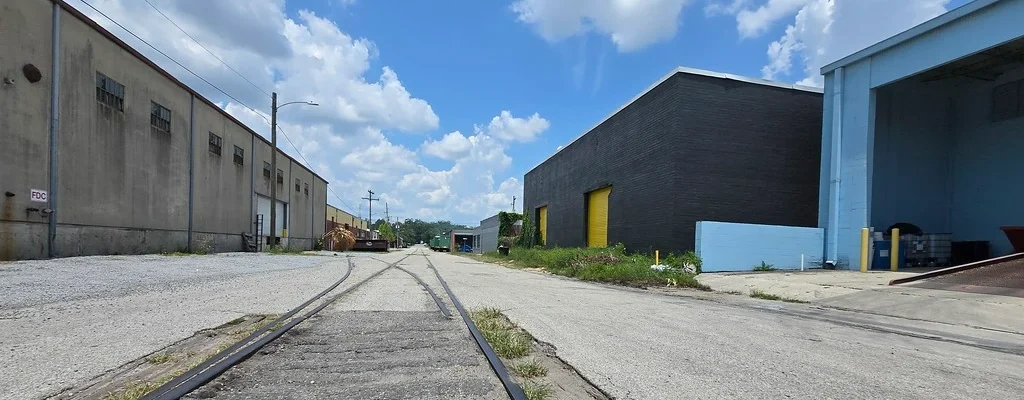
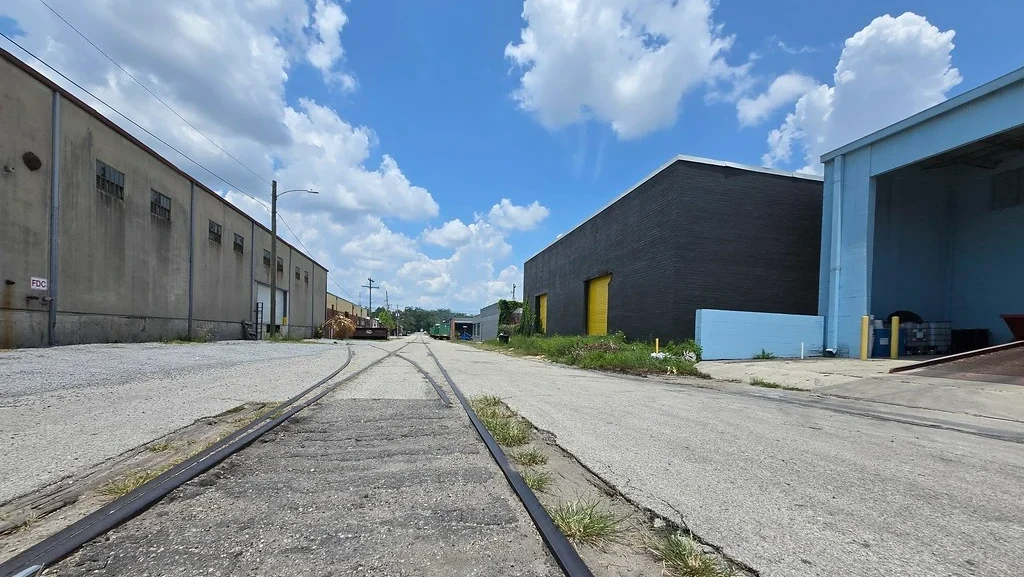
In 1946, bulldozers moved onto the property as crews filled marsh along McCoys Creek, graded the land, laid out new streets, and installed Atlantic Coast Line Railroad sidings down the middle of Harper and Swan Streets. Price invested approximately $75,000, a substantial sum at the time, to prepare nearly 600,000 square feet of industrial property for development.
The investment immediately attracted manufacturers and distributors looking for modern warehouse facilities connected directly to rail transportation.
Within three years, 25 companies had established operations in the emerging Dennis Street Industrial District. Price’s first major success came in 1947 when Turpentine Rosin Factors, Inc. signed a contract for a new $100,000 warehouse serving the company’s commissary operations.
The project demonstrated that Dennis Street could accommodate large industrial users while offering modern facilities unavailable elsewhere in Jacksonville. The warehouse quickly became the catalyst for additional investment.
National companies arrive

As word spread, nationally recognized companies began selecting Dennis Street for regional distribution operations. Jewel Tea Co., an Illinois-based door-to-door grocery and housewares business, established operations in 1948.
That same year, H.J. Heinz Co. constructed a new 13,000-square-foot warehouse, office and shipping facility at the southeast corner of Dennis and Cantee streets. Designed by Marsh & Saxelbye and built by Gillespie Construction Co., the facility served virtually the entire state of Florida outside Miami, replacing Heinz’s earlier Jacksonville warehouse at the intersection of West Ashley and Broad streets in LaVilla.
The arrival of nationally recognized brands validated Price’s vision and established Dennis Street as one of Florida’s premier industrial addresses. By 1949, development accelerated dramatically.
B.F. Goodrich relocated from Downtown Jacksonville to a modern 18,800-square-foot warehouse at Dennis and Watts streets. Designed through a collaboration between Marsh & Saxelbye and B.F. Goodrich’s engineering department, the facility included district offices, extensive warehouse space and multiple truck loading docks that improved shipping efficiency across Northeast Florida.
That same year, Price announced construction of four additional warehouses for Bethlehem Steel Co., Kraft Foods Co., Acousti Engineering Co. of Florida, and Jacksonville’s own Cohen Brothers department store.
Just three years after development began, nearly two-thirds of Price’s original industrial tract had been sold or committed to new construction. Of the 600,000 square feet originally purchased for only $40,000, roughly 225,000 square feet remained available by the close of 1949.
District continues to grow

Other developers quickly followed Price’s lead. Amica-Burnett Chemical & Supply Co. built a new facility alongside Price’s development in 1947. Chitty & Co., one of Jacksonville’s oldest wholesale grocery firms, opened its new warehouse at 2225 Dennis St. the same year. Clark & Lewis Co. relocated its wholesale grocery operations to 2421 Dennis St., bringing additional food distribution businesses to the district.
By 1949, Jacksonville newspapers estimated that more than $1.67 million in industrial construction had either been completed or planned along Dennis Street since the end of World War II.
Among the largest projects were Reid, Murdock Foods’ $250,000 warehouse, Florida Ice Machine Corp.’s $175,000 citrus and frozen foods cold-storage plant at Dennis and Stockton streets, Atlantic Coatings Co., Wilson Manufacturing Co., Duke Lumber & Supply Co., Jones Chemical Co., Harbor Plywood Corp., King Concrete Products, Casco Products Co., Jacksonville Steel Co., Jack Yeomans Sea Foods, Apperson Chemical Co., Smith Steel Construction Co., and several other manufacturers that collectively transformed the corridor into one of Jacksonville’s fastest-growing industrial centers.

During the early 1950s, Dennis Street increasingly specialized in warehousing and regional distribution. Kraft Foods relocated from North Myrtle Avenue into a new 32,000-square-foot warehouse at 2240 Dennis St. in 1950. The facility included modern freezer storage and served as a major distribution hub for perishable food products.
The following year, National Biscuit Co., better known as Nabisco, opened an 18,500-square-foot warehouse and office building constructed by Gillespie Construction Co. and designed by Marsh & Saxelbye. Owned by Okeechobee Construction Co., whose president was John E. Price, the facility doubled the company’s previous Jacksonville warehouse space and distributed products throughout Northeast Florida and Southeast Georgia. The building was designed with room for future expansion and direct Atlantic Coast Line rail service.
As Jacksonville’s transportation network expanded, Dennis Street continued attracting businesses displaced from older parts of the city. In 1959, Cash Building Material Co. relocated its operations to Swan Street after the construction of Interstate 10 forced the company from its longtime Stockton Street location in Riverside.
A site with deeper industrial roots

The largest industrial property along Dennis Street occupies land whose manufacturing history predates the district itself.
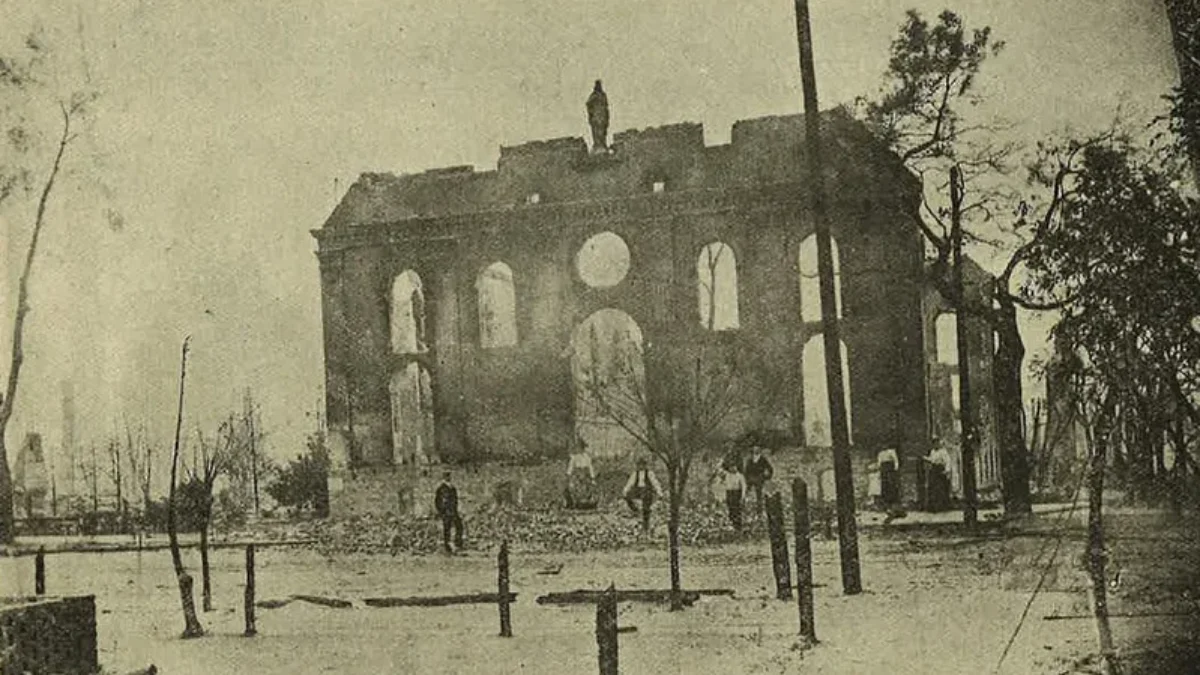
Located at 2124 Dennis Street, today’s Cain & Bultman distribution center traces its industrial heritage to the Florida Cotton Oil Co., established there in 1901. Oklahoma-based Choctaw Cotton Oil acquired the operation in 1920 before a devastating fire led to its closure five years later.
Swift & Co. purchased the property in 1928, converting the former cotton oil plant into a modern vegetable shortening refinery. Half a century later, the site entered a new chapter.

In 1978, Cain & Bultman, one of the Southeast’s largest independent distributors of appliances and floor coverings, constructed a $1.7 million, 142,000-square-foot distribution center on the 6.5-acre property. Designed for future expansion and built by Preston H. Haskell Co., the facility consolidated the company’s Jacksonville operations into what remains the largest industrial building on Dennis Street.
The legacy of John E. Price

The success of the Dennis Street Distribution District did not happen by accident.
It resulted from the foresight of John E. Price, who recognized the area’s location was strategically positioned for distribution facilities due to its access to West Jacksonville’s rail infrastructure. His willingness to invest in roads, rail sidings, utilities and site preparation before tenants arrived fostered a model of speculative industrial development that proved remarkably successful.
What began as a corridor with only three factories became one of Jacksonville’s principal manufacturing and distribution districts within a decade.
Now considered to be a part of the Rail Yard District, more than 80 years later, Dennis Street continues to serve the purpose Price envisioned: moving goods, supporting industry and connecting Jacksonville to markets throughout Florida and the Southeast. While many of the original companies have disappeared or relocated, the warehouses, rail-served sites, and industrial character established during the late 1940s remain a lasting testament to one of the city’s most significant periods of postwar industrial economic development.