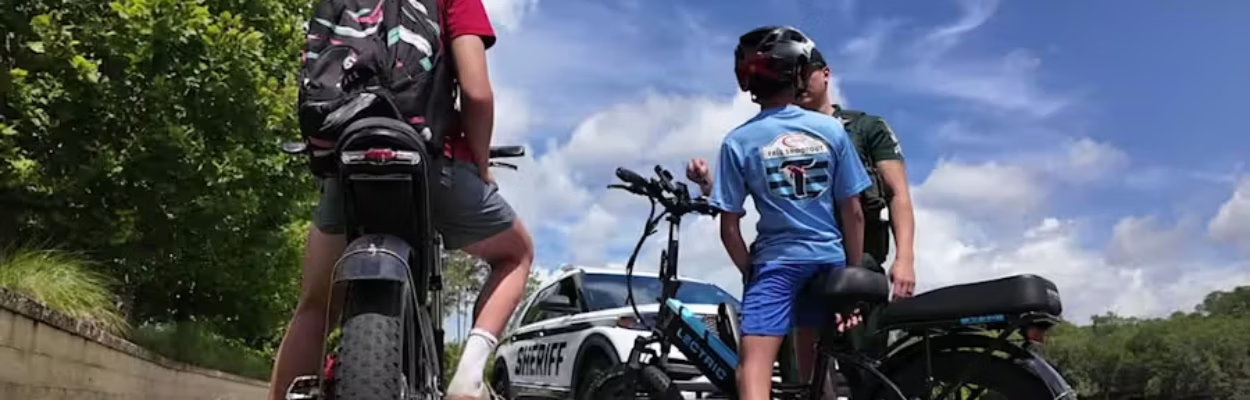
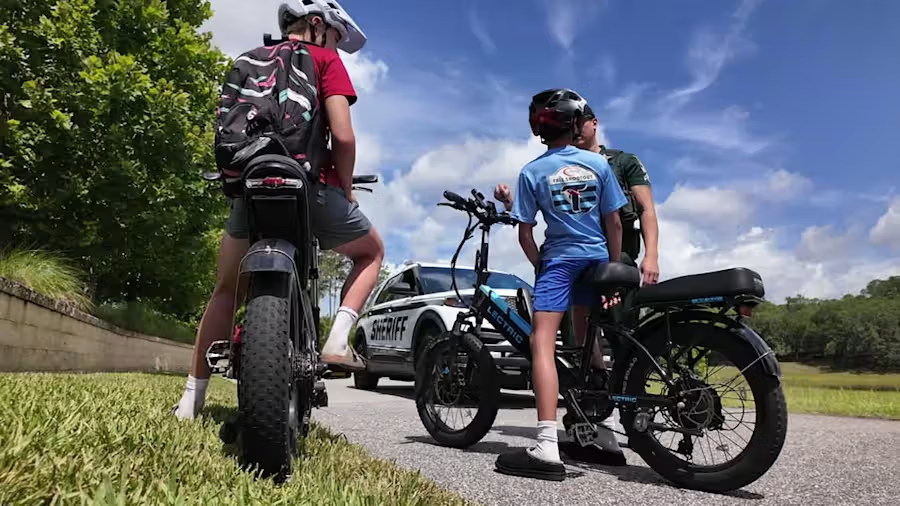
Two e-bike riders talk with a police officer. | News4Jax
Published on June 26, 2026 at 1:05 pm
Free local news and info, in your inbox at 6 a.m. M-F. Sign up for the Jacksonville Today newsletter.
Gov. Ron DeSantis has vetoed a bill that would have imposed stricter state regulations on e-bikes, one of his first vetoes of the 2026 legislative session.
A bipartisan coalition of lawmakers supported SB 382, which received near-unanimous approval in the Legislature.
Jacksonville Today thanks our sponsors. Become one.
The bill would have limited e-bikes to a 10 mph speed limit on paths shared with pedestrians; instituted consistent tracking of each crash involving an e-bike throughout Florida; and created a statewide “micromobility task force” to recommend additional changes to state law.
In a letter explaining his reasons for vetoing the bill, DeSantis expressed concern about the ability for cyclists to measure their speed and how law enforcement would track them.
“This bill will likely lead to enhanced surveillance by local governments against citizens,” DeSantis wrote. “Moreover, the bill creates a task force, yet substantive changes are also implemented prior to any task force recommendations.”

Jacksonville Today thanks our sponsors. Become one.
He reiterated his stance at a news conference Friday in Lakeland.
“I don’t want to do anything that’s going to lead to more surveillance. I understand law enforcement has a job … but do we really want to have policing of e-bikes?” DeSantis said. “Are you going 10 miles or 8 miles, or whatever. I think it was a little bit of an overreach.”
In addition to bipartisan support in the Legislature, stricter e-bike regulation from the state received support at the local level in Northeast Florida.
The St. Johns County Commission backed away from adopting local regulations on e-bikes, but St. Johns County Sheriff Rob Hardwick worked closely with lawmakers on SB 382 and its companion bill in the House of Representatives.
Speaking with News4Jax last year, Hardwick said a priority was drawing distinctions between e-bikes and e-motorcycles, which can go much faster. A number of children in the area have been seriously hurt in e-motorcycle crashes, and Hardwick supported stricter regulation.
“When you have blood on your hands from kids getting hurt, it’s time to act,” he said.
In a statement provided to Jacksonville Today after DeSantis’ veto, the Sheriff’s Office struck a different tone.
The Sheriff’s Office “supports the need for clarity of SB382 and is prepared to collaborate with state lawmakers, partner law enforcement agencies, and organizations about what’s applicable in St. Johns County. SJSO has significantly increased its enforcement efforts, training, and public education of electric bicycles, e-scooters, and other motorized devices. Regardless of statewide legislation, we are committed to continuing these efforts in partnership with the St. Johns County School District. The safety of our citizens and roadways is a priority, and because of our efforts so far, SJSO has seen a positive impact of safe riding practices countywide.”
Elsewhere in the area, a local e-bike ordinance with its own 10 mph speed limit recently advanced in Fernandina Beach.
E-bike veto a surprise to advocates
News that the governor vetoed the bipartisan e-bike bill came as a surprise to Lauren Rushing. She serves as the chair of Bike Walk Jax, a local bicycle and pedestrian advocacy organization.
Rushing says the bill seemed like “common sense.”
“The legislation wasn’t about discouraging people from riding e-bikes,” Rushing said. “It was about helping everyone share our sidewalks and our trails and other infrastructure safely.”
The rise in e-bike usage on Northeast Florida’s roads and trails happened relatively quickly, she said, and keeping better crash records at the state level could have helped make everyone on the roads safer.
“Without good data, it’s hard to understand what the actual issue is,” Rushing said. “This would have allowed us to collect better data on these crashes to hopefully form better legislation in the future.”
Ultimately, Rushing says she supports reducing dependency on cars, but she hopes local governments will step in to fill the gap left by state regulations.
Next steps?
Despite the governor’s veto, it is possible the bill could still become law. Florida law allows bills vetoed by the governor to become law if two-thirds of each legislative body agrees to override the governor’s decision.