
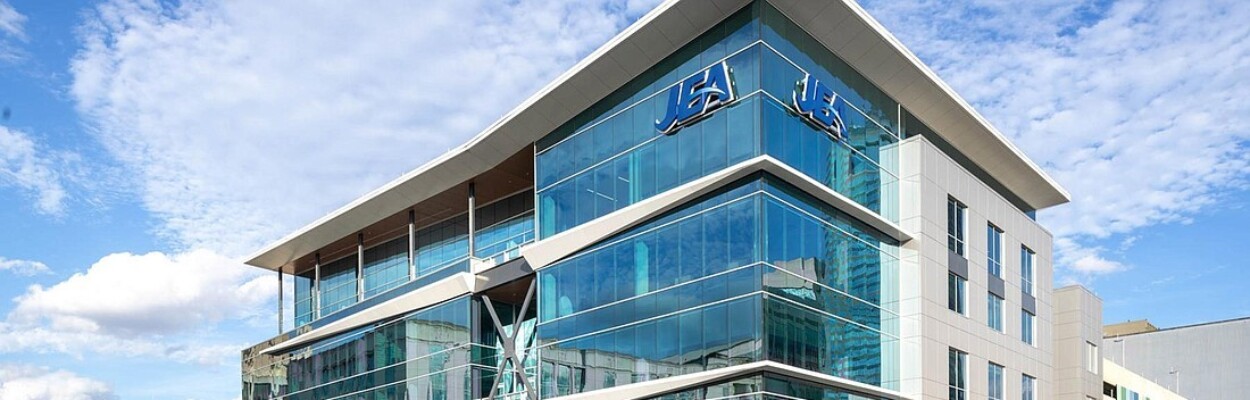
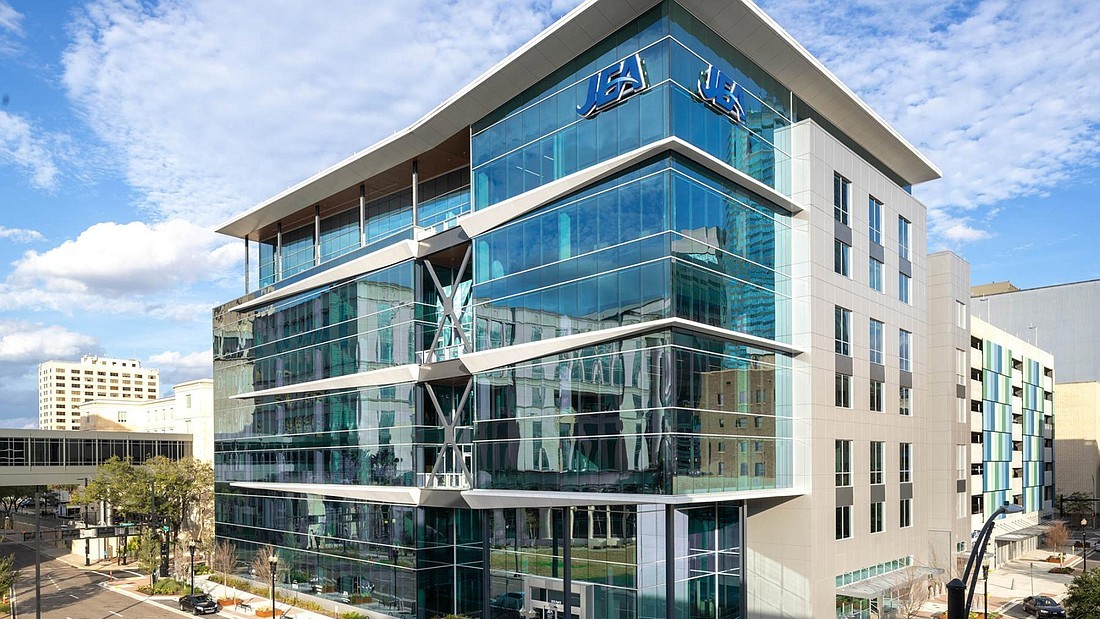
JEA headquarters is at 225 N. Pearl St. | Jacksonville Daily Record
Published on June 26, 2026 at 4:33 pm
Free local news and info, in your inbox at 6 a.m. M-F. Sign up for the Jacksonville Today newsletter.
JEA’s board of directors is expected to vote Tuesday on water, sewer and electric rates that would increase customers’ bills this fall.
The board is scheduled to hold a public hearing at its 9 a.m. meeting at the utility’s headquarters building, at 225 N. Pearl St. Downtown, before the vote.
Jacksonville Today thanks our sponsors. Become one.
JEA officials say the residential rate increases are necessary to cover a projected revenue gap of 6% on the electric side and 8% on the water sewer side.
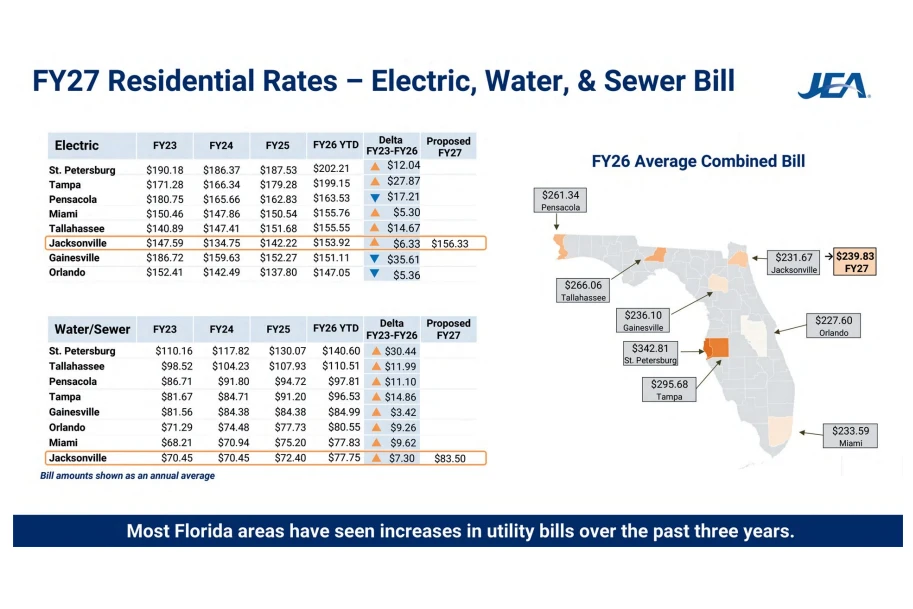
The move would bring an increase in the base rate portion of a customer’s bill. Documents from the utility show a typical JEA customer using 1,000 kilowatt hours of electricity would see their bill rise from $153.92 a month to $156.33.
The current proposal does not affect the fuel charge portion of the bill. JEA sets its fuel rates based on the price of the fuel like natural gas, petcoke and other sources on the market. The utility always typically buys the fuel in advance to lock in prices at lower costs.


Jacksonville Today thanks our sponsors. Become one.
For water and sewer, the average customer currently pays $77.75 per month. The proposed hike would bump that up to $83.50.
That would move the average combined bill up to $239.83 from $231.67.
Here is how JEA’s current and new rates compare to other major metropolitan areas in Florida:
If approved, the new rates would take effect Oct. 1.
Road to the rate hearing
JEA officials have been talking since last year about another rate increase, They held a workshop in April on the hikes and the utility’s capital maintenance needs.
JEA did cost-of-service studies that utility officials cited to justify increasing the water and electric rates — one in April 2025 and the other in October 2025.
During that meeting, then-JEA board Chair Joe DiSalvo said the rate increases are directly linked to upcoming water infrastructure and power generation projects as well as regional population growth.
“The problem is, we sort of got the perfect storm,” he said. “We’re committed to a lot of capital projects that have to come. Otherwise, it could get worse. You’ve got that dynamic mixed with … we were short (of) some revenue.”
One of those projects is a $1.57 billion natural gas-fired power plant to replace the aging Northside Generation Station. Costs also jumped last year for JEA’s work to raise powerlines across the Fulton Cut in the St. Johns River to allow larger cargo ships into Jaxport. The city agreed to pay more money to JEA to help offset some of those costs.