Published on June 25, 2026 at 9:33 pm
Free local news and info, in your inbox at 6 a.m. M-F. Sign up for the Jacksonville Today newsletter.
Newly released, unredacted text messages sent and received by Jacksonville City Council President Kevin Carrico reveal the close timing between an attempted Nassau County land acquisition by his nonprofit boss and his nomination of that same boss to the JEA board.
The unfiltered text exchange between Carrico and Boys & Girls Club of Northeast Florida CEO Paul Martinez was released Thursday by the State Attorney’s Office in response to a public records request by Jacksonville Today, along with nearly 1,000 other documents Carrico submitted in response to a Feb. 24 criminal subpoena.
Jacksonville Today thanks our sponsors. Become one.
The texts show Martinez and Carrico in January were texting about Martinez’ desire to obtain JEA-owned land on behalf of the Boys & Girls Clubs of Nassau County Foundation, and about Martinez’s appointment to JEA’s board of directors.
Jacksonville Today, with six other media outlets, previously received heavily redacted versions of the same records from city council. It took months of public-records requests by Jacksonville Today and other local outlets, plus attorney intervention, to get the city to release the truncated documents.
Those documents lacked key context surrounding Carrico’s discussions with Martinez about efforts to obtain land for Boys & Girls Club for a teen center near Yulee High School at the same time Carrico was telling Martinez he would nominate him to replace another member of the public utility board.


Jacksonville Today thanks our sponsors. Become one.
Text timeline
The first reference to the land in Carrico’s subpoenaed records was on Dec. 9, when Carrico referenced research that then-JEA Chief of Staff Kurt Wilson did for the Boys & Girls Club about the Nassau County property.
The records provided by the State Attorney show Martinez reached out to Carrico on Jan. 7 to ask for an update on the project. Two weeks later, on Jan. 20, Martinez reached out to Carrico again for a status update:
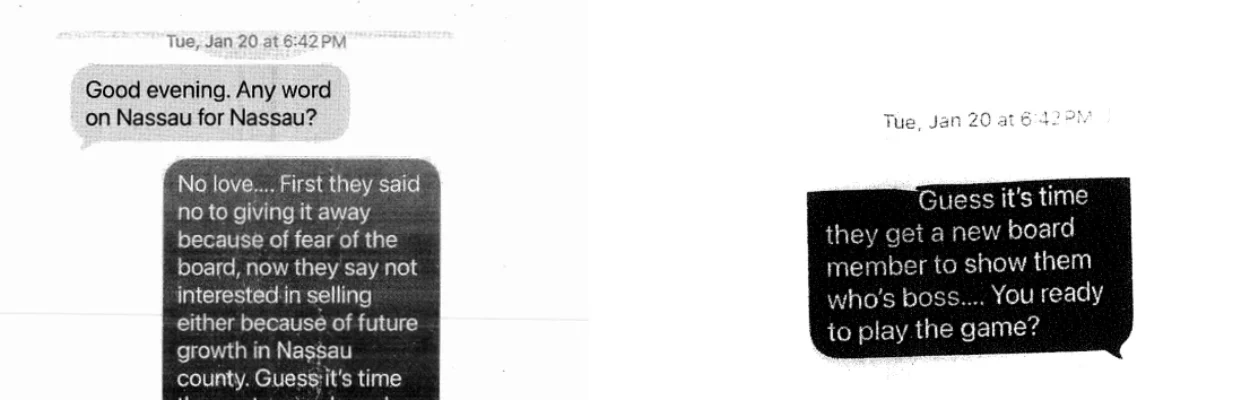
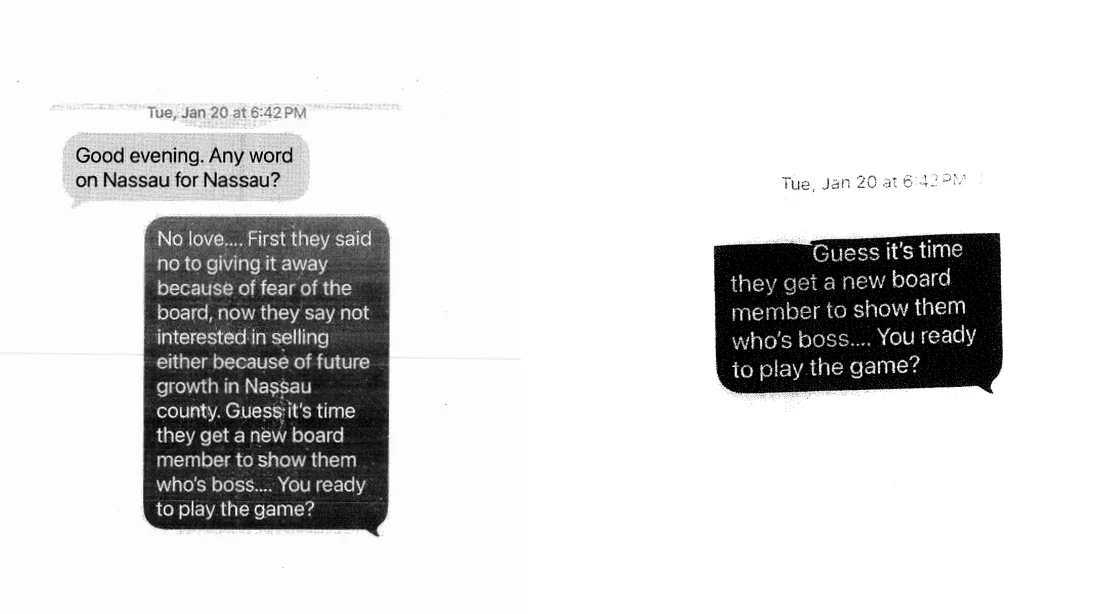
Martinez: “Good evening. Any word on Nassau for Nassau?”
Carrico: “No love. …First they said no to giving it away because of fear of the board, now they say not interested in selling either because of future growth in Nassau county. Guess it’s time they get a new board member to show them who’s boss…. You ready to play the game?”
In their response to Jacksonville Today’s request for the same records on June 9, city council officials redacted references to the land discussion and only showed Carrico’s partial text: “Guess it’s time they get a new board member to show them who’s boss.. … You ready to play the game?”
The council president confirmed at the time that the text message was directed to Martinez. City council officials told Jacksonville Today they had copied and released the documents Carrico sent to the State Attorney’s Office except for communications deemed “personal.”
Carrico sent the Jan. 20 text three weeks before he tapped Martinez to fill a spot on the utility board currently held by retired CSX executive Arthur Adams Jr.
Carrico’s JEA board appointment bubbled up as a public controversy in mid-February, when Action News Jax reported on a text he sent Adams informing him he was not re-nominating him for another term because he “owed a big favor to a friend.”
That “big favor” text also appeared in the documents from the city council and State Attorney’s Office.
“What’s up bro … hey I owed a big favor to a friend and opted to put him on the JEA board as your term is expiring. Not sure if you wanted to stay but I needed to do this for my guy. Tab is on me when we link up next,” Carrico wrote to Adams on Feb. 5.
Martinez, the nonprofit CEO, ultimately withdrew his name for consideration on Feb. 24 following news coverage.
As of Thursday, no one has been charged in the State Attorney’s probe of Carrico’s records.
On Friday, Martinez sent a statement to Jacksonville Today that asserted no connection between his potential nomination to the JEA board and the Nassau County Boys & Girls Club Foundation’s discussions regarding the property.
“The Nassau County Boys & Girls Club Foundation is a separate 501(c)(3) organization with its own independent board of directors. The Foundation’s board had expressed that it was not receiving responses regarding the property and asked me to inquire on its behalf,” Martinez said in the emailed statement.
“Other than this inquiry, I had no further conversations with Mr. Carrico regarding the property. Had I been appointed to the JEA Board, I understood that I would have been required to abstain from participating in any discussion or vote involving the property. That is how any potential conflict would have been handled,” he said.
A few weeks after his texts with Adams went public, Carrico launched a special city council investigation into JEA on March 11. The council president accused JEA CEO Vickie Cavey of allowing a toxic work culture and racism at the utility. A three-member panel of council members is expected to finish its investigation in early July.
In addition to documents referencing Carrico’s employer, the State Attorney’s Office subpoenaed any communications between Carrico and JEA board members, Cavey and Wilson, along with documents containing words and phrases including “lobbying contract,” “toxic,” and “racist.”
Side-by-side: City and State Attorney’s records
Comparing the city council’s public-records response side-by-side with the text chain released by the State Attorney’s Office appear to show the messages that came from City Hall were altered to remove reference of the Nassau County deal.
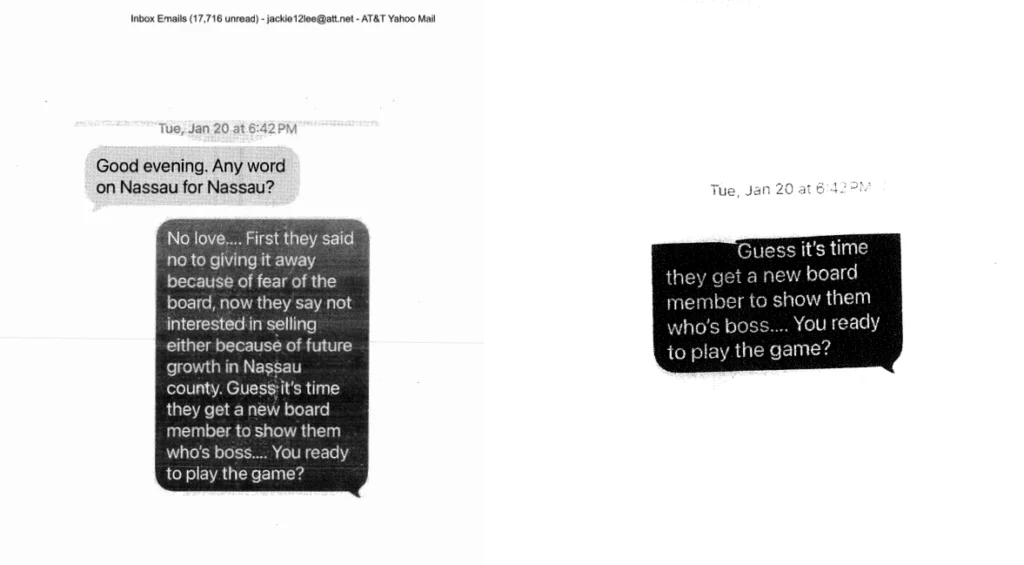
This runs counter to City Council Legislative Counsel Jason Teal’s claim that no public records were withheld when Jacksonville Today questioned him about the redactions early this month.
Lawyers at the State Attorney’s Office performed their own review of the documents before they released the same subpoena response Thursday.
Other communications: Land deal and crisis management
The State Attorney’s records also included an email from Wilson to Carrico dated Dec. 9, 2025, showing that under the previous CEO, JEA had appraised the land the Boys & Girls Club wanted to obtain in Nassau County.
The email said it was worth $1.17 million for purchase or a $9,293 land lease. Wilson told Carrico the deal would need to be vetted again through Cavey.
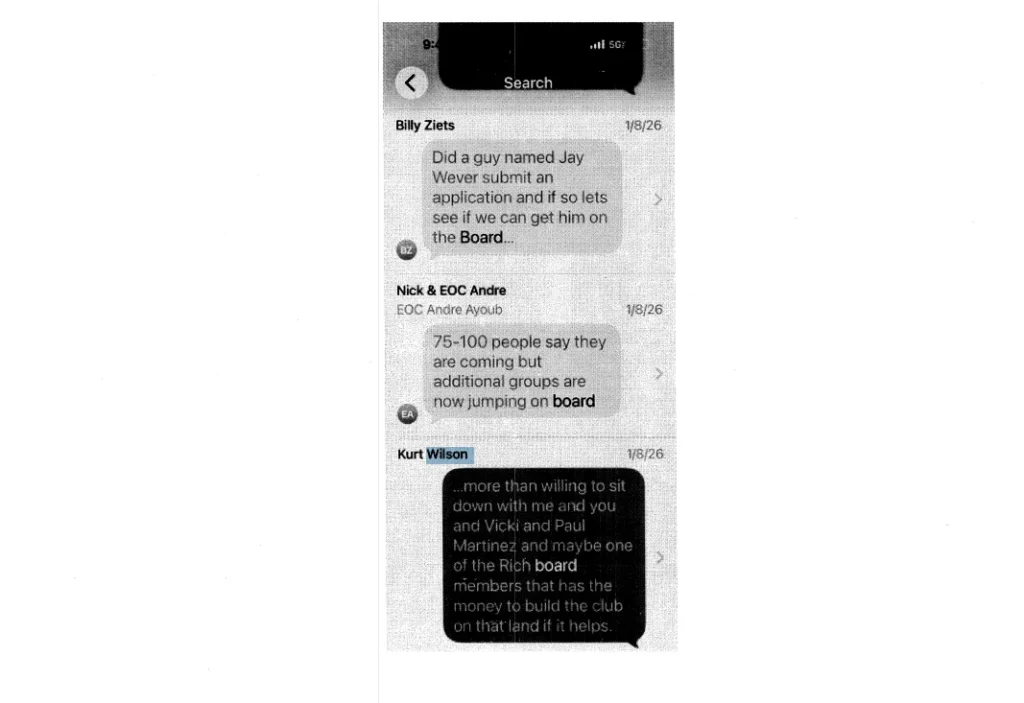
On Jan. 8, a text from Carrico to Wilson showed the the council president suggested a sit-down meeting between the Boys & Girls Club CEO and JEA’s top brass.
“…more than willing to sit down with me and you and Vicki(e) and Paul Martinez and maybe one of the Rich board members that has the money to build the club on that land if that helps,” Carrico wrote.
The records also contain text messages from Jacksonville-based Charlene Shirk Public Relations. The firm confirmed ownership of the texts on Friday to Jacksonville Today.
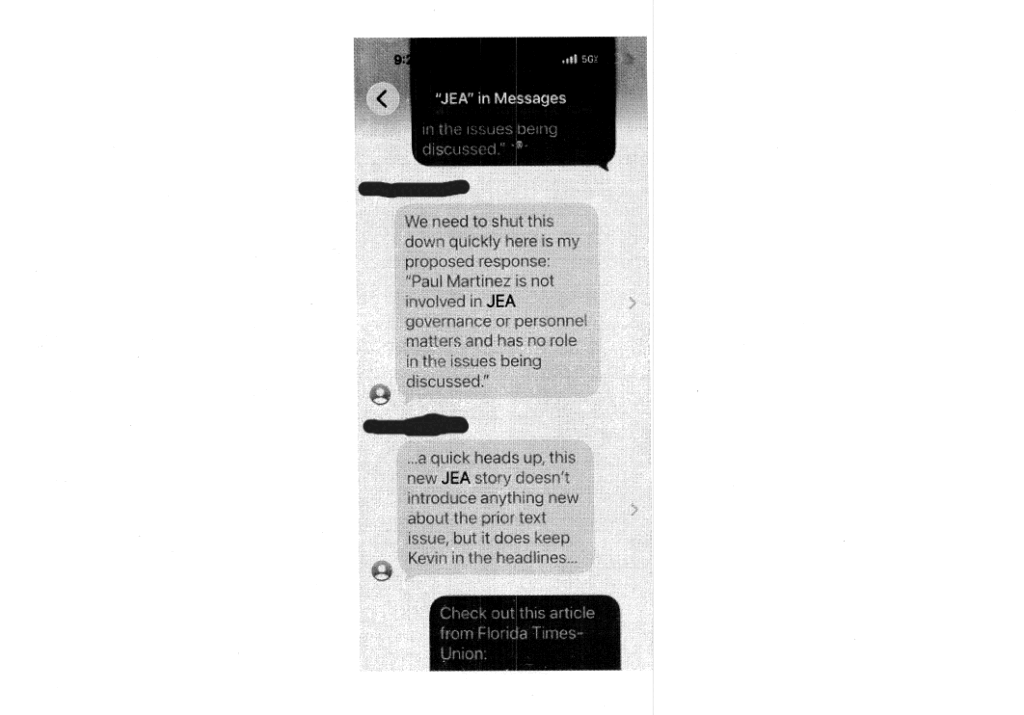
In that text thread, the firm provides some crisis management messaging on and around Feb. 19, after media reports on the deal began to publish.
“We need to shut this down quickly here is my proposed response: ‘Paul Martinez is not involved in JEA governance or personnel matters and has no role in the issues being discussed,’” one message says.
A second text in that thread reads, “… a quick heads up. this new JEA story doesn’t introduce anything new about the prior text issue, but it does keep Kevin ‘in the headlines …”
Carrico’s response
Carrico is currently traveling abroad. When Jacksonville Today reached out to the outgoing council president for comment about how the text messages appear to link his appointment of Martinez to the canceled Nassau County deal, he directed us to his attorney Mitch Stone.
Stone told Jacksonville Today Thursday that Carrico was acting in his private capacity as an employee of Boys & Girls Club when he was doing fact-finding for the proposed teen center in Nassau County.
Carrico’s attorney argues, although the State Attorney’s Office decided to release the messages, that portion of the text messages about the land deal should have been withheld as private communications.
The JEA board appointment was something Carrico was doing in his city capacity, Stone said, making that portion of the text a public document.
JEA is a city-owned, public utility, which makes the land in question a city asset. The utility’s board of directors would have had to give final approval of the land agreement, if it had moved forward.
When asked if the way the text was written makes it appear Carrico linked the land deal and Martinez’s JEA board nomination, he argued they’re two distinct issues in one text.
“Had it been in two separate texts, it would have been cleaner, but it’s still two issues,” Stone said Thursday. “…But it wouldn’t change the context. And Kevin Carrio had zero effort as a city councilman to affect the land purchase or the swap for the Boys & Girls Club. There was no pressure. No nothing.”
“The fact that private communications were disclosed in response to a subpoena does not transform those communications into public records subject to disclosure under Florida law. Florida’s Public Records Act applies to records made or received in connection with the transaction of official public business, not to wholly private communications unrelated to governmental functions,” Stone wrote in a June 11 press release.
Obtaining the unaltered records
It took lawyers at the State Attorney’s Office 14 days to fulfill Jacksonville Today’s public records request for Carrico’s subpoena response.
After noting the missing context in the city council’s response, Jacksonville Today reached out to Teal and the council’s records custodian to ask for justification for each record redacted or withheld.
Jennifer Mansfield — a partner with Holland & Knight who practices media and First Amendment law and who argued for the records’ release on behalf of Jacksonville Today and its media partners — said the subpoena response is itself a public record. She said on Florida open records law, only privileged and exempt documents were allowed to be redacted or withheld.
In his June 15 response, Teal wrote, “There were no redactions of public records. You have them all.”
Editor’s note: Jacksonville Today removed the phone number belonging to the public relations firm from the text messages due to privacy considerations.