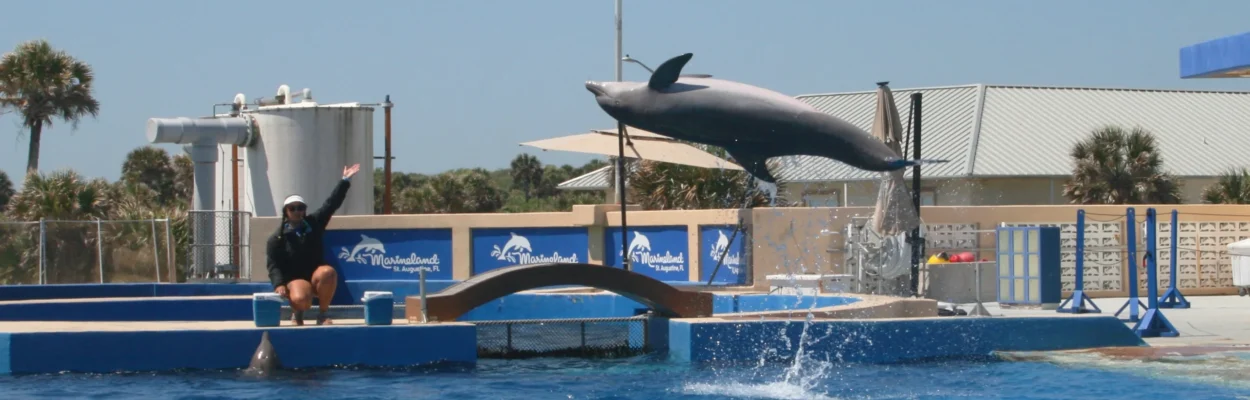
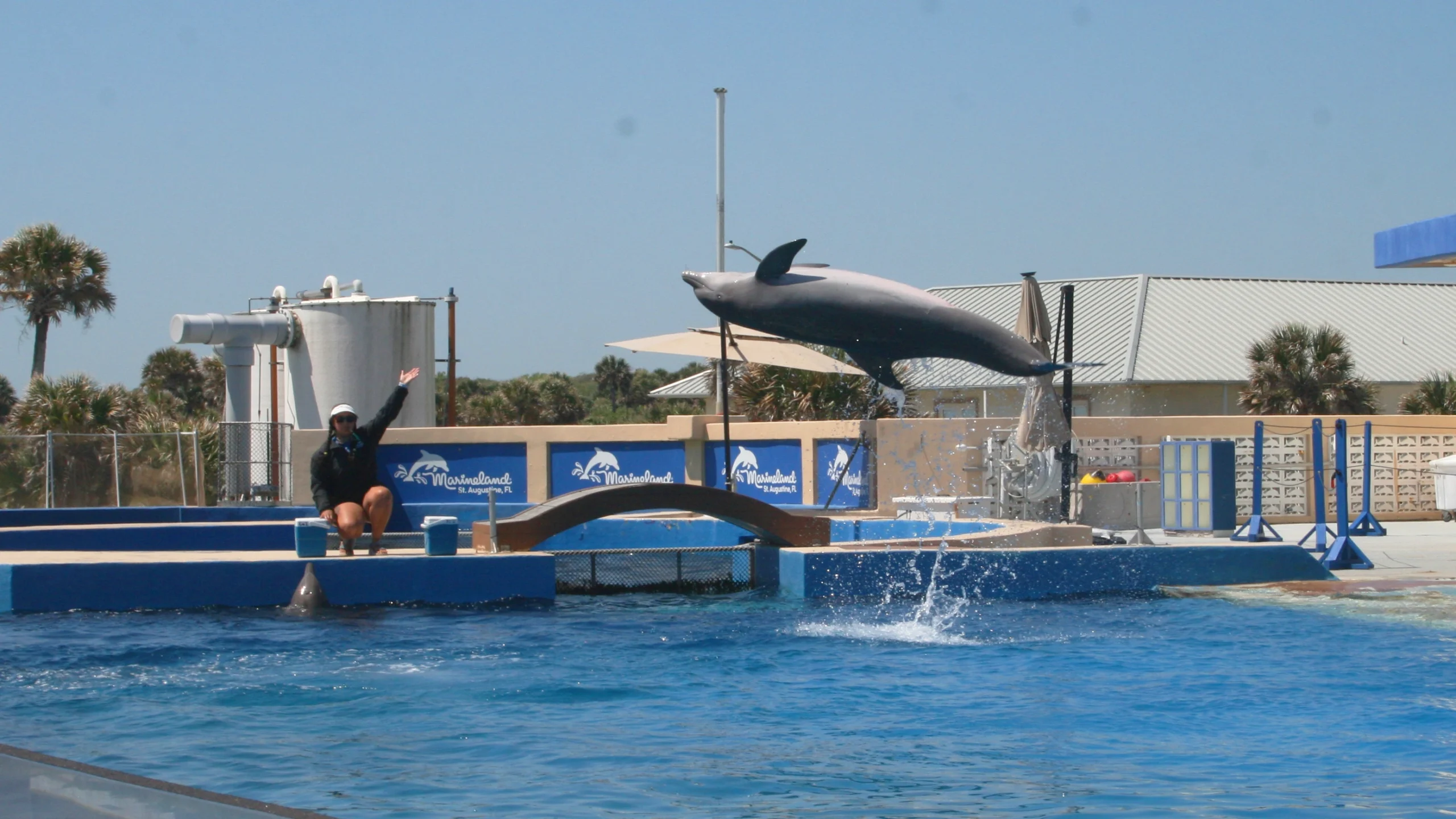
A dolphin leaps from the water at Marineland Dolphin Adventure. | Noah Hertz, Jacksonville Today
Published on May 20, 2026 at 12:28 pm
Free local news and info, in your inbox at 6 a.m. M-F. Sign up for the Jacksonville Today newsletter.
Just six months ago, as a sale loomed, the future of Marineland Dolphin Adventure was uncertain. Now, with the park under new management, staff say the future is looking bright for everyone at the aquarium — sea creatures included.
Before Clay County couple Barbara and Jon Rubel mounted an eleventh-hour campaign to buy Marineland, all signs pointed toward a bankruptcy judge brokering a deal to hand the aquarium from its former owner to a real estate development company.
Jacksonville Today thanks our sponsors. Become one.
Those were dark days for the park, Terran McGinnis says. She first got a job at Marineland 21 years ago and has since served as the education director, the historian and now the aquarium’s communications specialist.
“It was really heartbreaking because it looked for a while like the only people interested in purchasing Marineland were developers who were going to sell off the animals,” McGinnis says.
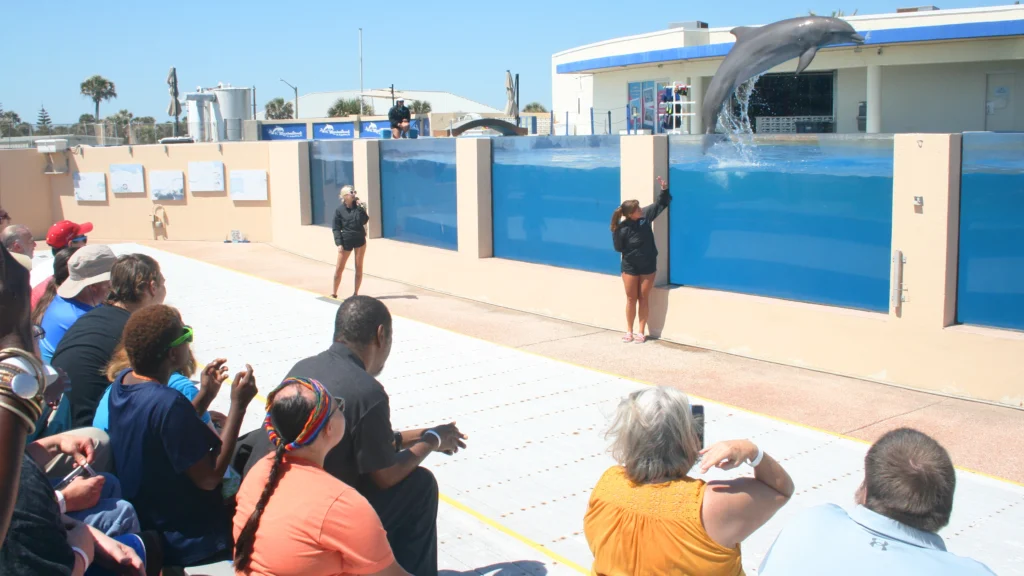
That would have included the aquarium’s 13 dolphins, many of which were born in captivity at the park.

Jacksonville Today thanks our sponsors. Become one.
Park Director Felicia Cook says the new, local ownership has made a world of difference.
“It is very different working for a corporation, let alone a foreign corporation, than it is working for yourself, which is what we’re doing now as a not-for-profit,” Cook says. “We’re able to make decisions that we can prioritize as opposed to a corporate office prioritizing.”
Cook previously worked as the park’s director before she resigned last year. She says that she couldn’t stand having to lay off employees as the financial issues from the park’s former owner, the Dolphin Co., affected Marineland’s day-to-day operations.
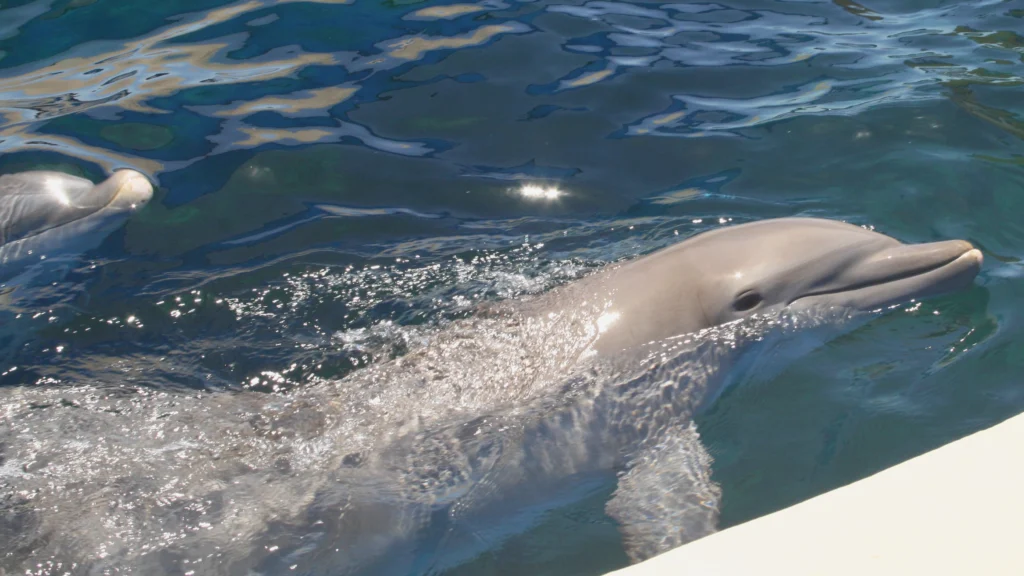
Now Cook says the park can focus on promoting conservation and creating partnerships with universities, businesses and civic organizations that will help the park evolve.
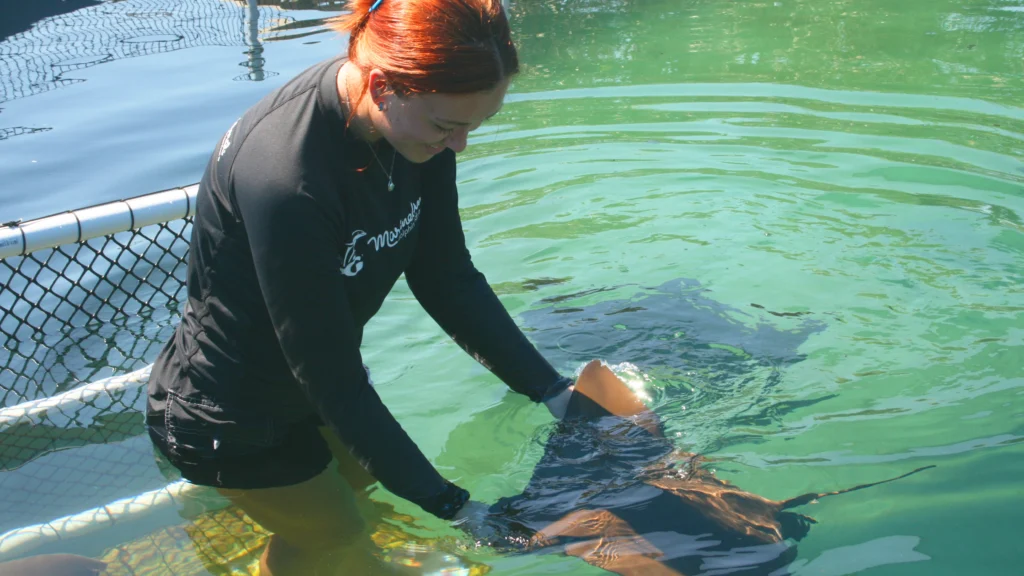
The park is introducing a new opportunity for guests to get up close with cownose rays, and Marineland is hiring an in-house research director — something the park couldn’t do when all of its research efforts had to be channeled through a corporate office.
With all of those changes, Cook hopes locals and tourists alike will come check out the new Marineland.
The past, present and future of Marineland
Even as Marineland’s dire financial straits worsened last year, McGinnis, the park’s communications specialist, says she simply couldn’t believe the aquarium would be sold off and paved over.
“I just couldn’t imagine a world without Marineland,” McGinnis says.
The aquarium has, after all, been around for the better part of a century.
Marineland opened in 1938 as Marine Studios, a hub not just for aquatic research, but for films to capture an under-the-sea atmosphere.

The park grew and changed over the years but eventually closed in 2003 before reopening three years later. Marineland was sold to the Georgia Aquarium in 2011, and the Mexico-based Dolphin Co. bought it in 2019.
But Marineland felt the effects of the Dolphin Co.’s tanking finances as controversy mounted around the treatment of animals at another park the company owned.
For a time, Marineland’s staff were not even being paid.
Associate curator Caitlin Rose says she and a group of staff members agreed to support each other and stick with Marineland until its doors closed for good to ensure the animals were treated well.
“It’s not their concern,” Rose says of Marineland’s dolphins. “They need to worry about snacks, and they need to worry about playing with their friends and they need to be worrying about staying healthy. It’s more important for us to figure out the rest of it for them.”
On a week-to-week basis, everyone chipped in, Rose says.
They shared food and other necessities and looked out for one another to make sure the dolphins were fed and cared for.
“It was very much like we came together as a team because if we were surviving, then (the dolphins) were thriving,” Rose says.
But those days are over, she says. Now, staff don’t have to worry about where their next paycheck is coming from.
That’s thanks to Barbara and Jon Rubel, the Clay County couple who stepped in and bought the park — as well as the help of people like Park Director Cook and other local activists.
As for long-term planning, Jon Rubel says he and his wife aren’t thinking about selling the park.
“No plans at the moment,” he says. “[W]e are more interested in Marineland getting back up on its feet and running smoothly.”
The park never shut down during the sale. Changes to its culture and plans have been implemented on the fly.
Now, staff members like McGinnis want to share the park with the public.
Marineland isn’t SeaWorld, she says. It’s not as showy, and the park doesn’t have as many animals, “but this feels like Florida.”
“We want Marineland to go back to being the community’s aquarium,” McGinnis says. “This belongs to them. We want to know what they want.”