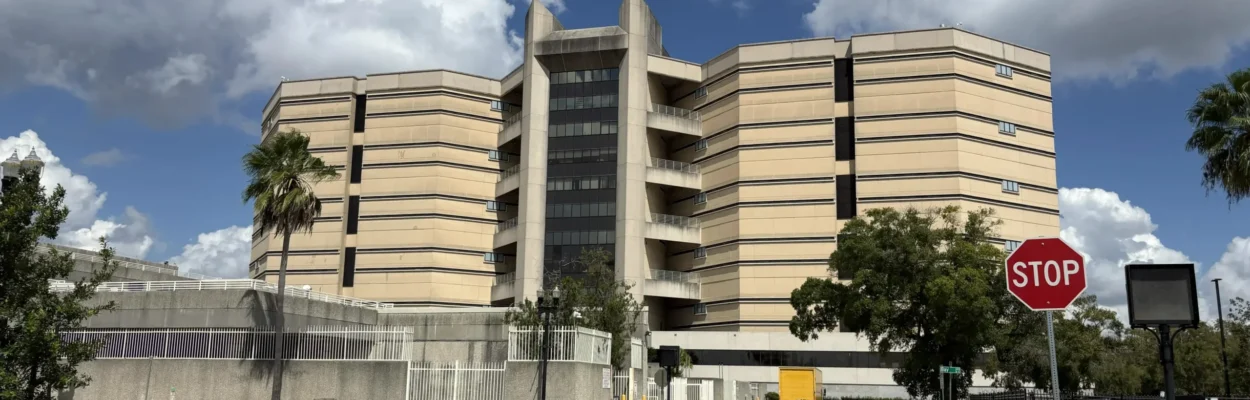
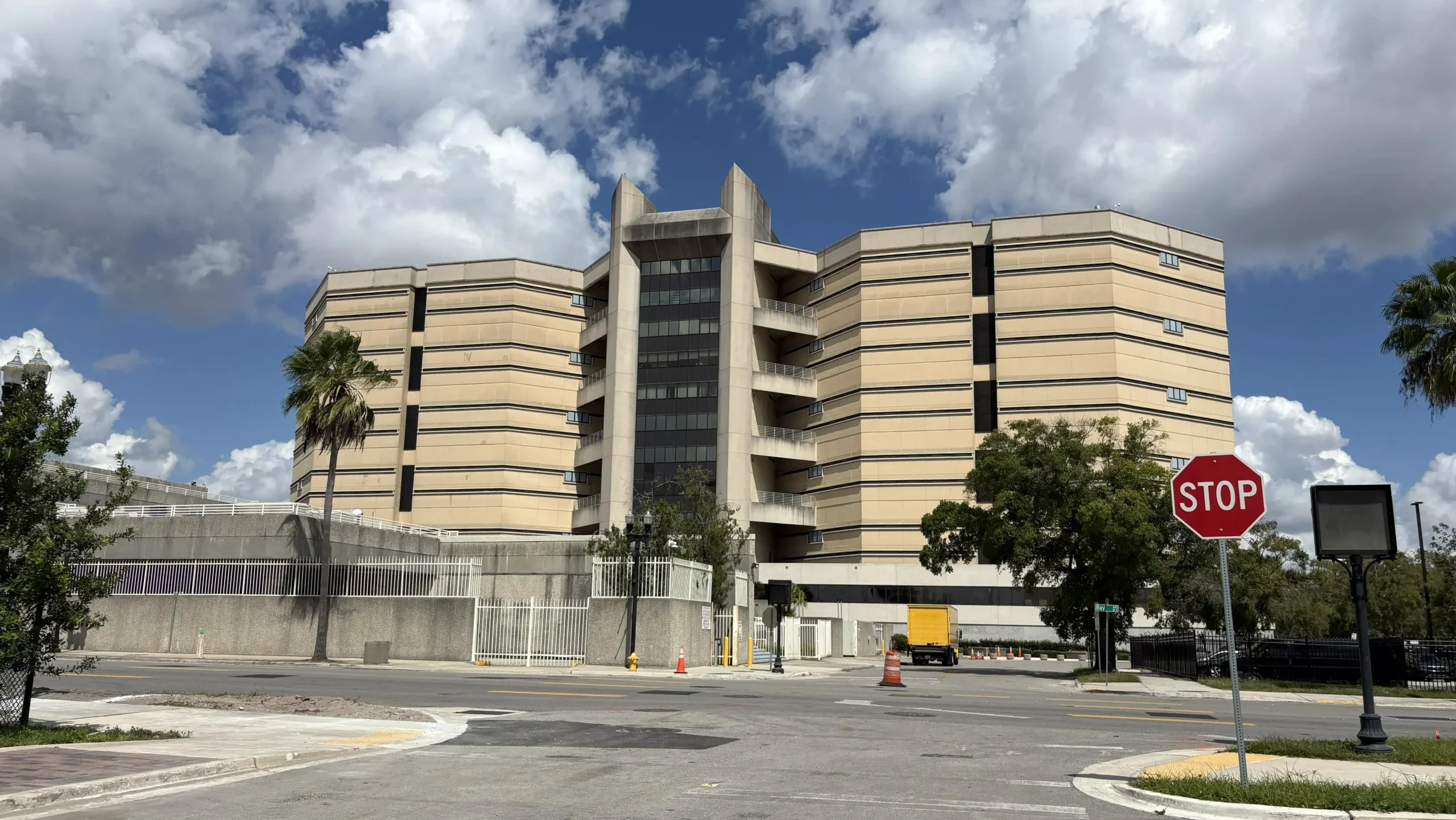
Inmates in the Duval County jail are among those awaiting transfer to a state hospital for mental health treatment, a lawsuit says. | Simone Endress, Jacksonville Today
Published on September 30, 2026 at 12:51 pm
Free local news and info, in your inbox at 6 a.m. M-F. Sign up for the Jacksonville Today newsletter.
A lawsuit alleges that the Florida Department of Children and Families takes too long to transfer mentally ill defendants, including some in Jacksonville, from jail to state hospitals, in violation of Florida law and the U.S. Constitution’s right to due process.
Defendants are considered incompetent if they cannot understand court proceedings or assist in their defense. Incompetency designation requires psychiatric evaluation and often other court experts. Once it is documented, DCF is required to transport the defendant to a state hospital for treatment within 15 days, where medications and therapies can be used to stabilize the patient. Until the hospital deems them competent, their trial doesn’t proceed.
Jacksonville Today thanks our sponsors. Become one.
The lawsuit, brought by Disability Rights Florida and the Southern Poverty Law Center, alleges DCF “exceeds this deadline by an average of over 100 days.” The suit also claims hospital admissions frequently take six months or longer, and that DCF “has maintained a fluctuating waitlist of between 650 and 880 people across Florida who are waiting an average of around four months for court-ordered competency restoration treatment.”
The complaint details cases of several anonymized defendants who were deemed incompetent. One, referred to as “A.A,” was arrested in Duval County in January of 2025. In June of last year, the expert who determined incompetency filed an order to move A.A. to a state hospital. “[G]iven his psychiatric condition and significant level of distress,” the expert said, “it would be ideal to have [A.A.] transported to the state hospital as soon as feasibly possible.”
Over the next six months, A.A. awaited transfer. During the wait, his condition worsened. He refused to eat and lost 80 pounds. It wasn’t until January of 2026 that he was admitted to a state hospital. Upon returning to the jail, A.A.’s condition deteriorated, and he was once again deemed incompetent in August of 2026. He is currently awaiting treatment again.

Jacksonville Today thanks our sponsors. Become one.
Another defendant, “A.L.,” died in the Duval County jail in 2024 while waiting for DCF to commit him to a state hospital, four weeks after the statutory deadline had passed. Jacksonville hospital clinicians warned that he was at risk of harming himself. Six weeks later, he died of hyponatremic dehydration, typically caused by drinking excessive amounts of water.
Charlie Cofer, the Jacksonville-area public defender, represents some of the clients mentioned in the suit. He said on WJCT News 89.9’s First Coast Connect this week that in Jacksonville, the number of defendants on the waitlist for state hospitals fluctuates between 50 and 60. Across the state, the suit says it tends to range from 650 to 880.
DCF has acknowledged the issue. In a 2025 filing, the agency attested that about 87% of defendants on its waitlist had waited longer than the maximum 15 days. DCF blamed a lack of funding and bed space. It’s pointed out that Florida tends to rank near the bottom for community mental health spending.
Despite that, Cofer notes, the agency didn’t seek more funding for the commitment of defendants in its last state budget request.
Cofer argues that making people wait is “inefficient, it costs money, but primarily, it’s inhumane.”
Florida’s population is increasing, meaning that more people will need admittance to these services. “There needs to be continued oversight on DCF,” he says. “So if the Legislature provides additional funding, they need to see results.”