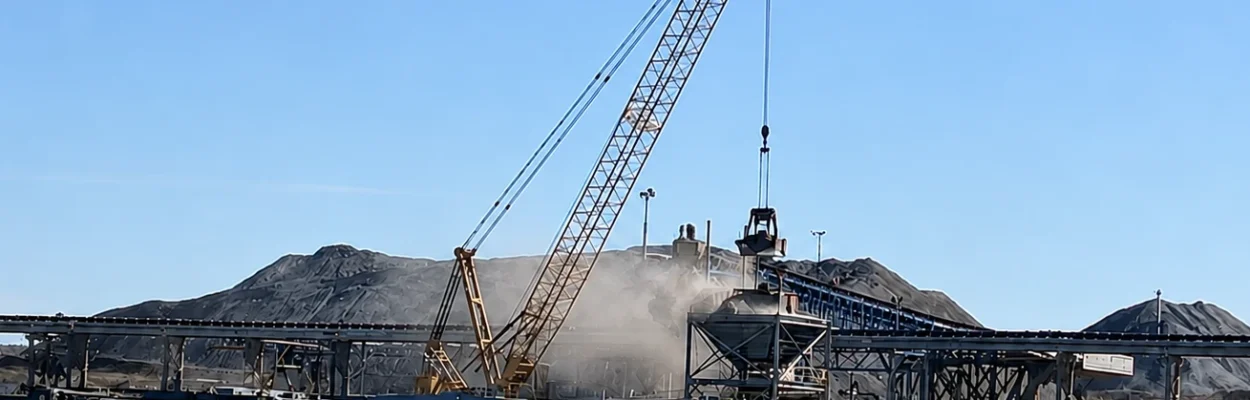
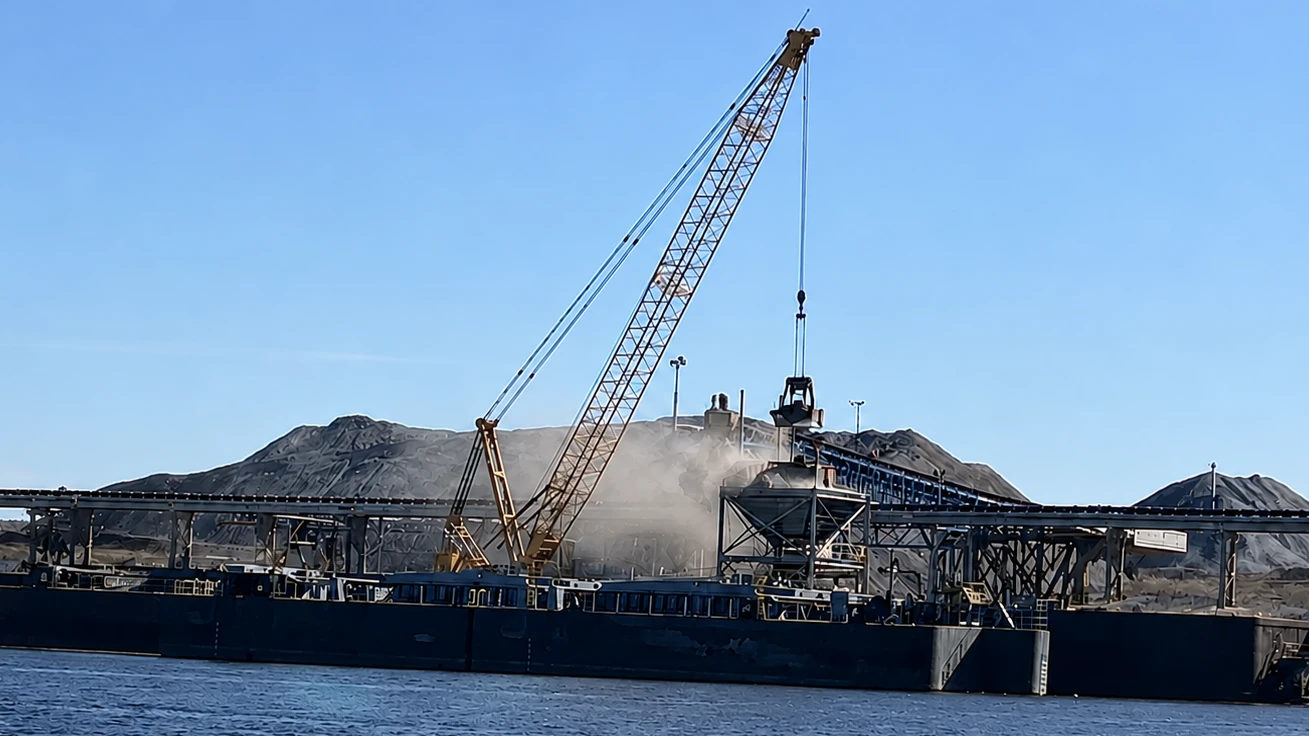
Dust flies into the air from a coal dust pile at Keystone Terminal in Talleyrand | St. Johns Riverkeeper
Published on August 27, 2026 at 1:40 pm
Free local news and info, in your inbox at 6 a.m. M-F. Sign up for the Jacksonville Today newsletter.
The St. Johns Riverkeeper and Florida Public Trust have filed a lawsuit against Jacksonville’s Keystone Terminal, alleging that the private port is violating federal safeguards in how it stores coal ash.
In 2021, a barge carrying coal ash from Puerto Rico ran aground about a mile south of the St. Johns River’s mouth off the coast of Northeast Florida. At least 9,300 tons of coal ash were released into the river, according to Lisa Rinaman, the St. Johns Riverkeeper.
Jacksonville Today thanks our sponsors. Become one.
Aside from polluting the river, Rinaman says, the crash “ alerted us to the high volume of coal ash that was being imported into our river, into our community, without anyone really knowing anything about it.”
The coal ash from that barge was on its way to Talleyrand’s Keystone Terminal, where coal ash is stored temporarily next to the St. Johns on its way north to a private landfill in Folkston, Georgia.
John November is executive director and general counsel for the Public Trust Environmental Legal Institute of Florida, a nonprofit that advocates to protect natural resources. He says his research found violations of the Clean Water Act, which regulates pollution released into waters, and the Resource Conservation and Recovery Act, which regulates the treatment of hazardous and solid waste.
Jacksonville Today thanks our sponsors. Become one.
Keystone Terminal did not respond to Jacksonville Today’s request for comment.
Coal ash is not considered a hazardous waste by the federal Environmental Protection Agency, though its storage tends to create controversy. Puerto Rico banned the long-term storage of coal ash on the island in 2019 after AES Corp.’s failure to report groundwater contamination from coal ash ended in toxic heavy metal levels in the soil.
Now AES Corp.’s coal ash travels through Jacksonville to Georgia.
Keystone Terminal was granted an exemption by the Florida Department of Environmental Protection, meaning they wouldn’t need a permit for their coal ash operation, so long as there was no pollution discharge.
Keystone is allowed to store coal ash in the open air on a lined surface. November, through satellite imagery, determined that the facility was storing ash outside the lined area. He contacted state regulators, who investigated the site in February.
In May, the state DEP sent Keystone a warning letter. It had failed the inspection. Stormwater from the coal ash piles outside the lined area was not flowing into the stormwater treatment pond; instead, it potentially entered the groundwater and the river.
November waited three months to hear from Keystone. When he didn’t, he filed a citizen lawsuit. The Clean Water Act and the Resource Conservation and Recovery Act allow citizens to bring environmental concerns to court.
Rinaman says the potential contamination is concerning.
“Studies have documented high levels of chemicals, such as selenium, in the tissues of fish where coal ash has been discharged into waterways,” she says. “In addition, as the ash sinks to the bottom, it smothers aquatic organisms and plants essential to the health of the ecosystem. It’s all connected.”
Aside from the threats to the river, November says Jacksonville’s Environmental Quality Division has received complaints from residents near the facility about “dust” emissions. One resident sent a photo of their car covered in ash. Another said that when they painted their house, dust stuck to its outer walls.
Litigation takes a long time, but November is hopeful.
“During discovery,” he says, “we’re actually gonna be able to better understand what the impacts have been to the environment and what the continuing impacts are on the environment. And so I anticipate FDEP continuing to monitor the situation closely and likely are going to take some type of enforcement action over time.”