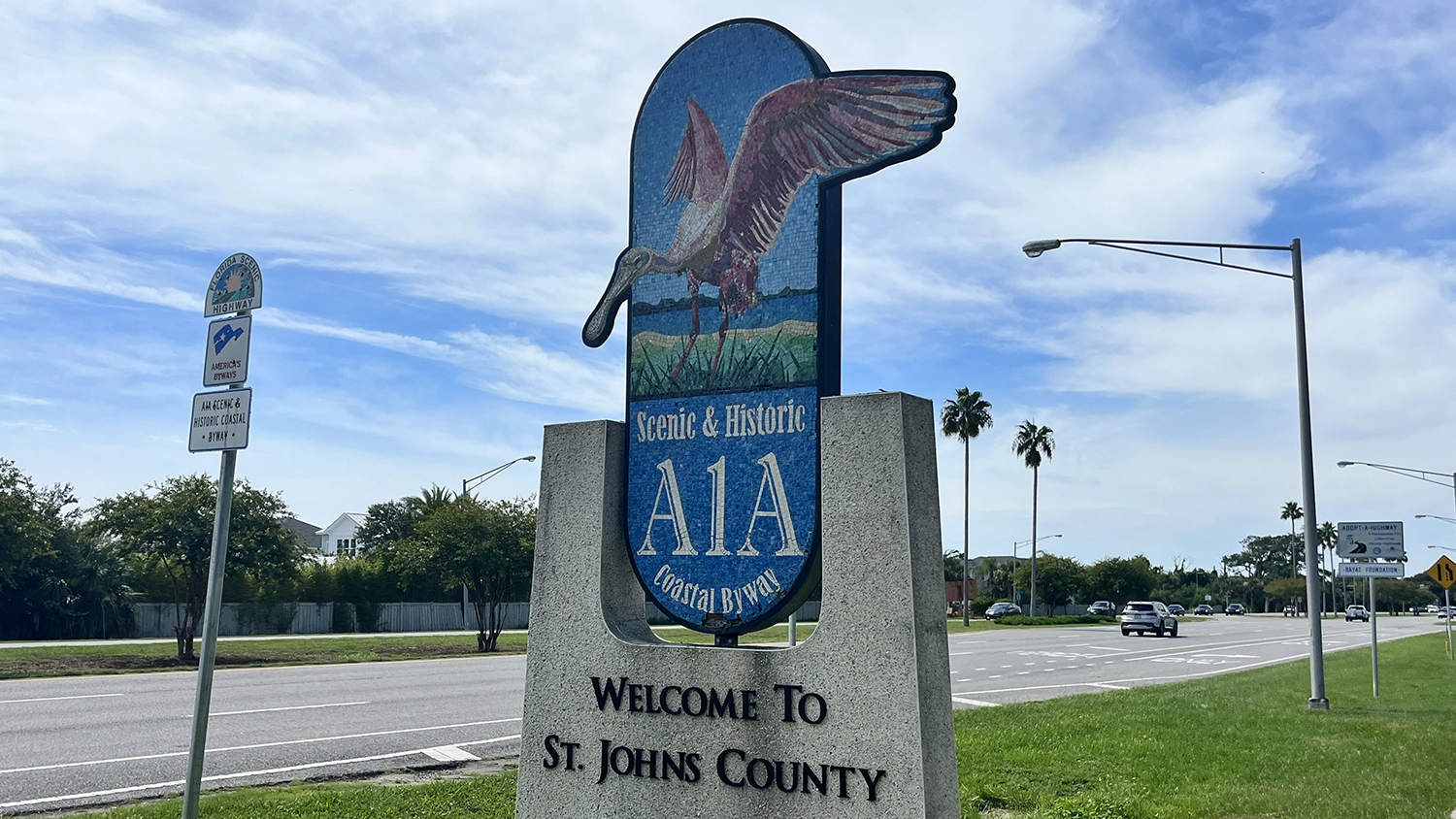
St. Johns County voters will be asked in November about potentially paying a little extra to fund land conservation. | Noah Hertz, Jacksonville Today
Published on August 18, 2026 at 12:46 pm
Free local news and info, in your inbox at 6 a.m. M-F. Sign up for the Jacksonville Today newsletter.
St. Johns County voters will be asked in November about potentially paying a little extra to fund land conservation.
Voters will consider a potential tax increase to support St. Johns County’s Land Acquisition Management Program. The board overseeing the program identifies environmentally sensitive or otherwise important pieces of land that would be better as public properties than potentially bought up for future development. But funding has been up and down in recent years, with cuts and one-time increases to its budget.
Jacksonville Today thanks our sponsors. Become one.
In an effort to make funding for the program more consistent, the county will ask voters in November whether they support a tax increase to help buy conservation land.
If it passes in November, the county would not automatically OK a new property tax levy. All the measure would do is give the county the ability to issue bonds that could be paid back later with money raised from residents’ property taxes.
“Essentially we’re borrowing money with the promise to pay it back overtime with interest,” St. Johns County Budget Director Wade Schroeder says. “So if a project came forward for conservation land and we needed to borrow funds for it then we would go to that bond market, issue the bonds and then that millage rate, or a portion thereof of that millage rate, would repay the bond … and the interest related to that bond.”
Jacksonville Today thanks our sponsors. Become one.
Just last month, a property the program board had previously identified as a top priority for conservation sold to homebuilder Ashley Homes.
The dollars and cents of conservation
If approved by voters, the county would have the option of raising property taxes to help buy land. But that increase would be capped at a rate of 0.15 mills, or 15 cents per $1,000 of a home’s taxable value.
Pegeen Hanrahan, associate director of conservation finance for the Trust for Public Land, estimated that would average out to about $47 per household.
Hanrahan and other environmental advocates like Matanzas Riverkeeper Jen Lomberk supported the measure, urging the county to have a stream of cash to pay for conservation that isn’t tied to Tallahassee.
In recent years, the Florida legislature has passed a number of bills that make it easier for developers to build. One such bill is Senate Bill 180, a disaster recovery bill that has ultimately capped how strict local governments can be on developers.
“I know that there’s just so much frustration about the rate and character of growth and all of the preemptions we’ve been seeing with Senate Bill 180 and the agricultural enclaves bill. And unfortunately those preemptions are going to continue,” Lomberk said. “This is a way that we can take back some of that control.”
The St. Johns County Commission passed the measure by a 3-2 vote. County Commission Chair Clay Murphy and Commissioners Krista Joseph and Ann Taylor voted in favor of putting the decision up to voters in November. County Commissioners Sarah Arnold and Christian Whitehurst opposed the measure.
Whitehurst explained that he wholeheartedly supports having more money on hand for protecting conservation land, but that the timing is poor with the vote on Amendment 3 also on ballots and statewide efforts to root out so-called “wasteful” spending in high gear.
Arnold agreed.
“We are literally asking people to cut their taxes and raise their taxes on the same ballot at the same time,” she said.
But Hanrahan, with the Trust for Public Land, said land conservation is popular. She said polling conducted by her organization indicates that local voters support conserving local lands.
When voters get to the ballot box in November, the measure will need the support of 50% of them for it to pass.