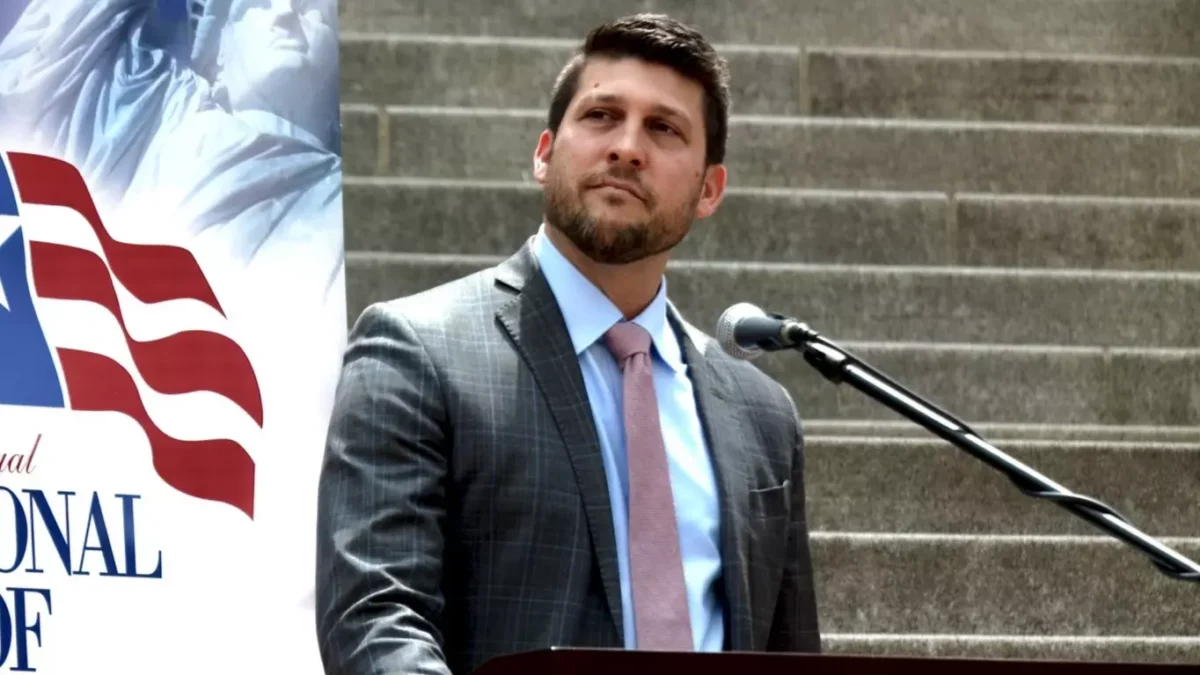

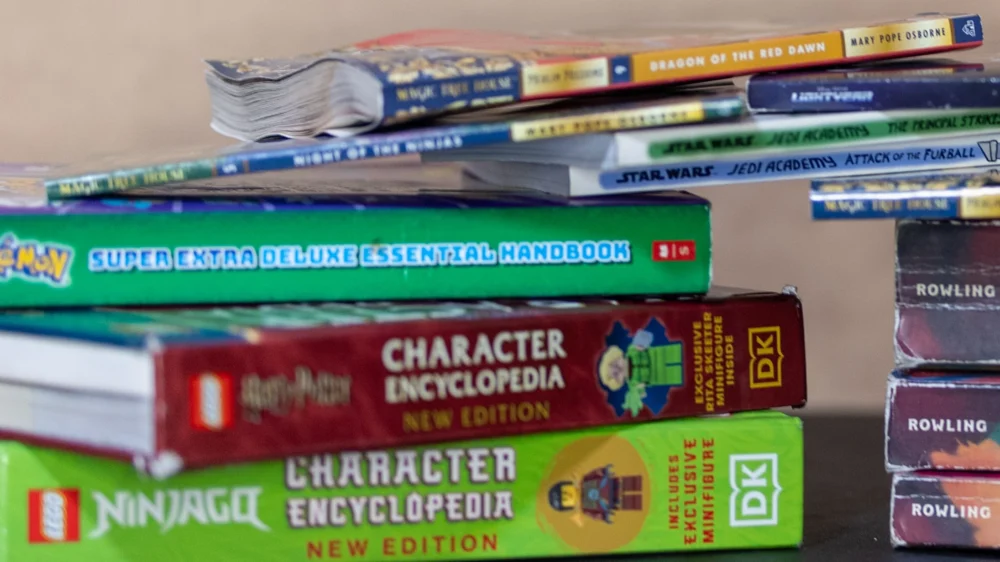
Read Jax is a literacy campaign designed to get all Duval County students reading on grade level by the end of third grade. Duval County Public Schools, the Kids Hope Alliance and the Jacksonville Public Education Fund are among the organizations that have collaborated for Read Jax since 2021. | Ben Brown, Special to Jacksonville Today
Published on April 3, 2026 at 2:40 pm
Free local news and info, in your inbox at 6 a.m. M-F. Sign up for the Jacksonville Today newsletter.
Duval County’s longstanding literacy woes cannot be solved by a solitary organization, educator or person.
The Jacksonville Public Education Fund identified nine practices in a recent research brief that it believes will enhance the local literacy landscape.
Jacksonville Today thanks our sponsors. Become one.
Nevertheless, if the Duval literacy rate is going to improve, more must be done.
“Early literacy is one of the most important predictors of later-life success,” says Shannon Varga, the senior director of research and data for the Jacksonville Public Education Fund.
“The earlier we can start the better,” Varga says. “Bridging from birth to third grade is a difficult problem, but we have found ways to start approaching that.”
Jacksonville Today thanks our sponsors. Become one.
In the 2024-25 academic year, the Florida Department of Education considered 51% of Duval Schools’ third grade students to be proficient readers. That tied for the highest percentage in the last decade.
How Duval can improve local literacy
JPEF identified nine ways to spur literacy:
- Curriculum that follows the science of reading
- Partnerships between schools and families
- Professional development for educators
- Tutoring support for students in school and through after-school programs.
- Community services to help reduce external barriers to learning
- Writing and intervention support for students
- Investment in technologies that will give educators more time with students
- Family support through training and hardware
- A communitywide birth to third grade literacy plan
JPEF applauded Duval County Public Schools, as well as other entities, for implementing five of the suggestions.
COMING MONDAY: The president of JPEF will discuss the literacy report on WJCT’s First Coast Connect.
The most important of those are: literacy curriculum from the University of Florida Literacy Institute that follows the science of reading; a commitment to coordinate — and share data — across networks as well as current programs that serve children and families.
“We found there really is a rich early literacy ecosystem of hundreds of organizations that are working together to support early literacy. … These efforts are spread across, possibly, too many organizations. It makes it harder to build momentum at scale because sometimes partners aren’t always aware of the scope of all their work.”
Duval literacy barriers
Varga earned a Ph.D. from the University of Virginia and has devoted more than a decade studying education and youth development. She says chronic absenteeism, teacher shortages and funding gaps — at the state and federal levels — have been the biggest barriers to implementation.
In the 2024-25 academic year, 89.1% of Duval County Public Schools students attended on a daily basis. That is more than two percentage points below the statewide average (91.8%) and lower than the state’s six other urban counties.
According to Duval County Public Schools data from the 2023-24 academic year, nearly a third of all third grade students who did not pass the Florida Assessment of Student Thinking test were absent at least 20 days that academic year.
A student is considered proficient in literacy if they score at least a Level 3 on the five-tiered test.
Varga states student engagement is a large predictor of outcomes. So, too, is poverty.
Duval County has more 40,000 students who come from economically disadvantaged households. That’s 43% of its student population. Earlier this academic year, Duval Schools noted 23% of its students are from families that receive Supplemental Nutrition Assistance Program benefits.
“Economics is almost a 1-to-1 correlation with literacy scores and literacy rates,” Varga says. “It’s a stronger correlation than adding race, or any other factor into the equation. … The literacy rate in this area has remained within a similar five percentage point range for enough years now that some of the parents of students who are struggling also struggled in the same areas when they were in school. Sometimes, there are double barriers to engagement.”
Exploring the magic of literacy
JPEF President Rachael Tutwiler Fortune says addressing adult literacy may have the knock-on effect of spurring more children to read.
Other initiatives like Tenikka’s Books for Kids and the Mayor’s Book Club are the type of initiatives that will inspire children to read.
Another is the Celebrate Reading Week from the Jacksonville Public Library. The week of festivities concludes with Family Reading Day on April 25 at the Main Library in Downtown. It’s an event where children will have access to a free book.
Connection to Duval literacy resources
Increased awareness between families and the local literacy ecosystem is another method Varga indicates can enhance reading outcomes.
Harvard School of Education professor Bianca Baldridge argues that community-based resources and after-school programs are essential for students in urban areas.
In a conversation with Jacksonville Today earlier this academic year, Baldridge said these programs not only provide academic support, they help contextualize the world and explain systemic issues that may not be taught in classrooms.
“I don’t think there is anything inherently wrong with Black and brown kids,” Baldridge says. “I know from my research it shows that programs are making up for what schools lack. They’re making up for disinvestment in communities and neighborhoods. Those are the things they are making up for, (and) supplementing.”
She noted that after-school programs, as well as partnerships between schools and communities, can help children in urban and under-resourced communities be exposed to additional opportunities.
“For Black and brown young people, indigenous young people, queer young people, young people living in poverty, I firmly believe that an opportunity to process and make sense of inequality, to make sense of harm is extremely important for them. That is where I see after-school programs that do that kind of work being extremely beneficial.”