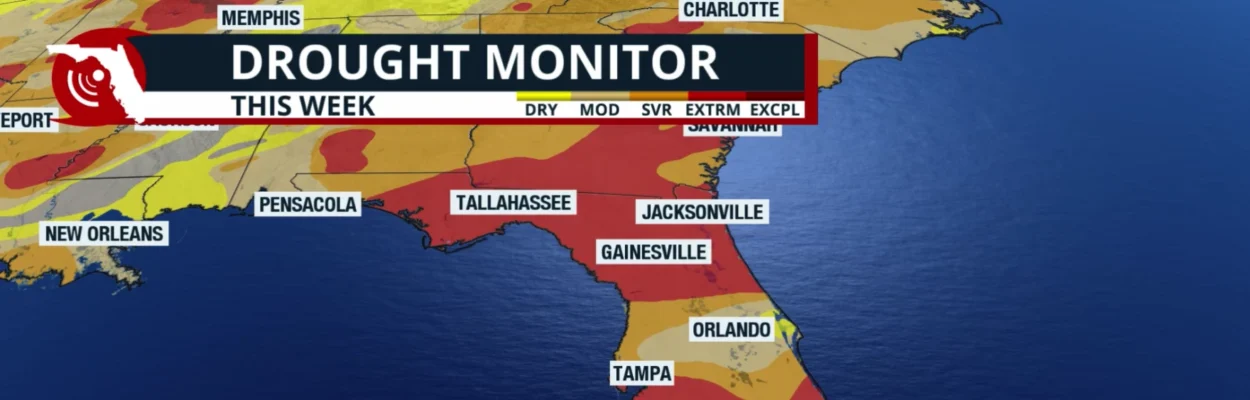
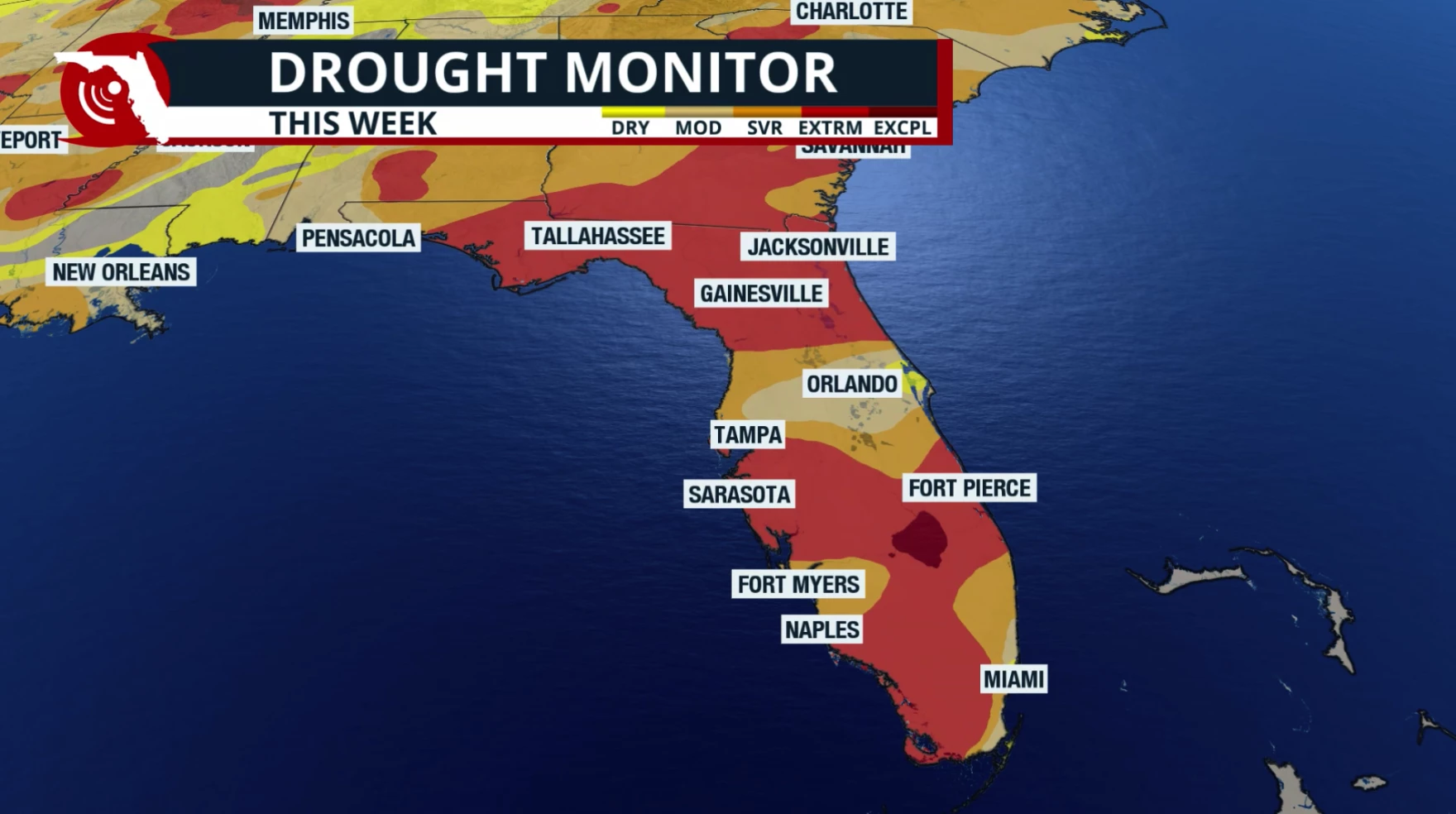
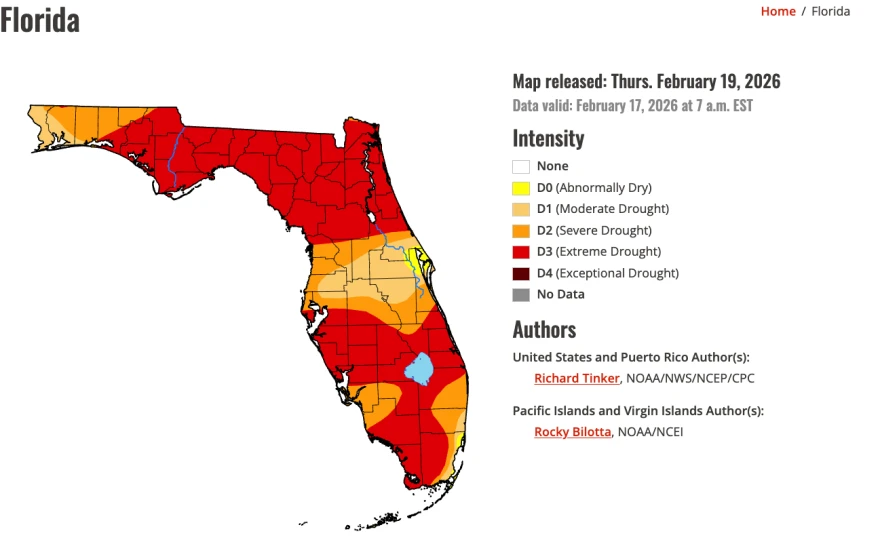
The Drought Monitor report released Thursday, Feb. 19, 2026.
Published on February 20, 2026 at 12:12 pm
Free local news and info, in your inbox at 6 a.m. M-F. Sign up for the Jacksonville Today newsletter.
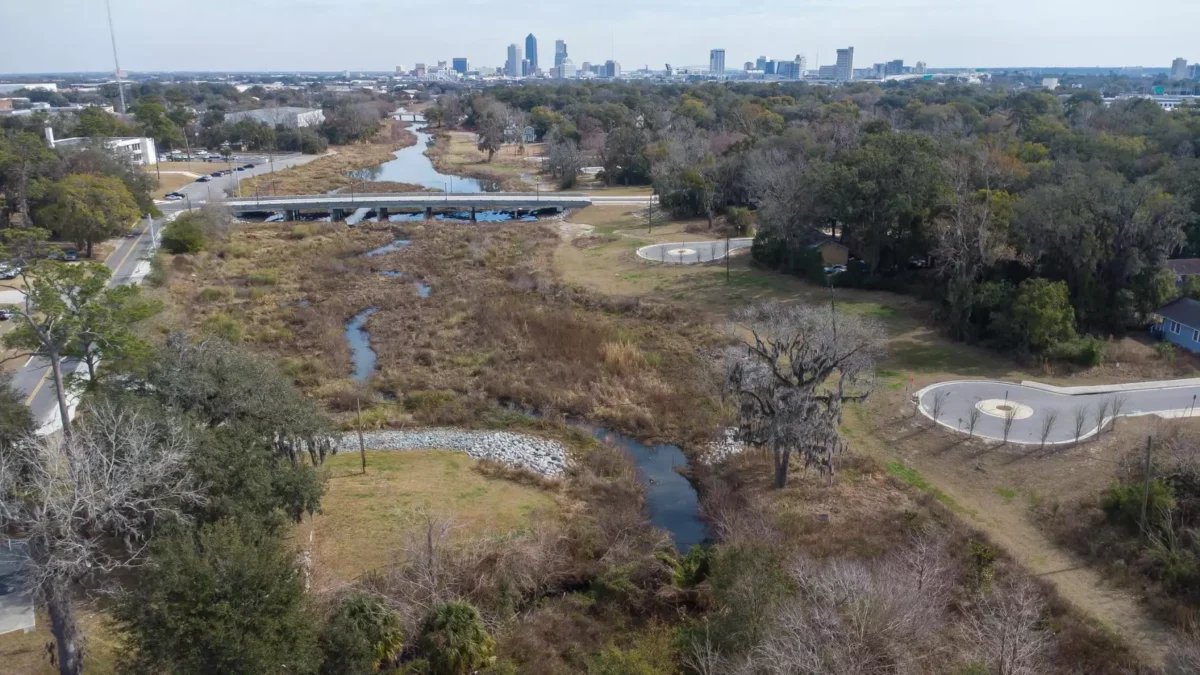
The extreme drought continues to expand its coverage across Florida.
Compared with last week, extreme drought (Level 3 of 5) is now taking over Volusia and Lake counties in Central Florida. This level of drought also has affected counties around Lake Okeechobee, including Okeechobee, Glades, Highlands and Hendry counties.
Jacksonville Today thanks our sponsors. Become one.
It also expanded across Collier County into western Palm Beach, Broward and Miami-Dade counties. All this expansion accounts for nearly a 24% increase compared to the report released last week.
Another notable change, although not as large, was in the severe category. Last week, about 85.5% of Florida was under severe drought. This week, the report shows 87.5%.
All of Florida is experiencing some sort of drought. There are only two small areas labeled abnormally dry: the northern portion of Brevard County and the immediate coast of Miami-Dade County.


Jacksonville Today thanks our sponsors. Become one.
It is not unusual for Florida to experience drought, and droughts are usually accentuated during late winter and early spring, as the dry season runs from October to May.
Contributing to the extra dryness is the La Niña winter, which tends to bring drier-than-normal conditions.
The drought in many parts of Florida has persisted since last summer. Generally, Florida had a rain deficit even during the rainy months.
We did not have major rain events, such as tropical systems, which usually contribute to the rain gauges. We also had persistent high-pressure systems, which not only limited rainfall but also caused temperatures to soar, further drying up the ground.
With the drought, the ground is very compacted. If we were to experience a heavy rain event over a relatively short period, as we often do with fronts, it would cause flooding, as the water can’t drain properly through compacted ground.
Think of it as water ponding on top of clay. Light, constant rain over a relatively long stretch of time, through several days or weeks, could actually help relieve the drought, as the rain would loosen the ground and allow it to drain better.
The forecast shows a front coming on Sunday, sweeping across the Sunshine State. Will it bring rain? Yes, but it will likely not affect the drought.
Long-term models still indicate below-average rainfall for Florida in March. The Climate Prediction Center outlook for the next three months (March, April and May) shows equal chances of above- or below-average rainfall.
Make sure you conserve water and heed any water restrictions in place for your county or local authorities.
Also, avoid burns. Many counties in Florida are under a burn ban, and they will remain in effect throughout the weekend. Make sure to put out any barbecues or anything that can spark.