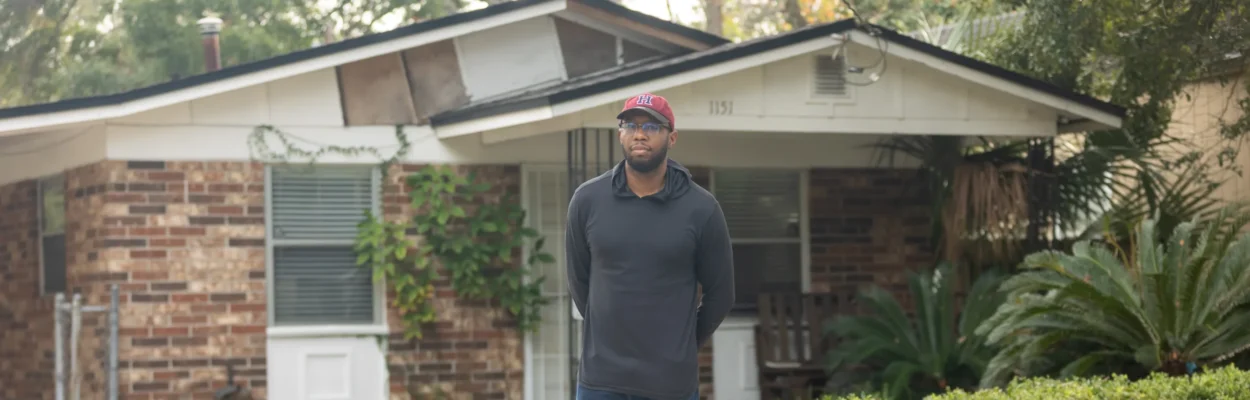
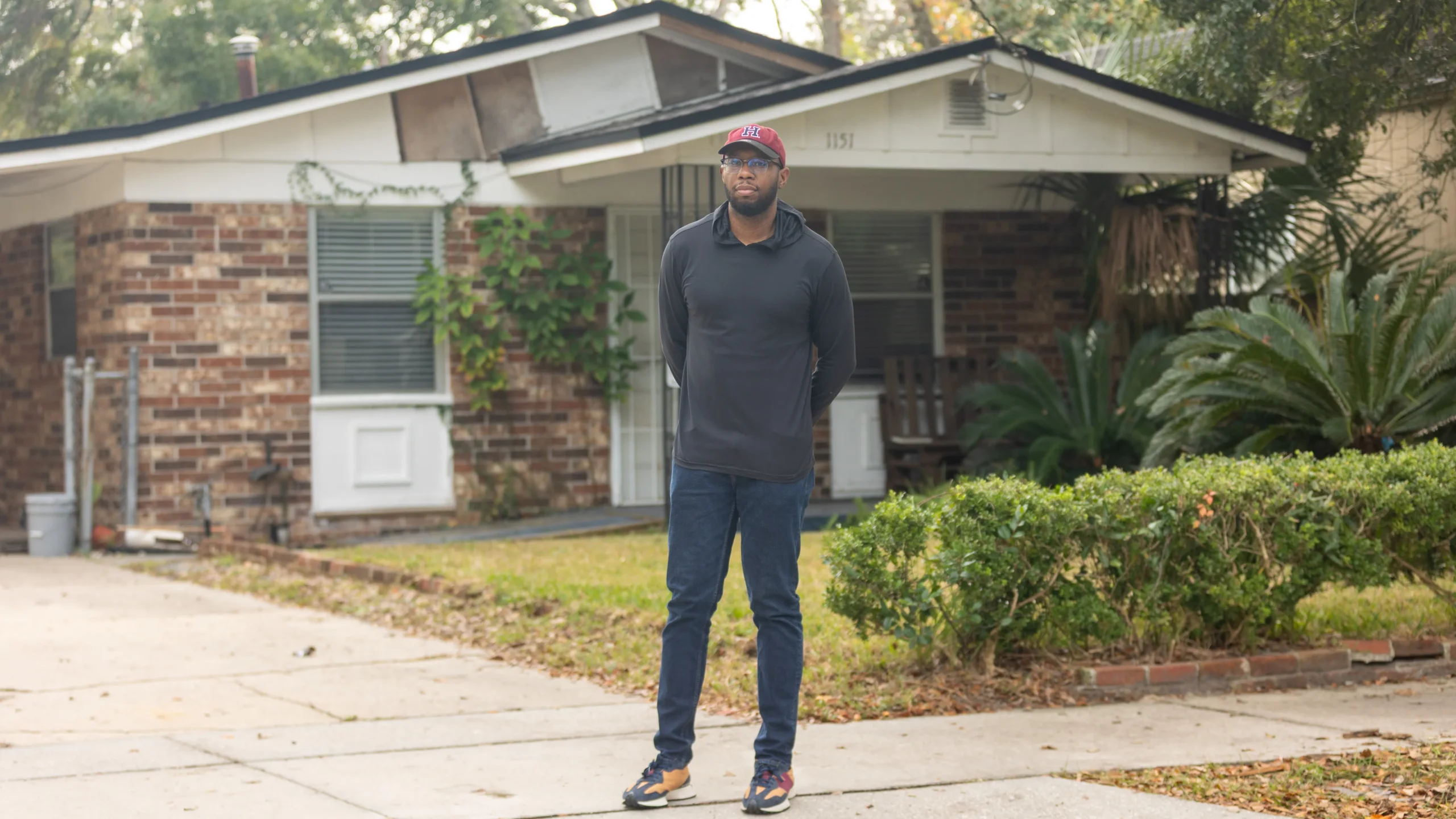
LIFT Jax CEO Travis Williams was brought home to this house on Van Buren Street on the Eastside. His roots in the neighborhood have informed his work leading the nonprofit that advocates for the Eastside. | Will Brown, Jacksonville Today
Published on January 23, 2026 at 11:05 am
Free local news and info, in your inbox at 6 a.m. M-F. Sign up for the Jacksonville Today newsletter.
The reality that the first infusion of public dollars from Jacksonville’s community benefits agreement will flow into the Eastside in the spring has not stopped the worker bees from LIFT Jax from its commitment to community.
LIFT Jax Chief Executive Travis Williams says the nonprofit has its sights on spurring private development along A. Philip Randolph Boulevard, advocating for public school education for Eastside residents and informing the historically overlooked community about options in health care, business development and homeownership.
Jacksonville Today thanks our sponsors. Become one.
Jacksonville Today recently spent a few hours with Williams listening, walking and driving throughout the Eastside to learn about the organization’s vision for a community that comprises Campbell’s Addition, Fairfield, Oakland, Phoenix and Longbranch neighborhoods.
Deep roots pay dividends
A question that motivates most of LIFT Jax’s work is simple: What are things residents have to leave the neighborhood to get?
The answers inform their work.
That’s one reason why Project One Health will be launched this spring.
Jacksonville Today thanks our sponsors. Become one.
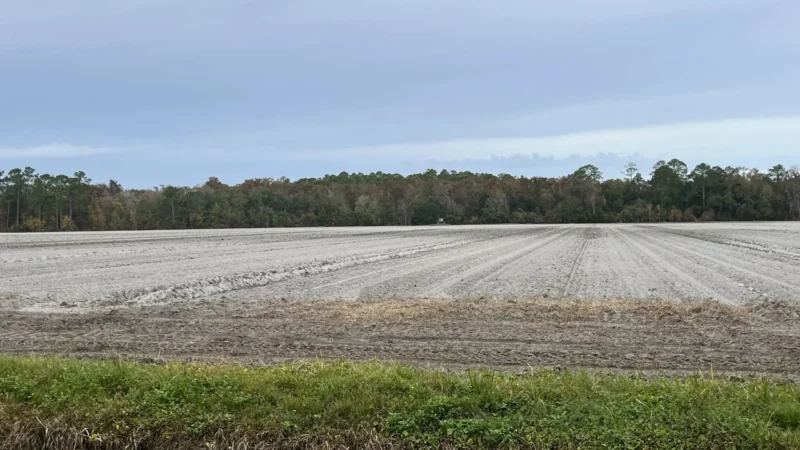
Project One Health will allow students at Long Branch Elementary and Matthew Gilbert Middle — and children who attend the Police Athletic League location on Franklin Street — to experience urban farming at A. Philip Randolph Park.
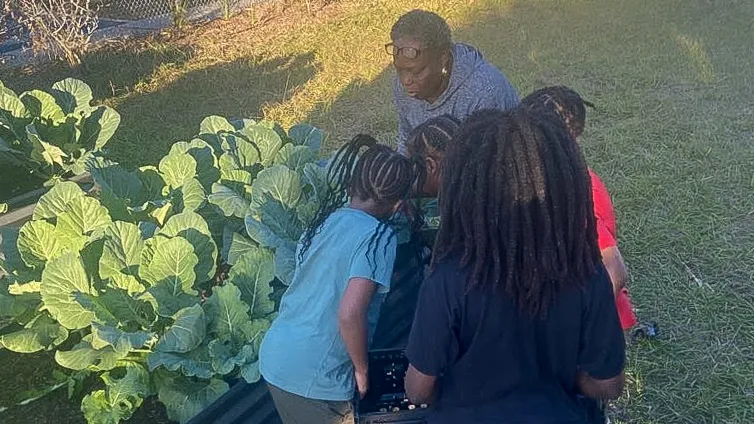
It’s the continuation of a partnership between LIFT Jax and Success Gardening. Success founder Sylvia Powell helped students at the Eastside Police Athletic League harvest sweet potatoes, herbs, peppers and greens last fall.
“I talk about this work being mile-deep work,” Williams says. “It’s an inch-wide and a mile deep. Part of the success is having long obedience to the same things.
“Can you do more of what you were successful with in the previous year? Can we repair more homes for low-income homeowners, scale it up and do it at a faster rate? Can we plug more vacant lots? We want to see the vacant lots number to go down in the neighborhood with workforce housing options for folks. Can we continue to have more public sector investments in infrastructure into the neighborhood? Can we start a catalytic development for the commercial corridor of Florida Avenue? I think in 2026 we will be able to start that.”
Collaboration and community Out East
Williams spent many days at his grandmother’s home on Van Buren Street. The home was close enough to Alltel Stadium to hear the roars from Jaguars touchdowns.
“Van Buren Street is really a case study, in (answer) how does mixed-income housing really work,” Williams says. “You have a home that a Black doctor now lives in with her family. You have a Habitat (for Humanity) home that is a low-income homeownership option. You have a private developer home that’s a rental product. You have some older, low-income, homeownership options. You have long-term residents. … There are 15 homes on this street that were home repairs for low-income homeowners.”
Williams views LIFT Jax as a quarterback that works with a series of partners.
Those relationships have helped provide education for 3-year-olds at the John Love Early Learning Center after other funding sources evaporated — as well as operate a monthly mobile health unit at the Church of Oakland or intentionally work with small and minority owned businesses and contractors as part of a Restore and Repair program that provided improvements at 19 homes in 2025.
LIFT Jax’s coordination with Goodwill Industries to provide $15,000 in gift cards to Eastside residents who faced hunger amid the uncertainty surrounding federal Supplemental Nutrition Assistance Program benefits in November was a quiet collaboration.
It’s similar to LIFT Jax’s 3-year-old partnership with Jax Youth Works.
Jax Youth Works provides training, mentorship and youth leadership programs to people under 25 in under-resourced neighborhoods. Together, the two organizations expose young people from Out East to careers in construction by working on houses and properties on the Eastside.
This work, this investment in people and community, began years ago. Williams has worked for LIFT Jax for nearly five years. He became its CEO in June 2025. But, he’s also a fourth generation Eastside resident from an entrenched family.
At home on the Eastside
The Eastside’s legacy may be intertwined with Williams’ personal backstory.
Zora Neale Hurston’s family once owned a flower shop at the corner of 5th Street and Evergreen Avenue. Williams says family lore has it that his great-grandfather owned a confectionery store in the same building.
Nevertheless, Williams says he is committed to more than personal edification.
The Eastside was named to the National Register of Historic Places in 2023. It is one of the largest intact historic African American neighborhoods in the Southeast. It’s also located in a ZIP code that has vacant lots, a homeownership rate below the county and state percentages, and pockets of poverty.
“Our work predates a lot of the attention media has now put on the neighborhood because of things like the (community benefits agreement),” Williams says.
Community benefits amid community mistrust
The Eastside will see a $115 million infusion of investment from both the city and Jaguars over the next 32 years. The city’s $40 million public investment — the first $4 million will be allocated this year — will be spent over the next seven years. Meanwhile, the Jaguars will devote $2.5 million annually to Eastside initiatives beginning in 2028 when EverBank Stadium renovations are complete.
Historians, policymakers and Jaguars leadership have all stated that the Eastside witnessed chronic disinvestment for decades. The disappearance of the dollars started in the months and years after the October 1969 riot that started over a confrontation between two men along what is now known as A. Philip Randolph Boulevard.
“Through meeting and working together and having tension together, you build relationships,” Williams says. “Now, when something else comes up, like a school board meeting, we’re able to have this mantra — not necessarily as the coalition’s work, but a collective rallying cry to say ‘We are here. We believe in our neighborhood. We have solidarity of saving our school.’ That coalition has spurred off and done many great things.”
Presence and people versus poverty
LIFT Jax faced scrutiny from nonprofits like the Together Eastside Coalition Inc., as well as grassroots organizations such as the Historic Eastside Neighborhood Association, during the latter half of 2025.
The criticism is that LIFT Jax was not immersed and invested the Eastside. Together Eastside Coalition leadership alleged in mid-November that LIFT Jax placed profits over people in poverty.
However, it was not lost to some Eastside advocates that when Duval County Public Schools considered closing Long Branch Elementary during the fall, LIFT Jax leadership attended the community meetings and spoke before the Duval County School Board. Meanwhile, the other entities that criticized LIFT Jax for not having the best interests of the Eastside were not physically present at those community workshops and School Board meetings.
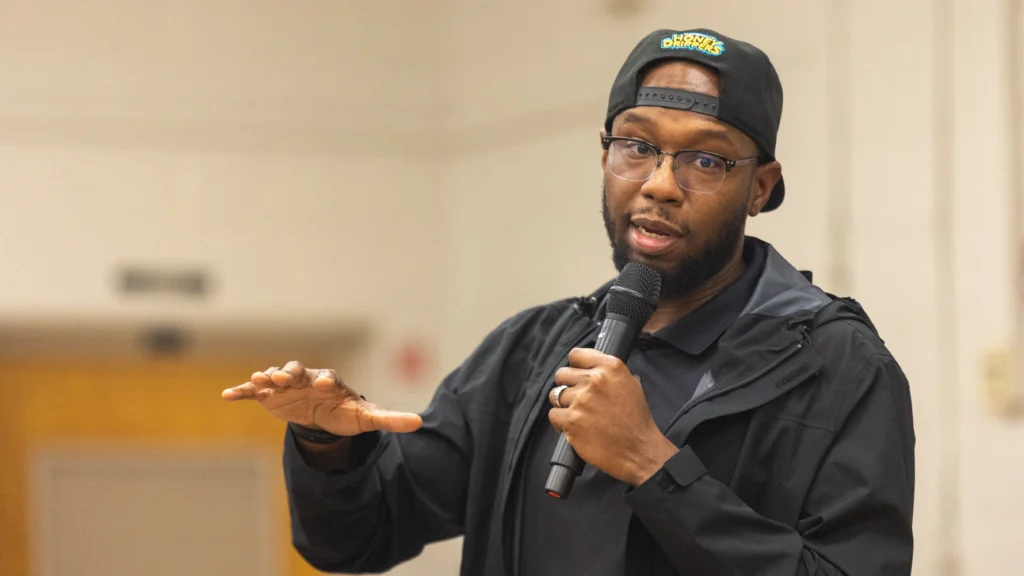
“Our focus is on how do we get more people from the neighborhood to these things so their voice can be heard?” Williams says. “If anyone is showing up and they’re actually doing the work, and whether they are criticizing or whatever, if they are adding to the work of advancing positive things, then show up, put your hands to the work.”
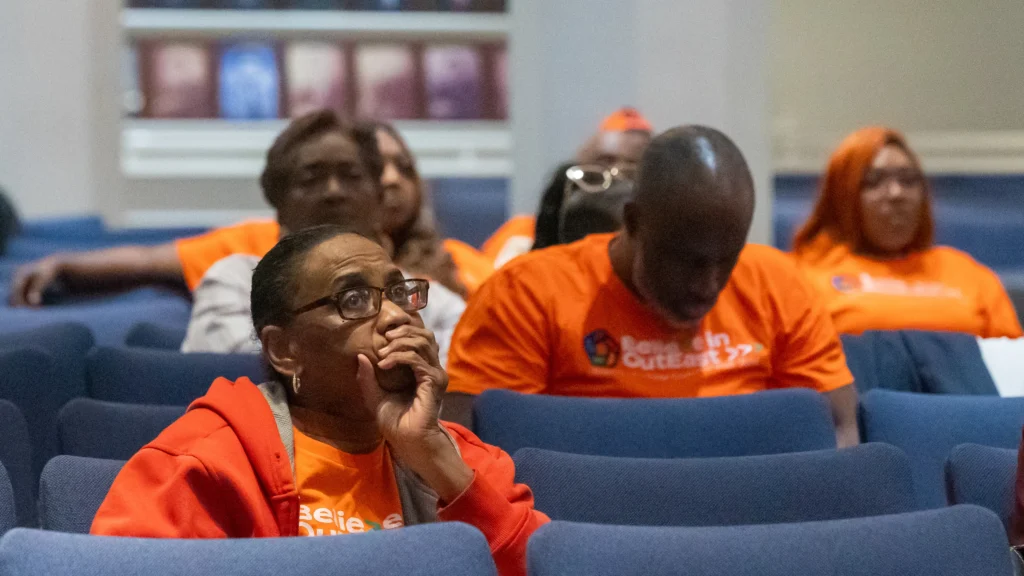
When the Duval County School Board elected to close Long Branch Elementary at the end of the 2026-27 academic year and consolidate it into R.L. Brown Gifted and Talented Academy, scores of people from the Eastside attended the meeting.
LIFT Jax rented a bus and provided food to help Eastside residents voice their concerns to policymakers.
“That request came from residents and advocates,” Williams says. “They said ‘LIFT Jax, can you sponsor a bus to get residents to that meeting?’ … The idea was, ‘We’re going to have families and kids on the bus. We should probably give them dinner. This is going to be a late meeting. That is also part of just doing work with community.”
(Editor’s note: Jacksonville Today reporter Will Brown’s child addressed the Duval County School Board during the Dec. 1 meeting about school consolidation. The younger Brown attended a school that was closed and consolidated with R.L. Brown.)
“We want to be doing the work and making impact,” Williams says. “The price of impact is criticism. That is the price you pay for making an impact. But, I’d rather us be criticized for actual work that we’re doing, be able to adjust and make improvements then just being an organization that is playing it safe by not actually doing any work in the neighborhood.”