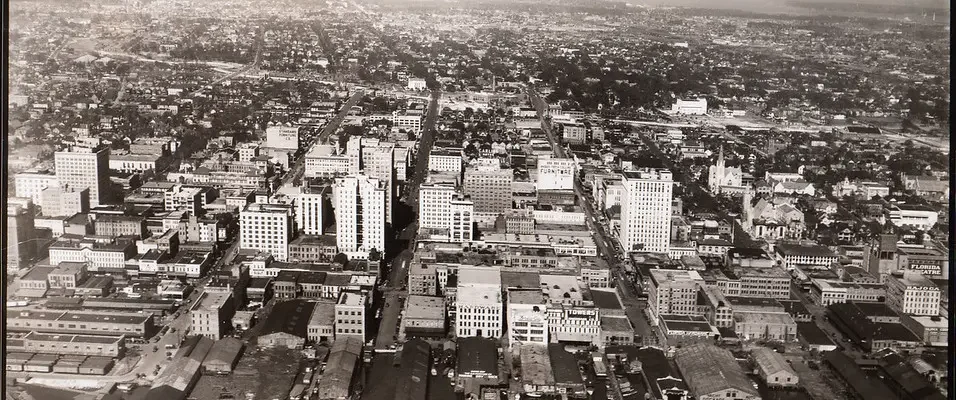
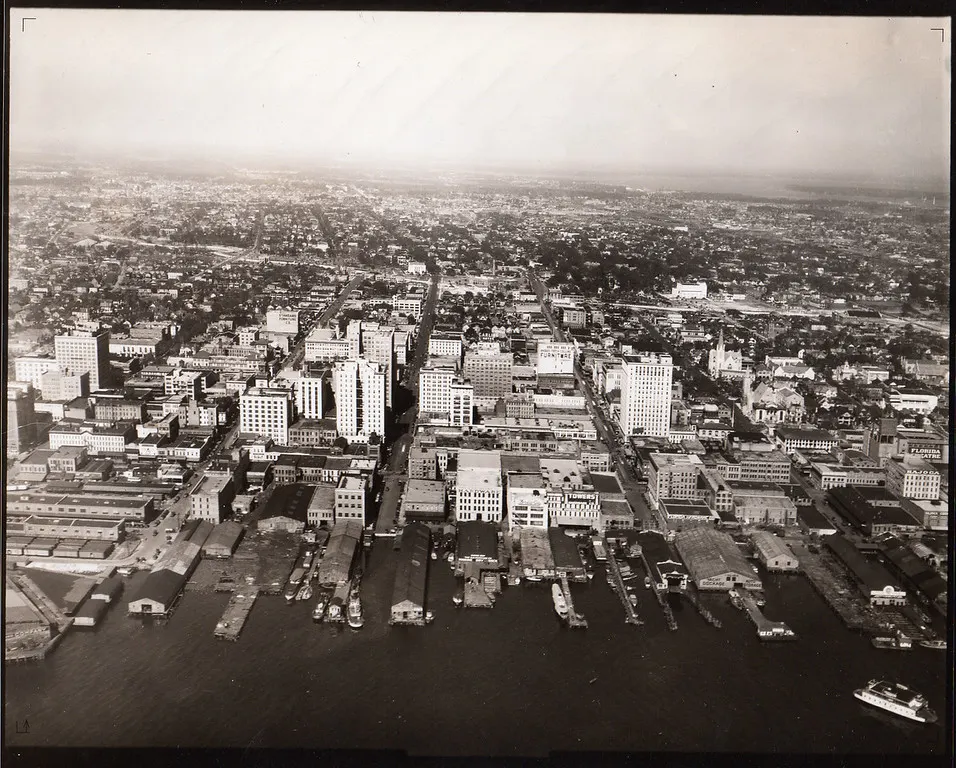
From presidents and pioneers to forgotten families and distinctive trees, the names of downtown Jacksonville's streets offer a fascinating glimpse into the city's early history.
Published on November 4, 2026 at 3:34 pm
Free local news and info, in your inbox at 6 a.m. M-F. Sign up for the Jacksonville Today newsletter.
Every day, thousands of people travel along Downtown Jacksonville’s familiar thoroughfares without giving much thought to the origins of their names. Yet, hidden in plain sight, Downtown Jacksonville’s street names tell stories of the city’s founding, its early settlers, political ambitions and transformation from a small frontier settlement into a major Florida city.
Some streets honor American presidents and political figures who helped shape Florida’s transition from Spanish to American control. Others commemorate Jacksonville’s earliest residents, including members of the Hart family, whose influence remains visible on the city’s street grid two centuries later. Other streets received their names from natural landmarks, neighborhood institutions or the everyday activities of early Jaxsons. Together, these names provide a window into the people, places and events that shaped the city during its formative years.
Jacksonville Today thanks our sponsors. Become one.
A city named for presidents and political leaders

Jacksonville was established in 1822, just one year after Florida officially became a U.S. territory. Not surprisingly, several of the city’s earliest streets were named for national political leaders associated with the country’s founding and the acquisition of Florida.
Forsyth Street honors John Forsyth, who served as the U.S. minister to Spain during negotiations surrounding Florida’s acquisition. Forsyth later served as governor of Georgia and U.S. secretary of state.
Adams Street was named for John Quincy Adams, who served as secretary of state under President James Monroe. Adams played a central role in negotiating the Adams-Onís Treaty of 1819, through which Spain agreed to cede Florida to the U.S. He would later become the nation’s sixth president.
Jacksonville Today thanks our sponsors. Become one.
Monroe Street commemorates James Monroe, the fifth president of the U.S., whose administration oversaw Florida’s acquisition from Spain in 1819.
Duval Street honors William Pope DuVal, who became Florida’s first territorial governor in 1822. DuVal served in that position until 1834, overseeing the territory during its early years of American administration.
Washington Street was named for George Washington, the nation’s first president.
These street names reflected the political loyalties and national identity of Jacksonville’s early founders. In a settlement established shortly after Florida became an American territory, naming streets for prominent national figures was a way of connecting the developing community to the social context and broader history of the U.S.
The Hart family’s lasting legacy

Few families were as influential in Jacksonville’s early development as that of Isaiah D. Hart, widely recognized as one of the city’s founders. Hart was among the early settlers who helped establish Jacksonville along the St. Johns River. His family became closely associated with the settlement’s growth, and several Downtown streets preserve their names.
Laura and Julia streets were named for Hart’s daughters, reflecting the common 19th century practice of naming streets after members of prominent local families.
Ocean Street, despite its geographic-sounding name, was really a phonetic nod to Ossian Hart, Isaiah Hart’s son. Ossian followed his father into public life and eventually became Florida’s 10th governor, serving from 1873 until his death in 1874.
These names demonstrate how Jacksonville’s earliest street grid was influenced not only by national political figures but also by the personal relationships and family histories of the people who helped establish the community.
Streets named for Jacksonville’s earliest settlers

Several other Downtown streets commemorate individuals associated with Jacksonville’s early settlement and Florida’s territorial period. Unlike the streets honoring nationally prominent figures, these names preserve more personal stories associated with Jacksonville’s earliest residents.
Hogan Street takes its name from Lewis Zachariah Hogans, identified as one of the city’s founders. Hogans built a log cabin on what eventually became the northwest corner of Hogan and Forsyth streets in 1816. It was the first house in what would become Jacksonville. Over time, the final “s” was dropped, leaving the name familiar to Jacksonville residents today.
Newnan Street honors Col. Daniel Newnan, a military figure associated with the Patriot movement in Florida during the early 19th century. Newnan participated in a campaign against the forces of Seminole leader King Payne in Central Florida and later served as inspector general of Georgia. Newnan, Georgia, and Newnan’s Lake in Alachua County are also named in his honor.
Ashley Street may have been named for Col. Richard H. Ashley, a military leader associated with the short-lived Republic of Florida movement. However, the precise origin of the name is less certain than that of several other Downtown thoroughfares. Ashley Street was originally known as Caroline Street, reportedly named for the daughter of an early or prominent Jacksonville settler.
Catherine Street offers another example of a family connection. The street was named for a young daughter of the John Doggett family who died at an early age. Doggett had arrived in Florida 1820, acquired St. Johns River land, and served as a territorial judge and legislative council president.
When street names reflected everyday life

Not every Downtown street was named for a person. Some were named for natural features, commercial activities and institutions that characterized Jacksonville during its early development. These street names offer clues about the city’s early landscape, when ferries, markets, churches and large trees served as recognizable features of a small riverfront community.
Bay Street, one of Downtown’s most recognizable thoroughfares, may have received its name from a distinctive tree. A large bay tree stood along the riverbank at the foot of Market Street, near the starting point of Jacksonville’s first survey. Described as a “fine old bay,” the tree may have influenced the naming of the street.
Market Street received its name from the public market that operated at the foot of the street during the city’s early years. The name reflects the importance of markets as centers of commercial and social activity in 19th century communities.
Church Street was named in honor of the collection of churches once located along it, illustrating the prominent role religious institutions played in the developing settlement.
Liberty Street combined patriotic symbolism with an earlier transportation function. Before receiving its present name, it was known as Ferry Road because a ferry operated from the foot of the street. Its renaming reflected a desire to include a street celebrating the American ideal of liberty.
Pearl Street was originally known as Cedar Street, a name believed to have been inspired by a distinctive tree in the area. Like Bay Street, its original designation suggests the importance of recognizable natural landmarks in an era before Jacksonville developed into a densely built urban environment.
LaVilla, annexation and a changing street grid

As Jacksonville expanded during the 19th century, its street names evolved alongside its municipal boundaries. One of the most significant changes occurred in 1887, when the neighboring municipality of LaVilla became part of Jacksonville. Before annexation, LaVilla had developed as an independent community immediately west of Jacksonville’s original town limits. Its incorporation into the larger city required adjustments to the street network and naming conventions.
Clay Street once served as the dividing line between Jacksonville and LaVilla. Although the origin of its name has been lost, its historical significance remains tied to the boundary between the two municipalities.
The annexation period also brought street names commemorating figures associated with both American and Confederate history. Jefferson and Madison streets were named in honor of Presidents Thomas Jefferson and James Madison. Meanwhile, Davis and Lee streets honored Confederate leaders Jefferson Davis, president of the Confederate States of America, and General Robert E. Lee.
Broad Street was originally known as Bridge Street. As Bridge Street, it connected to the Riverside Viaduct, which carried automobiles and streetcars over the Florida East Coast’s railroad tracks and McCoys Creek, connecting Downtown and LaVilla with Brooklyn and Riverside. Its name was changed in the early 20th century.
These names reflect the political and cultural values of Jacksonville’s political and civic leaders of the late 19th century, when Reconstruction ended and Confederate commemoration became increasingly prominent in Southern public spaces. Their inclusion in Jacksonville’s street grid also illustrates how the city’s landscape was shaped by different generations, each leaving its own interpretation of history through the naming of public places.
The Downtown streets that changed names

Several of Jacksonville’s present-day streets, including some previously mentioned, were originally known by different names, reflecting changes in local identity and the development of a more unified downtown street network.
Beaver Street was originally named Elizabeth Street, reportedly in honor of the daughter of an early or prominent local settler. Union Street was once Broward Street, a name associated with an early Jacksonville family. State Street was originally Hart Street, another reference to the Isaiah Hart’s family with deep roots in Jacksonville’s founding.
These changes demonstrate how street names are not necessarily permanent. As communities grow, merge and redefine themselves, familiar names can disappear from maps, leaving behind historical associations that are easily forgotten.
A living map of Jacksonville’s history

Downtown Jacksonville’s street names are more than navigational conveniences. Collectively, they form a historical record of the city’s development. Names such as Adams, Monroe, Forsyth and Duval recall Florida’s transition into an American territory. Laura, Julia, Ocean and Hogan preserve connections to early settlers and their families. Bay, Market, Church and Liberty reflect the physical landscape, institutions and values of the developing riverfront town.
Others, including Broad, Clay, Davis and Lee, reveal the influence of the political culture of the late 19th century. Some names have lasted for more than two centuries, while others have been replaced or altered. In several cases, their origins remain uncertain or have been lost entirely.
Nevertheless, the stories behind these streets provide an opportunity to better understand the people and events that shaped the city Jacksonville. The next time you walk along Laura Street, cross Adams Street or travel west toward LaVilla, consider the history embedded in the street signs overhead. They are reminders that Jacksonville’s past is not confined to museums, historic buildings or archival photographs. Much of it remains visible in the names of the streets we travel every day.