
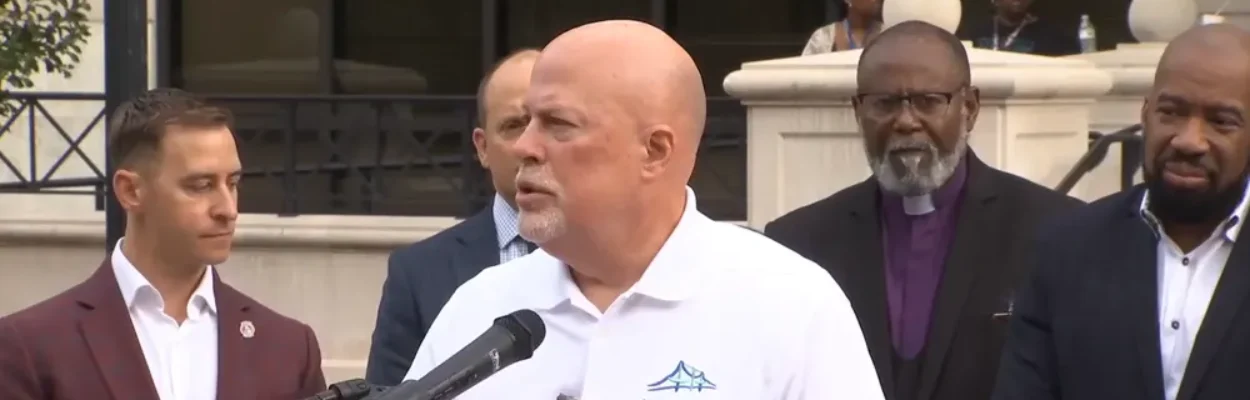
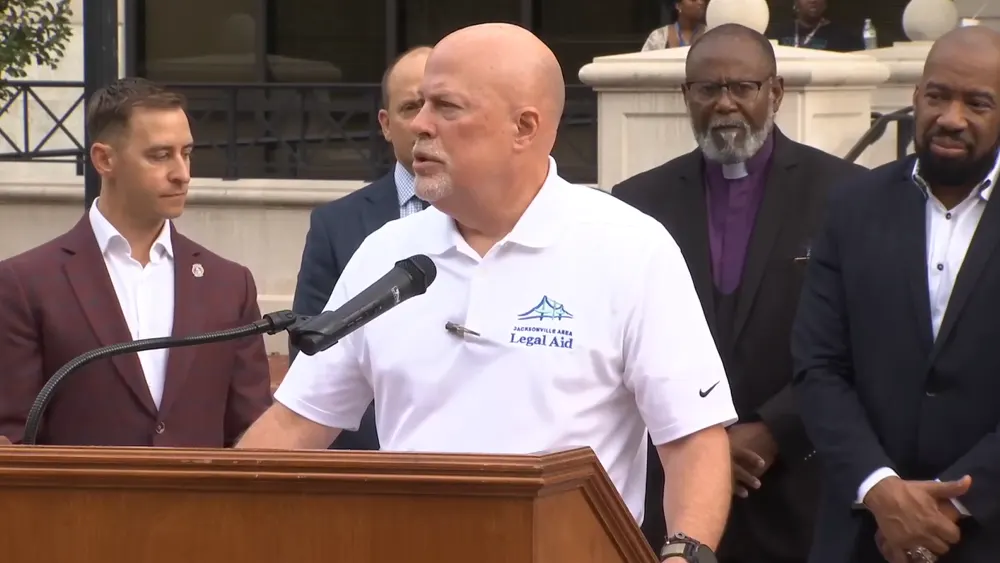
Jacksonville Area Legal Aid CEO Jim Kowalski announces a new
tool Friday, Sept. 18, 2026, to help renters spot housing violations. | News4Jax
Published on September 18, 2026 at 11:28 am
Free local news and info, in your inbox at 6 a.m. M-F. Sign up for the Jacksonville Today newsletter.
Jacksonville renters can now search for reported housing code violations before signing a lease under a new online rental registry developed by Jacksonville Area Legal Aid.
The tool, available at JaxStableHousing.org, allows current and prospective tenants to search rental properties by address and view reported Jacksonville code enforcement issues. The registry uses three years of city code enforcement records and includes a map and search function.
Jacksonville Today thanks our sponsors. Become one.
Jacksonville Area Legal Aid CEO and President Jim Kowalski said the tool is intended to make public records easier for renters to find and understand.
“We can’t make landlords register for anything in Florida, but we can help bring some transparency to the rental process by helping you learn more about where you are renting or, in particular, where you want to rent,” Kowalski said.
The registry was unveiled Friday with support from Jacksonville City Council members Jimmy Peluso and Michael Boylan, as well as other housing advocates and officials.


Jacksonville Today thanks our sponsors. Become one.
Peluso said renters frequently ask what they can do when a landlord fails to address serious problems, including unsafe living conditions.
“At the very least, we can give people information,” Peluso said. “And with that information, we expect them to say, ‘Oh wow, there were cockroaches here two weeks ago. You know what? I’m going to rent somewhere else.’”
The launch comes amid recent reports questioning living conditions at Calloway Cove, where a woman’s ceiling collapsed despite her warning to management.
READ MORE: $20M fund established to spark affordable rental housing in Jacksonville
The registry does not force landlords to participate and does not include every issue that could affect a tenant’s housing. Officials said the tool is tied to municipal code enforcement records, meaning problems that are not code violations — such as a landlord failing to provide a promised amenity — may not appear.
The records also do not replace the legal process tenants must follow when a rental property has unsafe conditions. Kowalski said tenants generally cannot simply stop paying rent because of a problem. Under Florida law, tenants must notify their landlord and allow time for repairs while also engaging with city code enforcement.
Jacksonville Area Legal Aid operates a clinic that helps tenants provide the required notice and can represent them in court, Kowalski said. More information is available at JaxLegalAid.org.
Officials said code enforcement records for a property will remain on the registry but will be marked as closed after an issue is resolved. The goal is to provide information about landlords who respond to violations, as well as those who take too long to address them.
“Good landlords don’t have anything to fear from us,” Kowalski said. “If you have a landlord that’s being responsive, that has a good local manager that’s turning over a violation — trees fall through roofs, it happens to be raining today — so they fix it, we want that to be reflected as well.”
The registry’s developers said future updates could include more information about property managers and the entities responsible for maintaining rental properties. Officials said it can be difficult to determine who manages a property when ownership is held through multiple limited liability companies.
The registry also could eventually incorporate additional housing data, but officials said those features are not yet available.
Former state Sen. Jose Javier Rodriguez, who also spoke at the launch, called the registry a way to help renters identify landlords who repeatedly fail to meet minimum housing standards.
“It is a simple idea, but it is a powerful one: transparency,” Rodriguez said. “Before you sign a lease, you should know which landlords are violating code.”
The launch follows Jacksonville’s eviction diversion program, which is in its second year. Kowalski said more than half of local renters are cost-burdened, meaning they spend more than one-third of their income on rent.
The registry is part of a broader effort by Jacksonville officials and housing advocates to provide renters with more information in a state where local governments have limited authority to regulate landlords.
This story was published as part of the Northeast Florida News Collaborative.