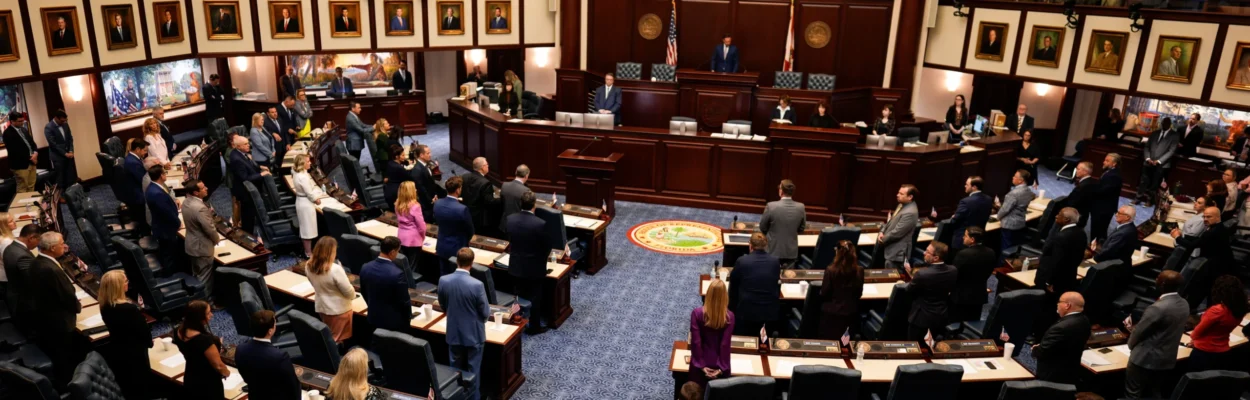
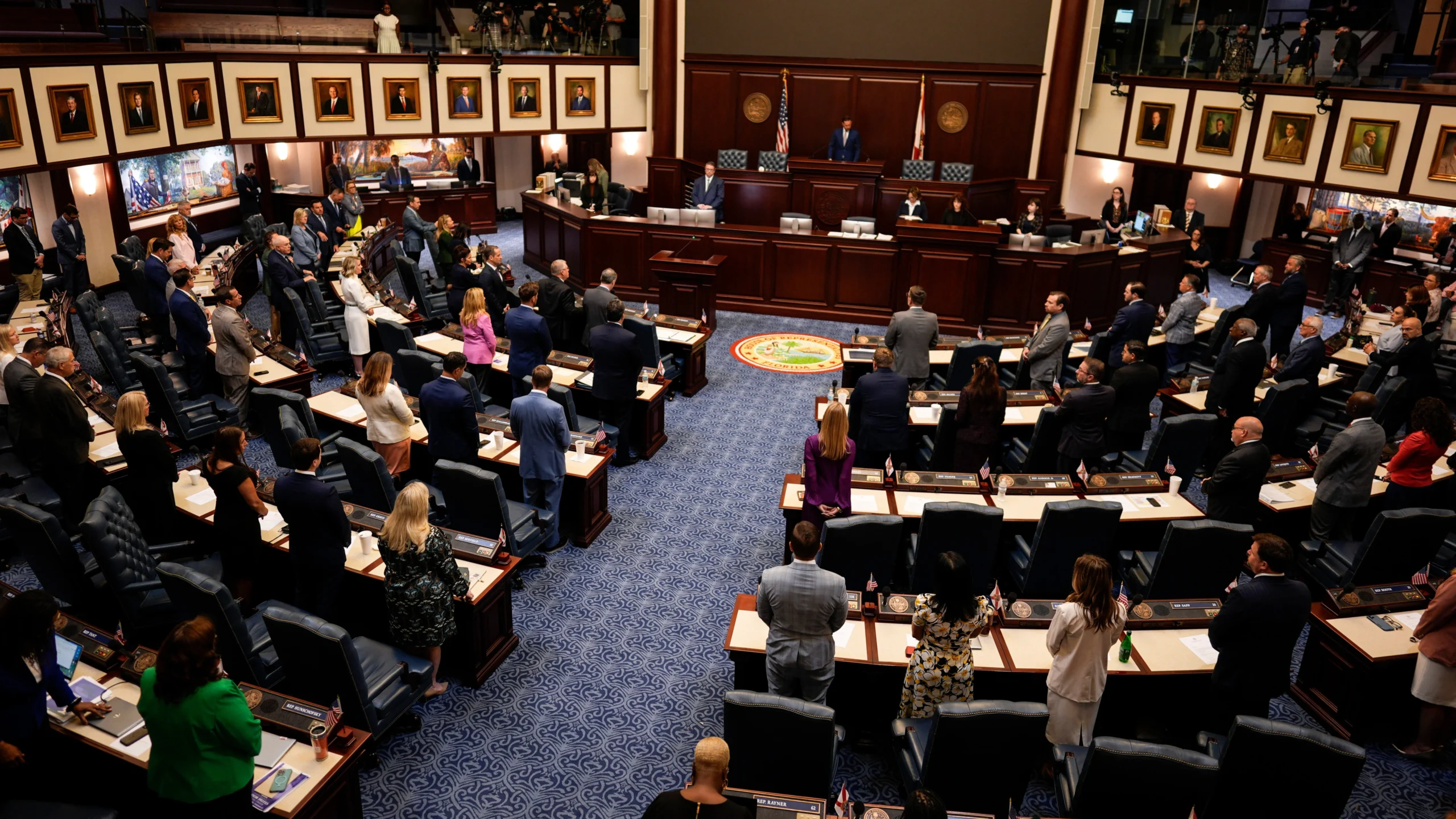
The Florida Legislature in session on April 29, 2026. | Mike Stewart, AP
Published on July 6, 2026 at 6:23 pm
Free local news and info, in your inbox at 6 a.m. M-F. Sign up for the Jacksonville Today newsletter.
Changes in Florida law will make it easier for state prosecutors to hold people accountable if they suspect child abuse but don’t report it.
Florida law requires certain professionals — including all school personnel — to report suspicions of child abuse. Not doing so is a third-degree felony. But two local legislators sponsored a change in the law regarding the statute of limitations in such cases.
Jacksonville Today thanks our sponsors. Become one.
The statute of limitations remains three years, but the clock will now start only after a law enforcement agency is made aware of the abuse. Previously, it began when the crime happened.
“When the victims came forward later or as adults, the statute of limitations had expired for those who failed to report the abuse,” the Florida State Attorney’s Office wrote in a social media post last week when the law took effect. “These failures allowed the abuse to continue. Today, that changes.”
Sponsored by state Rep. Wyman Duggan, R-Jacksonville, and Sen. Jennifer Bradley, R-Fleming Island, the bill passed unanimously last spring.


Jacksonville Today thanks our sponsors. Become one.
Duggan says Jacksonville’s Douglas Anderson School of the Arts is the reason he filed the bill.

Three years ago, after vocal teacher Jeffrey Clayton was arrested on charges of lewd conduct with a student, stories tumbled out for months — about Clayton and about other teachers. Clayton pleaded guilty and is serving a 10-year prison sentence.
Duggan tells Jacksonville Today that the State Attorney’s Office realized during its investigation of Douglas Anderson that they had no mechanism to hold accountable people who knew of the abuse but didn’t report it.
“[State Attorney] Melissa Nelson came to me with this issue of the statute of limitations for the crime of failing to make a mandatory report having expired by the time she uncovered the failure in her investigation out there,” Duggan says.
A Jacksonville Today investigation of the fallout after Clayton’s arrest found that numerous school and district officials had received reports about abuse happening at the school. Many Douglas Anderson graduates told Jacksonville Today that they lacked faith that administrators would take complaints seriously.
“It takes a long time for these survivors to find the emotional strength to come forward,” Duggan says. “In the mandatory reporter context, unfortunately, the clock had run out.”
Florida now has no statute of limitations for sex crimes against minors, after changing that law in 2020. The new legislation for mandatory reporters applies to future cases, but Duggan’s office says it doesn’t “revive cases in which the statute of limitations had already expired.”