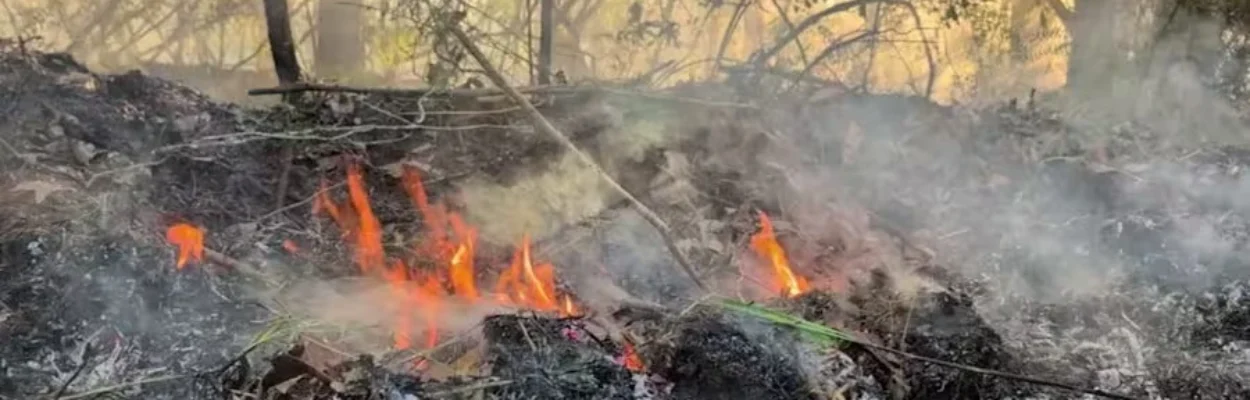
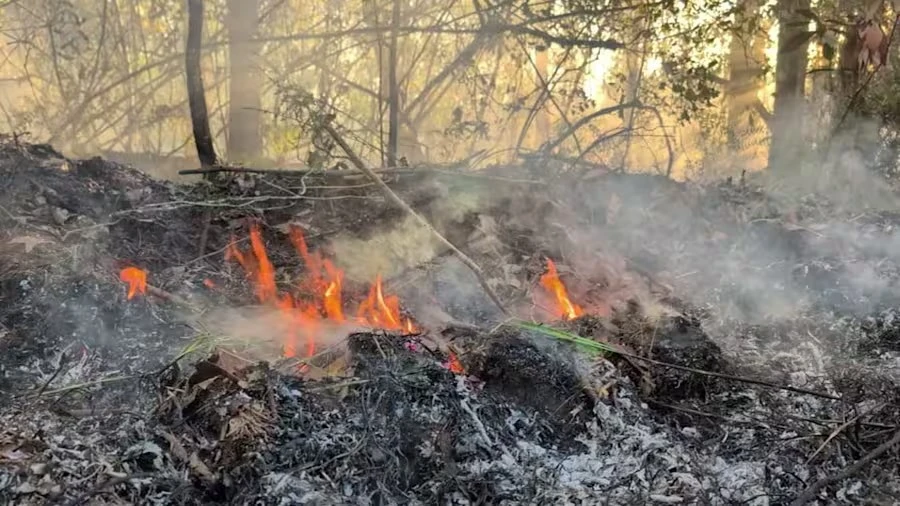
Two fires burning near the Clay–Putnam County line merged into the massive Railroad Fire. | Jesse Hanson, News4Jax
Published on June 1, 2026 at 2:46 pm
Free local news and info, in your inbox at 6 a.m. M-F. Sign up for the Jacksonville Today newsletter.
Clay County has lifted its ban on burning after recent rainfall eased the area’s severe drought.
County officials said Monday that conditions are expected to improve even more with heavy downpours forecast for Tuesday afternoon and evening.
Jacksonville Today thanks our sponsors. Become one.
The burn ban had prevented campfires, firepits, burning of yard debris or any other outdoor burning. Use of a barbecue grill was allowed if food was cooked.
In lifting the burn ban, county officials reminded residents that only vegetative yard waste — not household garbage or other materials — may be burned.
The county banned burning April 16 because the drought had heightened the risk of forest and brush fires. Baker, Nassau, Putnam and St. Johns counties also imposed burn bans.


Jacksonville Today thanks our sponsors. Become one.
Burning is prohibited year-round in Duval County without a permit, but the county issued a total burn ban in April, meaning people could be charged with a misdemeanor for a violation.
That ban was lifted Wednesday, but the county’s year-round burning regulations remain in effect.
Water restrictions
The St. Johns River Water Management District stressed that, despite recent rain, the drought remains severe.
“A single rain event will not erase months of significant water deficits,” the district said in a statement Monday.
Northeast Florida would need nearly 31 inches of rainfall over the next three months to eliminate current drought conditions, the statement said.
The water management district declared a “Phase III Extreme Water Shortage” earlier this month in response to declining groundwater levels and reduced flow of surface water. Mandatory restrictions remain in place throughout the area, including:
- Irrigation restrictions for new plantings, including sod, have been tightened.
- Residential, commercial and institutional properties are limited to one day per week of landscape irrigation.
- Landscape irrigation is prohibited between 8 a.m. and 6 p.m. daily.
- Commercial, industrial and institutional users must suspend certain non-essential water uses.
- Golf course fairway irrigation is limited to one day per week.
- Aesthetic water use, such as decorative fountains, is prohibited.
- Street and pressure washing activities face additional restrictions.
The water management district also shared this information: “Residents may occasionally see irrigation systems operating in public spaces such as parks, medians and common areas during the water shortage. In many cases, these systems use reclaimed water, which is a highly treated recycled water source that helps reduce demand on potable groundwater supplies.
“While conservation remains important across all water sources, some reclaimed water systems must continue operating to maintain system function or manage storage capacity.”
The water shortage order, along with water conservation tips, is available here.


Randy comes to Jacksonville from the South Florida Sun-Sentinel, where as metro editor, he led investigative coverage of the Parkland school shooting that won the 2019 Pulitzer Prize for public service. He has spent more than 45 years in reporting and editing positions in Illinois, Iowa, Missouri, Ohio and Florida.