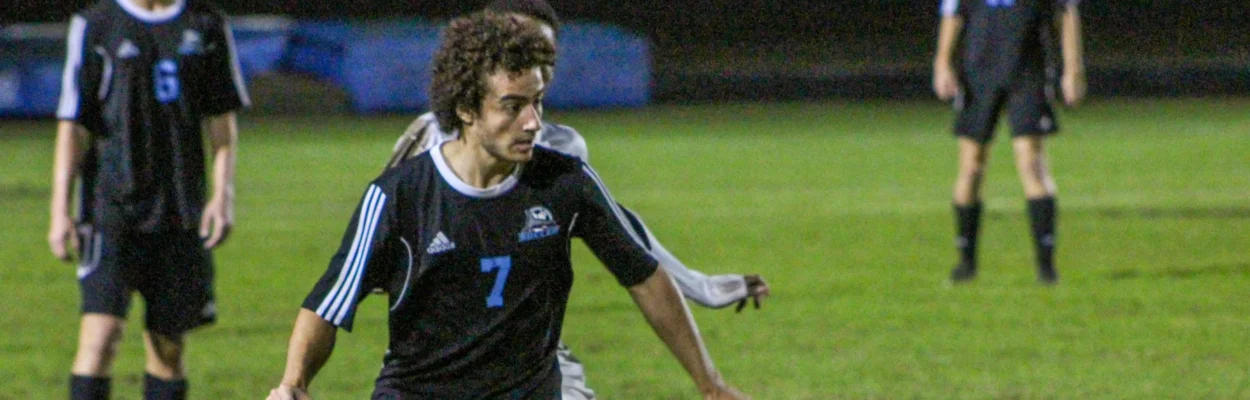
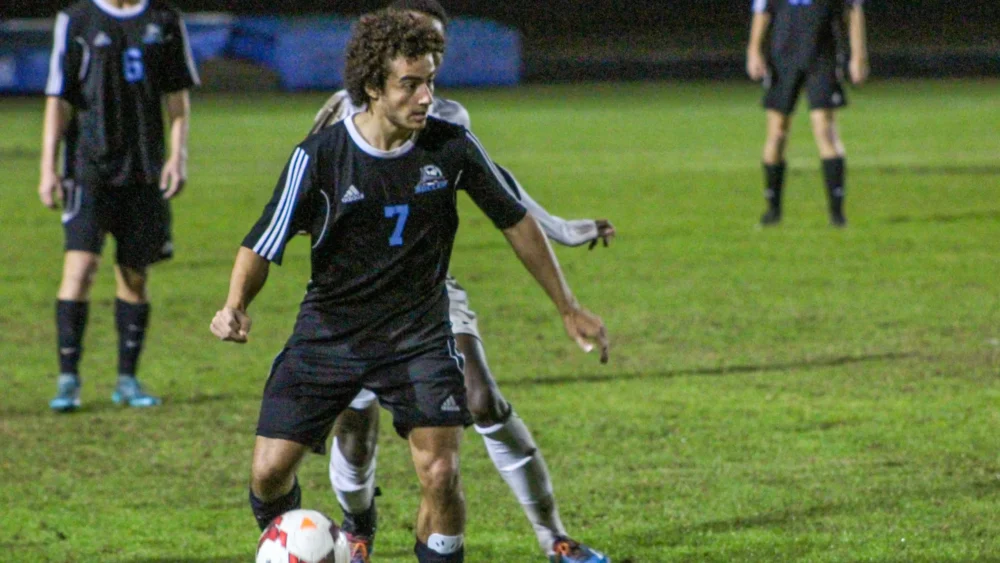
Munir Adamo helped the Ponte Vedra boys soccer team finish 25-0-0 in the 2015-16 season. The Sharks became one of the few boys soccer teams in Florida history to finish the season unbeaten and untied. | Will Brown
Published on May 21, 2026 at 5:33 pm
Free local news and info, in your inbox at 6 a.m. M-F. Sign up for the Jacksonville Today newsletter.
A Ponte Vedra High School soccer coach once lamented Munir Adamo was intelligent enough to do anything he wanted in life.
At that time, Adamo was the heartbeat of the irrepressible varsity soccer team at Ponte Vedra High. Adamo and Nick Kostrubsky were part of a surgical attack that scored for fun.
Jacksonville Today thanks our sponsors. Become one.
Today, Dr. Munir Adamo is set to begin an internal medicine residency at the University of South Florida. Dr. Nikita Kostrubsky will soon begin an internal medicine residency at Brown University in Rhode Island.
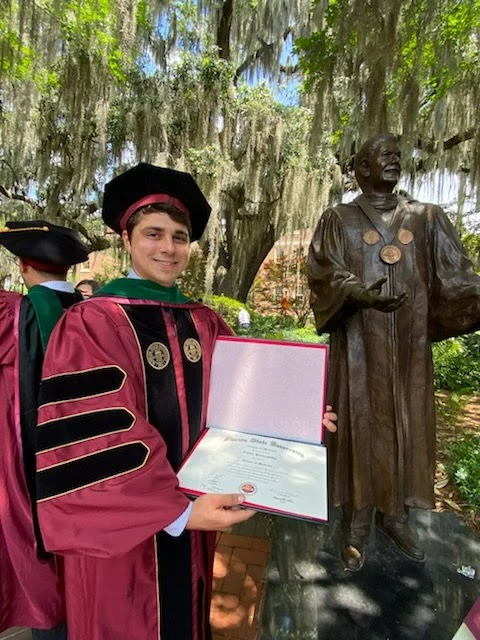
Dr. Kostrubsky earned his medical degree from Florida State last week. Dr. Adamo earned his medical degree from Florida International last month.
A decade ago, they were vital cogs for a high school soccer team that won district, regional and state championships. Adamo was an attacking midfielder whose touch and vision frustrated opponents. Kostrubsky was a left winger with devastating pace and elite finishing.



Jacksonville Today thanks our sponsors. Become one.
“It was always a joke with my friends in elementary, middle school. They would call me Dr. Adamo. In my head, as a kid, I always thought I would be a doctor,” Adamo tells Jacksonville Today. “But at the same time, I did love soccer. I wanted to also play professional soccer or at least college soccer.”
From pitch side to bedside
Ponte Vedra High’s 2016 team might have been the best high school soccer team Northeast Florida has ever produced.
Ponte Vedra played 1,739 minutes that season and trailed for only 47 of them. Their finished with a 25-0-0 record.
They didn’t just win. They humiliated teams with high-octane pressing and incisive passing. Ponte Vedra outscored teams 133-15, won 23 of its games by multiple goals and produced the state’s first unbeaten and untied boys soccer champion in 20 years.
Adamo and Kostrubsky were at the heart of that dominance.
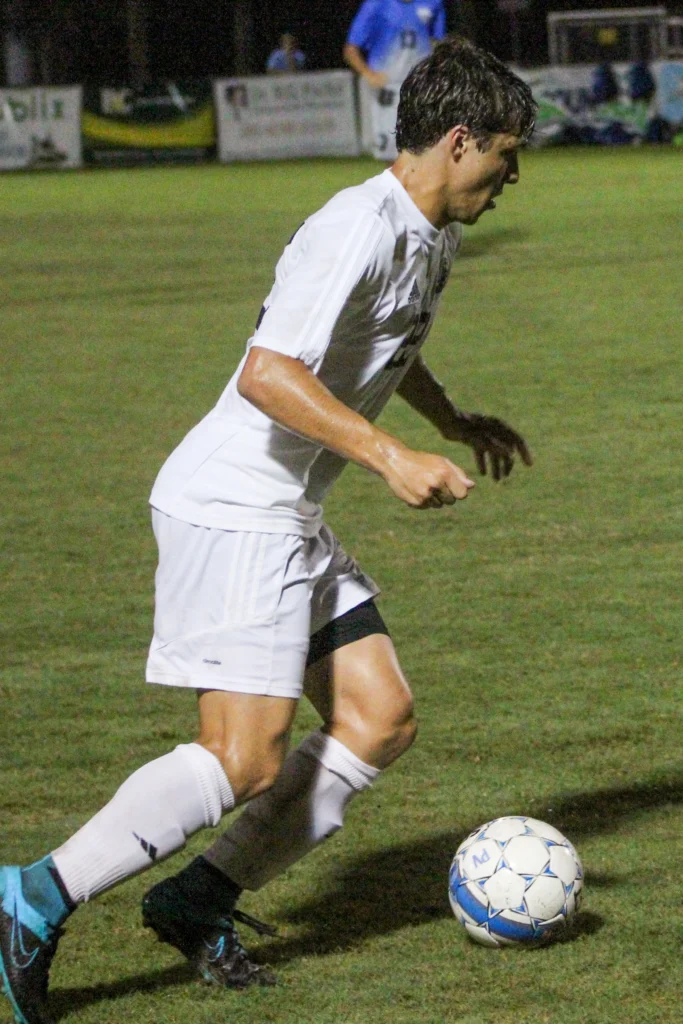
Adamo was the St. Johns County Boys Soccer Player of the Year in 2015 and 2016. In 2016 he was named Northeast Florida’s Player of the Year after he finished with 15 goals and 18 assists. That year, Kostrubsky was an All-St. Johns County and All-First Coast selection after producing 16 goals and 19 assists.
As great as Kostrubsky and Adamo were for Ponte Vedra High, and for their club teams, neither one went on to play collegiate soccer. Since most soccer scholarships are partial, the money and time commitment would not have made playing worthwhile, they say.
Gainesville is a short drive from Ponte Vedra Beach, and the University of Florida has maintained a club team for decades. For Kostrubsky, it was the best of both worlds.
“Those positives kind of outweighed the potential to try and play college soccer elsewhere,” Kostrubsky says. “It may have been further from home, probably would have been a little bit more expensive. …It was a hard decision. But, I definitely don’t regret it. And, I continued playing soccer in college in intramurals. There’s a couple adult leagues I still play in, and then, (I play) pick-up whenever I can.”
Sharks swim together
Soccer careers in this country can be fleeting.
For many, the memories playing with teammates and friends surpass the thrill of winning trophies. Kostrubsky and Adamo did both at Ponte Vedra.
The two doctors still frequently communicate in a group chat with their high school soccer teammates. The other members include a commercial airline pilot, Andrew Kassing, and Matthew Fishman, a University of Pennsylvania MBA candidate.
Soccer, Kostrubsky says, helped him adjust to life in Florida. His family moved from Ann Arbor, Michigan, to Ponte Vedra Beach when he was in sixth grade.
“It was fantastic in terms of finding friendships,” Kostrubsky recalled earlier this spring. “I started playing at the local club there, First Coast Kicks. …(I) met some friends that I’m still friends with today, Matthew Fishman being one of them.”
Fishman, the MBA candidate, was a defensive midfielder with sharp wit and timely tackles.
Positive peer pressure has been a persistent presence for both internists for years.
In high school that was manifested in soccer practices, in games, in academic performance. Since then, it’s been the mentality that has motivated Adamo and Kostrubsky through medical school.
“I think it starts with our parents,” Adamo says. “We all had amazing parents that really did push us. I think all of us can really attest it was really our parents who got us to this point. But, being surrounded by my best friends that are pushing themselves and doing amazing things, it is some peer pressure. You don’t want to slack behind the other one.”
Adamo, Kostrubsky, Fishman and Kassing all attended the University of Florida together. When the Covid-19 pandemic halted life as most knew it, the two doctors worked as certified nursing assistants in Gainesville while they finished their undergraduate work.
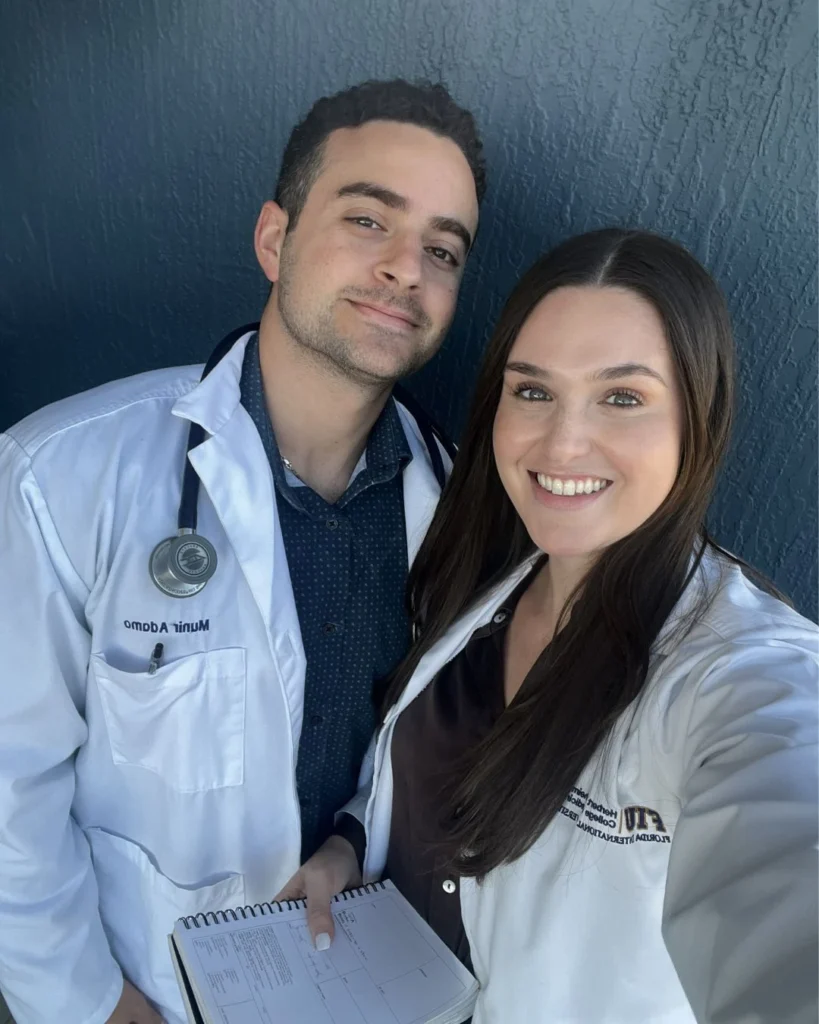
“That experience solidified my decision to pursue medicine,” Kostrubsky says. “I didn’t want to sit on the sidelines. I wanted to know the knowledge and the decision making that goes into these patient care plans.”
Adamo says he may eventually focus on cardiology to honor the legacy of his paternal grandfather who died young from a heart attack. Kostrubsky is considering nephrology or cardiology.
Glory, Glory, Ponte Vedra!
As Kostrubsky and Adamo move onto the next stage of their lives, their connection to the beautiful game remains.
Adamo, the son of Iraqi immigrants, is excited to watch the Lions of Mesopotamia compete in the men’s FIFA World Cup for the first time in 40 years this summer. His father, Layth, learned to play and love the game on the street in Baghdad. The elder Adamo moved to Jacksonville in 1980 and played in the midfield at Wolfson High.
Kostrubsky is an avid Arsenal supporter. The Gunners clinched the English Premier League for the first time in 22 years this week and have a chance to be European champions for the first time later this month.
Their hearts are still on the pitch, even if their bodies are not.
Dr. Kostrubsky says soccer prepared him to engage with physicians, nurses, pharmacists, administrative staff and others who provide healthcare.
“Soccer taught me the importance of that. You have 10 other teammates on the pitch,” Kostrubsky says. “You can’t really just take the ball and dribble through everybody. You really need to use everybody else, pass the ball, get the tactics going in order to achieve your goal.”