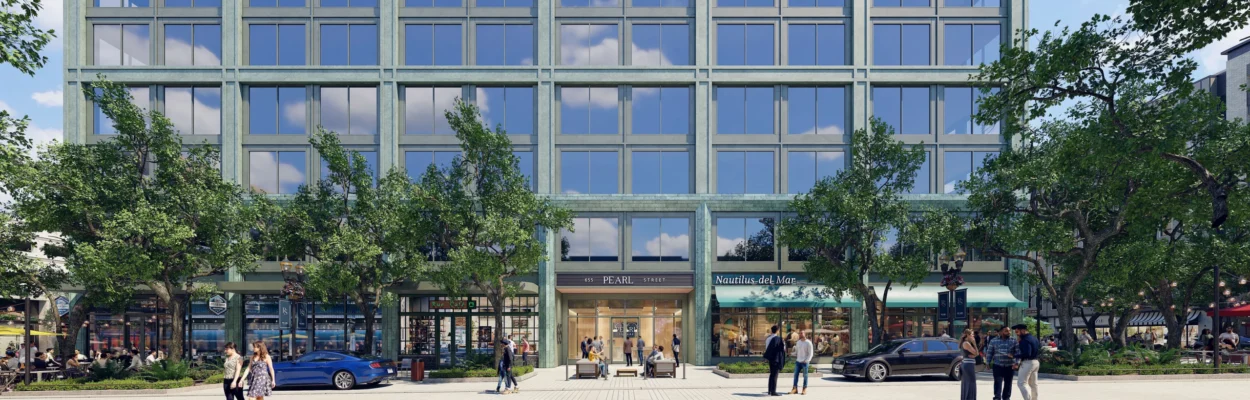
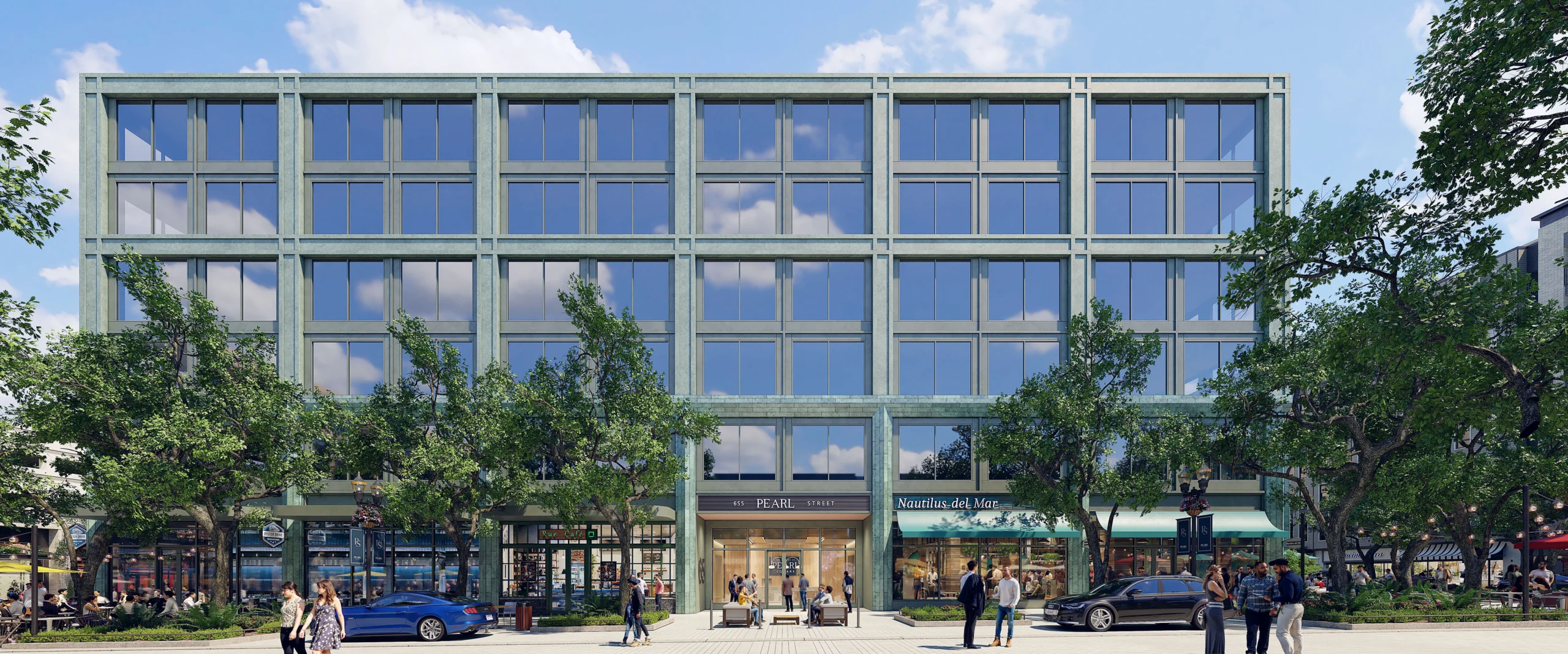
Gateway Jax Inc. wants to build 100,000 square feet of office space in its $750 million Pearl Square development Downtown. | Gateway Jax Inc.
Published on May 1, 2026 at 4:21 pm
Free local news and info, in your inbox at 6 a.m. M-F. Sign up for the Jacksonville Today newsletter.
In Downtown Jacksonville, the office building was once the driver of real estate investment. But a decade of residential city policy and a global pandemic turned that on its head.
Downtown Vision Inc.’s annual State of Downtown Report released Wednesday shows a vacancy rate for offices in the urban core sitting at 27.4% — highest among major metros in Florida and nearly nine points above the national average of 18.5%.
Jacksonville Today thanks our sponsors. Become one.
The real surge Downtown, according to the report, is in residential investment.
There’s been a 97% increase in Downtown’s population between 2016 and 2025 from 4,200 residents to 9,228. The report projects the number of residential units Downtown will grow from 5,655 today to 13,382 by 2028.
That growth is not by accident. The city’s Downtown Investment Authority has used targeted incentives over the last decade to grow residential projects to increase the number of people living Downtown.

Jacksonville Today thanks our sponsors. Become one.
But the shift toward housing has not stopped a few developers from building and proposing a combined 491,397 square feet of new high-end, or Class A, office space on Jacksonville’s Northbank and Southbank.
Bets on new office projects have some local market stakeholders waiting to see if Jacksonville’s Downtown market is ready and can absorb the new office supply.
The latest announcement came in April from developer Gateway Jax Inc., which plans to build 655 Pearl — a 100,000-square-foot “highly amenitized” Class A office building as part of its broader $750 million mixed-use Pear Square project west of City Hall.
Gateway Jax CEO Bryan Moll is touting 655 Pearl as the first new multi-tenant office building constructed in Downtown’s North Core in more than two decades.
Moll says the office project will be designed to be “more attractive” to the way people work and run their companies in a modern office.
“What that means is smaller floor plates, more easily demisable, more light that gets in through the entire office space,” Moll told Jacksonville Today.
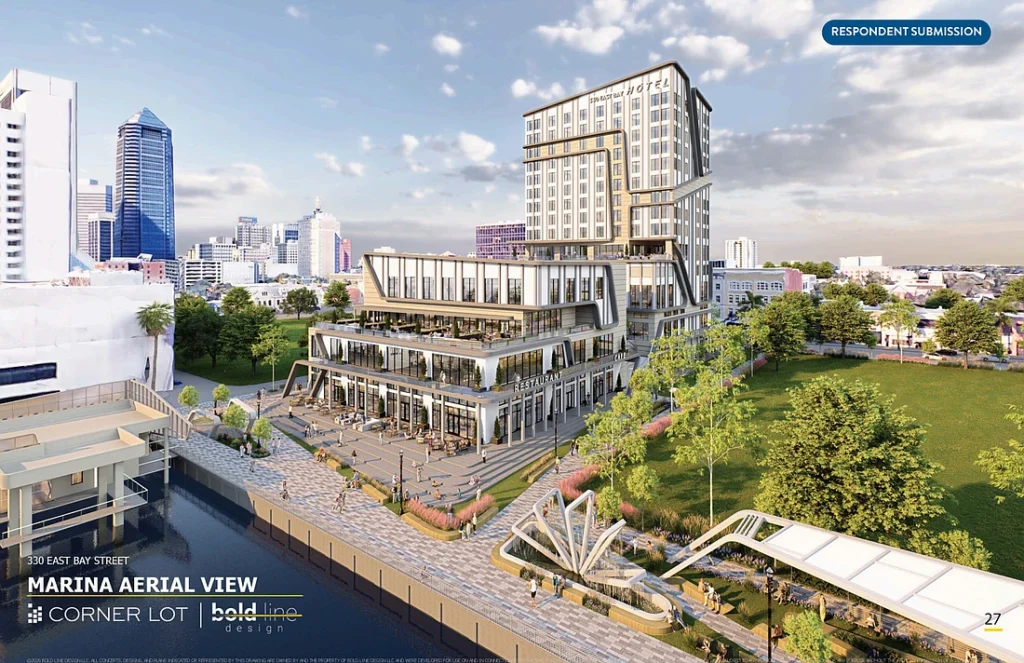
Pearl Square’s office reveal came two weeks before the city’s Downtown Investment Authority Board voted to start negotiations with Corner Lot Development Group for a $160.5 million mixed-use project on the Bay Street riverfront with 54,000 in office space proposed.
The 330 East Bay Street project has an “anchor tenant” on board to lease 25,000 square feet of that, Corner Lot told the city.
There’s also Jacksonville Jaguars owner Shad Khan’s 137,000-square-foot One Tower Court office project 90% leased by the NFL team’s business staff and other tenants.
And Texas-based Preston Hollow Community Capital also has its long-promised 200,000 square feet of office space slated for its estimated $693 million RiversEdge master-planned project on the Downtown Southbank.
In total, Downtown Vision reports $7 billion in investment planned for Downtown and $3.4 billion completed from 2016-2024.
Office market ‘in a weird spot’
Oliver Barakat is senior vice president for the real estate firm CBRE Inc. in Jacksonville with a focus on commercial office space and a former DIA board member.
He told Jacksonville Today that there is some demand locally for Class A office space, but Jacksonville’s office market “is in a weird spot right now.”
“There is a demand for higher quality, what we call trophy quality office space, that is newer, lighter and more glass. It just feels new and fresh when you walk into the lobby,” Barakat said.
But he said for developers to be able to financially justify building that style of office space in Jacksonville, it would demand to bring in rental rates 50% to 100% higher than existing office stock.
“I would say it’s an extreme minority, but there are some companies in Jacksonville that would highly consider paying for that,” Barakat said. “And that’s the challenge.”
Jacksonville’s office market vs. Florida
Downtown Vision, the nonprofit business improvement district for Downtown Jacksonville funded by the area’s property tax revenue, says office vacancy rates in Jacksonville’s core are “admittedly faring worse” than its peer cities and the national average.
The organization calls it a reflection of the national shift toward hybrid and rework work accelerated during the pandemic.
Downtown Jacksonville currently has about 8.11 million square feet of office space.
The vacancy rate is down slightly from Downtown Vision’s 2024 report when it sat at 28%. Available supply was the lowest in 2019 right before the pandemic at 14%, one point higher than the national average at the time.
Office vacancy rates in Jacksonville’s suburbs, where rental rates are also less expensive, were at 22% in 2025.
Florida’s lowest office vacancies in 2025 among major cities were in St. Petersburg. Only 7.6% of its 1.67 million square feet sat vacant. The second-lowest in Florida is neighboring Tampa with a 10.2% vacancy out of its 7 million square feet of office.
Downtown Vision CEO Jake Gordon told Jacksonville Today that when Downtown residential projects like the Residences at Barnett were being developed in the 2010s, offices built into the plans were still the priority.
“(Developers) were like, ‘Wait, the office will carry the residential because the residential is way too speculative,’” Gordon said. “And now you see in the Downtown core, particularly, it’s way more likely that someone is going to rent a residential apartment than try to rent a bigger office.”
Downtown vision says as more people return to office settings — 75% of workers nationally are now back in-office — there is reason for optimism in the sector.
“What do these office workers want? They usually still want to be in a dense urban environment and be around all the amenities,” Gordon said. “So we do still have office (demand), and we do still have companies coming into Downtown, but it’s definitely softened.”
Jacksonville’s office market troubles are not unique and are not the highest in the country by far.
Denver had a vacancy rate at 38.9% in the first quarter of 2026, seeing a similar trend of tenants flocking to higher quality products.
Downtown planners have tried to fill the worker gap with residents and hospitality stays, Gordon said.
Jacksonville has seen a drop in the number of people working Downtown from about 60,000 pre-pandemic to 46,833 in 2025. But total visits are up by 1.5% from last year from 19.45 million to 19.71 million people.
655 Pearl’s Tampa connection
For Moll with Gateway Jax, the Tampa market could be a guide for office development in Downtown Jacksonville.
Moll was an executive vice president for Strategic Property Partners when the company was building the $3.5 billion Water Street Tampa project in that city’s Downtown.
Since Phase 1 of that project was completed in 2023, Moll says 350,000 square feet of Class A office space has been leased and stabilized, in a Tampa downtown that also once had high vacancy rates.
Moll thinks vacancy rates in Jacksonville have reached their peak, and the key to building and leasing new office space in a market like Downtown Jacksonville is providing tenants modern office needs.
“There’s a saying that’s called flight to quality in the office market. And, essentially, what that means is that there’s an older vintage of office buildings all throughout the United States … (that) were designed and developed for a very different type of clientele than what exists in the market today,” he said.
“A lot of those office buildings were designed for big banks and law firms,” Moll said. “A lot of tenants these days are looking for 5,000 square feet, 7,000 square feet, not the 30,000 (to) 40,000 square feet that you get … in some of these bigger buildings.”
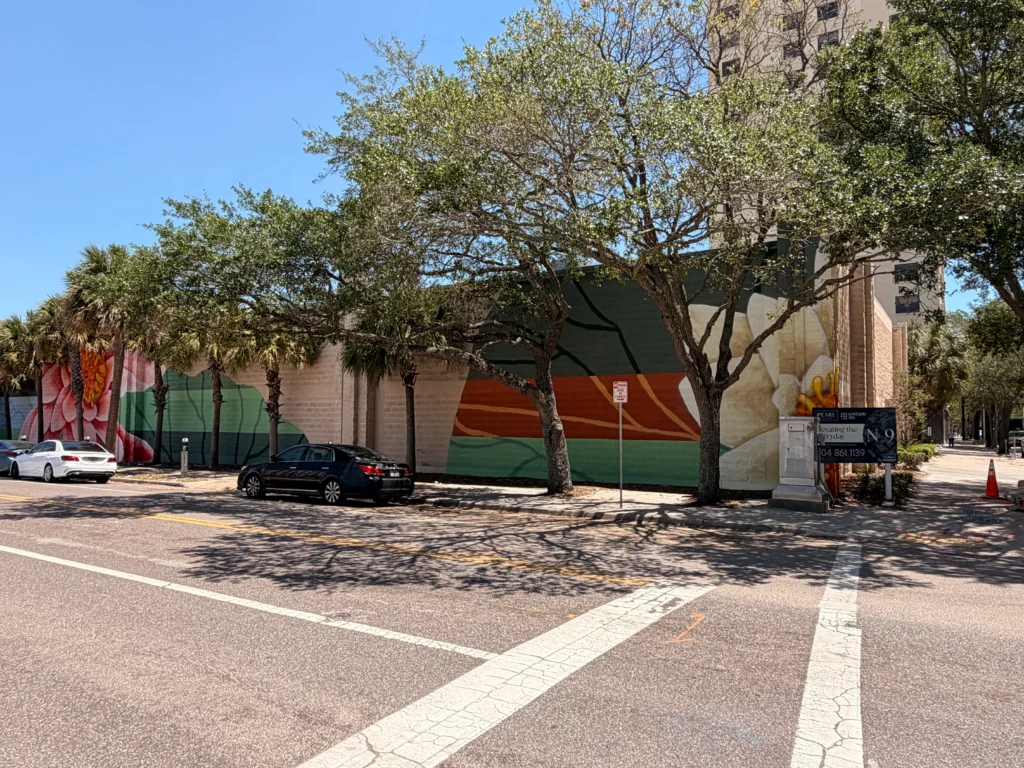
Moll doesn’t see Gateway building “a massive amount” of office space. And it will be on top of first-floor retail and near the other amenities planned for Pearl Square like a public park, restaurants and the Emerald Trail.
It remains to be seen if Gateway Jax will build 655 Pearl as speculative space or if it will bring tenants with its construction.
“We are talking to several potential tenants, and those conversations have been going really well,” Moll said. “We’ll at some point have to decide if we want to build it speculatively if we don’t have a tenant in tow.”
Build-to-suit on Bay Street
The office space Corner Lot plans for its Bay Street project is expected to complement a 160-room hotel, 17,000-square-foot conference space and 19,000 square feet of restaurant space.
Corner Lot CEO Andy Allen told Jacksonville Today he is under a nondisclosure agreement and declined requests to comment on the proposed office space at 330 East Bay Street. The DIA is still negotiating an incentives package for that deal that will need Jacksonville City Council approval.
Barakat said he’s “under the impression” that the Culinary Institute of America plans to lease that office space.
Culinary institute graduate and Jacksonville Chef Dennis Chan told Jacksonville Today news partner the Jacksonville Daily Record in April that the institute was part of the Corner Lot project.
According to Barakat, that makes this project build-to-suit and less risky than if the developer were to build the office space based on market speculation.
“So that’s a little different. You have a tenant that is in tow — committed to leasing the space if you build it,” he said. “Now the question is are they committed and at what price?”
Before Khan’s One Tower Court, the last major office project completed Downtown was the $156 million, 300,000-square–foot global headquarters for Fidelity National Information Services Inc. in 2022.
That Class A office project was also a build-to-suit, following modern office layout and amenity trends, and received $29.9 million in combined city and state incentives.
Will existing office space need upgrades?
The demand for trophy office product does create market pressure for owners of Downtown Jacksonville’s existing office stock to make upgrades, Barakat said. But that comes with a cost.
Haskell, a global engineering and construction services firm, has been moving its office headquarters from Brooklyn to a high-rise at 701 San Marco Blvd. on the Southbank with a $30 million renovation. In 2021, owners of the then-Wells Fargo Center undertook a $12.5 million renovation of the building’s lobby, cafe and common amenity area.
Higher vacancy rates slow the increase of rental rates — revenue for building owners. For older office holders Downtown, those levels of investments could be difficult to justify.
“It’s an affordability issue. When you have 30% or close to 30% vacancy rate Downtown with existing product, it’s just hard to make those investments,” Barakat said.