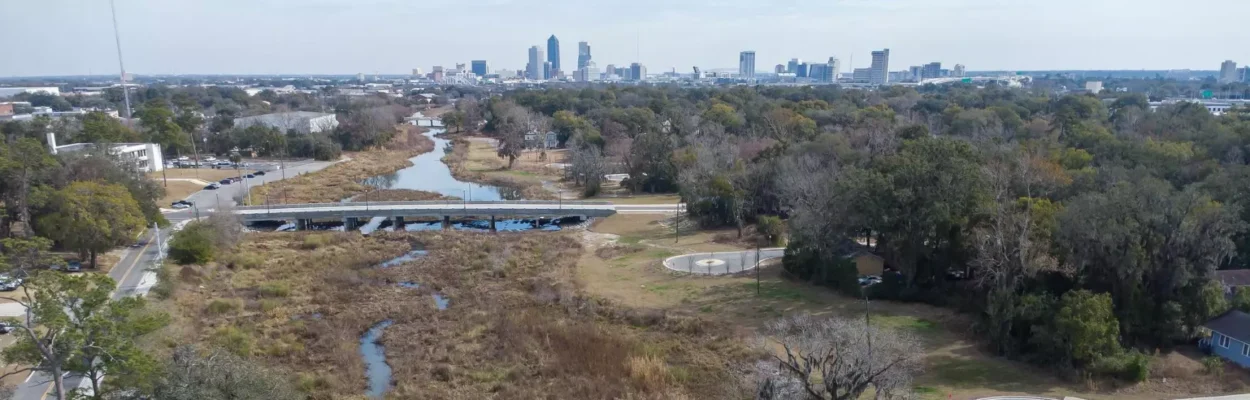
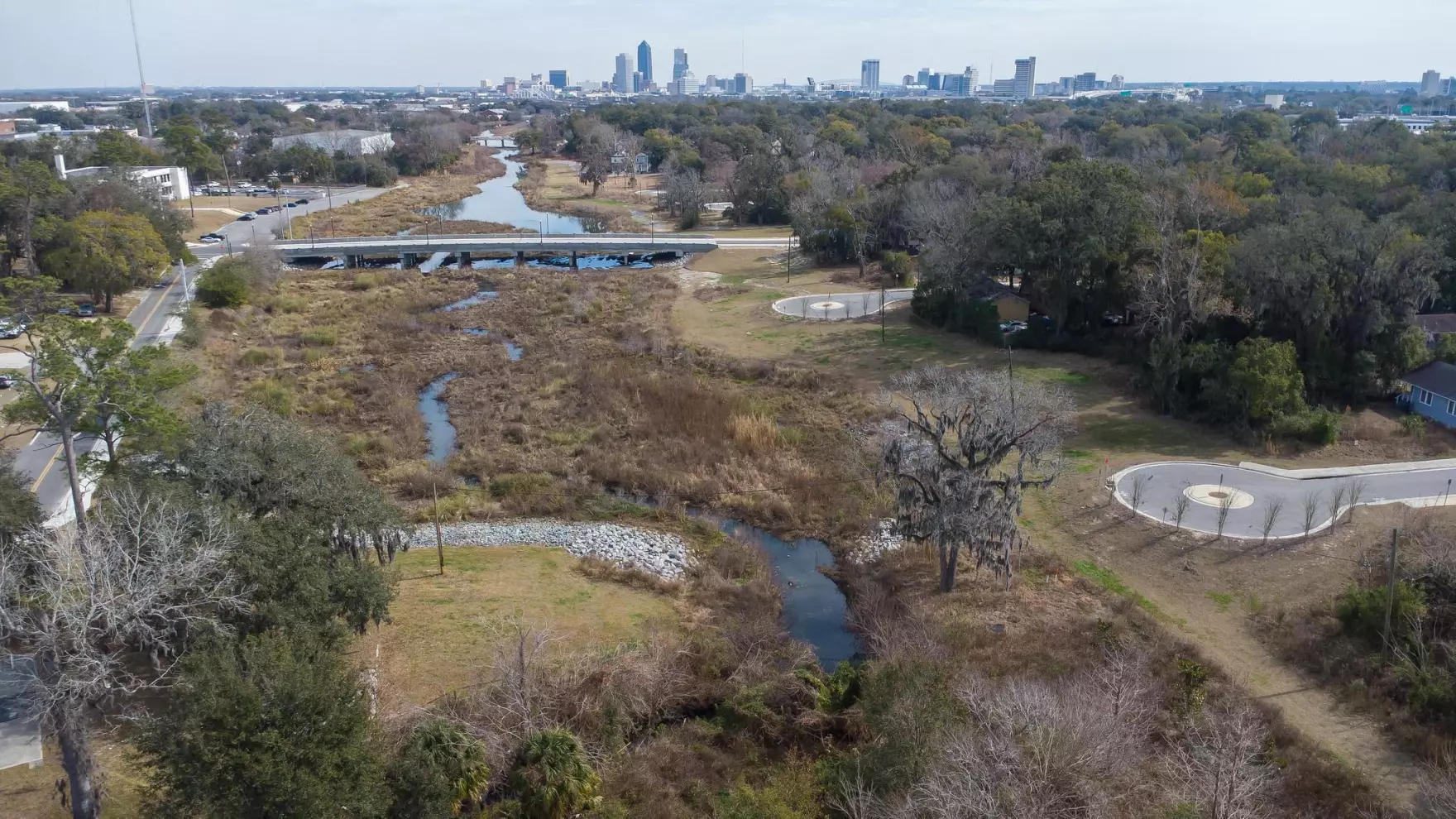
The landscape and skyline of Jacksonville as spring approaches. | City of Jacksonville
Published on February 19, 2026 at 11:26 am
Free local news and info, in your inbox at 6 a.m. M-F. Sign up for the Jacksonville Today newsletter.
Even with another cold blast in the forecast, the first signs of the spring growing season are emerging.
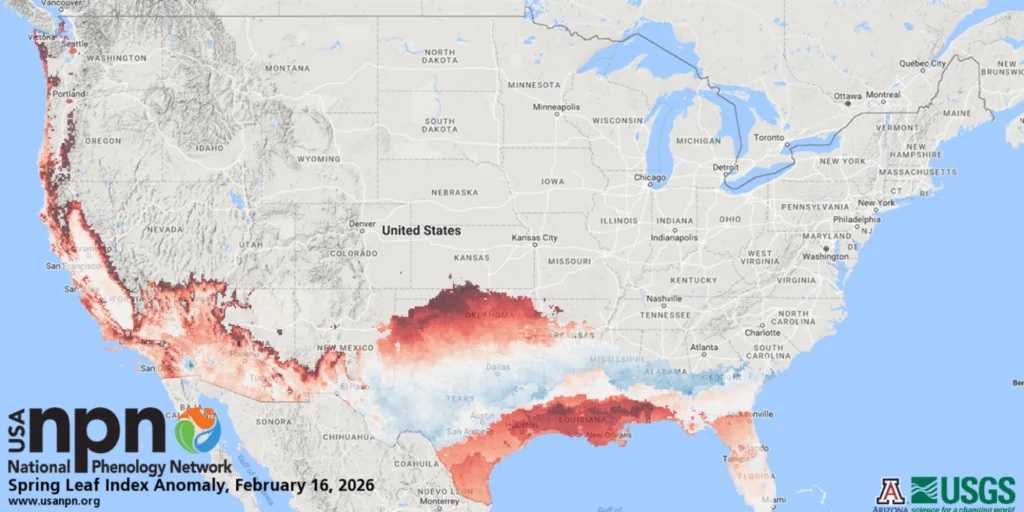
Data released by the USA National Phenology Network shows that most communities across the state were seeing the first signs of growth before late January’s Arctic blast that put a temporary halt on the activity.
Jacksonville Today thanks our sponsors. Become one.
With the warmer air firmly in place after the record cold, the spring progression has begun again, albeit more slowly than what was witnessed weeks ago.
The data stems from observations of lilacs and honeysuckles, which are usually among the earliest indicators that the leaf-out process is underway.
According to the phenology network, the Jacksonville-area is around four days earlier than average for growth, while Pensacola is more than a week ahead of schedule.

Jacksonville Today thanks our sponsors. Become one.
Parts of Central Florida are up to two days later than average, with much of the terrain around Miami either on time or about a day late as well.
In areas outside the Sunshine State that were not able to take advantage of early-year warmth before the Arctic plunge, foliage is running upwards of two weeks behind schedule — especially in South Carolina.
When temperatures drop below freezing after vulnerable growth has already begun, damage can result ranging from cosmetic issues to the complete loss of flowers.
Gardening experts say for plants that lose flowers to the weather, they will not produce buds for a second time during a season.
Spring pollen
Due to Florida’s climate, communities that see early leaf production usually experience a simultaneous increase in pollen levels, with trees and grasses waking up from their winter slumber.
At last report, moderate to high levels of pollen were being observed statewide, with grasses, juniper and oak among the top allergens.
With an extensive drought across the state, not only can dry conditions push back the growth timeline for some plants, but it can also make pollen particles more concentrated.
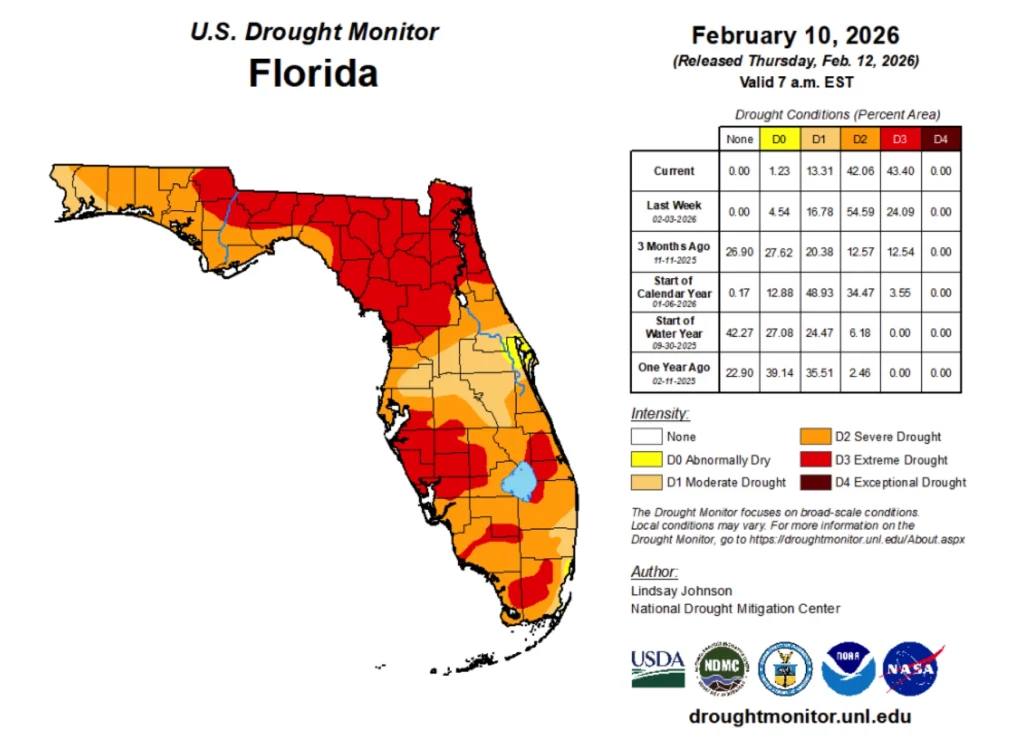
According to the Centers for Disease Control and Prevention, dry soils and a lack of rainfall can make pollen and other particulates more concentrated, leading to potential irritation and asthma flare-ups.
The Asthma and Allergy Foundation of America estimates that at least 100 million Americans suffer from some type of allergy, and with pollen seasons becoming longer and more intense, so are the associated health issues.
Experts with the University of Florida say there are steps people can take to limit exposure during peak pollen periods.
Peak pollen hours typically occur from roughly 10 a.m. to 4 p.m., and it is advised that those with severe allergies reduce prolonged outdoor activities when possible.
Additionally, showering after spending time outdoors, changing clothes and running a home’s air-conditioning system can help reduce the effects of pollen.