
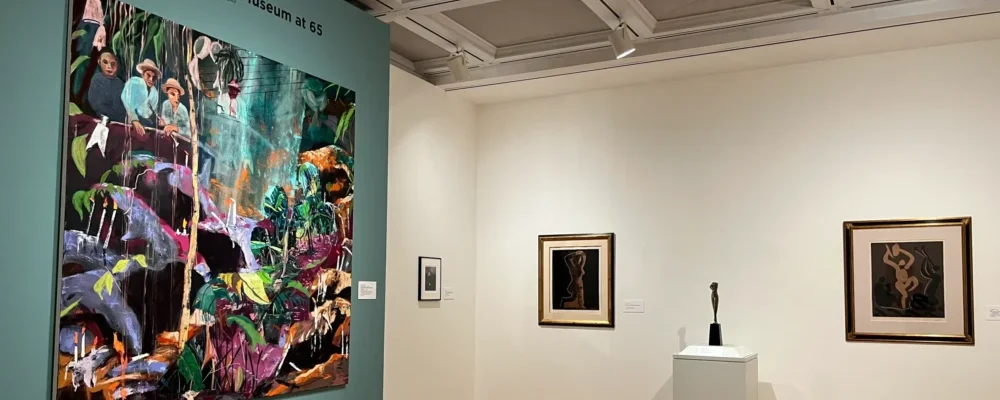
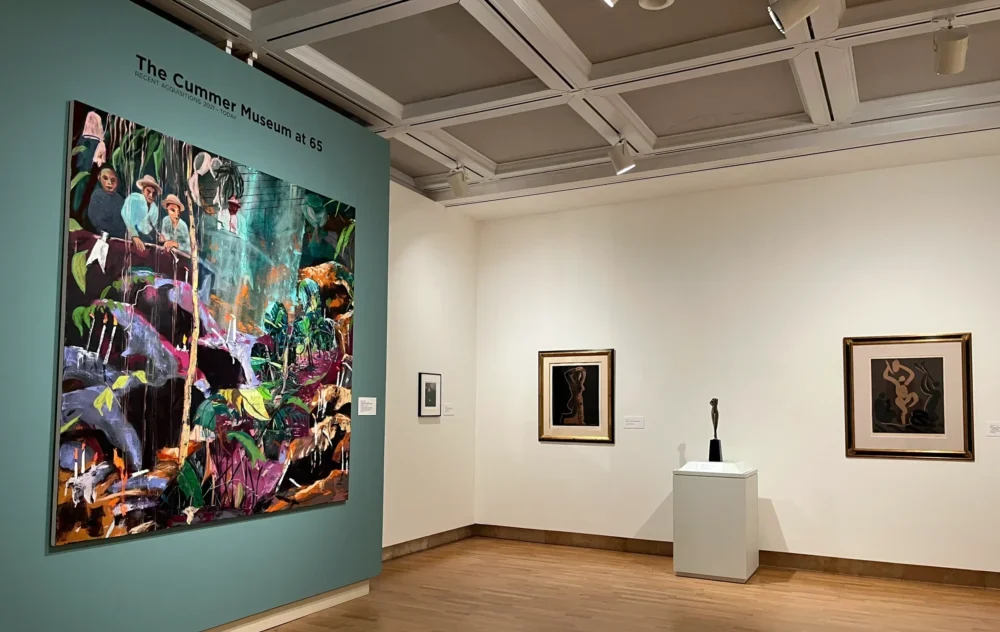
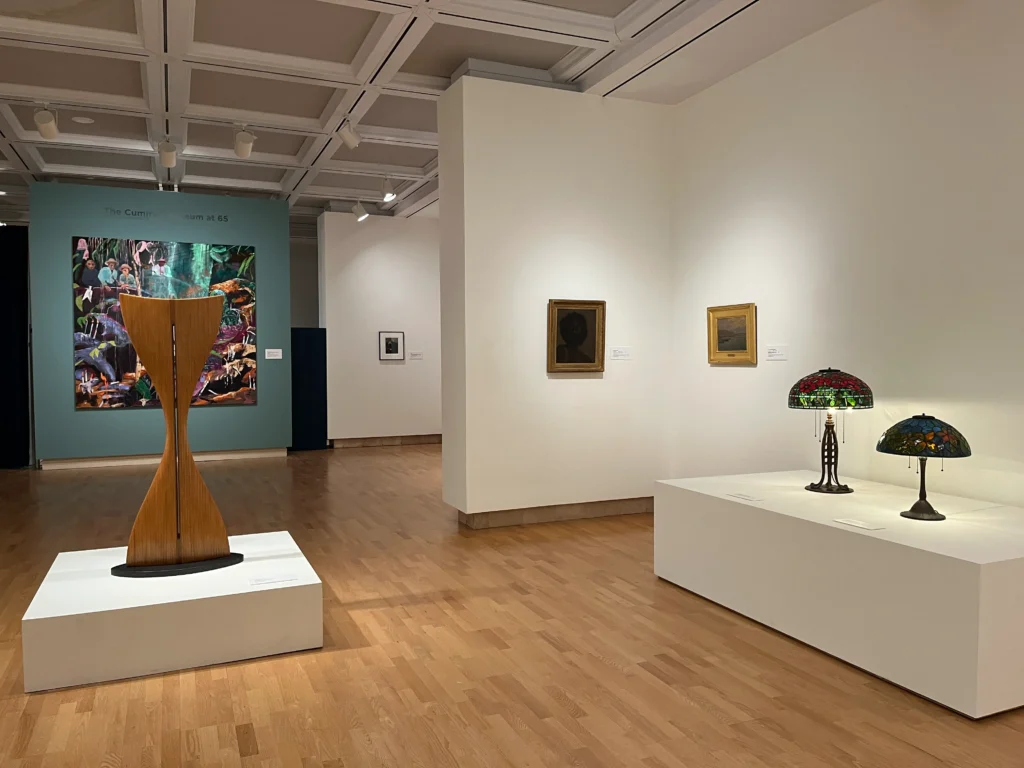
New acquisitions on view as part of 'The Cummer at 65' include a large-scale painting by Maia Cruz Palileo (left) and two Picasso prints (center and right), among others | Cummer Museum
Published on November 5, 2026 at 2:46 pm
Free local news and info, in your inbox at 6 a.m. M-F. Sign up for the Jacksonville Today newsletter.
Sometime in the early 2000s, the staff at the Cummer Museum opened a gift sent by a curious new benefactor. The Riverside institution had recently been approached by an obscure donor, who’d offered an enticing donation – free, no strings attached – to be added to the museum’s collection: An original work by Pablo Picasso.
“As soon as we opened it, we were like, ‘This is wrong,’” remembers current Chief Curator Holly Keris, whose tenure began as a member of the curatorial department back in 2003. Like many famous works, the piece is today remembered nearly as much for the context surrounding its creation as the hands that created it. Unfortunately, it was not the hands of the famed Spanish master but that of an infamous forger, Mark A. Landis, who, over the course of 25 years, had made and donated 100 or so counterfeit works to dozens of arts institutions across the country, before being found out in 2008.
Jacksonville Today thanks our sponsors. Become one.
The piece never went on view, according to Keris, nor was it considered for the museum’s collection.
“There’s a pretty strict and involved process that we follow that guides our acquisitions,” Keris says. “Of course, it has always been part of our procedure [for the curatorial team] to see gifts, purchases, bequests or whatever, in person before accepting things.”
That particular “Picasso” didn’t pass muster, explains Keris. But two decades later, two authentic Picassos have been added to the museum’s permanent collection to go along with works by the famed artist already held by the museum. Bequests from the Jacksonville-based collector and local arts patron, the late Dita Domonkos, both linocut prints share an economy of line and kineticism reflective of the artist’s mid-century oeuvre.



Jacksonville Today thanks our sponsors. Become one.
The Picasso prints are on view as part of The Cummer at 65: New Acquisitions, an exhibition that celebrates the museum’s 65th year by showcasing works acquired in the last five years. It highlights both the increasing diversity in the Cummer’s collection and the rigorous intention behind the institution’s acquisition process.
Among the recently obtained works are paintings by French Impressionist Gustave Caillebotte and the American folk artist Grandma Moses, from the late 19th and mid-20th centuries, respectively. There are hand-painted storyboards by famed Japanese filmmaker Akira Kurosawa and a large-scale oil painting by the Filipinx-American artist Maia Cruz Palileo.
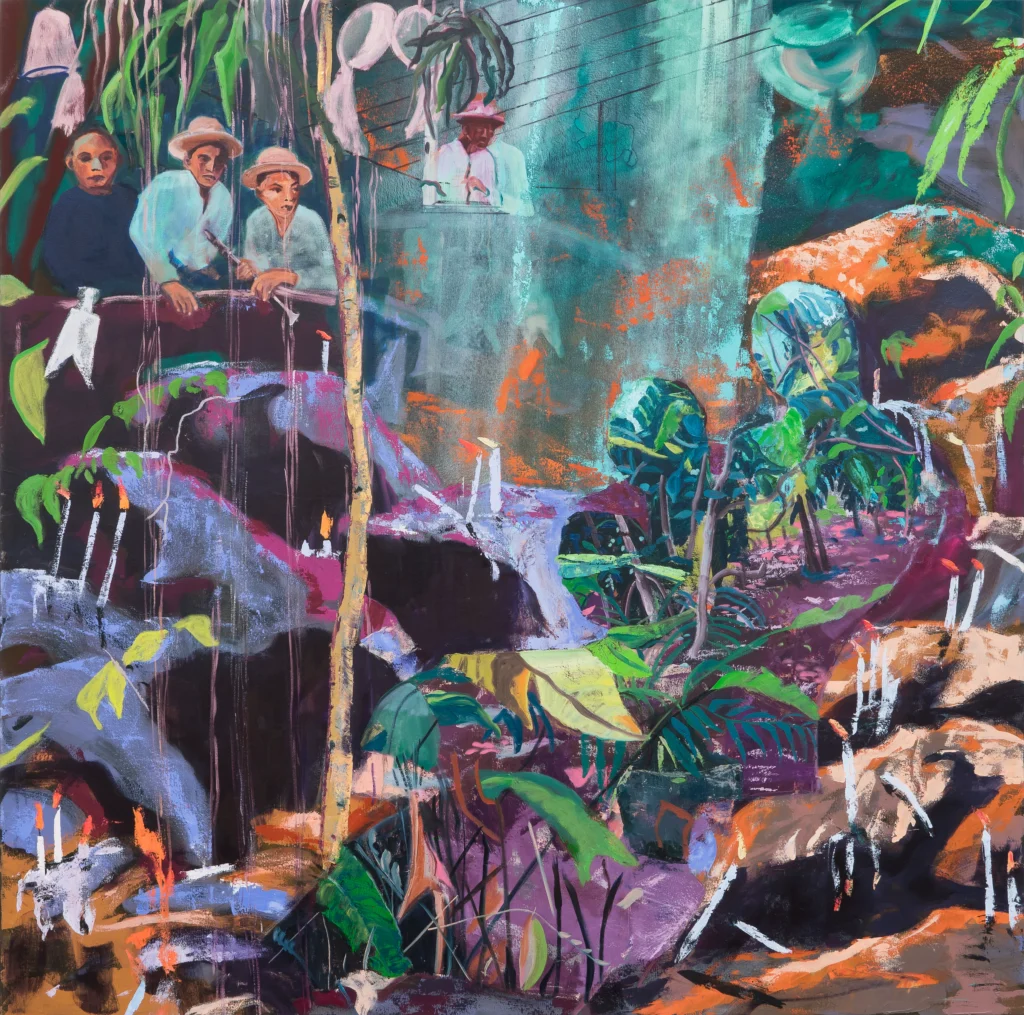
Right: Maia Cruz Palileo (Filipinx American, b. 1979), “It Was Said They Could See Each Other’s Memories II,” 2023, flashe and oil on canvas, 84 x 84 in., Purchased with funds from the Morton R. Hirschberg Bequest and the Francis and Miranda Childress Foundation, Inc., AP.2023.1.1. | Courtesy of the artist and Monique Meloche Gallery
Like the Picassos, new acquisitions of works by Amanda Crowe, George Inness and James McNeil Whistler add to the museum’s existing inventory of pieces by those wellknown artists. And that’s just one way The Cummer Museum at 65 nods to the museum’s permanent collection, which, over the course of six-and-a-half decades, has grown from roughly 60 objects donated by the institution’s namesake, Ninah Cummer, to an eclectic and expansive repertoire of more than 5,000.
The art of acquisition
“Mrs. Cummer never set forth a collecting mandate when she established the museum foundation,” Keris says. That prescience, from the institution’s founder, has allowed the Cummer to build a rather broad permanent collection for a museum of its size. “We’re not limited to American art, or European art, or photography or anything like that. And museum directors over the past 65 years have had the flexibility to shape the collection and to be somewhat opportunistic as things were being offered to us.”
Traditionally, there are two ways by which art museums like the Cummer acquire new works: gifts and purchases. That is, they either buy something or someone gives it to them. Like most art museums, the Cummer’s acquisition process is limited by financial resources, as well as space to hang and store artworks. “We can’t have everything,” Keris says.
Acquisition, Keris explains, is a meticulous process, subject to a kind of decision tree that is guided by two documents. One, the collections management policy, is the more technical of the two, outlining best practices from the industry regarding the minutiae of acquiring and caring for artworks. The other, the “collecting priorities” document, is specific to the Cummer — “our strategic plan” is how Keris describes it. The museum’s Artistic Affairs Committee, a subcommittee of its Board of Trustees, uses both documents to vet new works.
“Some of the more technical things they look at first, like, Does this violate any laws? Was it stolen or something? Is it in good, museum quality condition? Can we care for it?” After that, the committee references the ‘collecting priorities’ document to determine if a piece is a good fit. Rather than a mandate to target pieces by specific artists or from specific artistic movements, the document guides the museum as opportunities arise.
“You don’t necessarily need to put Monet on a list somewhere,” Keris says, adding. “If someone is going to gift you a Monet, you’re going to consider it.”
Pieces like the Picasso prints, then, are in some ways no-brainers for the committee. Keris and others had many conversations with Domonkos about her estate plans and a gift of those works in particular, before she died, suddenly, earlier this year.
But what happens when the museum wants to purchase a piece? The acquisition of Maia Cruz Palileo’s “It Was Said They Could See Each Other’s Memories II” provides an illustrative example. A large-scale painting featuring a dynamic nature scene rendered in lush greens and vibrant pinks and purples, the piece is a standout of The Cummer at 65. But it was originally on view as part of a solo exhibition of the artist’s work in 2023. The show, Days Later, Down River, was a resounding hit. And “It Was Said” was one of the works from the exhibition that was available for purchase.
Luckily, the museum has a fund for that. Earmarked specifically for new acquisitions, the pot is supplemented annually through fundraisers and sporadically through donations (as the piece’s placard suggests, “It Was Said” was purchased with money from the Morton R. Hirschberg Bequest and Miranda Childless Foundation).
Keris says in addition to the impactful nature of the piece, expanding the museum’s collection to include a contemporary Filipino-American artist was important. In addition, from the painting’s setting to its purview, its medium, its connections to works already in the museum’s permanent collection — not to mention the institution’s own verdant gardens — Palileo’s piece will make for versatile addition, with potential to be on view often.
The next 65
Not all of the Cummer’s new acquisitions are confined to gallery currently hosting The Cummer at 65. From its perch among the Wark Collection of Messien Porcelain, “Translated Vase,” a sculptural piece of ceramic shards forged together with gilded epoxy by the Korean artist Yeesookyung, is already sparking new conversations. Made from discarded porcelain shards, Yeesokyung’s nebulous form makes for a natural fit, connecting the dots from the Cummer’s highly regarded collection of antique tableware and furniture from 18th century Europe to the ceramic artists of Korea.
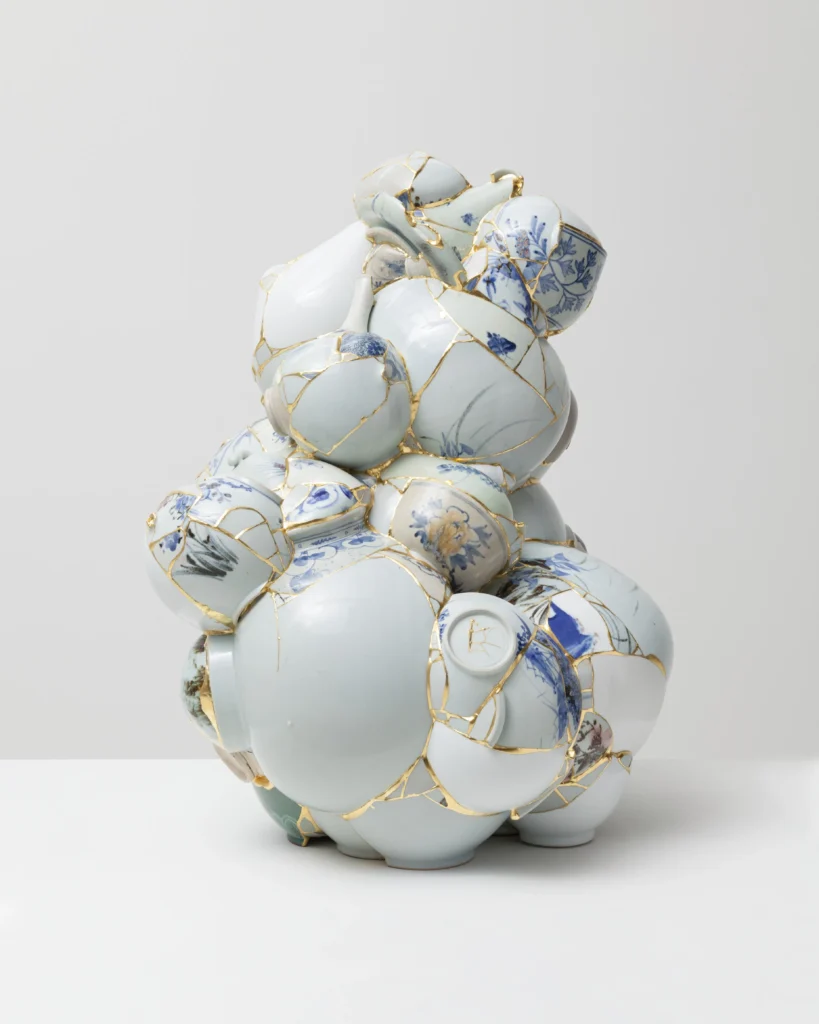
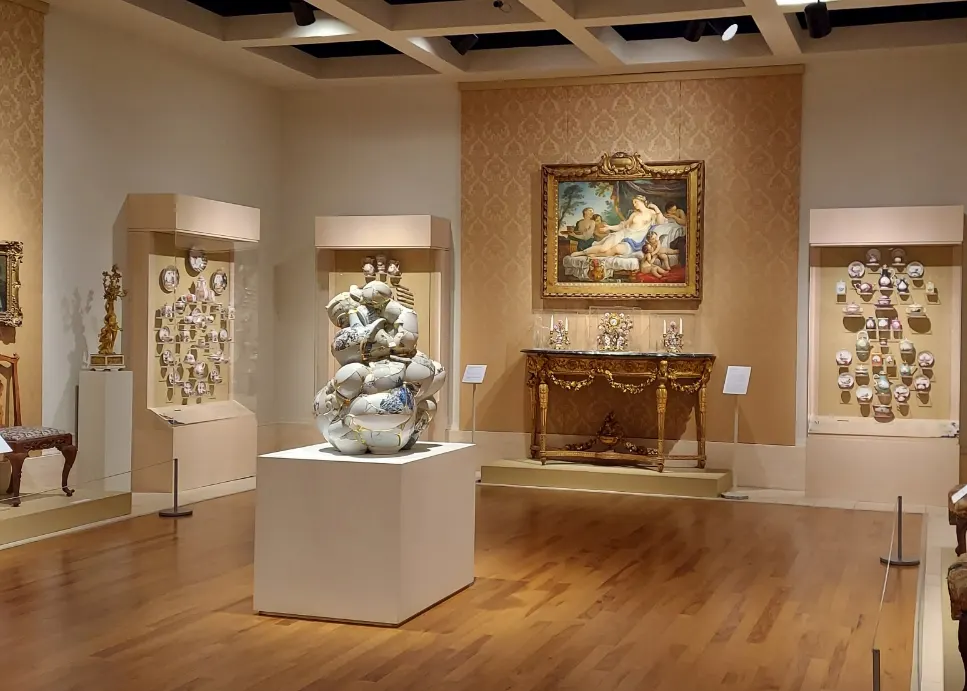
RIGHT: Yeesookyung’s “Translated Vase” on view among the Cummer’s collection of Messien Porcelain
Other new acquisitions are primed to be in conversation with temporary exhibitions currently or soon to be on view. Gustave’s serene “Garden in the Countryside” dovetails nicely with Beyond the Frame, a new installation of the late American artist Seward Johnson’s immersive life-sized statues inspired by the works of some of Gustave’s Impressionist compatriots. Meanwhile, Tiffany or Ti-Phony: A Story of Desire, a highly engaging exhibit pairing authentic productions of the famed Art Nouveau light fixtures with counterfeit versions, reflects, if unintentionally, on the museum’s own brush with forgery.
As for those authentic Picassos: Just because a work is added to the museum’s permanent collection, that doesn’t mean it’s guaranteed to be on view in perpetuity. Best practices dictate that the prints will need to go on ice (figuratively) for an extended period of time before they’re hung once more. “For works on paper, it’s roughly three months on display and three years in storage to protect them from deterioration,” Keris says. At that rate, the new Picassos will likely only be seen once more this decade, if at all, which, according the Cummer’s acquisition strategy, is totally fine. In fact, it’s kind of the point.
“When we’re acquiring works of art, we’re not thinking, ‘This is a 12-week exhibition opportunity.’ This is something that belongs to our community forever,” Keris says. “We’ve been around for 65 years. We intend to be around and serving this community for a lot longer than that.”