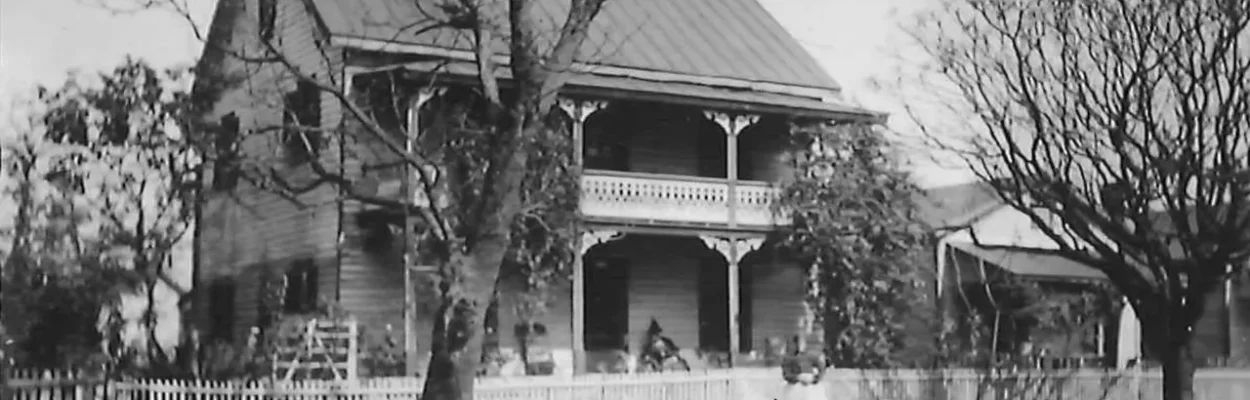
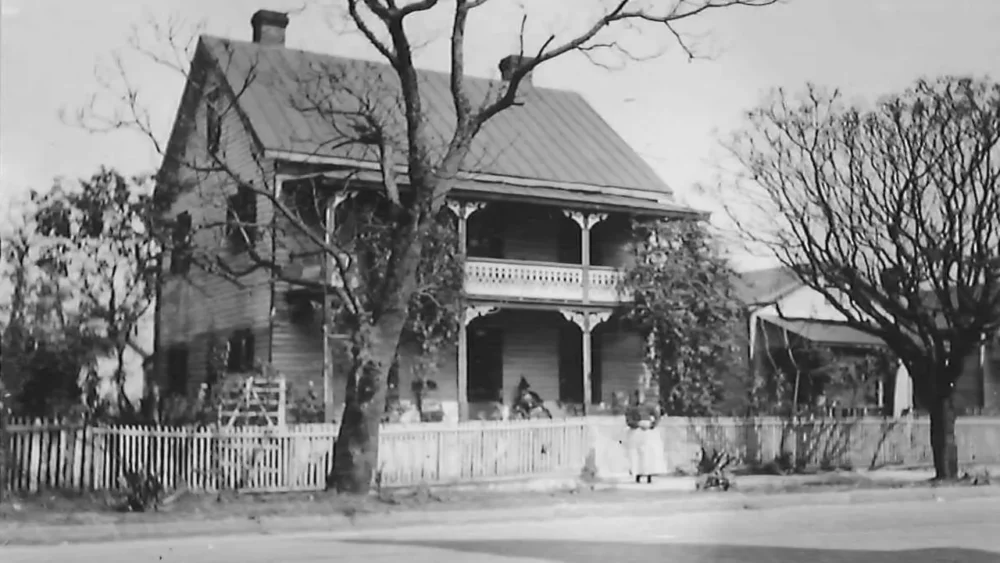
Established in 1869, Jacksonville's historically African American neighborhood of Oakland helped shape the city's cultural identity.| General Commission on Archives and History of The United Methodist Church.
Published on October 28, 2026 at 11:48 am
Free local news and info, in your inbox at 6 a.m. M-F. Sign up for the Jacksonville Today newsletter.
Rare photographs from the early 20th century offer a glimpse into Oakland, the oldest neighborhood in Jacksonville’s Historic Eastside. Established in 1869, this historically African American community became home to generations of residents, businesses, churches and institutions that helped shape the city’s cultural identity.

Just east of Downtown Jacksonville lies one of the city’s oldest surviving African American communities. Known today as the Eastside, or simply “Out East,” the neighborhood traces its origins to Oakland, a community established during Reconstruction following the Civil War.
Jacksonville Today thanks our sponsors. Become one.
Between 1900 and 1920, Oakland was a thriving working-class neighborhood characterized by narrow streets, wood-frame shotgun houses, neighborhood businesses, churches and educational institutions.
A rare collection of historic photographs preserved by the General Commission on Archives and History of the United Methodist Church provides a window into this period. Featuring images of the Boylan Industrial School, Florida Avenue, Union Terminal Warehouse and residential streets, the photographs document life in the neighborhood during the early 20th century.
From Reconstruction to Oakland

Oakland’s origins date to 1869, when Jesse D. Cole platted a residential subdivision on land originally granted to Daniel Hogans in 1817. The neighborhood emerged as formerly enslaved African Americans sought opportunities to establish independent lives following emancipation.

Jacksonville Today thanks our sponsors. Become one.
The Eastside’s history, however, predates Oakland. During the antebellum period, the nearby St. Johns River waterfront was home to lumber mills, shipbuilding operations and maritime industries that relied heavily on enslaved African American labor.
Following the Civil War, proximity to waterfront employment made Oakland an attractive place for freedmen and women to settle. Many residents worked at sawmills, docks, railroads and other industrial facilities.
Oakland became an important center of Jacksonville’s Gullah Geechee community. Descended from enslaved Central and West Africans who lived along the Southeastern Atlantic coast, Gullah Geechee residents brought cultural traditions that influenced the neighborhood’s architecture, religious institutions, foodways and community life.
During the 1880s, additional residential subdivisions, including Campbell’s Addition and Longbranch, developed around Oakland. Together, these communities evolved into today’s Historic Eastside.
The Shotgun houses of Oakland

Among the most recognizable features of early Oakland were its shotgun houses. These narrow, wood-frame dwellings were common throughout Jacksonville’s historically African American neighborhoods and remain an important architectural expression of the city’s Gullah Geechee heritage.
Typically one room wide and several rooms deep, shotgun houses were designed for narrow urban lots. Many had front porches, raised foundations, metal roofs and decorative woodwork. Double shotgun houses, containing two residential units, were also common.
Their front porches and close proximity to the street encouraged social interaction and helped establish the neighborhood’s distinctive character. The United Methodist Church’s photographic collection captures several examples of these residences during the early 20th century. Although many have since disappeared, surviving shotgun houses contribute to the Eastside’s architectural significance and recognition on the National Register of Historic Places.
Florida Avenue: The neighborhood’s Main Street

As Oakland grew, Florida Avenue emerged as its principal commercial thoroughfare. Now known as A. Philip Randolph Boulevard, the street connected residential neighborhoods with businesses, employment centers and the broader Jacksonville community.
Served by an early streetcar route, Florida Avenue developed into a destination where residents could shop, conduct business and socialize. Among its early landmarks was the Anderson Department Store, established in 1909 by Richard Anderson, son of prominent African American businesswoman Charlotte Scott Anderson Lewis.
In 1913, Gullah Geechee contractor Edward D. Mixson constructed a two-story brick commercial building at Florida Avenue and East Fifth Street. The property later became the beloved Debs Store, serving generations of Eastside residents. By the mid-20th century, Florida Avenue had also become an entertainment destination, with theaters, restaurants and nightclubs participating in the network of Black entertainment venues known as the Chitlin’ Circuit.
Boylan Industrial School and Home: Education and opportunity

Education played an important role in Oakland’s development. One significant institution was the Boylan Industrial School and Home, established by the Methodist Episcopal Church in LaVilla in 1886. Named for benefactor Ann Boylan DeGroot, the school provided African American girls and young women with educational and vocational opportunities.
Initially offering instruction in sewing, dressmaking, housekeeping and cooking, its programs eventually expanded to include nursing, helping lay the foundation for Jacksonville’s Brewster Hospital and Nurse Training School.
In 1910, Boylan relocated to 1214 Jessie St. in the Eastside. Historic photographs capture students in classrooms, participating in outdoor activities and posing on the school’s grounds, providing rare glimpses into African American education during segregation.
The institution became Boylan-Haven School following a 1932 merger and remained an important part of Jacksonville’s educational landscape until relocating to South Carolina in 1959.
Union Terminal Warehouse: An industrial landmark

Oakland’s development was closely connected to Jacksonville’s expanding industrial economy. One prominent surviving landmark is the Union Terminal Warehouse at 648 E. Union St. Developed by businessman C.B. Gay, construction began in 1912 and was completed in 1913.
At the time, it was Florida’s largest commercial building. Designed and constructed by Turner Construction Co., the massive warehouse featured reinforced concrete construction, freight elevators and railroad sidings.
Its location near Hogans Creek and multiple railroad lines connected it to Jacksonville’s industrial waterfront. The warehouse accommodated wholesale distributors and other businesses that helped establish Jacksonville as a regional transportation and distribution center. More than a century later, its recent adaptive reuse demonstrates the continued potential of the Eastside’s historic industrial buildings.
Notable residents of early Oakland

The neighborhood’s significance extends beyond its surviving buildings. During the era documented by these photographs, Oakland and the surrounding Eastside were associated with several influential African Americans.
Charlotte Scott Anderson Lewis was born enslaved in Savannah, Georgia, and became one of Jacksonville’s most successful African American businesswomen. Beginning with a laundry business, she accumulated substantial real estate holdings, including more than 40 houses and commercial properties throughout the Eastside. Son, Charles Anderson, opened one of Jacksonville’s first Black owned banks inside LaVilla’s Masonic Temple in 1914.
A. Philip Randolph grew up at 830 Jessie St. After graduating from the Cookman Institute in 1907, he left Jacksonville for New York City in 1911. He later became a nationally influential labor and civil rights leader, organizing the Brotherhood of Sleeping Car Porters and helping lead the 1963 March on Washington.
Noted writer, anthropologist and folklorist Zora Neale Hurston attended the Florida Baptist Academy on East Sixth Street and lived with her brother at 1663 Evergreen Ave. She later became a celebrated Harlem Renaissance writer and author of Their Eyes Were Watching God.
Preserving Oakland’s legacy

The Oakland captured in photographs between 1900 and 1920 would undergo significant changes over the following century. Highway construction, urban renewal and decades of disinvestment altered the neighborhood’s landscape, eliminating many homes and businesses.
Nevertheless, the Eastside retains a significant concentration of buildings associated with Jacksonville’s African American working-class and Gullah Geechee communities. Their survival contributed to the neighborhood’s listing on the National Register of Historic Places.
Today, the rare photographs preserved by the United Methodist Church offer more than a nostalgic glimpse into the past. They document the people, architecture and institutions of a community established during Reconstruction that continues to shape Jacksonville’s cultural identity.
More than a century later, Oakland’s surviving streets and landmarks remain tangible connections to the generations who built one of Jacksonville’s oldest African American neighborhoods.