
Published on October 21, 2026 at 2:18 pm
Free local news and info, in your inbox at 6 a.m. M-F. Sign up for the Jacksonville Today newsletter.
In the 1930s, folklorist and Episcopal priest Harry Middleton Hyatt traveled city streets and backcountry byways with a dictation machine, recording folklore and hoodoo traditions from hundreds of Black Americans from all walks of life. In July 1937, Hyatt’s travels took him to Jacksonville’s Wynn Hotel, where one informant told him possibly the eeriest stories in the whole collection. Here’s the story of a Jacksonville family’s terrifying encounter with a life-draining witch from Gullah Geechee lore: the boo hag.
‘Some dark woman‘

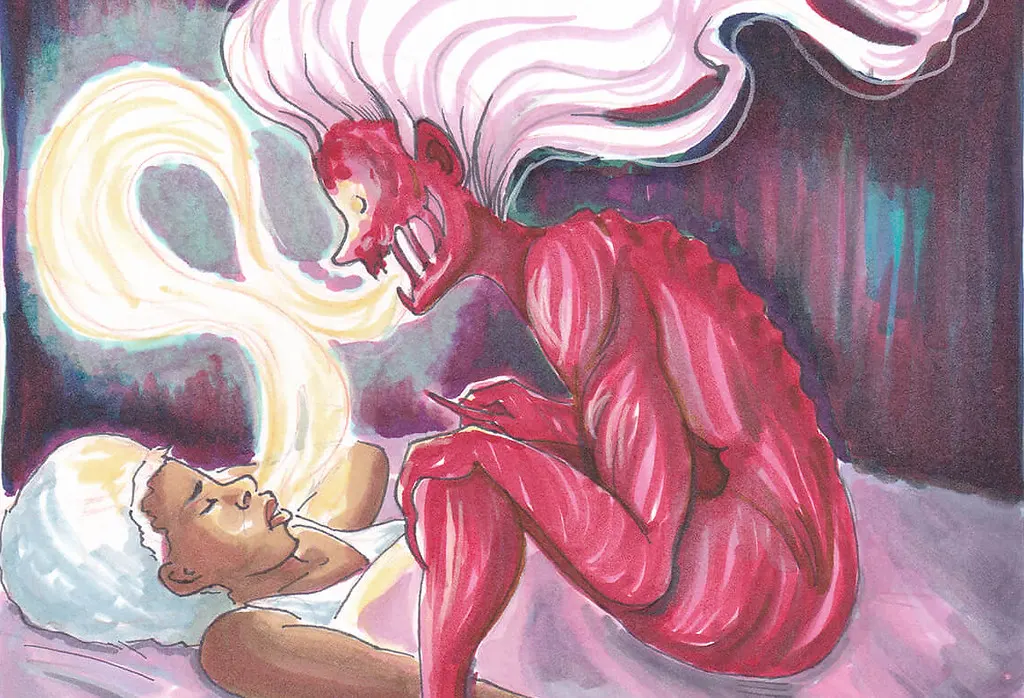
Among those who Henry Middleton Hyatt interviewed was a man identified only as Informant 562. Among his stories, he spoke of his horrifying childhood dealings with a boo hag. This is a type of witch or haint originating from the traditions of the Gullah Geechee people that slips into the house at night to “ride” sleeping victims and drain their breath and life force.
Jacksonville Today thanks our sponsors. Become one.
The hag bedevilling the narrator and his family was so powerful the normal defenses failed, but with the help of a local conjure woman, the magic-adept “Old Lady” of the story, the family was able to fend off the intruder — but she never truly left. (Note: Some of the spelling in this account was cleaned up, but grammar and diction appears mostly as it was written.)
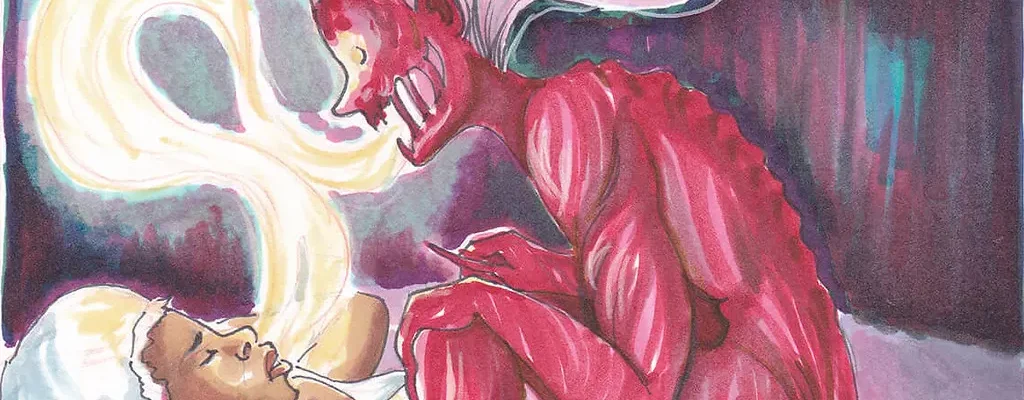
“I was about 10 years old. Well, my grandmother used to tell me if I wouldn’t be good that a hag, she would come at night and ride me. Well, I never did believe it til—when I’d go to bed, just about every morning just about 4 o’clock, it would always be some dark woman would come and get right on my bed, and seemed if she tried to choke me. And she’d be choking me and choking me, and it seemed like always just the time I’d be trying to holler, she’d choke me all the tighter. Well, she kept doing that for about a week—she never would choke me to death but she always would choke me where I really would be strangled. She did that about two weeks out of every month and it was like that for about six months.
The doctor, he said I was nervous. So my mother she kept on trying everything. And so a old lady told her to take straws and put them in the center of bed at night when I go to bed, like a cross, an that would stop it. Well, she tried that—two crosses there for a while—and for a while the woman she’d always come and bother me, but she never would come near to choke me, she’d stand off with one of her hands up in front of her face.



Jacksonville Today thanks our sponsors. Become one.
So my mother she started to put my brother in the bed to sleep with me. Well, instead of bothering me the woman would go to my brother and bother him, and she did him the same way she did me for a long time until she had him where he was getting poor—losing weight all the time. She tried the straws on my brother, but they wouldn’t help him at all. So she would take him and put him in bed with her, and she could wake up and really see him choking at night. But the woman never did come bother me long as the straws was in my bed.
So the old lady told my mother that it wasn’t but one thing for her to do. That was to burn this here sulphur in all the rooms at night before we go to bed, shut the windows tight down, and wouldn’t open up the windows no more at all at night to let air in—let her in—for at least a month. So my mother she did that for at least a month. Well, gradually, we’d always hear a noise like somebody scratching on the side of the windowpane trying to get in. So pretty soon it stopped and my mother she could raise the windows again.
But always, along about around the full of the moon, this woman she’d come back. She always would come back and you could hear her laugh—a funny laugh at night. Never bothered us any more, but she always just come back and laughed.”
— Story 541, Harry Middleton Hyatt’s Hoodoo—Conjuration—Witchcraft—Rootwork, Volume 1, pages 160-161
Yikes, y’all.
Harry Middleton Hyatt

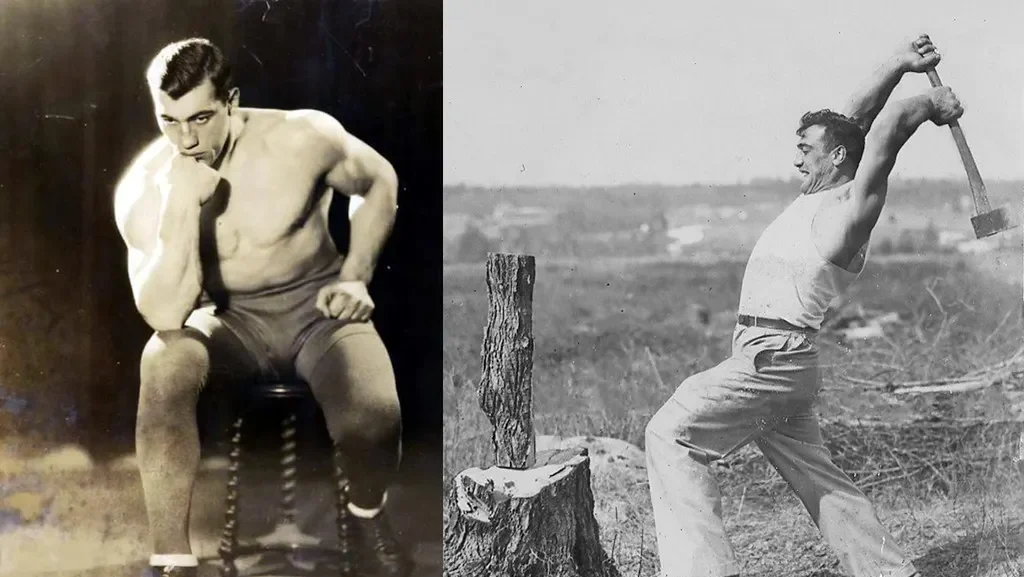
The Rev. Harry Middleton Hyatt was singular. He was an ordained priest of the Episcopal Church and a scholar with master’s and doctor of divinity degrees from Kenyon College and Oxford. His passion was folklore, and he devoted a huge portion of his life to chronicling the folkways, supernatural beliefs and magical practices of the American panoply. In 1935 he published Folk-Lore from Adams County, Illinois, a deep-diving, wide-ranging catalogue of one particular place and time.
The book prepared him for an even bigger project. He became particularly interested in the African-American folk magic system known as hoodoo. Hoodoo is a syncretic system combining traditions from a broad swath of West and Central African peoples with various European, Native American and Christian influences. It is known by several other names — my Jaxson colleague Ennis Davis, whose ancestor, Dr. Franklin Vereen, was a professional practitioner, knew it as rootwork. Others call it conjure, conjuration or simply witchcraft — hence Hyatt’s unusual title, Hoodoo Conjuration Witchcraft Rootwork.

To gather his material, Hyatt traveled widely through the country, from New York City south to Jacksonville and St. Petersburg, then west to New Orleans, and finally up the Mississippi to Memphis and Little Rock. In each place he hired Black assistants to help find people willing to talk hoodoo with an unusual white reverend – a prospect made more attractive by the stresses of the Great Depression, as Hyatt paid the informants for their time.
It also helped that Hyatt kept the informants anonymous. Several were prostitutes. Two were gender-nonconforming people who called themselves boy-girls, who Hyatt sympathetically referred to with pronouns like “him-her” and “he-she.” Others had stories they might have been reluctant to share under their real name; for instance, Informant 562 talked about his ex-wife casting a spell to make him impotent when he went to sleep with another lover.
In all Hyatt interviewed nearly 1,600 people. The fruit of the collective labor of Hyatt, his assistants and the informants was a five-volume work containing possibly the most extensive single record of hoodoo lore and practice.

In July 1937, Hyatt and his assistant, a man identified only as “Carter,” arrived in Jacksonville. While Hyatt booked a room in the Mayflower, a hotel for whites in Downtown’s Northbank Core, the Wynn Hotel, an African American inn better known today under its original name, Genovar’s Hall, agreed to let him set up in the lobby for his interviews.
Standing in the heart of LaVilla’s booming Ashley Street entertainment strip, the Wynn was especially popular with traveling performers like Louis Armstrong due to being located where all the action was. In fact, the building’s bottom floor was a jazz club, The Lenape. It was here that Hyatt recorded Informant 562’s harrowing account of the boo hag.
Little is revealed about Informant 562’s background. It’s evident from the interviews that he’d gotten much of his knowledge of hoodoo from his grandmother. He told of powerful conjurers who summoned haints with graveyard dust to take revenge on murderers or chase out obnoxious neighbors. He knew of spells to protect yourself or to bring a wandering lover back to your door; his ex-wife had used such a tactic on him until he destroyed the source of her power, a type of bespoke amulet called a mojo bag. And of course, he knew of the boo hag and her greater powers on moonlit nights: “My grandmother used to tell me that on a moonlight night that a witch doctor, he can do more then… on a moonlight night it really is an evil night for anyone.”
Boo hags and Gullah Geechee lore

Informant 562’s is not an isolated story. The boo hag is one of many distinctive traditions from the Gullah Geechee, the descendents of West and Central Africans enslaved on the Southeastern coasts and waterways from Cape Fear, North Carolina, down to St. Augustine. It’s a regional variant of an international myth connected to the phenomenon of sleep paralysis.
Stories of entities causing this torturous experience occur worldwide. The English word “nightmare,” now meaning a bad dream, originally applied to such a creature; the term combines “night” with the Old English “mare” or “mære,” a demonic entity that crushes the breath out of sleepers. Many traditions join the Gullah Geechee in characterizing their vampiric sleep monster as a witch or hag. A person waking up from bad sleep might be described as “hagridden.” A common Southern warning to avoid this fate goes, “Don’t let the boo hag ride ya!”
The distinguishing feature of the Gullah Geechee hag is that by day they are a normal person who sheds their skin at night to wreak their havoc. Though this element isn’t evident in the informant’s story, it’s found in dozens of others from across the Gullah Geechee corridor and beyond, including several others in Hyatt’s Hoodoo. Additionally, while the English word “hag” generally refers to a woman, the Gullah Geechee hag is frequently male.
Boo hags are just one of many supernatural beings in Gullah Geechee tradition. The jack-o’lantern, also called jack-a-ma-lantern and similar, is a traditional name for spectral lights seen in the night woods said to vex travelers or lure them off their path. (This use long predates, and is related to, the carved Halloween pumpkins.) This tradition, now better known as the will-o’-the-wisp or ghost light, is as ancient and widespread as the hag. More specific to the Gullah Geechee is the plat-eye, an exceptionally malevolent ghost with red, burning eyes that haunts a particular place, sometimes guarding a treasure. In Jacksonville, Old Red Eyes, a ghost reported at Kingsley Plantation since at least the 1970s, is a spirit of this type.
It’s not surprising that Hyatt spent so much time in Jacksonville for his fieldwork, or that the area proved so rich in Gullah Geechee tradition and hoodoo lore. It’s the largest city in the Gullah Geechee Cultural Heritage Corridor, after all, and home to the largest population of Gullah Geechee descendents anywhere. And when it comes down to local folklore and legends, Jacksonville can hold its own against any place from New Orleans to the Old World.
As Jaxsons continue to recognize and celebrate our storied Gullah Geechee heritage, it’s useful to look back on stories and collections like this to not only catch a glimpse into the lives of people long before but to discover how they continue to speak to us.