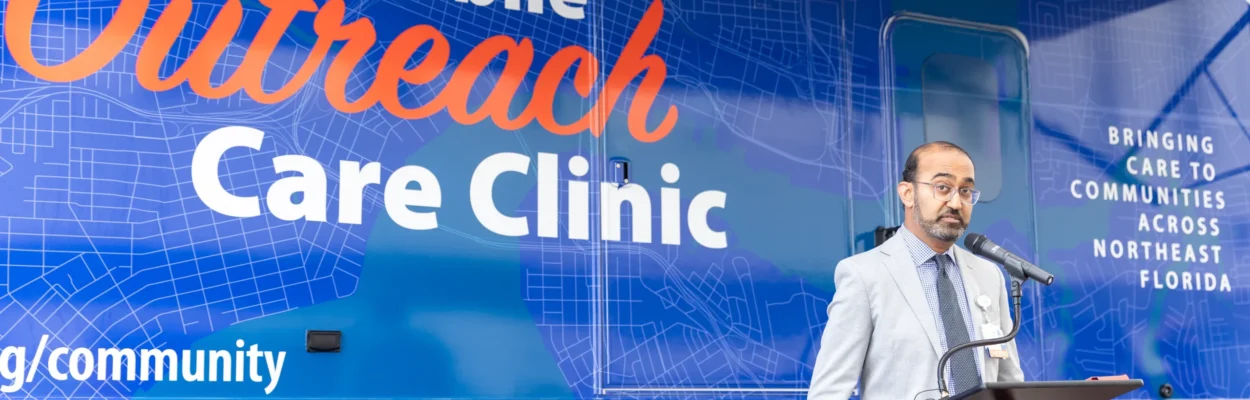
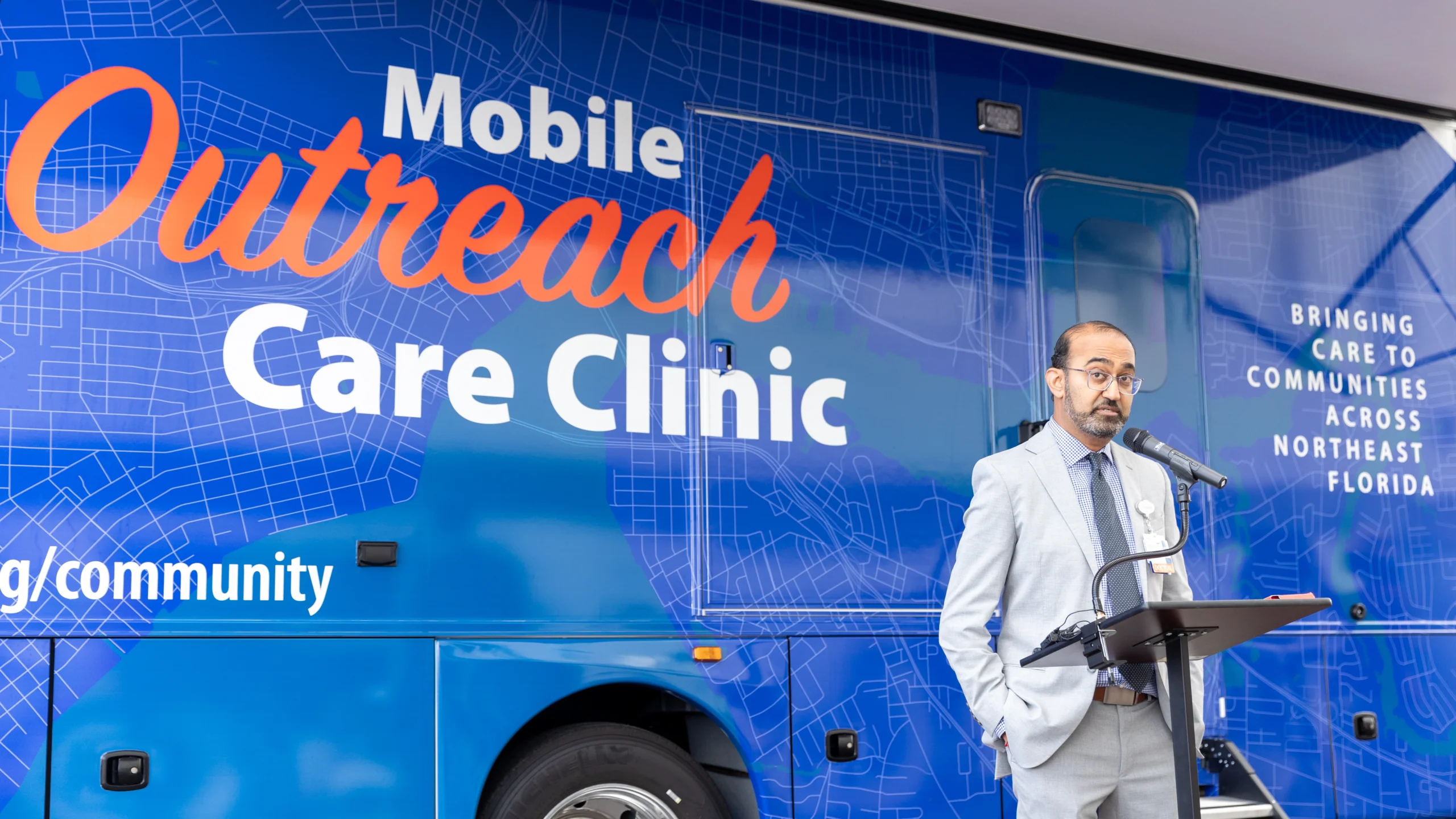
UF Health Jacksonville Chief Medical Officer Dr. Chirag Patel says UF Health's first mobile care unit will allow the system to expand its compassion, preventive medicine and care. The converted residential vehicle was unveiled Wednesday, Sept. 9, 2026. | Will Brown, Jacksonville Today
Published on September 9, 2026 at 3:08 pm
Free local news and info, in your inbox at 6 a.m. M-F. Sign up for the Jacksonville Today newsletter.
UF Health Jacksonville will roll out its first mobile health clinic this month.
The health system expects the unit to provide blood pressure, cholesterol and diabetes screenings; primary care visits; wellness visits; and other preventive services.
Jacksonville Today thanks our sponsors. Become one.
Its first stop will be at Wayman Temple AME Church in the Hillcrest neighborhood on the Westside on Sept. 26.
Care is not exclusive for UF Health patients.
Expanding access to care
Dr. Chirag Patel, chief medical officer for UF Health Jacksonville, says the system will devote the next three to six months to determine the best places to park the clinic.
“There is a lot of distrust in health care these days. It’s really important that we get out and rebuild the trust with the community,” Patel says. “We say, ‘We want to help you live a better life, live a healthier life: Here’s what we have to offer.’ There is no pressure involved in this. Ultimately, it’s your choice if you choose to use it or not. But, UF Health has your back and will come to your neighborhood.”


Jacksonville Today thanks our sponsors. Become one.
Patel says the mobile clinic will hold its first stops at Jacksonville churches, like Wayman Temple, as well as senior centers.
The Jacksonville Nonprofit Hospital Partnership, of which UF Health is a member, identified transportation access as one of the primary impediments between Northeast Florida residents and healthcare providers in its 2025 Community Health Needs Assessment.
“The problematic nature of public transit not only affects access to health care, but it also means it is problematic in accessing healthy food — a critical factor in achieving optimal health,” the assessment found.
The 18.1% of Northeast Florida residents who receive Medicaid — the federally subsidized medical insurance program for low-income and under-resourced people — is lower than the state and national figure. However, the geographic size of Jacksonville, and the reality there is a river that runs through the heart of it, creates a transportation barrier for vulnerable, or underserved, populations.
Whether it was colon cancer screenings that targeted Duval County’s abnormally high colon cancer incidence rate, to identifying the cause of health disparities, UF Health has been intentional about closing Jacksonville’s healthcare gaps.
Shamika Baker Wright, UF Health Jacksonville vice president for external affairs and community engagement, led a team that won a private grant earlier this year.
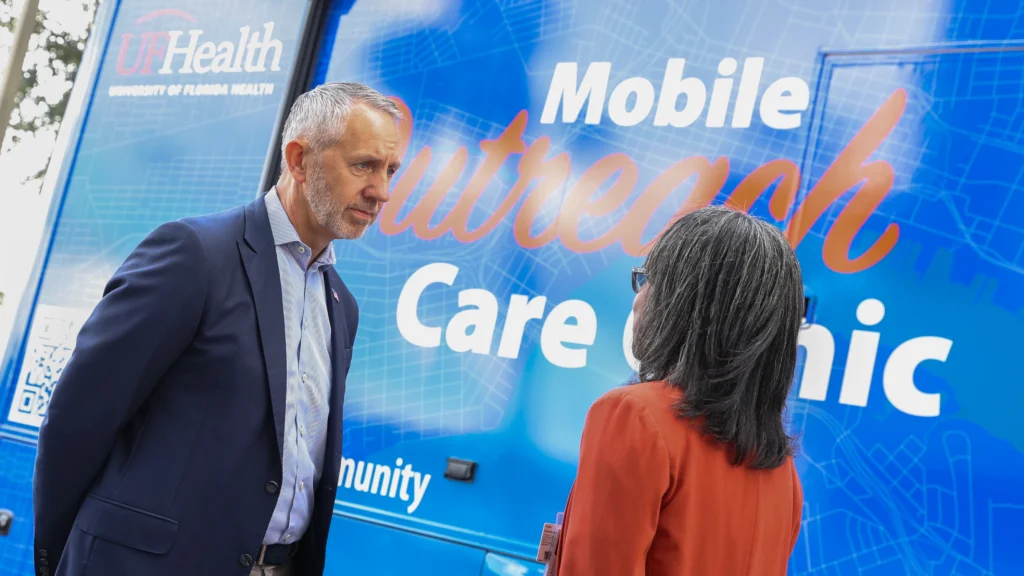
From there, the system partnered with North Carolina-based Mission Mobile Medical to outfit the vehicle with a wheelchair ramp as well as private space for patients and providers.
Meeting people where they are
“Access to healthcare is about more than having excellent service available,” UF Health Jacksonville CEO Patrick L. Green said in a statement. “This mobile medical unit allows us to extend our reach beyond the walls of our hospitals and clinics and into the communities we are privileged to serve.”
UF Health Central Florida in Leesburg as well as UF Health St. Johns have mobile medical units.
UF Health Shands in Gainesville has operated mobile units for 15 years. Its eight-vehicle fleet provides services for rural residents; preventative wellness; women’s care; stroke prevention; and more.
Jacksonville’s mobile unit will feature, at least, a paramedic on site at all times. Patel is optimistic UF Health Jacksonville will provide other mobile units in the years ahead.
“Preventative medicine is the best type of medicine, because it lets you live a longer and healthier life before you need emergency care or hospital-based care,” Patel says. “The last thing we want to see are younger individuals, whose bodies have already started to break down, who need more of a hospital than a primary care setting. That’s where we would like to see you first.”